
Why Does My Dog Eat Grass? Common Causes and When to Worry

Almost every owner eventually asks, why does my dog eat grass, usually while watching their dog graze like a tiny cow. The habit looks odd, much like paw licking, but grass eating is very common in healthy dogs.
Most dogs that eat grass are not sick, and most do not vomit afterward. For many, grazing is simply normal canine behavior with several possible causes.
This guide explains the likely reasons, when grass is risky, how to reduce the habit, and the warning signs that mean a vet visit instead of a wait-and-see approach.
Quick Answer: Most dogs eat grass because they like the taste or texture, feel bored, or follow a normal grazing instinct. It is usually harmless on untreated grass. See a vet if grazing comes with repeated vomiting, blood, appetite loss, lethargy, or diarrhea.
Is It Normal for Dogs to Eat Grass?
Yes, in most cases it is normal. Dogs of all breeds, ages, and diets nibble grass from time to time, including dogs fed complete, good quality food.
Occasional grazing, followed by normal energy, normal appetite, and normal stools, is rarely a problem on its own. It is a behavior to understand, not automatically a symptom to fear.
What matters is the pattern. A dog that suddenly grazes frantically, eats far more than usual, or seems unwell at the same time deserves a closer look.
Common Reasons Dogs Eat Grass
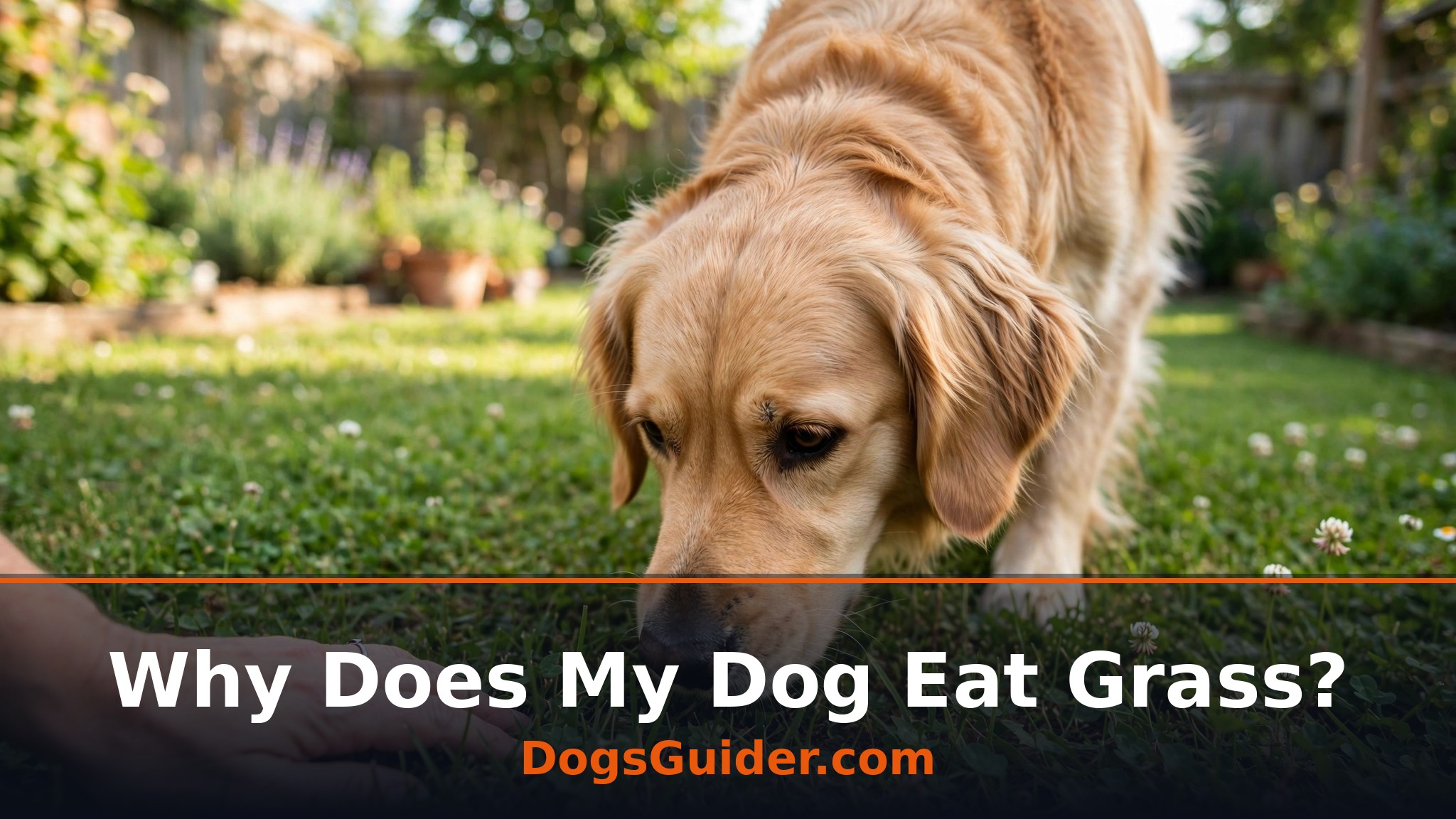
There is rarely one single explanation. Several of the causes below can overlap in the same dog, and the main one can change over time.
They Simply Like the Taste and Texture
The simplest answer is often the right one. Many dogs enjoy the taste, smell, and chewy texture of fresh grass, especially young spring growth.
Dogs explore the world with their mouths. Grazing can be one more way to sample the environment, no different in spirit from sniffing every tree on a walk.
If your dog selects particular patches, chews calmly, and stops on its own, simple enjoyment is a very likely explanation.
Boredom or Habit
A dog left alone in a yard with nothing to do will invent entertainment. For some dogs, that entertainment is grazing, digging, or chewing whatever is available.
Habit plays a role too. A behavior repeated daily quickly becomes part of the routine, even if the original reason for starting it has long disappeared.
Dogs with plenty of exercise, play, and training usually graze less out of boredom, because their day already holds more interesting options.
A Normal Grazing Instinct
Dogs are opportunistic omnivores, not strict meat eaters. Their wild relatives eat plant material as well, both directly and through the animals they hunt.
Grass, berries, and other vegetation fit naturally into that scavenging pattern. A pet dog nibbling grass is often following an old, normal feeding instinct.
The Upset Stomach Theory
Many owners believe dogs eat grass to make themselves vomit when their stomach feels off. It is a popular idea, but the evidence behind it is weak.
Most grass eating is not followed by vomiting at all. When vomiting does happen, it is often unclear whether the dog felt sick first or the grass itself caused it.
A dog that occasionally grazes and then brings up a little grass may simply have eaten too much, too fast. Repeated vomiting is a different matter, covered below.
Looking for Fiber
Grass contains rough fiber, and some dogs may graze when their diet leaves them wanting more of it. Fiber supports normal digestion and firm, regular stools.
This does not mean every grazing dog has a deficient diet. It does mean diet is worth reviewing if grazing is daily and heavy.
Our guide to high fiber foods for dogs explains safe fiber sources and how to add them gradually without upsetting the stomach.
Learned Behavior and Attention
Dogs repeat what works. If grazing reliably brings an owner running, talking, and offering a treat to distract them, grazing becomes a smart way to get attention.
That does not make the dog sneaky or naughty. It just means the behavior has been rewarded, often completely by accident.
Calm redirection, rather than an exciting chase, helps this pattern fade. Reward the dog for coming away from the grass instead of for eating it.
Does Eating Grass Make Dogs Vomit?
Sometimes, but usually not. Vomiting after grazing tends to happen when a dog eats a large amount quickly, swallowing long blades without chewing them well.
Those blades can irritate the throat and stomach lining. The result is a small vomit containing grass, foam, or yellow bile from an empty stomach.
Our article on a dog throwing up yellow explains what bile vomit means and which patterns need a vet.
One small vomit in a bright, hungry dog is rarely an emergency. Vomiting that repeats, or arrives with other symptoms, always needs proper attention.
Is Grass Safe for Dogs?
Plain, untreated grass in small amounts is not toxic to dogs. The risks around grass eating come from what may be on the grass or mixed in with it.
Chemicals and Lawn Treatments
Grass treated with weed killers, pesticides, or chemical fertilizers can make a dog sick. Signs depend on the product, but drooling, vomiting, and diarrhea are common.
Keep dogs off treated lawns for at least the period stated on the product label. When in doubt, treat public and neighbors’ grass as unsafe to eat.
If you suspect your dog ate chemically treated grass and now seems unwell, call your vet promptly and name the product if you know it.
Harmful Plants Among the Grass
Lawns and garden edges often hide plants that are poisonous to dogs. A grazing dog can easily swallow pieces of these plants along with harmless grass.
Know which plants grow where your dog grazes, and remove access to any that are known to be toxic. Your vet can help identify risky local plants.
Mushrooms after wet weather are another hidden hazard. Some wild mushrooms are dangerous, so remove them from your yard and watch closely on walks.
Dirt, Waste, and Parasites
Grass in parks and shared areas can carry traces of other animals’ waste. That waste can contain parasite eggs and bacteria that infect a grazing dog.
Staying current with vet recommended parasite prevention and routine fecal checks reduces this risk a great deal. So does steering grazing away from heavily soiled areas.
How to Reduce Grass Eating

You do not need to stop every nibble. If grazing is frequent, though, these steps address the most common causes without punishment or stress.
Review the diet. Feed a complete diet suited to your dog’s age, size, and health. If stools are often soft, discuss fiber and food choice with your vet.
Transition foods slowly. Sudden diet changes upset stomachs and can increase grazing. Mix the new food in gradually over about a week, watching stools and appetite.
Add mental work. Puzzle feeders, sniffing games, training sessions, and varied walks give a bored dog something better to do than graze the yard.
Teach a calm leave it. Reward your dog for turning away from grass on cue. Keep it positive, and never chase or scold a dog for grazing.
Watch the pattern. Note when grazing happens: before meals, after meals, on certain walks, or when the yard is the only entertainment. Patterns point to causes.
Offer support for a mild upset. If your vet agrees it is mild, a short period of gentle feeding can help. Our guide to a bland diet for dogs explains the basics.
When to See a Vet
Occasional grazing in a well dog can wait and be watched. The signs below cannot. Book a vet visit promptly if you notice any of them.
- Repeated vomiting, especially more than once or twice, or vomiting that continues into the next day
- Blood in vomit or stool, or stool that looks black and tarry
- Appetite loss, refusing food the dog normally eats with enthusiasm
- Lethargy, weakness, hiding, or a clear drop in energy and interest
- Diarrhea that lasts beyond a day, or comes with straining or accidents
- Sudden frantic grazing, eating grass and anything else non-food in a rush
- Weight loss, a swollen belly, or pale gums at any point
- Known chemical exposure, such as grazing on a freshly treated lawn
Puppies, senior dogs, and dogs with existing health conditions get worse faster. For them, lower your threshold and call the vet sooner rather than later.
What Your Vet May Do
A vet visit for heavy grazing usually starts with questions. Expect to describe the diet, treats, grazing pattern, stools, vomiting, and any lawn products used at home.
The vet will examine your dog, check the mouth and belly, and assess hydration and body condition. Many causes are ruled in or out at this stage.
If needed, further steps can include a fecal test for parasites, blood work, or a structured diet trial. Each test answers a specific question from the history.
Treatment follows the cause, if one is found. Often the outcome is reassurance, a diet adjustment, and a plan for monitoring at home.
The Bottom Line
Most dogs eat grass because they enjoy it, feel bored, or follow a normal grazing instinct, not because they are ill. Untreated grass in small amounts is usually safe.
Watch the pattern instead of the single nibble. Repeated vomiting, blood, appetite loss, lethargy, or sudden frantic grazing turn a harmless habit into a vet visit.
References
- American Kennel Club (AKC), guidance on why dogs eat grass and when to call a vet. https://www.akc.org/
- PetMD, veterinary guidance on grass eating in dogs, causes and warning signs. https://www.petmd.com/
- VCA Hospitals, client education on dietary indiscretion and gastrointestinal upset in dogs. https://vcahospitals.com/
- RSPCA, advice on dogs eating grass, lawn chemical risks, and poisonous plants. https://www.rspca.org.uk/
- Merck Veterinary Manual, owner guidance on digestive disorders and vomiting in dogs. https://www.merckvetmanual.com/
FAQs
1. Why does my dog eat grass every day?
Daily grazing usually points to habit, boredom, or simple enjoyment rather than illness. Review diet, exercise, and mental stimulation first. If daily grazing is new, heavy, or paired with symptoms, book a vet check.
2. Is my dog eating grass because of a nutrient deficiency?
Usually not. Most dogs on complete diets get the nutrients they need. Grazing can occasionally reflect a wish for more fiber, but it is not reliable proof of any deficiency on its own.
3. Should I stop my dog from eating grass?
Not necessarily. Occasional nibbling of untreated grass is fine for most dogs. Stop grazing on treated lawns, near roads, or in areas with waste or unknown plants, and redirect calmly instead of scolding.
4. Why does my dog eat grass and then throw up?
Eating a lot of grass quickly can irritate the throat and stomach, which sometimes triggers vomiting. Most grazing is not followed by vomiting. Repeated vomiting, blood, or appetite loss needs a vet visit.
5. Can puppies eat grass?
Puppies explore with their mouths, so grass nibbling is common. Keep it small and supervised, avoid treated or soiled areas, and mention frequent grazing or any vomiting at the next puppy check.
6. Is it safe for my dog to eat grass at the park?
Park grass carries more unknowns: possible chemical treatments, waste, and parasites. Occasional nibbles are low risk for most healthy dogs, but heavy grazing in shared areas is best redirected.
7. When is grass eating an emergency?
Seek urgent care for repeated vomiting, blood, a swollen belly, collapse, pale gums, or known poisoning exposure. Also call promptly for appetite loss and lethargy alongside grazing, especially in puppies and seniors.

Sarah Mitchell has been raising French Bulldogs for over 9 years in Austin, Texas. After adopting her first Frenchie, Biscuit, she became passionate about helping new owners navigate the unique needs of the breed from breathing care to diet and heat safety. Sarah has worked closely with local veterinarians and attended the AKC National Championship three times as a breed enthusiast. Her guides focus on practical, real-world advice for American Frenchie owners.