French Bulldog Reverse Sneezing: Causes, What to Do, and When to Worry
Introduction
The first time my French Bulldog Reverse Sneezing, I thought she was choking. She planted her feet, stretched her neck out, and started honking and snorting, pulling air in through her nose in rapid bursts. I was halfway to grabbing my keys when it stopped, after about forty seconds, and she trotted off to her water bowl like nothing had happened.
That was a reverse sneeze, and in most cases it is no reason to panic. But because Frenchies are a brachycephalic breed with compromised airways, it is worth knowing what a reverse sneeze is, what it is not, and the situations where it does mean “vet, now.”
Quick note: this is general information from an experienced owner, not veterinary advice. A dog struggling to breathe is always an emergency; skip the article and go.
Quick Answer
A reverse sneeze, vets call it inspiratory paroxysmal respiration, is a sudden, forceful inhalation through the nose, usually triggered by a minor irritation in the back of the nose or throat (the nasopharynx). Instead of sneezing air out to clear an irritant, the dog rapidly pulls air in, producing a honking or snorting sound.
- It is usually harmless. VCA Hospitals, the AKC, and PetMD describe reverse sneezing as a generally benign reflex in otherwise healthy dogs.
- Episodes are short. Most last well under a minute, and the dog is completely normal before and after.
- It needs no treatment in most cases. Occasional episodes are a quirk, not a disease.
- Frequency is the thing to watch. Daily episodes, longer episodes, or episodes with other symptoms deserve a vet visit, more below.
What a Reverse Sneeze Looks and Sounds Like
A typical episode follows a script most Frenchie owners recognize:
- Your dog suddenly stops and stands still, legs slightly braced.
- The neck stretches forward, head tilted slightly down or out.
- You hear repeated, forceful snorting or honking as air is pulled in through the nose.
- The eyes may look wide or slightly bulging, the lips pulled back.
- Then it stops, just as suddenly. Your dog shakes it off, maybe swallows, and goes back to normal.
If you can, take a video of an episode. That clip is the single most useful thing you can show your vet, far better than imitating the noise in the exam room, which I can confirm does not work.
Reverse Sneeze or Something Serious? How to Tell the Difference
This is the part that matters most, because several serious conditions can look or sound similar at first glance, especially in a flat-faced breed.
| Feature | Reverse sneeze | Choking | Tracheal collapse | Kennel cough |
|---|---|---|---|---|
| Sound | Honking/snorting pulled inward through the nose | Gasping, gagging, little air moving | Dry “goose honk” cough pushed outward | Dry, hacking cough, often ending in a gag |
| Posture | Stands still, neck stretched, not panicked | Pawing at mouth, panicked, drooling | Cough triggered by excitement or collar pressure | Normal between fits |
| Duration | Under 1 minute, then fully normal | Does not resolve, gets worse | Recurs over weeks/months, worse on exertion | Lasts days to weeks |
| Breathing between episodes | Completely normal | Laboured or blocked, emergency | May be noisy with exercise or heat | Normal between coughs |
| What to do | Stay calm, observe | Emergency, act immediately / emergency vet | Book a vet appointment | Vet appointment; isolate from other dogs |
Two rules override this whole table:
- If your dog cannot settle, is panicking, has blue or pale gums, collapses, or is visibly struggling to get air, treat it as an emergency, whatever it is. French Bulldogs tolerate breathing crises badly, which is the same reason heat-related breathing trouble in Frenchies can turn fatal so fast.
- If in doubt, call your vet or an emergency clinic and describe what you saw (or send the video). No vet clinic will ever be annoyed at you for checking about breathing in a French Bulldog.
Why French Bulldogs Reverse Sneeze More Than Other Breeds
Any dog can reverse sneeze. Frenchies do it more, due to anatomy:
- Elongated soft palate. French Bulldogs commonly have a soft palate that is long relative to their shortened skull. That extra tissue at the back of the throat can flutter and irritate the nasopharynx, prime reverse-sneeze territory.
- Brachycephalic airway. A short muzzle means a crowded airway: narrow nostrils, compressed nasal passages, and tissues easily irritated by dust, pollen, and temperature changes.
- The BOAS connection. Reverse sneezing is not Brachycephalic Obstructive Airway Syndrome (BOAS), but the same anatomy sits behind both. A Frenchie who reverse sneezes and snores loudly, snorts at rest, or struggles in heat should be assessed for airway issues at their next vet visit. More topics are in our French Bulldog health care guides.
Common Triggers
An episode is usually set off by a small, specific irritation:
- Allergens and irritants, pollen, dust, sprays, scented candles, smoke, perfume
- Excitement, greetings, play, visitors at the door (a classic Frenchie trigger)
- Collar pressure, pulling against a collar tugs on an already sensitive throat
- Eating or drinking too fast, gulped food and water can irritate the back of the throat
- Sudden temperature change, stepping from a warm house into cold air, or the reverse
- Post-nasal drip, mucus draining into the throat, often allergy-related
- Nasal mites, a less common, treatable cause vets consider when episodes are frequent or persistent
On allergies: seasonal reverse sneezing plus foot-chewing often points the same direction, see our guide to why dogs lick their paws.
What to Do During an Episode
You usually do not need to do anything, the episode ends on its own. But here is what helps, and what to avoid.
Do:
- Stay calm and talk to your dog normally. Your panic becomes their panic, and a stressed dog breathes worse.
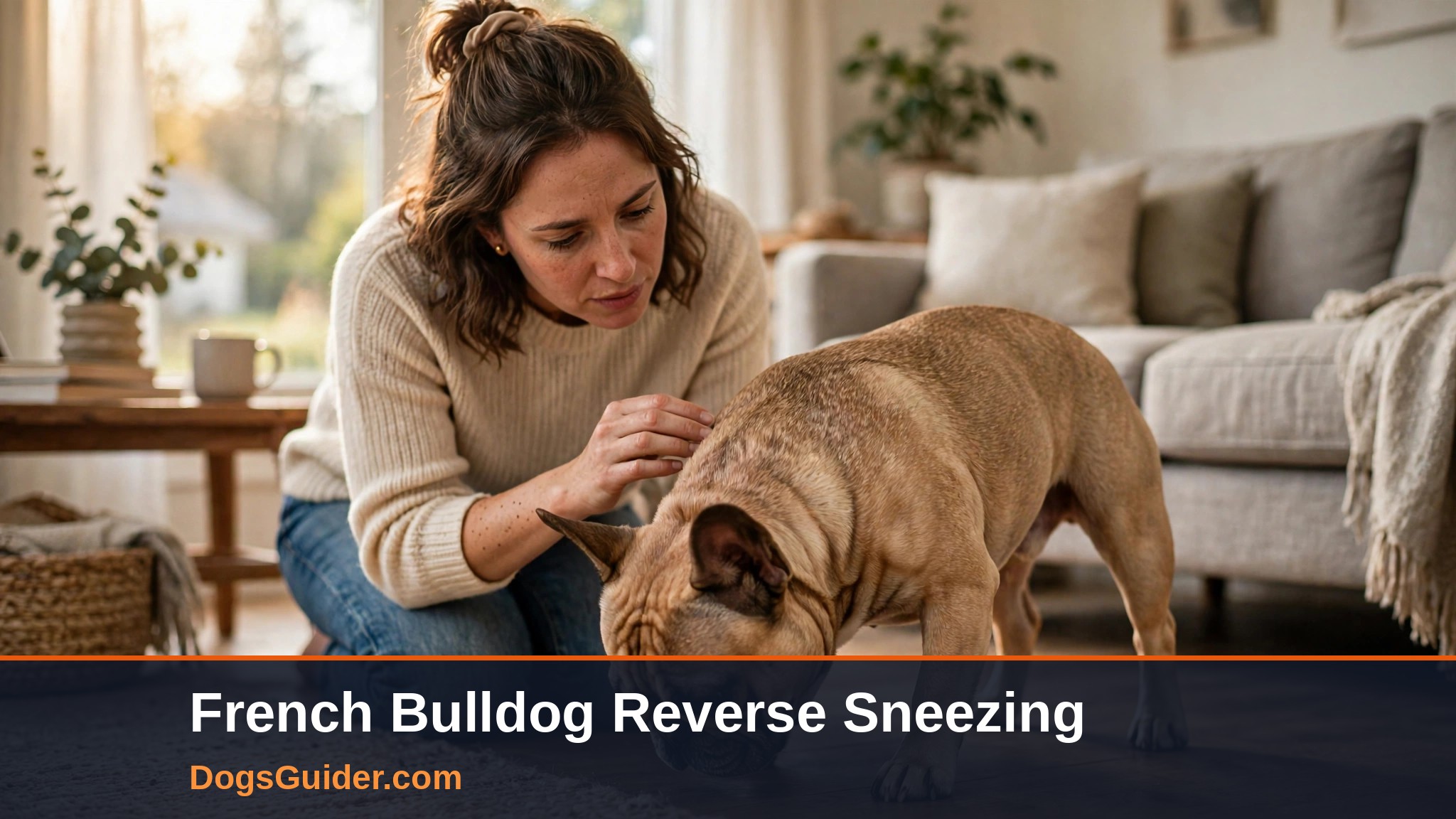
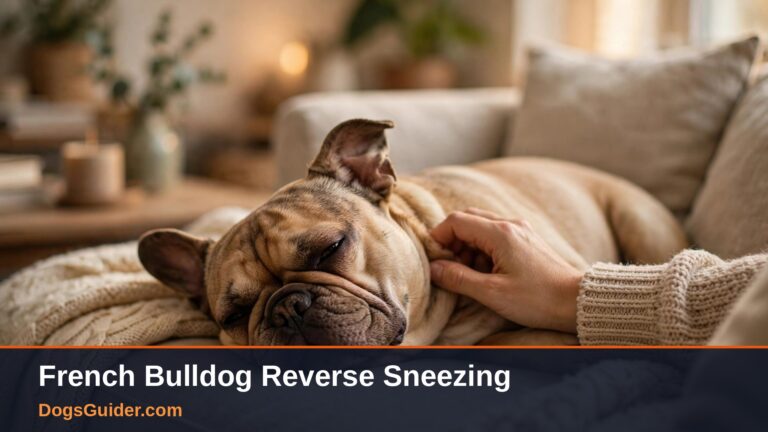
- Gently massage or stroke the throat. A slow rub under the jaw encourages swallowing, and swallowing often ends the episode.
- Move to fresh air if you suspect an airborne trigger (spray, smoke, dust).
- Briefly cover the nostrils, only as commonly recommended, and only gently. Many vets suggest momentarily (a second or two) covering the nostrils so the dog swallows or breathes through the mouth, which can stop the spasm. Only try this if your dog is calm about face handling, and stop if they resist. Unsure? Skip it, the episode will pass anyway.
Do not:
- Restrain a struggling dog or force them to lie down.
- Put fingers, food, water, or anything else in their mouth during an episode.
- Shake, slap, or startle your dog “out of it.”
- Offer treats mid-episode, wait until breathing is completely normal.
When to See a Vet
Book a vet appointment if you notice any of the following:
- Episodes happen daily, or clearly more often than they used to
- An episode lasts longer than a minute or two, or is hard to come out of
- Nasal discharge, especially coloured, bloody, or from one nostril only
- Sneezing fits, nosebleeds, or pawing at the face
- The first-ever episode happens in an older dog, new breathing noises in a senior should always be checked
- Reduced appetite, lethargy, or exercise intolerance alongside episodes
- You suspect the noises are not reverse sneezes, trust that instinct
And the most important line in this article: breathing distress, laboured, noisy breathing at rest, blue or grey gums, collapse, or a dog who cannot settle, is an emergency. Go now, call on the way.
Diagnosis and Treatment If It Happens Often
For a healthy Frenchie with occasional episodes, a vet will often confirm the diagnosis, your video helps enormously, and recommend no treatment. If episodes are frequent, expect a step-by-step workup: physical and oral exam (including the soft palate), questions about timing and triggers, and possibly investigation of allergies, nasal mites, or airway anatomy.
Treatment targets the cause, not the sneeze:
- Allergy management, reducing triggers, plus vet-directed medication where appropriate. Your vet may discuss antihistamines; our guide to Benadryl for dogs explains the basics, but only give it on your vet’s say-so, at their dose, never just for reverse sneezing.
- Nasal mite treatment, vets can prescribe effective antiparasitic treatment if mites are suspected.
- Harness instead of a collar, removing throat pressure removes a common mechanical trigger. I recommend a well-fitting harness for every Frenchie.
- Weight management, excess weight worsens every airway issue in this breed. A lean Frenchie breathes easier, full stop.
Prevention Tips
You cannot eliminate reverse sneezing, but you can cut episodes down:
- Walk on a harness, never a collar alone.
- Slow the eating, a slow-feeder bowl helps gulpers.
- Keep the air boring, go easy on sprays and scented products; vacuum in pollen season; wipe paws and face after walks.
- Manage excitement greetings, calm arrivals mean fewer door-front episodes.
- Keep your Frenchie lean, good airway habits help every breathing issue this breed has.
The Bottom Line
A reverse sneeze looks and sounds dramatic, but in most French Bulldogs it is a harmless response to a minor irritation and passes within a minute or so. Stay calm, soothe your dog, and note what triggered it. If episodes become frequent, last longer, or come with discharge, coughing, or breathing difficulty, that is no longer a wait-and-see: book a vet visit, and take a video of an episode with you.
References
- VCA Hospitals, reverse sneezing in dogs (client education)
- American Kennel Club (AKC), reverse sneezing: causes and when to worry
- PetMD, reverse sneezing in dogs: causes, symptoms, treatment
- Cornell Riney Canine Health Center, respiratory and brachycephalic health resources
Disclaimer: This article is general information only, not a substitute for professional veterinary advice. If your dog is struggling to breathe, treat it as an emergency and seek veterinary care immediately.
FAQs
1. Is reverse sneezing dangerous for French Bulldogs?
Usually, no. In a healthy dog it is a benign reflex that ends on its own within a minute. It becomes a concern when it is frequent, prolonged, accompanied by discharge, or when what you are seeing is actually breathing distress, an emergency in this breed.
2. How long does a reverse sneezing episode last?
Most last from a few seconds to about a minute. If episodes regularly run longer, or your dog struggles to come out of one, have your vet check it.
3. Can reverse sneezing be a sign of allergies?
It can be. Allergens irritate the nose and throat, and post-nasal drip is a common trigger. A seasonal pattern, especially alongside paw licking, ear issues, or itchy skin, is worth raising with your vet.
4. Should I take my Frenchie to the vet for one episode?
For a single short episode in an otherwise normal dog, most owners monitor at home, but film the next one. Book a visit if episodes repeat, change in character, or come with any warning signs above. When in doubt, call: breathing questions in Frenchies are always legitimate.
5. Does a harness really help?
It can, particularly if episodes happen on walks or when your dog pulls. A collar presses on the throat; a harness removes that pressure.
6. Can puppies reverse sneeze?
Yes, often triggered by excitement or irritants. The same rules apply: short and occasional is usually fine; frequent, prolonged, or accompanied by discharge or poor feeding means a vet visit, and young puppies should have a lower threshold for being checked.

Sarah Mitchell has been raising French Bulldogs for over 9 years in Austin, Texas. After adopting her first Frenchie, Biscuit, she became passionate about helping new owners navigate the unique needs of the breed from breathing care to diet and heat safety. Sarah has worked closely with local veterinarians and attended the AKC National Championship three times as a breed enthusiast. Her guides focus on practical, real-world advice for American Frenchie owners.