
French Bulldog Ear Infections: Signs, Causes & Treatment
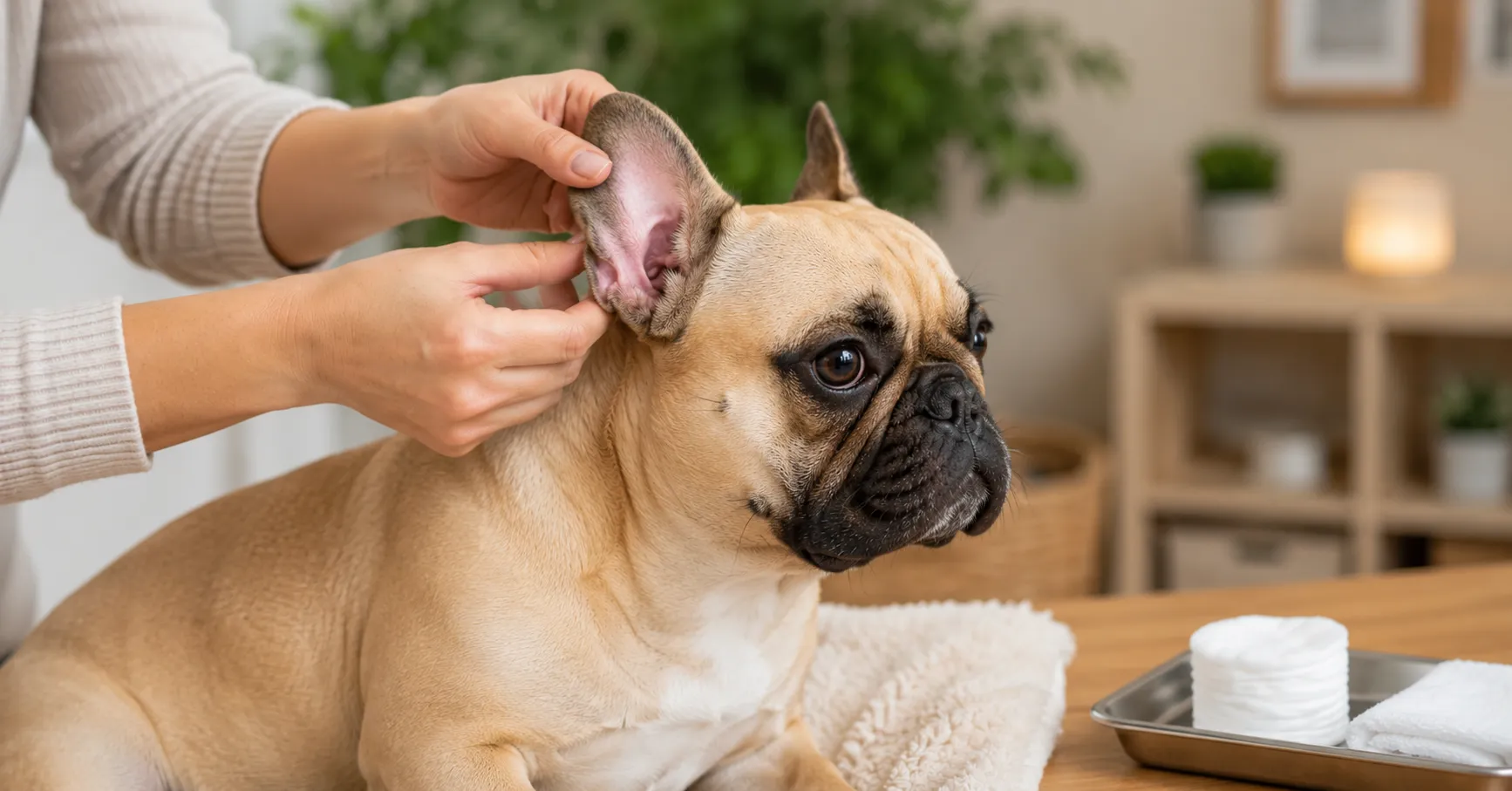
Introduction
French Bulldog ear infections are common and can cause itching, pain, redness, odor, head shaking, and unusual discharge. Frenchies can be more prone to ear problems because of their ear-canal anatomy and their tendency to develop allergies and skin conditions.
If your French Bulldog keeps scratching an ear, shaking their head, rubbing the side of their face, or developing a strong ear odor, it is worth having the ear checked rather than assuming it is simply dirty.
The important thing is to find why the ear is inflamed. Bacteria and yeast can contribute to infection, but allergies, parasites, foreign material, moisture, and middle-ear disease can also be involved. Treating only the infection without addressing the underlying cause can allow the problem to return.
In this guide, you’ll learn the common causes and signs of French Bulldog ear infections, when an ear problem needs veterinary attention, how vets diagnose it, what treatment may involve, how to clean your Frenchie’s ears safely, and how to reduce recurring problems.
Why Are French Bulldog Ear Infections So Common?
French Bulldogs have ear and skin characteristics that can make ear problems more likely.
Their ear canals can be relatively narrow, which may make it harder for debris and moisture to clear naturally. Frenchies are also prone to allergies and skin disease, and allergies can contribute to inflammation around the ears.
Once the ear canal becomes inflamed, the environment can change in a way that allows microorganisms such as yeast or bacteria to multiply. Chronic inflammation can also cause the canal to become thicker and narrower, making future infections harder to control.
This is why recurring French Bulldog ear infections should not simply be treated as a cleaning problem.
The goal is to identify the underlying trigger and treat the ear appropriately.
What Causes French Bulldog Ear Infections?
There isn’t always one single cause. Your veterinarian may find one or several contributing factors.
1. Allergies
Allergies are an important cause of recurring ear inflammation in dogs.
A French Bulldog with allergies may also have:
- Itchy paws
- Red or irritated skin
- Licking or chewing of the feet
- Skin rashes
- Recurrent ear problems
- Face or body itching
Both environmental and food-related allergies can contribute to ear disease.
If your Frenchie’s ear infection keeps coming back, your veterinarian may need to investigate allergies rather than repeatedly treating the ear alone.
2. Yeast Overgrowth
Yeast can normally be present in small numbers in a dog’s ear. Problems can develop when the ear environment changes and yeast multiplies excessively.
Yeast-related ear problems may cause:
- Strong odor
- Dark or brown discharge
- Itching
- Redness
- Head shaking
- Ear discomfort
A veterinarian can examine an ear sample under a microscope to help determine whether yeast is involved.
3. Bacterial Infection
French Bulldog ear infections can also contribute to otitis externa, which is inflammation of the external ear canal.
Bacterial infections may cause pain, redness, swelling, odor, discharge, and significant irritation.
Because different organisms can require different treatments, guessing which medication is needed based only on appearance is not a reliable approach.
4. Ear Mites and Parasites
Parasites such as ear mites can cause inflammation and discharge, particularly in some puppies or dogs exposed to infected animals.
A veterinarian can examine ear debris to determine whether mites or other parasites are present.
5. Moisture
Water left inside the ear can contribute to an environment where microorganisms can multiply.
This can be especially relevant after:
- Bathing
- Swimming
- Playing in wet conditions
Keeping the ears appropriately dry and following a veterinarian’s cleaning recommendations can help reduce problems.
6. Foreign Material
Grass seeds, dirt, plant material, or other foreign objects can become lodged in the ear canal.
A foreign body can cause sudden irritation, pain, scratching, and head shaking. If the problem suddenly affects one ear, a veterinarian may need to check for something stuck inside the canal.
What Are the Signs of French Bulldog Ear Infections?
The symptoms can vary depending on how severe the inflammation is and which part of the ear is affected.
Common signs include:
- Frequent head shaking
- Scratching at the ear
- Rubbing the ear or side of the face
- Redness inside the ear
- Swelling
- Bad or unusual odor
- Increased ear discharge
- Pain when the ear is touched
- Scaly or irritated skin
- Holding the head differently
MSD Veterinary Manual lists head shaking, odor, redness, swelling, scratching, discharge, scaly skin, and ear discomfort among common signs of otitis externa.
A dog does not need to show every symptom to have an ear problem.
What Does French Bulldog Ear Infection Discharge Look Like?
Ear discharge can vary depending on the underlying cause.
You may notice:
- Yellow or cream-colored discharge
- Brown discharge
- Dark discharge
- Waxy buildup
- Moist debris
- Blood mixed with discharge
Dark discharge can occur with yeast or parasites, but it can also occur with bacterial or mixed infections. Appearance alone cannot reliably identify the cause.
If your French Bulldog has noticeable ear discharge, especially if it is accompanied by pain, odor, or repeated scratching, a veterinary examination is appropriate.
French Bulldog Ear Infections: Outer, Middle & Inner Ear

Not every ear infection affects the same part of the ear.
Otitis Externa
Otitis externa means inflammation of the external ear canal.
It is the most common form of ear disease in dogs and can involve allergies, parasites, foreign material, yeast, bacteria, or other factors.
Otitis Media
Otitis media affects the middle ear.
It can develop when infection or inflammation extends deeper from the external ear. Recurrent external ear infections can sometimes be associated with middle-ear disease.
Otitis Interna
Otitis interna involves the inner ear and can affect balance and hearing.
Possible signs include:
- Head tilt
- Loss of balance
- Falling or leaning
- Difficulty walking normally
- Nausea or vomiting
- Hearing changes
Middle- or inner-ear disease can become more serious because important nerves and structures are located in this area.
When Are French Bulldog Ear Infections an Emergency?
French Bulldog ear infections require veterinary attention, but certain signs deserve especially prompt evaluation.
Contact a veterinarian quickly if your French Bulldog has:
- Severe ear pain
- Significant swelling
- Bloody discharge
- A pronounced head tilt
- Loss of balance
- Falling or circling
- Difficulty walking
- Facial weakness or inability to blink normally
- Sudden hearing changes
- Rapid worsening of symptoms
Balance problems, head tilt, and facial nerve changes can indicate deeper ear involvement and should not be ignored.
If your dog is extremely distressed, cannot walk normally, or has severe neurological signs, seek urgent veterinary care.
How Are French Bulldog Ear Infections Diagnosed?
A proper diagnosis is more than simply looking at the outside of the ear.
Your veterinarian may:
- Ask about the dog’s symptoms and history.
- Examine the ear flap and surrounding skin.
- Look inside the ear with an otoscope.
- Check the eardrum when possible.
- Examine ear debris under a microscope.
- Look for yeast, bacteria, parasites, or inflammatory cells.
- Take a culture in selected cases.
- Investigate allergies or other underlying problems.
- Use additional imaging when middle-ear disease is suspected.
Some painful or severely blocked ears may require sedation or anesthesia so the veterinarian can properly examine the canal.
This is one reason home diagnosis can be unreliable.
How Are French Bulldog Ear Infections Treated?
Treatment depends on the cause and the part of the ear affected.
A veterinarian may recommend:
- Veterinary ear cleaning
- Prescription topical medication
- Antibacterial medication when appropriate
- Antifungal medication for yeast
- Anti-inflammatory treatment
- Parasite treatment
- Allergy management
- Pain control
- Oral medication in selected cases
- Additional treatment for middle- or inner-ear disease
There is no single ear drop that is appropriate for every French Bulldog.
The eardrum also matters when choosing medication. Some products may be inappropriate if the eardrum is damaged or cannot be evaluated.
For chronic or severe disease, treatment can take considerably longer than a simple acute infection, and some dogs need ongoing management.
Can French Bulldog Ear Infections Go Away on Their Own?
It is better not to assume that an ear infection will simply disappear.
Ear inflammation can have different causes, and untreated underlying problems may allow the condition to continue or return.
For example, repeatedly treating yeast without addressing an underlying allergy may result in recurring ear problems.
Likewise, a foreign object, parasite, or middle-ear problem requires a different approach.
If your French Bulldog has persistent odor, discharge, pain, redness, or repeated head shaking, arrange a veterinary examination.
How to Clean a French Bulldog’s Ears Safely
Ear cleaning can be useful for some French Bulldogs, but the correct frequency and product depend on the individual dog.
If your veterinarian has recommended ear cleaning, follow their instructions.
General principles include:
- Use a veterinarian-recommended ear-cleaning product.
- Keep the outer ear area clean and dry.
- Apply the cleaner as directed.
- Gently massage the base of the ear if your veterinarian has shown you how.
- Allow your dog to shake its head if appropriate.
- Wipe away loosened debris from the accessible outer area.
- Avoid pushing anything deep into the canal.
When Should You NOT Clean Your French Bulldog’s Ear?
Do not start aggressive home cleaning if the ear is:
- Very painful
- Severely red
- Heavily swollen
- Bleeding
- Producing significant discharge
- Associated with head tilt or balance problems
In these situations, veterinary examination should come first.
A painful or blocked ear may need an otoscopic examination, and the condition of the eardrum can affect which cleaning products and medications are safe.
Can You Use Q-Tips for French Bulldog Ear Infections?
No. Q-tips or cotton-tipped applicators should not be pushed down into the ear canal.
They can push debris deeper and may injure delicate structures.
If cleaning is necessary, your veterinarian can show you the safest technique for your individual French Bulldog.
Can You Use Hydrogen Peroxide or Vinegar?
Avoid experimenting with household remedies.
Vinegar mixtures and other irritating home remedies can worsen inflammation in an already irritated ear. MSD Veterinary Manual specifically advises avoiding irritating home remedies and vinegar dilutions for inflamed ears.
Hydrogen peroxide or alcohol-based products may also irritate damaged or inflamed ear tissue.
The safer approach is to use a product recommended by your veterinarian for your dog’s specific ear condition.
How Can You Prevent French Bulldog Ear Infections?
You cannot prevent every ear infection, but you can reduce some risk factors.
Check the Ears Regularly
Look for changes in:
- Odor
- Redness
- Moisture
- Discharge
- Swelling
- Skin condition
Early changes are easier to address than severe chronic inflammation.
Keep Ears Dry
After bathing or swimming, prevent unnecessary moisture from remaining in the ear canals.
Do not pour random drying products into the ears.
Manage Allergies
If your French Bulldog has recurring ear infections alongside itching or skin problems, ask your veterinarian whether allergies could be contributing.
Treating the underlying skin disease may be an important part of controlling recurring ear infections.
Don’t Over-Clean
More cleaning is not always better.
Some dogs need regular cleaning, while others do not. Over-cleaning can irritate the ear canal.
The best schedule is the one recommended for your dog’s individual needs.
Why Do French Bulldog Ear Infections Keep Coming Back?
Recurring infections usually mean there is an underlying factor that has not been fully controlled.
Possible reasons include:
- Allergies
- Chronic skin disease
- Narrow ear canals
- Persistent yeast overgrowth
- Repeated bacterial infections
- Parasites
- Foreign material
- Inadequate treatment
- Middle-ear disease
- Excessive or irritating cleaning
MSD Veterinary Manual notes that successful long-term control requires identifying and addressing the factors contributing to otitis externa.
If your Frenchie repeatedly develops ear infections, ask your veterinarian whether additional testing is needed rather than simply repeating the same treatment.
Can French Bulldog Ear Infections Cause Hearing Loss?
Yes, chronic or deeper ear disease can affect hearing.
Hearing problems can occur when the ear canal becomes chronically inflamed or blocked, when the eardrum is damaged, or when the middle or inner ear becomes affected. Hearing may improve when the underlying problem is successfully treated, depending on the cause and severity.
This is another reason recurring ear infections deserve proper veterinary evaluation.
What Happens If French Bulldog Ear Infections Are Left Untreated?
An untreated or poorly controlled ear problem can become chronic.
Possible complications include:
- Persistent pain
- Repeated infections
- Thickening and narrowing of the ear canal
- Aural hematoma from scratching or head shaking
- Middle-ear disease
- Balance problems
- Hearing impairment
- More difficult treatment
- In severe chronic cases, the need for surgery
Chronic inflammation can change the ear canal itself, making future infections harder to manage.
That does not mean every ear infection becomes severe. Early diagnosis and appropriate treatment can make a major difference.
Final Thoughts
French Bulldog ear infections should not be treated as simply a problem of dirty ears. Frenchies can be predisposed to ear disease because of their ear anatomy and their tendency toward allergies and skin problems.
Watch for head shaking, scratching, redness, odor, discharge, swelling, and pain. If symptoms persist or keep returning, veterinary evaluation is important because the underlying cause needs to be identified.
Avoid Q-tips and unproven home remedies, and do not over-clean irritated ears. With the right diagnosis, appropriate treatment, and a prevention plan tailored to your French Bulldog, many ear problems can be managed much more effectively.
FAQs
1. What are the most common signs of French Bulldog ear infections?
Head shaking, scratching, redness, odor, discharge, swelling, and pain are common signs. Some dogs may also rub their face or hold their head differently.
2. Why does my French Bulldog’s ear smell bad?
A strong odor can occur when yeast, bacteria, or other changes are present in the ear. Odor alone cannot tell you which organism is responsible, so a veterinary examination may be needed.
3. Can allergies cause French Bulldog ear infections?
Yes. Allergies can contribute to inflammation of the ears and may be an important reason why some French Bulldogs develop recurring ear problems.
4. Can I clean my French Bulldog’s infected ear at home?
If the ear is painful, very red, swollen, or producing significant discharge, it is best to have it examined before attempting aggressive cleaning. Your veterinarian can recommend the appropriate cleaner and technique.
5. Can I use a Q-tip on my French Bulldog’s ear?
No. Do not push Q-tips into the ear canal because they can push debris deeper or cause injury.
6. Can French Bulldog ear infections go away without treatment?
It is not wise to assume they will. The underlying cause needs to be identified, particularly when symptoms persist, recur, or become painful.
7. What color is French Bulldog ear infection discharge?
Discharge may be yellow, brown, dark, waxy, or mixed with blood. Color alone cannot determine whether the problem is caused by yeast, bacteria, parasites, or another condition.
8. Can French Bulldog ear infections cause hearing loss?
Yes. Chronic external-ear inflammation and deeper middle- or inner-ear disease can affect hearing. Some hearing problems may improve after the underlying condition is treated.
9. When should I take my French Bulldog to the vet for an ear infection?
Make an appointment when you notice persistent scratching, head shaking, odor, discharge, redness, swelling, or pain. Seek prompt veterinary attention for severe pain, head tilt, balance problems, facial weakness, or sudden hearing changes.
10. Why does my French Bulldog keep getting ear infections?
Recurring infections may be linked to allergies, chronic skin disease, narrow ear canals, parasites, persistent yeast or bacteria, foreign material, or middle-ear disease. A veterinarian can help identify the underlying trigger.
11. Are French Bulldog ear infections serious?
Many ear infections can be successfully managed, especially when treated appropriately. However, untreated or recurring disease can become chronic and may affect the ear canal, hearing, or balance.

Sarah Mitchell has been raising French Bulldogs for over 9 years in Austin, Texas. After adopting her first Frenchie, Biscuit, she became passionate about helping new owners navigate the unique needs of the breed from breathing care to diet and heat safety. Sarah has worked closely with local veterinarians and attended the AKC National Championship three times as a breed enthusiast. Her guides focus on practical, real-world advice for American Frenchie owners.







3 Comments