
Dog Throwing Up Yellow? Causes, What to Do & When to Call the Vet
Introduction
Few things worry a dog owner more than seeing a dog throwing up yellow liquid or foam, often early in the morning. In many cases, the cause is simple: an empty stomach and a little bile. In others, yellow vomit is an early sign of something that needs a vet.
This guide explains what yellow vomit actually is, the most common causes, what you can safely do at home, and the warning signs that mean you should not wait.
Why Is My Dog Throwing Up Yellow?
Dog Throwing Up Yellow vomit is usually bile, a digestive fluid made by the liver and stored in the gallbladder. When a dog’s stomach is empty, bile can flow back into it and irritate the lining, causing the dog to vomit yellow liquid or foam.
It is often linked to a long gap between meals, but it can also be caused by a stomach upset, something eaten, or a more serious illness.
A single episode in an otherwise bright and active dog is often minor. Repeated vomiting, or vomiting with other symptoms, needs veterinary attention.

Table of Contents
- What yellow vomit is
- Common causes
- Yellow vs. other vomit colours
- What to do at home
- Red flags: when to see a vet now
- What your vet may do
- Prevention tips
- FAQs
What Is Yellow Vomit in Dogs?
Bile helps digest fat. It is normally released into the small intestine after eating. If the stomach has been empty for a long time or the stomach and intestine are irritated, bile can move backwards into the stomach.
The result is Dog Throwing Up Yellow, greenish-yellow, or foamy vomit. Vets sometimes call this bilious vomiting syndrome when it happens repeatedly, often in the early morning.
Common Causes of a Dog Throwing Up Yellow
1. Empty Stomach
The most common cause. If dinner is early and breakfast is late, bile builds up and irritates the stomach lining. This tends to happen at dawn or just before a meal.
2. Eating Grass or Something Irritating
Grass, plants, spoiled food, garbage or table scraps can irritate the stomach and lead to vomiting.
3. Dietary Change or Food Intolerance
Switching food suddenly, or feeding something that does not agree with your dog, can cause stomach upset and bile vomiting.
4. Gastritis
Inflammation of the stomach lining can be caused by food, infection, or medications, and causes nausea and vomiting.
5. Pancreatitis
Inflammation of the pancreas often follows a fatty meal. Signs include repeated vomiting, a painful belly, loss of appetite, and tiredness. It is serious and needs a vet.
6. Intestinal Blockage
Swallowed toys, socks, bones or corn cobs can block the intestine. A blockage causes repeated vomiting and is an emergency.
7. Parasites and Infections
Intestinal worms, viruses and bacterial infections can all cause vomiting, particularly in puppies.
8. Liver, Kidney or Other Organ Disease
Ongoing or recurring vomiting can be a sign of liver disease, kidney disease or hormone problems such as Addison’s disease. These conditions need blood tests to diagnose.
9. Toxins and Poisons
Some plants, chemicals, human foods, and medications are toxic. If poisoning is possible, treat it as an emergency.
10. Bloat (GDV)
Retching without bringing anything up, a swollen belly, and restlessness, especially in deep-chested breeds, can signal gastric dilatation-volvulus. This is a life-threatening emergency.
Yellow vs. Other Vomit Colours
| Colour / Type | Possible Meaning | Urgency |
|---|---|---|
| Yellow liquid or foam | Bile, empty stomach, irritation | Monitor, call vet if repeated |
| Clear liquid or white foam | Stomach fluid, saliva, nausea | Monitor, call vet if repeated |
| Green | Bile, grass, or other ingested matter | Monitor, call vet if repeated |
| Brown, looks like coffee grounds | Possible digested blood | See a vet urgently |
| Red or blood-streaked | Bleeding in the digestive tract | See a vet urgently |
| Undigested food | Eating too fast, regurgitation, upset | Depends on frequency |
What to Do If Your Dog Throws Up Yellow
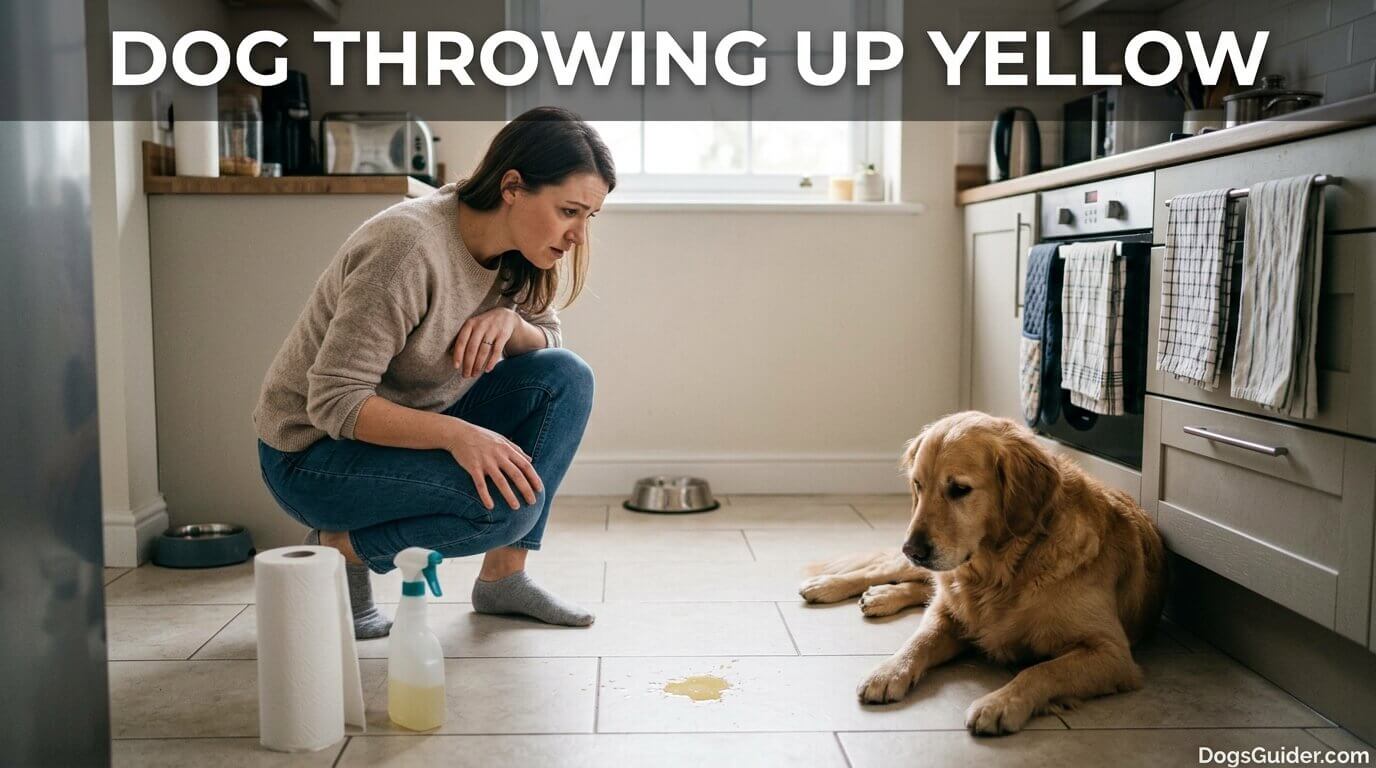
If your Dog Throwing Up Yellow vomit once, is otherwise acting normally, and is an adult in good health, these steps are commonly recommended. Always call your vet if you are unsure.
- Stay calm and observe. Note how often your dog vomits, what it looks like, and any other symptoms.
- Offer small amounts of water. Let your dog sip rather than gulp. Large amounts at once can cause more vomiting.
- Rest the stomach briefly. Many vets suggest withholding food for several hours in a healthy adult dog. Do not fast puppies, small or toy breeds, senior dogs, or dogs with diabetes or other conditions unless your vet tells you to.
- Reintroduce food gently. Offer a small portion of a bland diet, such as plain boiled chicken and rice, in small, frequent meals. Return to normal food slowly over a few days.
- Check for hazards. Look for missing items, chewed objects, spilled medication or plants your dog may have eaten.
- Do not give human medications. Many common anti-nausea or pain medicines are dangerous to dogs. Only use what your vet prescribes.
Red Flags: See a Vet Right Away
Do not wait if you notice any of the following:
- Vomiting more than once or twice, or for more than 24 hours
- Blood in the vomit, or vomit that looks like coffee grounds
- Lethargy, weakness, or collapse
- Bloated or painful belly
- Repeated retching with nothing coming up
- Diarrhoea along with vomiting
- Refusing food or water
- Pale or yellow gums or yellowing of the eyes or skin
- Possible swallowing of a toy, sock, bone or toxin
- Vomiting in a puppy, senior dog, small breed, or a dog with a medical condition
- Signs of dehydration such as dry gums or sunken eyes
If you think your dog has been poisoned, call an emergency vet or a pet poison helpline immediately.
What Will the Vet Do?
A vet will usually start with a physical exam and questions about diet, medications, and what your dog may have eaten. Depending on the findings, they may recommend:
- Blood and urine tests to check organs and hydration
- X-rays or ultrasound to look for blockages or other problems
- Faecal tests for parasites
- Fluids, anti-nausea medication, or a special diet
- Further testing if vomiting continues
How to Prevent Yellow Vomiting
- Feed on a regular schedule. Dogs that vomit bile in the morning often do better with a small meal late in the evening or an earlier breakfast.
- Split meals. Two or three smaller meals may suit dogs with sensitive stomachs better than one large meal.
- Change food slowly. Mix the new diet with the old one over 7 to 10 days.
- Avoid fatty table scraps. Fatty foods are a common trigger for stomach upset and pancreatitis.
- Dog-proof your home. Keep trash, small objects, toxic plants, and medications out of reach.
- Slow down, fast eaters. A slow-feeder bowl can help.
- Keep up with parasite control and vet visits.
Is Yellow Vomit Normal for Puppies?
Puppies can become dehydrated and drop their blood sugar quickly, so vomiting is more serious. Parasites and infections such as parvovirus can also cause vomiting.
Always contact a vet if a puppy vomits repeatedly or seems unwell.
Final Thoughts
A dog throwing up yellow is often just bile from an empty stomach, and a small change in feeding schedule can solve it. But yellow vomit can also be the first sign of pancreatitis, a blockage or organ disease. Watch how often it happens and how your dog behaves.
If vomiting repeats, blood appears, or your dog seems weak, painful or unwell, do not wait. A quick call to your vet is always the safer choice.
FAQs
1. Why is my dog throwing up yellow foam in the morning?
The most likely cause is bile building up in an empty stomach overnight. A small meal later in the evening may help. If it happens often, ask your vet to rule out other causes.
2. Is yellow vomit in dogs an emergency?
Not always. One episode in an otherwise normal adult dog may only need monitoring. It becomes an emergency if there is repeated vomiting, blood, lethargy, a swollen belly or suspected poisoning or swallowed objects.
3. Should I feed my dog after vomiting yellow bile?
Many vets suggest a short rest from food in healthy adult dogs, then small amounts of bland food. Puppies, small dogs and dogs with medical conditions should not be fasted without veterinary advice.
4. What is the difference between yellow and green vomit?
Both can contain bile. Green can also come from grass or other ingested material. The colour alone cannot tell you the cause, so look at the whole picture, including your dog’s behaviour.
5. How long can a dog vomit yellow before seeing a vet?
If vomiting happens more than once or twice, lasts over 24 hours, or comes with other symptoms, call your vet. Do not wait with puppies, seniors or dogs with health conditions.
6. Can grass make a dog throw up yellow?
Yes. Eating grass can irritate the stomach, and the vomit may include bile. Occasional grass eating is common, but frequent vomiting afterward should be checked.
7. Can I give my dog medicine for vomiting at home?
Do not give human medicines unless your vet has told you to. Some are unsafe for dogs and the dose depends on weight and health. Your vet can prescribe a safe option.
8. Can stress cause a dog to throw up yellow?
Stress, anxiety and sudden changes in routine can upset the stomach and lead to vomiting in some dogs. If it keeps happening, check with your vet to rule out medical causes first.

Sarah Mitchell has been raising French Bulldogs for over 9 years in Austin, Texas. After adopting her first Frenchie, Biscuit, she became passionate about helping new owners navigate the unique needs of the breed from breathing care to diet and heat safety. Sarah has worked closely with local veterinarians and attended the AKC National Championship three times as a breed enthusiast. Her guides focus on practical, real-world advice for American Frenchie owners.






One Comment