
Introduction
Loose stools one week, constipation the next, or a dog who is a few pounds too heavy: fiber is one of the first things vets and owners reach for. But the internet’s favorite answer, a spoonful of canned pumpkin, is only part of the story.
This guide covers the best dog high fiber foods, the difference between soluble and insoluble fiber, safe starting amounts by dog size, and the mistakes that can make digestive problems worse instead of better.
Why Fiber Matters for Dogs
Dogs don’t technically require fiber in their diet, but it can help with a range of issues. Vets and nutritionists commonly use it to help with chronic diarrhea, constipation, weight loss (fiber adds bulk and helps a dog feel full), and some cases of diabetes or high blood fats.
Fiber is also linked to healthy anal gland function in some dogs, because firmer, bulkier stool helps the glands empty naturally.
The first sign that a dog might benefit from more fiber is usually a stool problem: chronic loose stool or repeated constipation. Still, both symptoms can have other causes, so persistent problems deserve a vet visit before you start experimenting.
Soluble vs. Insoluble Fiber: The Difference That Matters

Not all fiber does the same job. Picking the right type is the difference between fixing a problem and creating a new one.
| Fiber Type | What It Does | Best For |
|---|---|---|
| Soluble (fermentable) | Dissolves in water to form a gel, slows digestion, absorbs excess water | Loose stool and diarrhea |
| Insoluble (non-fermentable) | Adds bulk and speeds movement through the gut | Constipation and stool bulk |
| A blend of both | Regulates stool in both directions | General digestive support |
Most dogs do best with a mix of both types, which is why many of the dog high fiber foods below are popular: they naturally contain both.
The Best Dog High Fiber Foods
The safest fiber boosters are simple whole foods that are already dog-friendly. Always introduce them gradually.
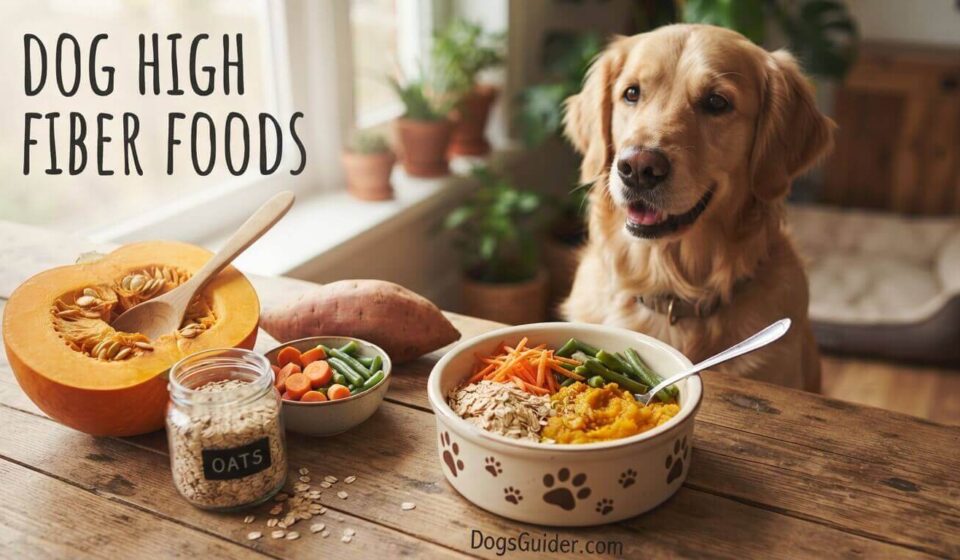
1. Plain Canned Pumpkin
Plain canned pumpkin is the most widely recommended natural fiber source for dogs. It contains both soluble and insoluble fiber, is gentle on the stomach, and can help with both loose stool and constipation.
Use 100% pure pumpkin only. Pumpkin pie filling contains sugar and spices such as nutmeg, which are not safe for dogs.
2. Green Beans
Green beans are one of the best dog high fiber foods for weight loss because they are low in calories, high in fiber, and well tolerated by most dogs.
Served plain and cooked or raw (chopped), they can replace part of a meal’s volume without adding many calories.
3. Sweet Potato
Cooked, plain sweet potato provides bulking insoluble fiber and is usually well tolerated. Remove the skin if your dog has a sensitive stomach, and never add butter, salt, or seasoning.
4. Carrots
Carrots are a crunchy, low-calorie option. Raw carrots are fine for healthy dogs, but steaming them makes the fiber easier to digest, which helps if your dog is already constipated.
5. Cooked Plain Oatmeal
Cooked oatmeal (no sugar, flavoring, or milk) provides soluble fiber and can be mixed into meals in small amounts. Skip it if your dog has a grain sensitivity.
6. Ground Flaxseed or Chia Seeds
Small amounts of ground flaxseed or chia can add fiber, but they are concentrated, so a little goes a long way. Check the amount with your vet first, especially for small dogs.
The Pumpkin Problem: It Has Less Fiber Than You Think
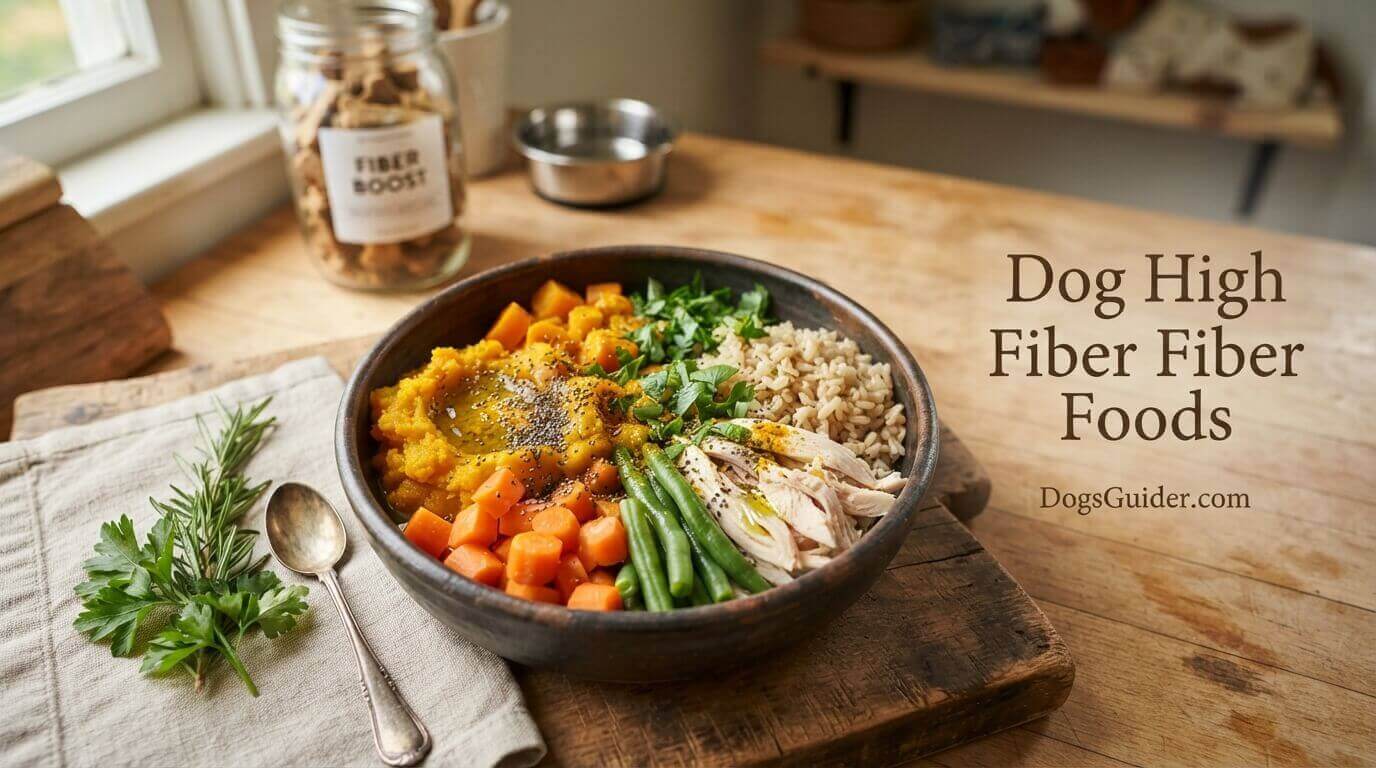
Here is something most owner guides skip. Veterinary nutritionists at Tufts University have pointed out that the amount of fiber in the spoonful of pumpkin people add to meals is tiny compared with what therapeutic high-fiber diets provide.
To match the fiber in one popular high-fiber prescription diet, a medium-sized dog would need close to 12 cups of pumpkin a day, which is obviously not practical.
That doesn’t mean pumpkin is useless. It is a gentle, cheap, and often helpful addition for mild issues. But if your dog needs a large, controlled amount of fiber for a medical reason, a properly formulated diet chosen with your vet will do a much better job than piling on pumpkin.
How Much High Fiber Food Is Safe?
There is no perfect universal dose, and different sources give different ranges. The starting amounts below, per meal, are widely cited for pumpkin or sweet potato. Start with about half of the suggested amount and work up over several days.
| Dog Size | Common Starting Amount (per meal) |
|---|---|
| Small (under 20 lbs) | 1/2 to 1 teaspoon |
| Medium (21 to 35 lbs) | About 1 tablespoon |
| Large (over 35 lbs) | About 2 tablespoons |
Some sources suggest larger amounts for diarrhea, but too much can cause the opposite problem. If in doubt, go smaller and ask your vet for a specific amount for your dog’s weight and condition.
Choosing a High Fiber Commercial Dog Food
If you prefer a ready-made option, look for foods designed for digestive health that list fiber sources such as pumpkin, beet pulp, or oats. Some tips for reading the label:
- Check crude fiber. Many nutrition sources consider about 6% or more crude fiber to be high compared with standard formulas, and higher still is common in weight-management or prescription diets
- Remember what “crude fiber” means. It is only an estimate and does not show total dietary fiber or the fiber type, so two foods with the same number can behave very differently
- Look at what fiber replaces. Some high-fiber foods lower protein or calories, which may not suit every dog, especially seniors who need calorie density
- Ask about prescription options. If constipation or another condition is frequent, your vet may recommend a therapeutic high-fiber diet
Which Dogs Benefit from High Fiber Foods?
- Overweight dogs can feel fuller on fewer calories when low-calorie, high-fiber foods like green beans replace part of the meal
- Dogs with mild constipation often improve with more fiber, more water, and more exercise
- Dogs with soft stools may firm up with soluble fiber such as pumpkin
- Dogs with certain medical conditions, such as diabetes, may be prescribed a fiber-rich diet by their vet
Be more careful with seniors who need higher calorie density, very small dogs, and any dog with a medical condition. Ask your vet before making changes.
How to Add High Fiber Foods to Your Dog’s Diet Step by Step
A gradual approach is the safest way to introduce any of the dog high fiber foods above:
- Pick one food only. Add a single item at a time so you can tell what is helping or upsetting your dog
- Start with about half the suggested amount and mix it into your dog’s regular meal
- Watch stool quality for 2 to 3 days before increasing anything
- Increase slowly if stool is improving and your dog is comfortable, and stop increasing if gas or bloating appears
- Keep fresh water available at all times, and encourage a longer walk, since movement also helps digestion
If two weeks of careful adjustments don’t improve things, it’s time to stop guessing. Your vet can check for underlying causes and tell you whether dog high fiber foods are the right tool or whether something else is going on.
Common Mistakes When Adding Fiber
- Adding too much, too fast. A sudden increase can cause gas, bloating, diarrhea, or constipation
- Not increasing water. Fiber absorbs water, so a dog who doesn’t drink enough can end up more constipated
- Using pumpkin pie filling. The sugar and spices are unsafe for dogs
- Giving flavored fiber supplements. If a vet suggests an unflavored psyllium-type supplement, avoid flavored products, which may contain xylitol, a sweetener that is toxic to dogs
- Treating a serious problem at home. Fiber can’t solve pain, blockages, or ongoing illness
Signs You’re Giving Too Much Fiber
Watch your dog’s stool and behavior after any change. Reduce the amount and talk to your vet if you notice more gas, bloating, stool that is too loose or too hard, or reduced appetite.
Very high fiber can also interfere with nutrient absorption, which is another reason not to overdo it.
When to Call Your Vet
Skip home remedies and see a vet if your dog is in pain, vomiting, lethargic, refusing food, straining without producing stool, has blood in the stool, or hasn’t passed stool in two days. Ongoing or recurring diarrhea also needs a proper diagnosis.
Sources Consulted
- Whole Dog Journal, “Dietary Fiber for Dogs”
- American Kennel Club, “Can Pumpkin Help With Dog Diarrhea?”
- Tufts University Petfoodology, “The Problem with Pumpkin”
- Bestie Paws Hospital, “20 Best High Fiber Foods for Dogs”
- Dr. Buzby’s ToeGrips, “Canned Pumpkin for Dogs: A Veterinarian’s Guide”
Final Thoughts
The right dog high fiber foods can help with soft stools, constipation, and weight control, but the details matter: choose the right type of fiber, start small, keep water available, and remember that pumpkin is a gentle helper rather than a cure-all.
If the problem doesn’t improve or keeps returning, your vet can find the cause and, if needed, recommend a diet formulated to deliver the fiber your dog actually needs.
FAQs
1. What are the best dog high fiber foods?
Plain canned pumpkin, green beans, cooked sweet potato, steamed carrots, and cooked plain oatmeal are commonly used dog high fiber foods. Pumpkin is the most widely recommended because it contains both soluble and insoluble fiber.
2. Is pumpkin good for both diarrhea and constipation?
Yes, in mild cases. Its soluble fiber can firm loose stool, while its insoluble fiber adds bulk for constipation. Use plain pumpkin, add it gradually, and make sure your dog has plenty of water.
3. How much pumpkin should I give my dog?
A common starting point is about a half to one teaspoon for small dogs, one tablespoon for medium dogs, and two tablespoons for large dogs per meal. There is no perfect dose, so start smaller and check with your vet.
4. Can too much fiber be bad for dogs?
Yes. Too much fiber can cause gas, bloating, diarrhea, or constipation, and very high fiber can interfere with nutrient absorption. Increase slowly and watch stool quality.
5. Which high fiber foods help dogs lose weight?
Green beans are a popular choice because they are low in calories and high in fiber, so they add volume to meals. Always combine this with portion control and exercise.
6. Is Metamucil safe for dogs?
Only with your vet’s approval, and only unflavored powder without xylitol or other harmful additives. Never use a flavored or sweetened product, and get the dose from your vet.

Sarah Mitchell has been raising French Bulldogs for over 9 years in Austin, Texas. After adopting her first Frenchie, Biscuit, she became passionate about helping new owners navigate the unique needs of the breed from breathing care to diet and heat safety. Sarah has worked closely with local veterinarians and attended the AKC National Championship three times as a breed enthusiast. Her guides focus on practical, real-world advice for American Frenchie owners.


[…] less obvious news is that the best dog food for skin allergies depends on what your dog is actually reacting to, and guessing wrong can cost you […]