Can French Bulldogs Swim? What Every Owner Must Know First

Can French Bulldogs swim? It is a fair question, especially in summer, when owners look for exercise that seems gentle on joints. Many start by checking how much exercise a French Bulldog needs and wonder if a pool could help.
For most French Bulldogs, the honest answer is no, not safely on their own. Their body shape works against them in water from the very first paddle.
This guide explains why Frenchies struggle, the risks owners underestimate, how to handle water safely if you still go near it, and better ways to keep them cool and active.
Quick Answer: Most French Bulldogs cannot swim safely. Their flat faces, heavy fronts, and short legs make them tire fast and sink headfirst. Never leave a Frenchie near deep water unsupervised. Use a well fitted life jacket, stay in shallow water, and prefer splash based alternatives.
Why French Bulldogs Are Poor Swimmers
French Bulldogs were bred for companionship, not for water work. Almost every feature that makes them look distinctive makes swimming harder and less safe.
A Heavy Front and a Sinking Rear Balance Problem
A Frenchie carries a big head, broad chest, and dense muscle on a compact frame. That weight sits at the front of the body, where it pulls the head down.
In water, the front end sinks while the back end floats higher. The dog must paddle constantly just to keep its nose above the surface.
Most swimming dogs hold a fairly level position with modest effort. A French Bulldog fights physics with every stroke, and that fight ends quickly.
Short Legs That Cannot Paddle Hard Enough
Swimming is paddling, and paddling needs leverage. French Bulldogs have short, stubby legs that move a lot of water for very little forward push.
They tire far faster than longer legged breeds. A distance that looks trivial from the pool edge can be more than a Frenchie can manage.
Fatigue is the real danger point. A tired Frenchie cannot hold its head up, and things go wrong in seconds rather than minutes.
A Flat Face That Struggles to Breathe
French Bulldogs are brachycephalic, meaning they have short skulls, narrow airways, and soft tissue that partly blocks airflow. Breathing is already work for them on land.
Swimming demands fast, steady breathing with the mouth near the waterline. For a flat faced dog, splashes and waves easily reach the nose and mouth.
A dog that cannot breathe freely cannot swim calmly. Panic follows, and panic makes every other problem worse at the same time.
Can French Bulldogs Learn to Swim?
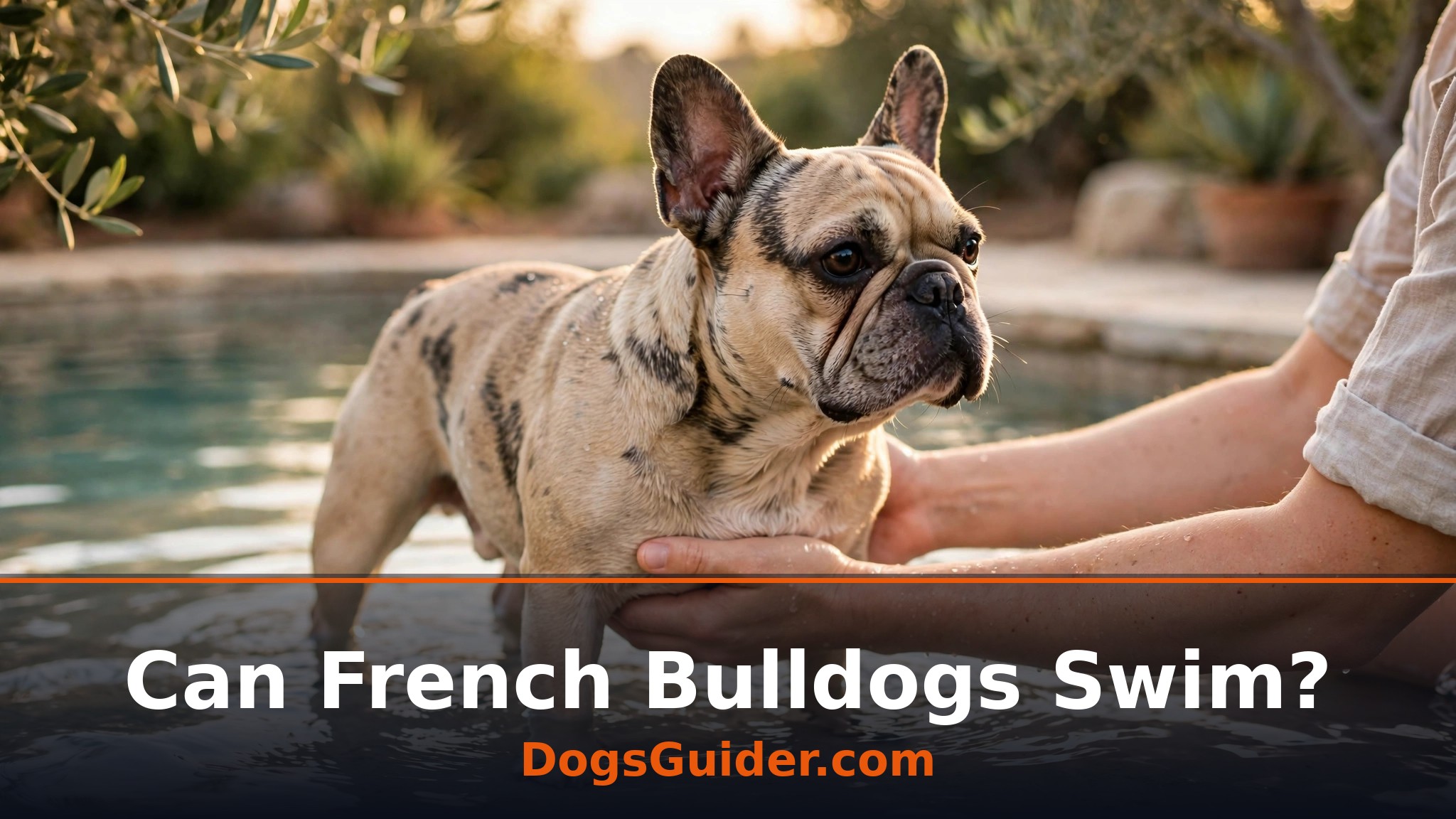
Some French Bulldogs can paddle briefly, especially in calm, shallow water with support. That is not the same as being able to swim safely and reliably.
Training cannot change the skull shape, leg length, or weight distribution causing the problem. It can only improve confidence, which sometimes makes a dog bolder near water, not safer.
Treat any paddling Frenchie as a non swimmer wearing enthusiasm. Keep sessions short, shallow, supported, and always within your arm’s reach.
The Real Dangers of Water for Frenchies
Owners often picture a dog calmly swimming or calmly sinking. Real accidents are faster, quieter, and easier to miss than that picture suggests.
Silent slipping under. A Frenchie that slips off a step or dock edge may go under with little splashing or noise, especially once tired.
Panic and exhaustion. Struggling burns energy fast. A panicked dog stops paddling effectively, swallows water, and sinks lower with each breath.
Water in the airways. Inhaled water can cause serious breathing problems, sometimes worsening hours later. Coughing or distress after swimming always needs veterinary attention.
Pool chemicals and natural water hazards. Chlorine irritates eyes and stomachs. Lakes and rivers add currents, slippery banks, hidden drops, and bacteria to the list.
Overheating around water. A sunny poolside is still hot. Frenchies overheat quickly, and our guide to French Bulldog heat stroke explains why that risk deserves respect.
Safety Rules Before Any Water Contact
If water is part of your dog’s life at all, these rules are not optional extras. They are the minimum standard for this breed.
- Never leave a French Bulldog unsupervised near water, not for a minute, not even a dog that has paddled before
- Fit a proper canine life jacket before any pool, lake, boat, or beach activity, every single time
- Block pool access with a fence or secure cover, because most accidents happen outside planned swim time
- Stay within arm’s reach in the water, with a hand ready to support the chest and belly
- Keep sessions very short, ending while the dog is still calm and energetic, never at exhaustion
- Never throw or force a Frenchie into water, and never push a frightened dog deeper
How to Introduce a Frenchie to Water Safely
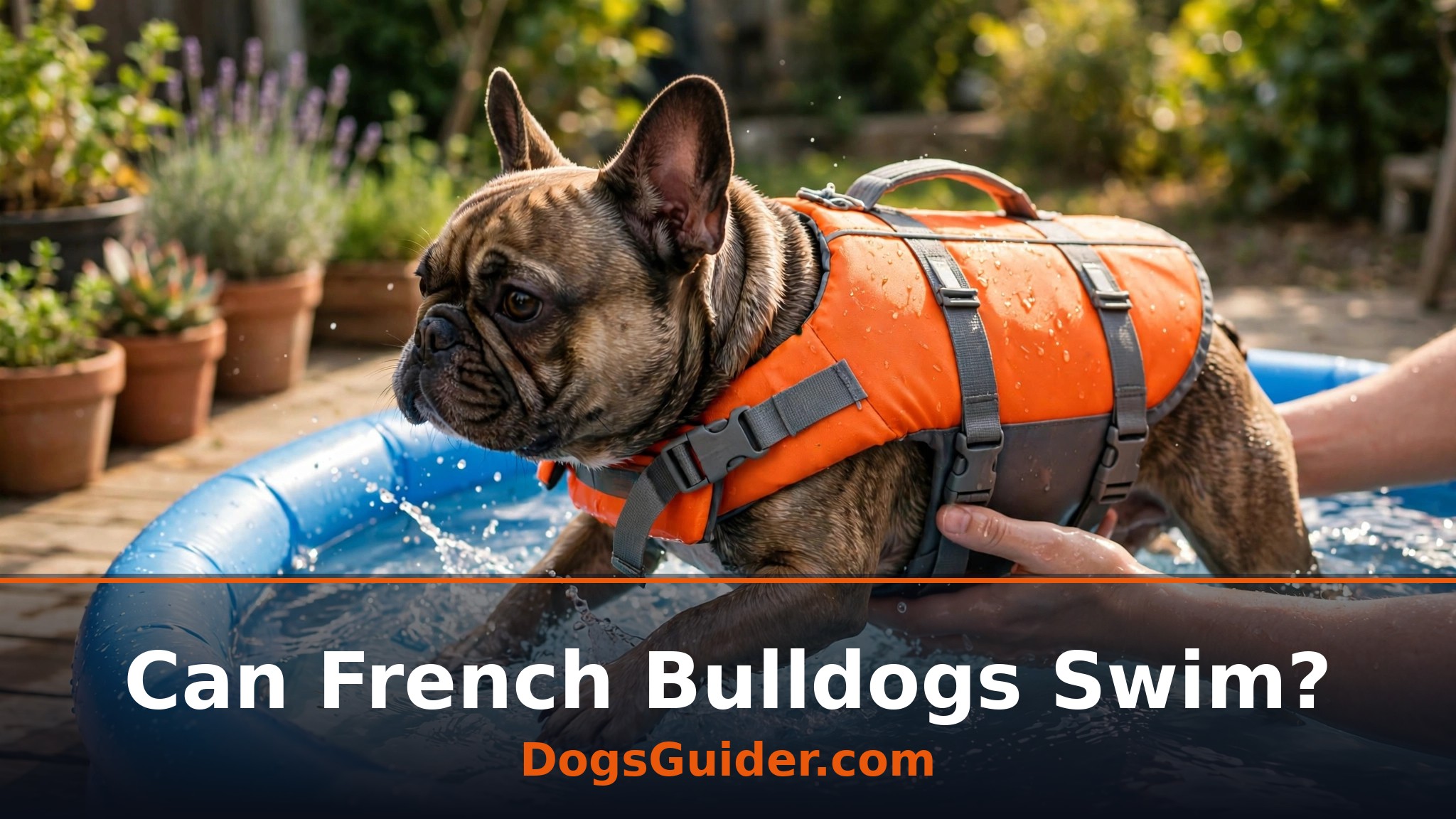
Some Frenchies enjoy shallow water and gentle splashing. If yours is curious, a careful introduction keeps that enjoyment on safe ground.
Step 1: Start on dry land with the jacket. Let your dog wear the fitted life jacket around the house and yard first, with treats and praise.
Step 2: Choose truly shallow water. A wide step, a gently shelving shore, or a few inches in a paddling pool is the right starting depth.
Step 3: Let the dog choose. Stand in the shallows and invite, never drag. Many Frenchies happily wet their paws and belly and want nothing deeper. That is enough.
Step 4: Support the body. Keep one hand under the chest and belly so the dog stays level and its head stays comfortably clear of the water.
Step 5: Watch breathing constantly. Heavy panting, wide eyes, frantic paddling, or a low head position all mean stop now, calmly and without fuss.
Step 6: End early and dry off. Lift the dog out before fatigue, rinse off chemicals or lake water, and dry the skin folds and ears thoroughly.
Choosing and Fitting a Life Jacket
A life jacket is essential safety equipment for this breed, but only when it genuinely fits. A loose jacket can slip, tilt, or trap a struggling dog.
Look for a strong top handle. You need to lift or guide your dog instantly, and a sturdy grab handle makes that possible without fumbling.
Look for head support. Some jackets include a front float that helps keep the chin up. For a heavy headed breed, that feature matters a lot.
Check the fit properly. The jacket should be snug without digging in, with secure straps that cannot slide over the hips or shoulders in the water.
Pick a bright color. Visibility helps you track your dog in murky water, low light, or a busy pool area.
Test the jacket in shallow water first, with your hand still supporting the dog. Equipment confidence comes from practice, not from the packaging.
Safer Alternatives Frenchies Actually Enjoy
Most owners want two things from swimming: exercise and cooling. French Bulldogs can get both, in ways that suit their bodies far better.
A shallow paddling pool. A few inches of water lets a Frenchie splash, sit, and cool its belly while its feet stay firmly on the bottom.
Sprinklers and splash pads. Moving water without depth gives the fun of getting wet with almost none of the risk of a pool or lake.
Short, shaded walks in cooler hours. Gentle walking remains the foundation of Frenchie fitness. Early morning and evening routes protect breathing and paws alike.
Indoor play and food puzzles. On very hot days, training games and puzzle feeders tire the mind without stressing the body or the airways.
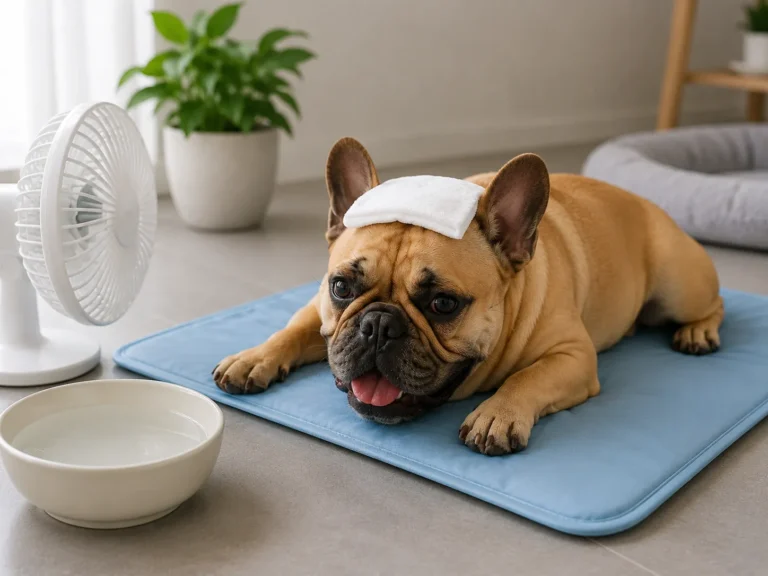
Our guide on how to cool down a French Bulldog covers cooling methods that are safe for flat faced dogs in detail.
Pool, Beach, and Lake Rules
At a pool, rinse your dog before and after, watch for slippery decks, and teach the location of the steps while you are supporting the dog. Never rely on the dog finding them alone.
At the beach, respect heat, hot sand, and waves. Even small waves can knock a short dog off balance and push water into its face. Keep to the water’s edge.
At lakes and rivers, avoid currents entirely, check entry points for sudden drops, and skip water that looks stagnant or has visible algae growth.
On boats, the life jacket stays on the whole trip, no exceptions. A fallen Frenchie in open water has almost no margin for delay.
Signs of Trouble and What to Do
Act immediately if your dog struggles, paddles frantically, holds its head low, or slips under. Lift the dog out with the jacket handle and keep it calm and warm.
Call a vet urgently, or go to an emergency clinic, if you notice any of the following after water exposure:
- Coughing, gagging, or noisy breathing after leaving the water
- Difficulty breathing, blue tinged gums, or extreme panting that does not settle
- Unusual tiredness or weakness in the hours after swimming
- Foam at the mouth, disorientation, or collapse at any point
Do not wait to see if breathing problems improve on their own. Water in the lungs can worsen with time, and early treatment gives the best outcome.
The Bottom Line
French Bulldogs are poor swimmers by build: flat faces, heavy fronts, and short legs leave them no safe margin in deep water. Never force a Frenchie to swim and never leave one near water alone.
With a fitted life jacket, shallow water, and constant supervision, some enjoy splashing. For exercise and cooling, safer options work better.
References
- American Kennel Club (AKC), guidance on dog swimming safety and breeds that struggle in water. https://www.akc.org/
- PetMD, veterinary guidance on brachycephalic breeds, breathing limits, and water safety. https://www.petmd.com/
- VCA Hospitals, client education on drowning risks and water safety for dogs. https://vcahospitals.com/
- RSPCA, advice on keeping dogs safe around pools, beaches, and open water. https://www.rspca.org.uk/
- Cornell University College of Veterinary Medicine, resources on brachycephalic airway syndrome in dogs. https://www.vet.cornell.edu/
FAQs
1. Can French Bulldogs swim at all?
Some can paddle briefly with support in shallow water, but they are not natural or safe swimmers. Their build makes them tire and sink quickly. Always use a life jacket and stay within arm’s reach.
2. Why can’t French Bulldogs swim like other dogs?
Three features combine against them: a heavy head and chest that pull the front down, short legs that paddle weakly, and a flat face that makes breathing hard. Together they leave almost no safety margin.
3. Do French Bulldogs need a life jacket in a shallow pool?
Yes, if the water can cover their body or they could slip into deeper sections. A fitted jacket with a handle and head support adds critical safety. In ankle deep splash water, close supervision matters most.
4. Can I teach my French Bulldog to swim without a jacket?
No. Training cannot fix the body shape behind the risk, and confidence can make a dog bolder without making it safer. Keep the jacket on for any water beyond paw depth, every time.
5. What should I do if my Frenchie falls into a pool?
Get the dog out immediately using the jacket handle or by supporting the chest and belly. Then watch closely for coughing, noisy breathing, or unusual tiredness, and contact a vet urgently if any appear.
6. Are French Bulldogs allowed at the beach?
They can enjoy the shoreline with shade, fresh drinking water, and short visits in cooler hours. Keep them out of waves and deeper water, and watch for overheating on hot sand and in strong sun.
7. What is a safer way to cool my Frenchie in summer?
Use a shallow paddling pool, sprinklers, shade, cool indoor rest, and short walks in cooler hours. These cool and entertain a French Bulldog without the drowning and breathing risks of swimming.

Sarah Mitchell has been raising French Bulldogs for over 9 years in Austin, Texas. After adopting her first Frenchie, Biscuit, she became passionate about helping new owners navigate the unique needs of the breed from breathing care to diet and heat safety. Sarah has worked closely with local veterinarians and attended the AKC National Championship three times as a breed enthusiast. Her guides focus on practical, real-world advice for American Frenchie owners.