
Introduction
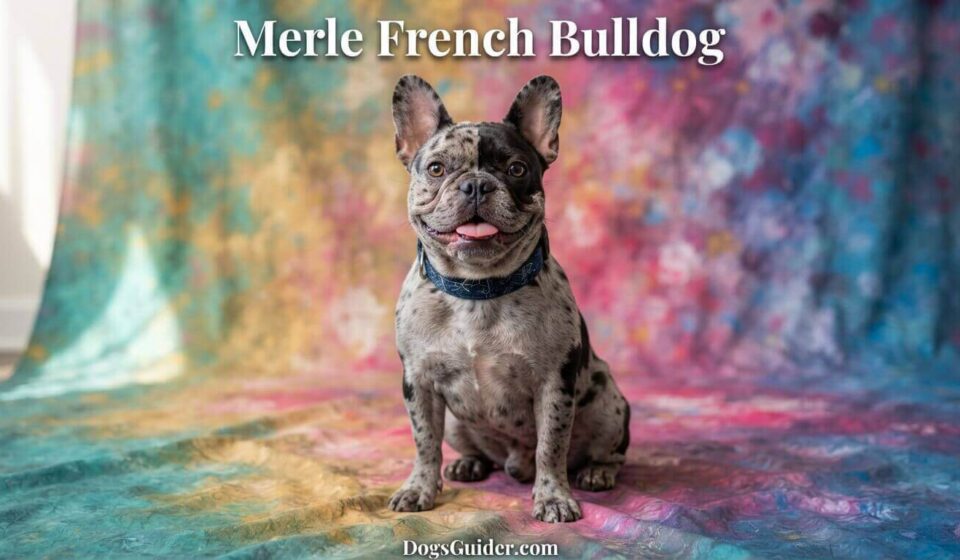
Type “Merle French Bulldog” into Instagram and the algorithm will hand you an endless scroll of marbled coats and pale, glassy-eyed dogs that look almost airbrushed.
What that scroll won’t tell you is that the color you’re admiring didn’t come from the French Bulldog at all. It came from somewhere else, and understanding that origin matters more than most buyers realize before they wire a $7,000 deposit.
This guide isn’t written to talk you out of a merle Frenchie. It’s written so you walk into that decision knowing exactly what you’re paying for genetically, ethically, and financially.
The Merle Gene Was Never Part of the French Bulldog
Merle French Bulldog rescue and health organizations have been saying this for years, quietly and consistently: the merle allele does not occur naturally in purebred French Bulldog bloodlines.
It was introduced deliberately, through crossbreeding most commonly with Chihuahuas, a breed where merle is a known, established color, and then bred back into French Bulldog lines across several generations to dilute the outside blood while keeping the coat pattern.
That’s the practical reason the AKC won’t register merle as a recognized French Bulldog color, no matter how “purebred-looking” the resulting puppy is on paper.
It’s also why veterinary geneticists and breed clubs tend to describe merle Frenchies as a manufactured trend rather than a naturally occurring variation in the same category as other so-called “fad colors” that have flooded the market in the last decade.
None of this means a merle puppy is automatically unhealthy. It means the coat you’re paying a premium for exists because someone engineered it in, not because nature produced it.
Single Merle and Double Merle Are Not the Same Risk
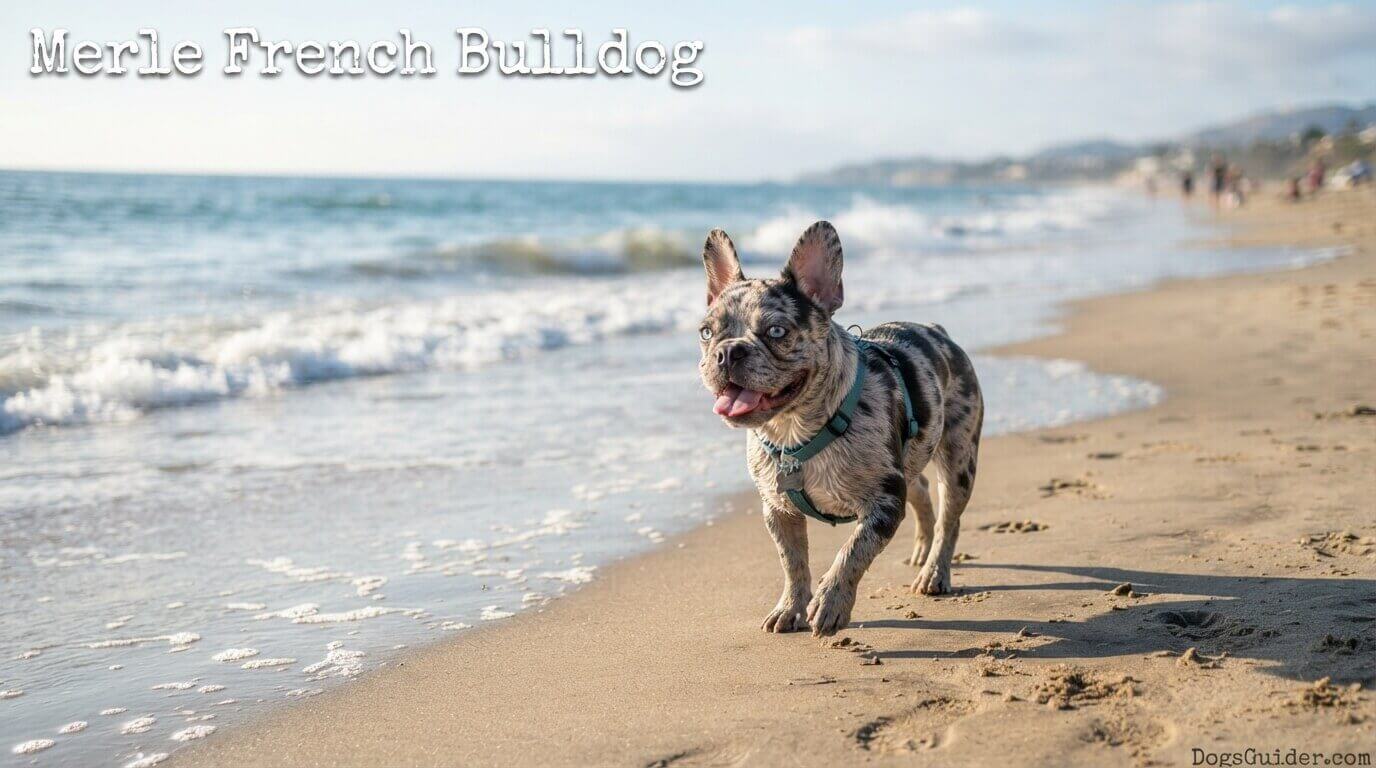
Merle French Bulldog behaves as a dominant gene; one copy from either parent is enough to produce the pattern. The danger isn’t the gene itself. It’s what happens when two merle carriers are paired together.
When a puppy inherits two copies of the merle gene, one from each merle parent, it’s classified as a double merle. The same pigment-suppressing mechanism that creates the marbled coat also interferes with melanocytes involved in inner-ear and eye development.
In practice, that means double merle puppies carry a documented, significantly elevated risk of congenital deafness, vision impairment, and structural eye defects like microphthalmia.
A single-merle puppy one merle parent, one non-merle parent doesn’t carry that same baseline risk simply by virtue of having the pattern. This distinction is the one piece of information every buyer needs before they even look at photos: ask which pairing produced the litter before you ask about price.
Reading the Coat: Color and Eye Variations
Because the Merle French Bulldog gene dilutes pigment randomly rather than uniformly, it can sit over nearly any base color the breed carries blue, lilac, chocolate, fawn and no two dogs come out patterned the same way.
The most commercially sought-after combinations right now are lilac merle and merle-and-tan, largely because the dilution shows up most dramatically against those lighter base coats.
Eye color follows the same pigment logic. Partial blue eyes, fully blue eyes, and “split” eyes one blue iris, one brown are common in merle Frenchies for the same genetic reason the coat mottles.
It’s a striking look, and it’s also a visible marker of the same pigment disruption that, in a double merle, extends into structures the eye needs to actually function.
What You’re Actually Paying For
Merle French Bulldogs sit at the top of the breed’s price ladder, and the number reflects rarity and breeding complexity more than anything else:
- Common merle combinations (blue or fawn base): roughly $5,000–$8,000
- Rare combinations (lilac merle, merle-and-tan): $8,000–$10,000 and up
- Exceptional eye coloring or documented health-tested lineage: often exceeding $10,000
A merle puppy listed well under $5,000 should raise questions, not excitement. Proper genetic screening,
BAER hearing tests, and veterinary eye exams cost real money; a breeder skipping that step can afford to undercut the market, and that’s exactly the corner they’re cutting.
Five Questions That Actually Separate a Responsible Breeder from a Backyard One
Photos and price tags tell you almost nothing. These questions do:
- “Were both of this puppy’s parents merle, or just one?” This single answer determines whether double-merle risk even applies.
- “Can you share the BAER hearing test results?” A breeder who’s done the work will have paperwork ready, not a promise that testing is “in progress.”
- “Has a vet examined the puppy’s eyes specifically?” Structural abnormalities are often visible early to a trained eye.
- “Can we do a live video call with the puppy and both parents?” Hesitation here is one of the clearest red flags in this price bracket.
- “Do you have past buyers I can talk to?” An established breeder won’t flinch at this request; a fly-by-night operation usually will.
Bottom Line
A single-merle French Bulldog, bred by someone who actually tests for what matters, can live a completely normal, healthy life.
The coat pattern isn’t the danger; the pairing behind it is. Ask about the parents before you ask about the price, and let a breeder’s willingness to answer that question decide whether you move forward.
FAQs
1. Is a Merle French Bulldog purebred?
Not in origin. The merle gene entered French Bulldog lines through deliberate crossbreeding, most commonly with Chihuahuas, rather than occurring naturally within the breed.
2. Why won’t the AKC register merle as a French Bulldog color?
Because the trait didn’t come from within the breed. Since merle was introduced through outcrossing, it falls outside the official breed standard and isn’t recognized for conformation purposes.
3. Will a Merle French Bulldog definitely have hearing or vision problems?
No. That elevated risk is specific to double merle puppies, born when both parents carry the gene — not to single-merle dogs from a merle x non-merle pairing.
4. How do I find out if a puppy is a double merle before buying?
Ask the breeder directly whether both parents were merle, and request DNA testing, BAER hearing test, and veterinary eye exam documentation before committing.
5. Why do Merle French Bulldogs cost so much more than standard colors?
Rarity, demand, and the cost of responsible testing. Reputable breeders invest in genetic screening specifically to avoid double-merle pairings, and that cost is reflected in the price.
6. Is it ever acceptable to breed two Merle French Bulldogs together?
No, responsible breeders avoid this entirely. Merle x merle pairings are the direct cause of double-merle puppies and the associated health risks.

Sarah Mitchell has been raising French Bulldogs for over 9 years in Austin, Texas. After adopting her first Frenchie, Biscuit, she became passionate about helping new owners navigate the unique needs of the breed from breathing care to diet and heat safety. Sarah has worked closely with local veterinarians and attended the AKC National Championship three times as a breed enthusiast. Her guides focus on practical, real-world advice for American Frenchie owners.


[…] the dilution gene combines with the merle pattern, you get a Blue Merle French Bulldog: a marbled, silvery-blue coat with darker slate patches scattered throughout. This is currently one […]
[…] a Blue Merle French Bulldog requires both the dilute gene and the merle gene simultaneously, this color combination is rarer […]