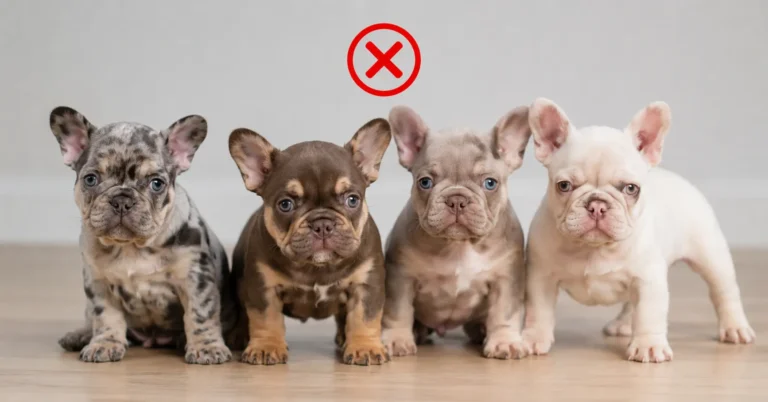
French Bulldog Types: Colors, Coats & Rare Varieties (2026)
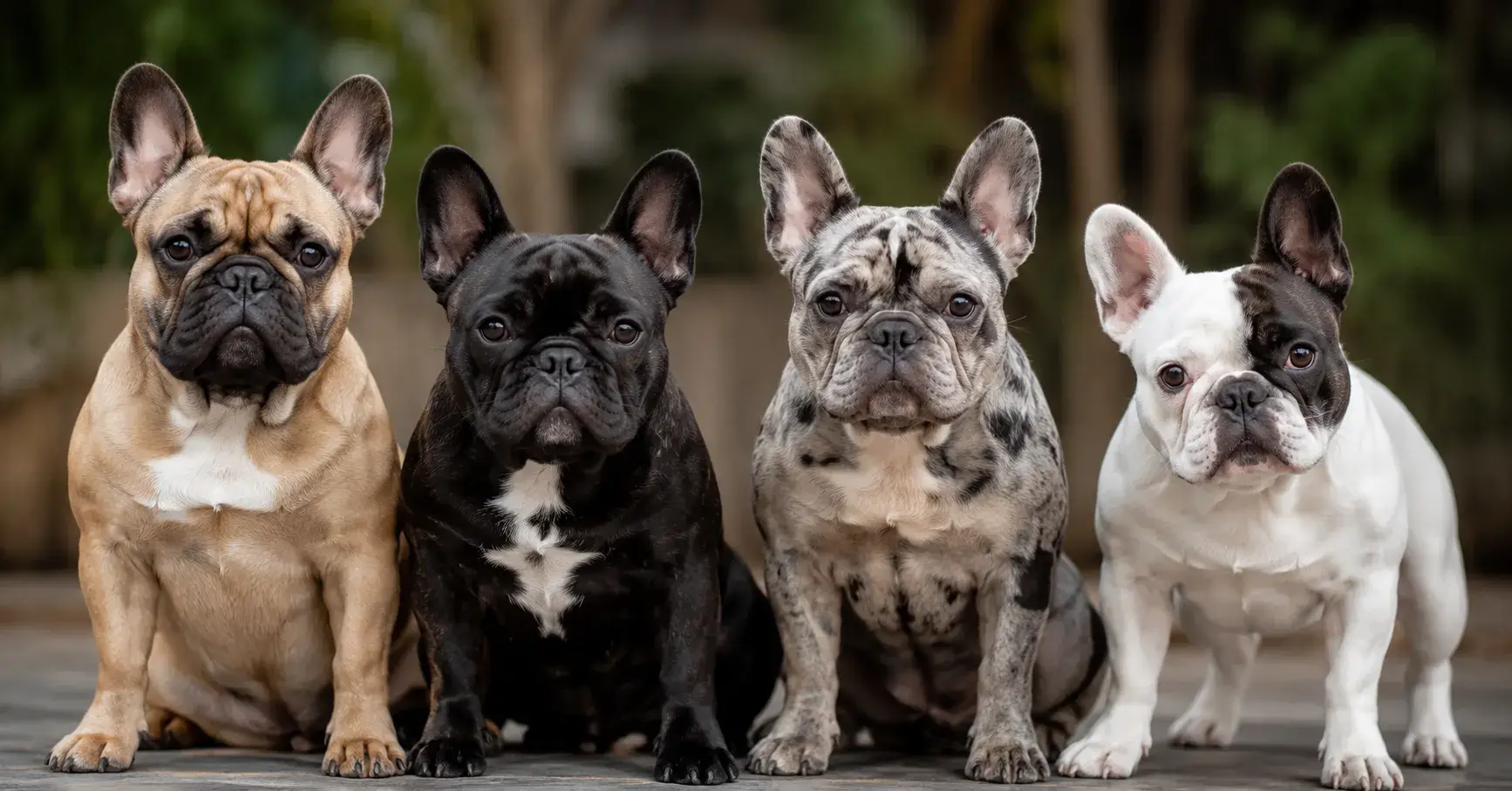
Frenchie’s fall into two camps: standard colors, which the AKC accepts, including brindle, fawn, cream, pied, and white, and rare ones like blue, lilac, merle, and chocolate. Rare types cost a lot more, but they often come with health baggage most buyers don’t expect.
No two Frenchies look quite alike, and that’s part of the fun. Some are classic brindles; others show up in rare shades like blue or lilac. In this guide, we’re covering every French Bulldog type out there, the common ones, the rare ones, and which colors might come with a bigger vet bill down the road.
What Does “Type” Mean in French Bulldogs?
When people talk about French Bulldog ‘types,’ they usually mean coat color, think brindle, fawn, blue, merle, stuff like that. Coat length matters too. The Fluffy Frenchie, for example, has noticeably longer fur than the typical smooth-coated dog.
One thing ‘type’ does not mean is size. There’s no such thing as a mini Frenchie or a standard-size Frenchie; that’s just marketing talk some breeders use. So here, when we say types, we’re talking color and coat, nothing else.
AKC-Recognized (Standard) French Bulldog Types
These five are the colors the AKC actually signs off on. If you’re going through a reputable breeder or thinking about showing your dog someday, stick with these; they’re the most common, the easiest to find, and they don’t come loaded with the health baggage that rare colors do.
Want to see the exact shades and how they compare side by side? Check out our complete AKC standard color chart for a closer look
Brindle
Brindle is what most people picture when they hear ‘Frenchie.’ It’s that tiger-stripe mix of black over fawn, red, or cream. Every brindle dog’s pattern is a little different, which is honestly part of the charm. You’re looking at roughly $3,900 to $5,500.
Fawn
Fawn Frenchies wear a warm tan-to-reddish-gold coat, usually with a black mask across the face that’s the giveaway. Prices range from $3,500 to $12,000, depending on the shade and who’s selling.
Cream
Cream is about as light as standard colors go, almost ivory, not quite white. What makes it ‘cream’ and not ‘white’ is the dark pigment: black nose, black lips, dark eyes. Expect somewhere around $2,500 to $5,500.
Pied
Pied dogs are mostly white with patches of color thrown in black, fawn, or brindle. No two pied Frenchies match, since the patches land differently every time. Prices generally run $4,600 to $6,000, with females often on the higher end.
White
True white Frenchies still carry dark pigment around the nose, lips, and eyes; that’s how you tell them apart from cream or platinum dogs. It’s rarer than the other standard colors, so you’re usually looking at $5,500 and up.
Rare & Exotic French Bulldog Types
None of these colors is AKC-approved, and breeders know it; that’s exactly why they charge so much for them. But here’s the thing: rare doesn’t mean safe. Most of these shades trace back to diluted genes, and dilution tends to bring health baggage. Good to know before you get talked into one.
Blue French Bulldog
That steel-gray coat everyone loves comes from a diluted black gene. Blue Frenchies aren’t cheap, usually $5,000 and up, and some sellers push past $10,000. The same gene responsible for the color has also been linked to skin conditions like alopecia, so it’s more than just a pretty coat.
Lilac French Bulldog
Lilac happens when blue and chocolate genes show up together, giving the coat that soft purple-gray look. It’s tough to breed on purpose, so you’ll mostly find it through a handful of specialty breeders, a lot of them out West. Budget for $4,500 to $5,500, give or take
Merle French Bulldog
Merle coats have that marbled, patchy look, usually paired with striking blue eyes. Here’s what nobody tells you upfront: breed two merles together, and you risk puppies born deaf or blind. Any breeder who actually knows what they’re doing avoids that pairing, but plenty don’t, so ask before you buy.
Chocolate French Bulldog
Chocolate coats run light tan to deep brown, and both parents have to carry the chocolate gene for it to show up. It’s a true recessive, which is exactly why it doesn’t happen often. Expect somewhere around $4,500 to $5,000
Isabella French Bulldog
A lot of breeders call Isabella the rarest color in the breed, a grayish, liver-tinted coat that only shows up when blue and chocolate genes stack together. Because it’s so hard to produce on purpose, prices start around $9,000 and can go well past that.
Platinum French Bulldog
Platinum’s a fairly new one, pale, silvery-blue, almost has a shine to it. Not many breeders have gotten their hands on it yet, and that scarcity keeps prices sitting around $8,000 to $9,000, sometimes higher.
Sable French Bulldog
Sable starts with a fawn base, then gets black-tipped hairs layered through it, mostly along the back and head. It gives off a smoky, shaded effect instead of a single flat color. Usually runs $4,200 to $5,300.
Black French Bulldog
Solid black, no brindle stripes mixed in, is rarer than people think. A few have a small white patch on the chest and still count as solid black, not brindle. Prices land around $4,800 to $5,000.
Fluffy French Bulldog
Fluffy’s not a color at all, it’s a coat type. A recessive gene gives these dogs longer, softer fur instead of the usual short coat, and yeah, they end up looking like little teddy bears. That gene is hard to come by, which is why Fluffy Frenchies often go for $10,000 or more.
Comparison Table All French Bulldog Types at a Glance
Want the short version? Here’s every type from this guide in one table, so you can compare them at a glance instead of scrolling through each section.
| Type | AKC Recognized? | Price Range | Rarity | Health Notes |
| Brindle | Yes | $3,900 – $5,500 | Common | No added risk |
| Fawn | Yes | $3,500 – $12,000 | Common | No added risk |
| Cream | Yes | $2,500 – $5,500 | Common | No added risk |
| Pied | Yes | $4,600 – $6,000 | Common | No added risk |
| White | Yes | $5,500+ | Uncommon | Minor skin/ear sensitivity |
| Blue | No | $5,000 – $10,000+ | Rare | Skin issues, alopecia |
| Lilac | No | $4,500 – $5,500 | Rare | Skin sensitivity |
| Merle | No | Varies widely | Very rare | Deafness/blindness risk |
| Chocolate | No | $4,500 – $5,000 | Rare | No major added risk |
| Isabella | No | $9,000+ | Extremely rare | Skin sensitivity |
| Platinum | No | $8,000 – $9,000 | Extremely rare | Skin sensitivity |
| Sable | No | $4,200 – $5,300 | Rare | No major added risk |
| Black | No | $4,800 – $5,000 | Rare | No major added risk |
| Fluffy | No | $10,000+ | Extremely rare | No major added risk |
Why Are Rare-Colored Frenchies So Expensive?
Genetics, mostly. Colors like blue, lilac, and merle only show up when both parents carry the right combination of genes, so breeders can’t just pair any two dogs and hope for the best. It takes planning and a fair number of failed attempts along the way.
Then factor in the real costs: Frenchies almost always need C-sections to give birth, plus genetic testing and vet care on top of that. And once you add in how badly people want the “rare” look, prices climb even higher.
Health Risks Linked to Certain French Bulldog Colors
Here’s something a lot of people don’t realize: coat color in Frenchies isn’t just about looks; it’s wired into their genetics, and it can affect their health. Merle is the one to really pay attention to. Breed two merle dogs together, and you’re rolling the dice on puppies that end up deaf, blind, or both, because that gene interferes with how pigment develops in the eyes and ears.
Dilute colors blue, lilac, and Isabella come with their own baggage too, mostly skin trouble like alopecia, dryness, and irritation that keep coming back. None of this guarantees a rare-colored Frenchie will have issues, but it’s a fair question to ask any breeder before you hand over a deposit.
If you want the full picture before you commit to a color, here’s our breakdown of the French Bulldog colors most experts recommend steering clear of.
How to Choose the Right Type for You
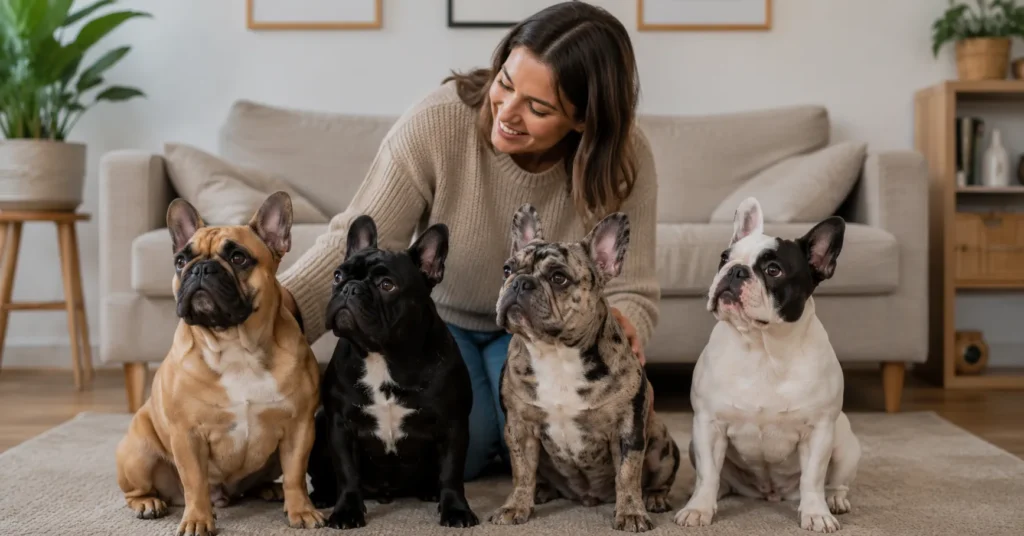
Color should really be the last thing you decide on, not the first. Start with what you can actually afford. Standard colors, brindle, fawn, cream, and pied, typically cost a couple of thousand less than something like Isabella or platinum, and you skip all the extra health worries that come baked into dilute genes. If you’ve got your heart set on a specific look, that’s fair enough; plenty of people do. Just go in prepared. Ask the breeder for genetic testing and health clearances before any money changes hands, especially if merle is involved, since that’s the color where a bad pairing can leave puppies deaf or blind.
Think past the photos, too. A fluffy coat means more brushing than a short, smooth one. Some dilute colors are a little more sensitive on the skin and ears, depending on the bloodline. None of that should scare you away from a dog you love. Just know what you’re signing up for before you bring the puppy home, not after the fact.
The biggest mistake people make is falling for a color and forgetting to vet the person selling it. A breeder who actually tests for health issues and gives you straight answers is worth way more than a rare coat. At the end of the day, a healthy standard-colored Frenchie beats a rare-colored one from a breeder who only cared about the paycheck.
Frequently Asked Questions
What is the rarest French Bulldog type?
Isabella. It needs both the blue and chocolate dilute genes at once, which almost never lines up naturally.
What is the most common French Bulldog color?
Brindle, by far. It’s been the breed’s signature look since the very start.
Are rare-colored Frenchies less healthy?
Not always, but colors like blue, lilac, and merle carry higher odds of skin or hearing/vision issues. A health-tested breeder makes a big difference.
Can you tell a purebred Frenchie by color alone?
No. Color and pedigree are completely separate even a merle or lilac Frenchie can be fully purebred.
Are merle French Bulldogs AKC registered?
They can be registered, but merle isn’t an accepted show color, so they’re disqualified from confirmation.
What’s the healthiest French Bulldog color?
Standard colors brindle, fawn, cream, pied are generally the safest, with no dilution-related health baggage.
What’s the difference between a Blue and a Lilac French Bulldog?
Blue comes from one dilute gene. Lilac comes from two blue plus chocolate which is why it costs more and looks more purple-gray.
Conclusion
At the end of the day, it’s not about which type is “best”; it’s about which one fits your budget, your lifestyle, and your comfort with a bit of health risk. Standard colors like brindle and fawn are the safe, tried-and-true choices. Rare ones like blue, lilac, or merle turn heads, but they come with a higher price tag and a few extra questions you should ask your breeder. Whichever way you go, put health testing above the color itself. That’s really what decides whether the next 10-12 years with your Frenchie are smooth sailing or a string of vet visits.

Sarah Mitchell has been raising French Bulldogs for over 9 years in Austin, Texas. After adopting her first Frenchie, Biscuit, she became passionate about helping new owners navigate the unique needs of the breed from breathing care to diet and heat safety. Sarah has worked closely with local veterinarians and attended the AKC National Championship three times as a breed enthusiast. Her guides focus on practical, real-world advice for American Frenchie owners.