

Introduction
Carving pumpkins in the fall or roasting seeds for a snack? Your dog is probably staring at you. So, can dogs eat pumpkin seeds? Yes, in most cases.
Plain pumpkin seeds are safe for dogs in small amounts and can offer some nutrition. But the way you prepare them, the amount, and your dog’s size all matter. This guide covers the benefits, the risks, how to prepare pumpkin seeds safely, and how much to give.
Are Pumpkin Seeds Safe for Dogs?
Can Dogs Eat Pumpkin Seeds? Yes. Plain, unsalted, unseasoned pumpkin seeds are not toxic to dogs and can be an occasional healthy treat.
The ASPCA does not list pumpkin as toxic to dogs. The problems come from what is added to the seeds, how many are eaten, and whether the shells cause digestive trouble.
Pumpkin seeds are also called pepitas when they are hulled. Both types are safe in moderation, but hulled seeds are easier on a dog’s digestion.
Health Benefits of Pumpkin Seeds for Dogs
Can dogs eat pumpkin seeds? They contain nutrients that can support a balanced diet when given as a small treat:
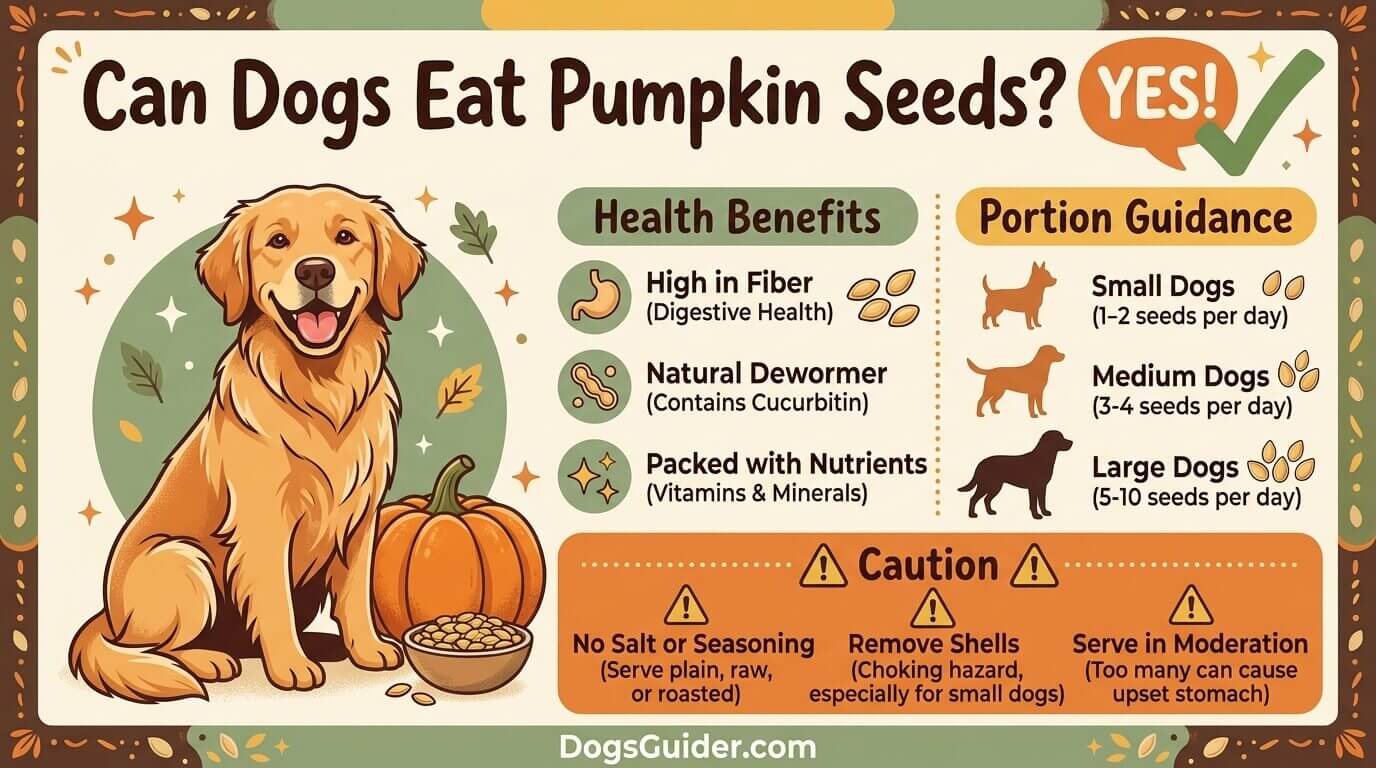
- Fiber: Supports digestion and regularity.
- Healthy fats: Provide energy and support skin and coat.
- Magnesium: Supports muscles, nerves, and bones.
- Zinc: Helps with immune function and skin health.
- Iron and manganese: Important minerals for normal body function.
- Antioxidants such as vitamin E: Help protect cells.
These benefits are modest. Pumpkin seeds should not replace a complete and balanced dog food, and they are not a medicine.
Do Pumpkin Seeds Get Rid of Worms in Dogs?
You may see claims that pumpkin seeds work as a natural dewormer because of a compound called cucurbitacin. Scientific evidence in dogs is weak, and seeds are not a reliable treatment for parasites.
If you suspect worms, such as scooting, weight loss, or visible worms in stool, see your vet for proper testing and treatment.
Risks of Feeding Pumpkin Seeds to Dogs
1. Salt and Seasoning
Roasted snack seeds are often heavily salted or flavored with garlic, onion powder, or other spices. Garlic and onion are toxic to dogs, and too much salt can cause sodium problems. Always choose plain seeds.
2. Too Many Seeds
Seeds are high in fat and fiber. A big serving can cause vomiting, diarrhea, gas, or constipation. In dogs prone to pancreatitis, rich fatty foods can trigger a flare-up.
3. Choking and Blockage
Whole, unhulled seeds with tough shells can be difficult to chew and swallow, especially for small dogs. In rare cases, a large number of seeds can cause an intestinal blockage. Grinding the seeds reduces this risk.
4. Extra Calories
Can Dogs Eat Pumpkin Seeds are calorie-dense. Too many treats can lead to weight gain, which raises the risk of joint problems and diabetes. Treats should make up no more than about 10 percent of daily calories.
5. Spoiled or Moldy Seeds
Seeds from carved jack-o’-lanterns that have been sitting out can grow mold. Never give seeds from a pumpkin that is old, soft, or moldy.
How to Prepare Pumpkin Seeds for Dogs

- Use a fresh pumpkin. Scoop out the seeds and discard any that look slimy or moldy.
- Rinse and remove pulp. Wash the seeds and pick off the stringy bits.
- Dry them well. Spread the seeds on a towel for an hour or two.
- Bake without seasoning. Roast on a baking sheet at about 300°F (150°C) for 30 to 40 minutes until dry and lightly golden. Skip oil, butter, and salt.
- Cool completely. Let them reach room temperature.
- Grind for small dogs. Use a clean coffee grinder or food processor to crush the seeds into a powder or coarse meal.
- Store properly. Keep in a sealed container in the fridge for up to a week or freeze for longer storage.
How Many Pumpkin Seeds Can a Dog Eat?
There is no official serving size, so start small. A general guide for ground, plain seeds:
- Small dogs (under 15 lbs): about 1/4 teaspoon
- Medium dogs (15 to 40 lbs): about 1/2 teaspoon
- Large dogs (over 40 lbs): about 1 teaspoon
Give seeds a few times a week at most, and add them to food or serve as a treat. Introduce them slowly, and stop if your dog has loose stool or an upset stomach. Check with your vet if your dog has kidney disease, pancreatitis, or any special diet.
Pumpkin Seeds vs Pumpkin: What Is the Difference?
Plain cooked pumpkin flesh is often recommended by vets as a fiber source and can help with mild constipation or diarrhea. Seeds are different. They are higher in fat and calories, so they work best as an occasional treat.
If you use canned pumpkin, choose 100 percent pure pumpkin, not pumpkin pie filling, which contains sugar and spices such as nutmeg.
Other Seeds Dogs Should Not Eat
- Apple seeds: Contain small amounts of cyanide compounds, so avoid feeding many.
- Cherry and peach pits: Choking hazards and cyanide risk.
- Macadamia nuts: Toxic to dogs.
- Seasoned seed mixes: Often contain salt, garlic, or onion.
Signs Your Dog Is Having a Problem
Contact your vet if your dog shows vomiting, ongoing diarrhea, belly pain, bloating, straining to poop, loss of appetite, or unusual tiredness after eating pumpkin seeds.
If your dog ate a large number of seeds or a seasoned snack, call your vet for advice.
Easy Ways to Serve Pumpkin Seeds to Your Dog
- Sprinkle on food: Mix a pinch of ground seeds into your dog’s regular meal.
- Homemade biscuits: Add ground seeds to a simple dog treat recipe with plain pumpkin and oat flour.
- Frozen treats: Stir ground seeds into plain, unsweetened yogurt and freeze in a silicone mold.
- Training rewards: Use a few crushed pepitas as small high-value rewards.
Whatever method you choose, remember that every treat adds calories, so reduce the main meal slightly if your dog tends to gain weight.
Which Dogs Should Be Careful With Pumpkin Seeds?
Most healthy dogs can enjoy a small amount, but some need extra caution or a vet’s approval first:
- Dogs with pancreatitis or a history of it: Fatty foods can trigger flare-ups.
- Overweight dogs: The calories can add up quickly.
- Dogs with sensitive stomachs: High fiber may cause gas or loose stool.
- Dogs with kidney issues: Seeds contain phosphorus and minerals that may need to be limited.
- Very small dogs and puppies: Higher choking and digestive risk, so use ground seeds in tiny amounts.
Pumpkin Seed Oil and Supplements for Dogs
You may see pumpkin seed oil or pumpkin seed supplements marketed for dogs, often for urinary or coat health. Evidence for these claims is limited, and products vary in quality.
If you are curious about a supplement, talk to your vet first, and choose a product made specifically for pets with a clear ingredient list.
Halloween Safety Tips for Dogs
Can Dogs Eat Pumpkin Seeds season brings more hazards than just seeds. Keep these in mind:
- Do not let your dog chew on carved pumpkins left outside. They can mold and attract pests.
- Keep candles and glow sticks out of reach.
- Store candy, especially chocolate and anything sugar-free with xylitol, where your dog cannot reach it.
- Skip pumpkin pie, which often contains sugar, spices, and nutmeg.
Key Takeaways: Pumpkin Seeds for Dogs
- Plain, unsalted pumpkin seeds are safe for dogs in small amounts.
- Skip seasoned, salted, or flavored seeds, especially those with garlic or onion.
- Grind seeds for small dogs to reduce choking and blockage risk.
- Start with a pinch, watch your dog’s stool and appetite, and increase slowly.
- Treats should stay under about 10 percent of daily calories.
- Seeds are not a reliable dewormer, so see your vet for parasite treatment.
When in doubt, ask your vet. They know your dog’s health history and can tell you whether pumpkin seeds fit into your dog’s diet.
FAQs
1. Can dogs eat pumpkin seeds?
Yes. Plain, unsalted, unseasoned pumpkin seeds are safe in small amounts.
2. Are pumpkin seeds good for dogs?
They provide fiber, healthy fats, and minerals such as magnesium and zinc, but they should be an occasional treat, not a main food.
3. Can dogs eat raw pumpkin seeds?
Fresh raw seeds are generally safe if clean and not moldy, but grinding or roasting without seasoning makes them easier to digest.
4. Can dogs eat roasted pumpkin seeds?
Yes, as long as they are plain. Avoid salted or flavored seeds.
5. How many pumpkin seeds can I give my dog?
Start with about 1/4 to 1 teaspoon of ground seeds depending on size, a few times a week at most.
6. Can pumpkin seeds deworm my dog?
There is not enough evidence to rely on them. See your vet for a proper parasite treatment.
7. Can puppies eat pumpkin seeds?
Only tiny amounts of ground seeds, and ask your vet first, since puppies have sensitive stomachs.
8. Can dogs eat pumpkin seed shells?
It is better to avoid whole shells because they can be hard to digest and may cause choking or blockage. Grind the seeds or use hulled pepitas.
This article is for general information and does not replace advice from your veterinarian.

Sarah Mitchell has been raising French Bulldogs for over 9 years in Austin, Texas. After adopting her first Frenchie, Biscuit, she became passionate about helping new owners navigate the unique needs of the breed from breathing care to diet and heat safety. Sarah has worked closely with local veterinarians and attended the AKC National Championship three times as a breed enthusiast. Her guides focus on practical, real-world advice for American Frenchie owners.