French Bulldog vs English Bulldog: Full Comparison 2026
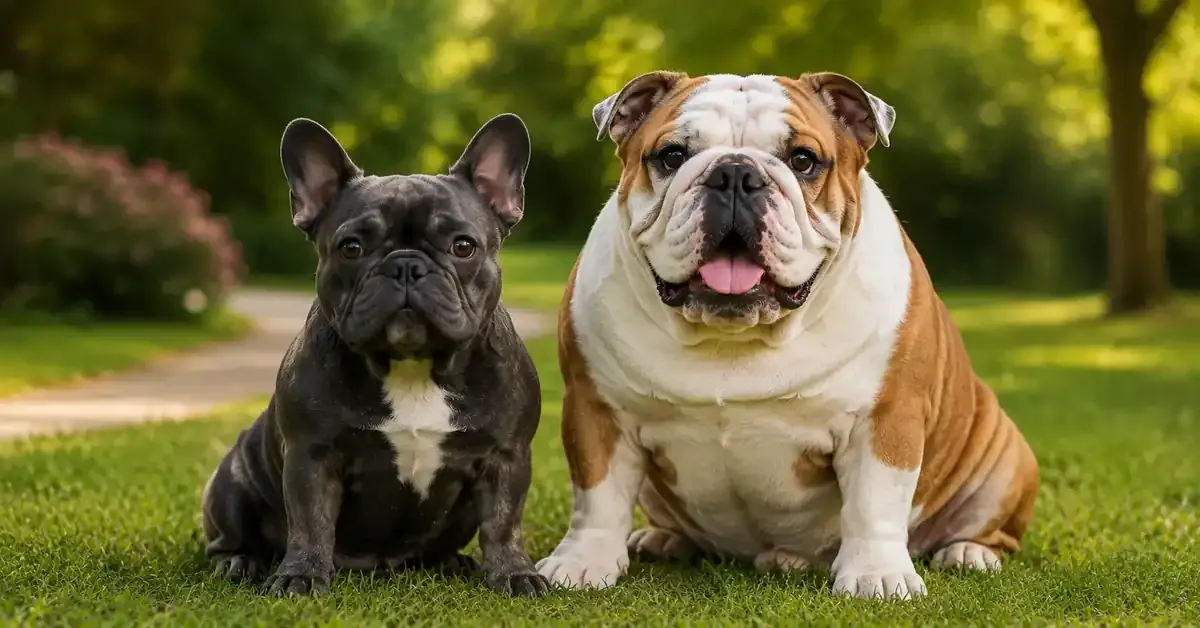
The biggest difference is size: English Bulldogs run heavy, often close to 50 pounds, while French Bulldogs stay small, usually under 28 pounds. Frenchies have tall, upright ears; English Bulldogs have small, folded ones. Personality-wise, Frenchies are playful and energetic, while English Bulldogs are calm and laid-back.
Can’t tell a French Bulldog from an English Bulldog? You’re not alone: same wrinkly face, similar name, totally different dog. In this guide, we’re breaking down French Bulldog vs English Bulldog, from size and personality to cost and health, so you know exactly which one actually fits your life.
French Bulldog vs English Bulldog: Quick Comparison Table
If you’re trying to figure out the difference fast, here’s how they stack up side by side.
| Feature | French Bulldog | English Bulldog |
| Height | 11–13 inches | 14–15 inches |
| Weight | 16–28 pounds | 40–50 pounds |
| Ears | Tall, upright “bat ears” | Small, folded ears |
| Coat | Short and smooth, low shedding | Short, sheds a little more |
| Personality | Playful, energetic, loves attention | Calm, laid-back, happy to nap |
| Exercise | 30–60 minutes a day | 15–40 minutes a day |
| Lifespan | 10–12 years | 8–10 years |
| Good Fit For | Apartments, active owners | Families who want a chill dog |
The weight difference alone tells you a lot. An English Bulldog can weigh almost double what a Frenchie does. If you’re choosing between the two, start with size and then let personality seal the deal more than looks do. Frenchies want to be part of everything you’re doing, while English Bulldogs are perfectly content watching from the couch. In the end, the choice comes down to whether you want a more involved companion or a more relaxed one.
What’s the Difference Between a French Bulldog and English Bulldog?
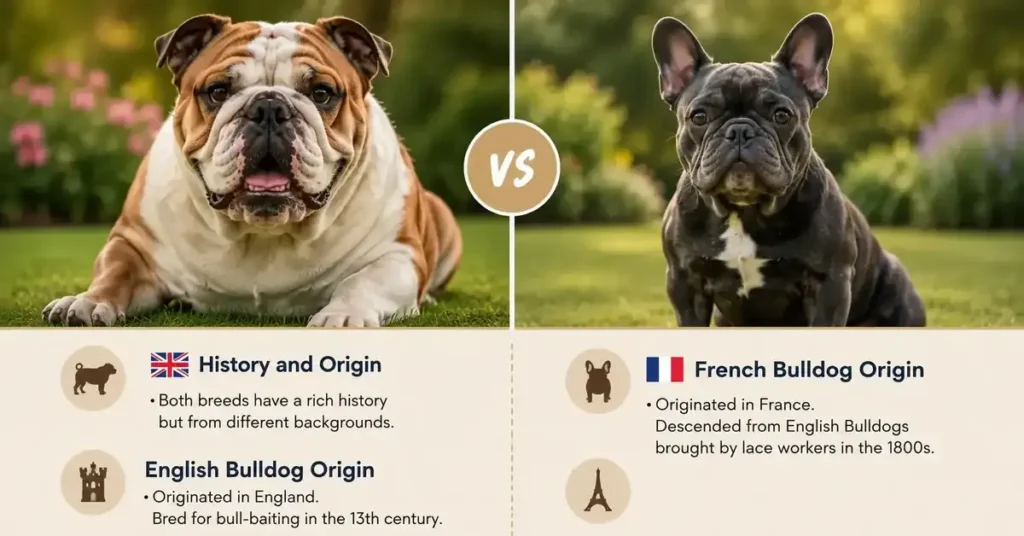
Size is the biggest giveaway. English Bulldogs run heavy, sometimes close to 50 pounds, while French Bulldogs stay small, usually under 28 pounds. The ears are another easy way to spot which one you’re looking at. Frenchies have those tall ears that stick straight up, and English Bulldogs have small ears that fold down flat.
History and Origin
Both breeds trace back to the same country, believe it or not, they just went in different directions from there.
English Bulldog Origin
The English Bulldog has been around since the 1200s, and its original job wasn’t pretty. It was bred for bull-baiting, a blood sport that England finally banned in 1835. After that, breeders had to rebuild the dog’s personality from scratch, and years later, what emerged was the mellow, easygoing Bulldog people keep as pets today.
French Bulldog Origin
The Frenchie actually got its start in England, too. Back in the 1800s, lace workers moved to France for work and took their small Bulldogs with them. Once there, those dogs mixed with local breeds, and that combination became the French Bulldog. Funny enough, the breed everyone thinks of as French didn’t really begin in France; it just got polished there.
Physical Differences
Even after you get past the size difference, plenty still sets these two apart: the ears, the shape of the head, the coat, and even how tall each one stands.
Size and Weight
Weight is the giveaway here. English Bulldogs sit on the heavier end, usually 40 to 50 pounds, while Frenchies stay much lighter, somewhere around 16 to 28 pounds. You don’t need to measure anything, just pick one up, and you’ll feel the difference immediately.
Height
French Bulldogs stay on the shorter side, standing about 11 to 13 inches at the shoulder. English Bulldogs are a couple of inches taller, usually 14 to 15 inches, but with all that extra weight packed on, they still come off as the bulkier, more solid-looking dog next to a Frenchie.
Ears
If you only remember one thing to tell these breeds apart, make it the ears. Frenchies have tall, upright ears that stand straight up; that’s the whole “bat ear” look everyone talks about. English Bulldogs go the opposite way, with small ears that fold down flat against the head.
Head and Face Shape
A Frenchie’s head is smaller and more square-shaped, giving the face a tighter, more compact look. English Bulldogs carry a much wider, rounder head, with a bigger forehead and those heavy jowls draping down on either side of the mouth; that’s where the classic droopy Bulldog expression comes from.
Coat Colors and Patterns
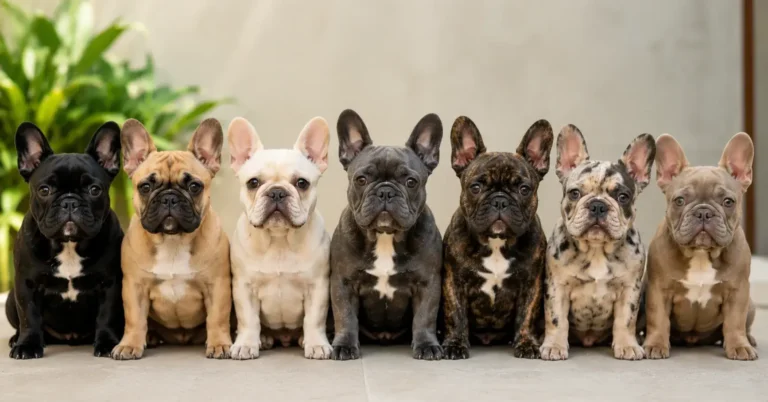
Color-wise, both breeds have a decent variety, just not identical ones. French Bulldogs typically come in fawn, cream, white, and brindle, sometimes with a black mask or piebald spotting. English Bulldogs tend to run more toward red, fawn, and white, with brindle and piebald combinations also common.
Temperament and Personality Differences
Looks are one thing, but personality is usually what makes people choose one breed over another.
English Bulldog Temperament
English Bulldogs are the couch potatoes of the two. They’re perfectly content lounging around most of the day and don’t ask for much in terms of activity. They’re loyal and easygoing, but they usually take their time warming up to new people instead of getting excited right away. Once they trust you, though, they’re your dog for life.
French Bulldog Temperament
Frenchies bring more energy into the room. They’re playful and alert, and they want to stay right next to you wherever you go, following you from room to room, which is normal behavior for this breed. They’re also more vocal and expressive, and they thrive on attention from their people.
Exercise Needs
Neither of these breeds needs a ton of activity, but there’s still a gap between the two. French Bulldogs do better with about 30 to 60 minutes a day, split between a couple of short walks and some playtime.
English Bulldogs need even less, usually just 15 to 40 minutes, since they wear out fast and don’t do well in the heat. Both breeds overheat easily thanks to those flat faces, so keep the walks short and skip outdoor time altogether when it’s hot or humid.
Grooming and Shedding
Grooming-wise, neither breed is a huge hassle. French Bulldogs shed less and just need a weekly brush to stay looking neat. English Bulldogs shed a touch more, so brushing them two or three times a week keeps things under control. The real work with both dogs is the wrinkles; those folds need regular wiping to stop bacteria and infections from building up underneath, especially after they eat or come in from a walk.
Health Issues and Lifespan
Both breeds have several health concerns, many of which are linked to the flat-faced build they share.
Common Health Problems in Both Breeds
Since both breeds are brachycephalic, breathing issues are the biggest concern across the board, including noisy breathing, struggling in the heat, and difficulty with exercise. English Bulldogs also deal with more skin fold infections and joint problems because of their heavier frame, while French Bulldogs are more likely to run into spinal issues and allergies. Either way, it’s smart to budget for regular vet visits and consider pet insurance early on.
Lifespan Comparison
French Bulldogs usually live between 10 and 12 years. English Bulldogs fall a bit short of that, averaging 8 to 10 years. That extra weight and the breathing struggles English Bulldogs deal with tend to knock a couple of years off their lifespan compared to a Frenchie.
Training and Trainability
Training either breed takes patience, though the stubbornness shows up in different ways. English Bulldogs are slow and steady learners who tune out fast if a session drags on too long, so keeping things short and calm works way better than drilling the same command over and over.
French Bulldogs pick things up quicker, but they lose interest just as fast, so five minutes of focused training beats twenty minutes of a bored dog wandering off mid-lesson. With both breeds, treats and staying consistent day after day make the biggest difference.
Are They Good with Kids and Other Pets?
Both breeds tend to do well around kids, but older, gentler children are usually the safer bet compared to toddlers, since either dog can get bumped or accidentally hurt during rough play. English Bulldogs are generally the more relaxed option with little ones; they’d rather just be near the family than get caught up in chasing games.
French Bulldogs love kids just as much, but their playful streak can get a little too intense, so keeping an eye on early playtime goes a long way. When it comes to other pets, both breeds usually adjust fine, especially if they grow up together, though Frenchies can sometimes get territorial with dogs of the same sex.
Cost Comparison (Puppy Price, Vet Bills, Maintenance)
Here’s how the two breeds line up when it comes to your wallet, from the day you bring them home to their ongoing care down the road.
| Cost Type | French Bulldog | English Bulldog |
| Puppy Price | $1,500 – $5,000 (rare colors can hit $8,000+) | $1,500 – $4,500 |
| Yearly Vet Bills | $500 – $1,500 | $700 – $2,000+ |
| Major Surgery Risk | Spinal issues, C-section births | Breathing (BOAS) surgery, joint problems |
| Grooming Costs | Low | Low to moderate |
| Pet Insurance | Worth having | Basically a must |
Puppy prices come out pretty close between the two, but English Bulldogs usually end up costing more over their lifetime because of joint and breathing problems that show up as they age. Frenchies aren’t cheap to own either, especially with C-section deliveries being the norm, but their everyday upkeep tends to be a bit lighter on the wallet than that of an English Bulldog.
Which Breed Is Better for Apartment Living?
Both breeds settle into apartment life well since neither needs a backyard to stay happy. French Bulldogs may have a slight edge because they’re lighter and easier to carry up a few flights if there’s no elevator.
English Bulldogs can live in an apartment just fine, too, but their weight puts more strain on their joints over time, so a ground-floor unit or an elevator makes life easier. Noise usually isn’t a concern with either breed; both are quiet indoors and not big barkers.
French Bulldog vs English Bulldog: Which One Should You Choose?
At the end of the day, it really comes down to your daily routine and how much energy you want to expend.
Go with a French Bulldog if:
- You want a smaller dog that’s easy to carry around.
- You’re fairly active and enjoy short walks or playtime.
- You live in a tight apartment and want a lighter pet underfoot.
- You don’t mind a dog that follows you everywhere and wants constant attention.
Go with an English Bulldog if:
- You want a calm, low-key companion.
- You’re happy with a dog that’s content lounging around most of the day.
- You’ve got a ground-floor place or a building with an elevator.
- You’re after a relaxed, easygoing family pet.
Neither one wins outright; it really just comes down to whether your life is better matched with a playful little shadow or a laid-back couch buddy.
Frequently Asked Questions
Are French Bulldogs and English Bulldogs related?
Yes, French Bulldogs actually came from smaller English Bulldogs brought to France and mixed with local breeds.
Which is more expensive, a French Bulldog or an English Bulldog?
French Bulldogs usually cost a bit more, especially in rare colors, while English Bulldogs stay closer to $1,500–$4,500.
Which Bulldog breed is calmer, French or English?
English Bulldogs are the calmer breed and happy to lounge all day, while Frenchies have more energy.
Do French Bulldogs or English Bulldogs live longer?
French Bulldogs typically live 10–12 years, a bit longer than the English Bulldog’s 8–10 years.
Which Bulldog breed is better for first-time owners?
English Bulldogs are usually easier for beginners since they need less exercise and training effort.
Conclusion
Choosing between a French Bulldog and an English Bulldog comes down to your lifestyle, living space, and budget. French Bulldogs are smaller, more playful, and easier to manage, making them a great fit for apartment living and busy households.
English Bulldogs are sturdier, calmer, and better for owners who prefer a laid-back companion. Both breeds are loving and loyal and enjoy spending time with their families, but they have different care needs and health concerns. Compare their size, temperament, exercise needs, grooming, and long-term costs before making your decision. The right choice is the one that fits your daily routine and gives your new companion the care and attention they deserve.

Sarah Mitchell has been raising French Bulldogs for over 9 years in Austin, Texas. After adopting her first Frenchie, Biscuit, she became passionate about helping new owners navigate the unique needs of the breed from breathing care to diet and heat safety. Sarah has worked closely with local veterinarians and attended the AKC National Championship three times as a breed enthusiast. Her guides focus on practical, real-world advice for American Frenchie owners.