French Bulldog Breathing Problems: Signs & Help

Introduction
French bulldog breathing problems worry many Frenchie owners, because noisy breathing that seems cute can hide a real airway problem. If your dog pants hard after a short walk, read our guide on why your French Bulldog pants so much for the difference.
French Bulldogs are brachycephalic, which means they have a short, flat face and a shortened skull. The soft tissues inside the airway are squeezed into a much smaller space.
This guide explains the causes, the warning signs, and the daily care that helps your dog breathe easier. It also covers snoring, reverse sneezing, heat, exercise, and surgery.
This article is educational only, not a substitute for veterinary advice. Any breathing concern should be checked by your vet.
Quick Answer: French bulldog breathing problems are caused by BOAS, where narrowed nostrils, a long soft palate, and a narrow windpipe restrict airflow. Mild noise is common, but blue gums, collapse, fainting, or heavy breathing at rest are emergencies. Keep your Frenchie lean, cool, and calm.
What Is BOAS?

BOAS stands for brachycephalic obstructive airway syndrome. It is the main cause of french bulldog breathing problems, and it describes airway defects that make breathing harder than it should be.
The syndrome is not one single defect. It is a combination of narrowings along the airway, from the nostrils down to the windpipe. Each one adds resistance, so the dog must work harder for every breath.
Dogs with BOAS often breathe noisily even at rest. They may snore loudly, snort during play, and tire quickly on walks. Many owners think this is normal, so the problem goes unnoticed for years.
Why French Bulldogs Get Breathing Problems
Selective breeding gave French Bulldogs their flat face, but it did not shrink the soft tissues to match. The same palate, tongue, and throat tissue is packed into a shorter skull.
The result is crowding. The soft palate hangs too far back, the nostrils are pinched shut, and the windpipe is often narrower than in similar sized breeds. Air must squeeze through a tight space.
The Four Parts of BOAS
Vets usually describe four defects that make up BOAS. A dog may have one or all four, and more defects mean harder breathing.
Stenotic Nares
Stenotic nares means narrowed nostrils. In many Frenchies the nostrils are tiny slits instead of open ovals, so very little air enters through the nose.
Elongated Soft Palate
The soft palate is the flap of tissue at the back of the roof of the mouth. In French Bulldogs it is often too long, so it hangs into the throat and blocks the airway.
Narrow Trachea
The trachea is the windpipe, the tube that carries air to the lungs. In many French Bulldogs it is narrower than expected for their body size, which limits how much air can pass through.
Everted Laryngeal Saccules
Laryngeal saccules are small pouches of tissue just inside the voice box. In dogs that strain to breathe for years, suction pulls them into the airway, where they block airflow further.
Normal Noise vs Warning Signs

Every Frenchie makes noise, so the question is whether the noise has changed or comes with signs of distress. A stable, happy, noisy dog is very different from a dog that struggles.
Effort matters more than sound. If the belly heaves or the neck stretches out with each breath, your dog is working too hard. Take that seriously.
| Sign | Usually normal | See a vet soon |
|---|---|---|
| Snoring | Soft, only in sleep | Loud, with pauses in breathing |
| Breathing effort | Relaxed chest and belly | Belly heaves, neck stretched |
| Gum colour | Pink and healthy | Blue, grey, or very pale |
Snoring in French Bulldogs
Snoring is the most familiar of all french bulldog breathing problems. Light, steady snoring during sleep is usually nothing to worry about. It is air moving past crowded tissues.
Snoring becomes a concern when it is very loud or changes suddenly. New or worsening snoring can mean the airway is swelling, or that weight gain has narrowed it.
Pauses in snoring are a red flag. If your dog stops breathing for a few seconds, then gasps or jerks awake, tell your vet. Oxygen levels may be dropping during sleep.
Reverse Sneezing Explained
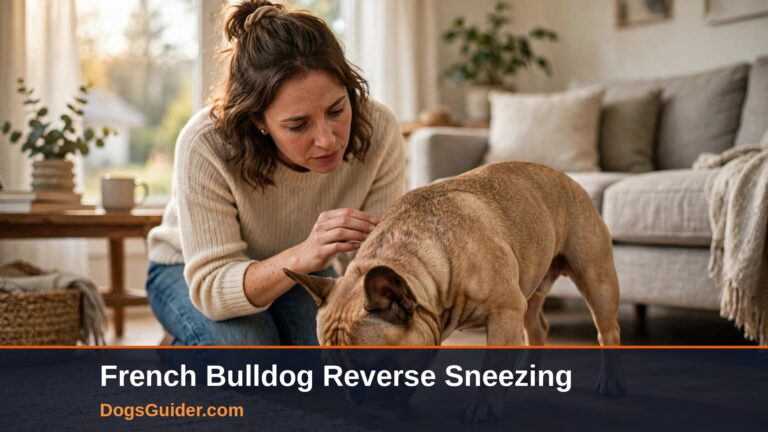
Reverse sneezing looks alarming, but it is usually harmless. The dog stands still, stretches the neck out, and makes rapid, honking inward breaths for a few seconds. It sounds like choking, but the dog is pulling air in.
Dust, pollen, excitement, eating too fast, or pulling on a collar can trigger an episode. Most end on their own within half a minute.
Reverse sneezing that happens daily, lasts longer than a minute, or comes with blue gums or collapse is not normal. Frequent episodes deserve a vet visit.
Weight, Heat, and Harness Management
Weight is the most useful thing you can control. Extra fat around the neck and chest presses on the airway and makes every breath harder.
You should feel the ribs with light pressure and see a waist from above. If you cannot feel the ribs, ask your vet about a safe weight loss plan.
Heat is the biggest seasonal danger. French Bulldogs overheat quickly, and an overheated dog pants harder, which swells the airway. Keep walks short on warm days.
A harness is safer than a collar. Collars press on the throat and worsen breathing. Choose one that does not sit high on the neck or squeeze the chest.
Exercise Limits for a Breathing Challenged Frenchie
Exercise is good for French Bulldogs, but the dose matters. Short, gentle walks beat long runs, and two short outings beat one long session. Watch your dog, not the clock.
Stop and rest as soon as breathing becomes loud or laboured. Let your dog cool down in the shade and offer water. Never push through noisy breathing.
For safe activity levels, read our article on how much exercise a French Bulldog needs. It covers daily limits and the signs that mean your dog has had enough.
Breathing Risk in Heat and Water
Water adds a second risk. French Bulldogs are poor swimmers, because their heavy head and short legs make it hard to keep the nose above water. A dog that struggles to breathe on land is in real danger in water.
Never let a Frenchie swim unsupervised, and use a life jacket near water. Even shallow water is risky if the dog panics.
For more on water safety, read our guide on can French Bulldogs swim. It explains why most Frenchies should not swim.
When to See a Vet
Book a vet visit if breathing changes. New snoring, frequent reverse sneezing, or tiring faster on walks are all good reasons to get checked. Early checks catch problems while they are manageable.
Take a short video of your dog breathing at rest and on a walk. Vets find videos helpful, because dogs breathe more calmly in the clinic.
Emergency Signs: Act Now
Some breathing signs are emergencies, and waiting can be fatal. If your dog’s gums turn blue or grey, get to a vet at once. Blue gums mean the blood lacks oxygen.
Collapse or fainting is also an emergency. A dog that falls over or faints during excitement or exercise needs immediate veterinary care, even if it recovers quickly.
Heavy breathing at rest that will not settle is another red flag. If your dog pants hard while lying still in a cool room, and it does not ease within minutes, seek help now.
While you travel to the vet, keep your dog calm and cool. Do not offer food.
Surgery: A Vet Decision, Not the Default
Surgery can help some dogs with BOAS, but it is not the first step. Many dogs improve with weight loss and careful management instead. Your vet decides, based on a full exam and the severity of the defects.
The most common procedures widen the nostrils and shorten the soft palate. Both aim to open the airway so the dog can move air more easily.
Surgery carries risks, as any operation under anaesthetic does, and the risk is higher in dogs that already struggle to breathe. Your vet will weigh the risks against the benefit for your dog.
Daily Care Checklist
Small daily habits add up to easier breathing, and most of them cost nothing. Consistency matters more than any single change, so build them into your routine.
| Daily habit | How it helps breathing |
|---|---|
| Keep weight lean | Less fat pressing on the airway |
| Use a harness | No pressure on the throat |
| Short, calm walks | Less strain on a narrow airway |
The Bottom Line
French bulldog breathing problems are common, but common does not mean harmless. Noisy breathing is part of the breed, yet changes in that noise, or signs of real effort, deserve attention.
Keep your Frenchie lean, keep walks short and cool, use a harness instead of a collar, and never ignore blue gums, collapse, or breathing that will not settle at rest.
Work with your vet, not against the problem alone. A planned check and a video of your dog breathing give your vet the best chance to help.
Your Frenchie depends on you to notice the difference between normal noise and a real struggle.
References
- American Kennel Club: https://www.akc.org/
- PetMD: https://www.petmd.com/
- VCA Animal Hospitals: https://vcahospitals.com/
- Merck Veterinary Manual: https://www.merckvetmanual.com/
Frequently Asked Questions
1. Are breathing problems normal in French Bulldogs?
Some noise is normal, because the breed has a short face and a crowded airway. Light snoring is common. Heavy breathing at rest, blue gums, or collapse are never normal, and they need a vet urgently.
2. What is BOAS in French Bulldogs?
BOAS stands for brachycephalic obstructive airway syndrome. It is a set of defects, including narrow nostrils, a long soft palate, and a narrow windpipe. Together they restrict airflow and make breathing harder.
3. Why does my French Bulldog snore so loudly?
Loud snoring comes from air forcing its way past crowded tissues in the nose and throat. Weight gain, heat, and allergies can make it worse. Snoring with pauses in breathing should be checked by a vet.
4. Is reverse sneezing dangerous for French Bulldogs?
Most reverse sneezing episodes are harmless and end within seconds. They are usually triggered by irritation, excitement, or eating too fast. Daily episodes, or ones with blue gums, need a vet visit.
5. Can French Bulldogs with breathing problems exercise?
Yes, but gently. Short, calm walks in cool weather are best, with rest breaks when breathing gets loud. Avoid midday heat and rough play. Stop at once if breathing becomes laboured.
6. When should I take my French Bulldog to the vet for breathing?
See a vet if breathing changes, snoring worsens, or your dog tires faster. Go at once for blue gums, collapse, fainting, or heavy breathing at rest that will not settle.
7. Does surgery fix French Bulldog breathing problems?
Surgery can help some dogs by widening the nostrils and shortening the soft palate, but it is not the default. Many dogs improve with weight control and careful management. Your vet decides if surgery is needed.

Sarah Mitchell has been raising French Bulldogs for over 9 years in Austin, Texas. After adopting her first Frenchie, Biscuit, she became passionate about helping new owners navigate the unique needs of the breed from breathing care to diet and heat safety. Sarah has worked closely with local veterinarians and attended the AKC National Championship three times as a breed enthusiast. Her guides focus on practical, real-world advice for American Frenchie owners.