
French Bulldog Hip Dysplasia: Signs & Treatment
Introduction
French bulldog hip dysplasia is a joint condition where the ball and socket of the hip do not fit together as they should. Keeping your Frenchie lean matters, so check our guide on how much a French Bulldog should weigh first.
The condition develops slowly in most dogs. Some show signs as puppies, while others only slow down in middle age. Early signs are easy to miss, because dogs hide discomfort well.
This guide explains what hip dysplasia is, why French Bulldogs are prone to it, and the signs to watch for. It also covers diagnosis, treatment options, and the daily care that keeps your dog comfortable.
This article is educational only. It is not a substitute for veterinary advice, and diagnosis and treatment decisions belong to your vet.
Quick Answer: French bulldog hip dysplasia means the ball and socket of the hip do not fit snugly, causing looseness, wear, and pain. Signs include bunny hopping, limping, stiffness after rest, and reluctance to climb stairs. A vet diagnoses it with an exam and X-rays, and treatment ranges from weight control and gentle exercise to medicine, therapy, or surgery.
What Is Hip Dysplasia?
A healthy hip joint works like a ball and socket. The round head of the thigh bone sits snugly inside a cup in the pelvis, and smooth cartilage lets it glide with every step.
Hip dysplasia means that fit is wrong from the start. The socket may be too shallow, the ball may be misshapen, or the joint may be too loose.
Over time, that poor fit wears down cartilage and inflames the joint. The body tries to stabilise it by growing extra bone, which leads to arthritis. Pain and stiffness follow.
Hip dysplasia is a developmental condition, which means it begins while the dog is still growing. The joint never forms correctly, so the problem is present long before the signs appear.
Why French Bulldogs Are Prone to Hip Dysplasia
Genetics is the biggest reason. Hip dysplasia runs in families, and French Bulldogs carry a higher risk than many breeds. Responsible breeders screen parent dogs with hip X-rays before breeding.
Body shape adds to the risk. French Bulldogs are compact and heavily built, with short legs and a wide chest. That stocky frame puts more load on the hips with every step.
Fast growth can make things worse. Puppies that grow too quickly, or carry extra weight while their joints form, place extra stress on soft, developing hips.
Signs of Hip Dysplasia in French Bulldogs
The classic early sign is bunny hopping. Instead of moving each back leg separately at a run, the dog moves both back legs together, like a rabbit. Many owners first notice it outside.
Limping is another common sign. It may appear in one back leg, or shift between legs. The limp is often worse after rest or exercise, then eases as the dog warms up.
Difficulty rising is easy to miss at first. Your dog may hesitate before standing, need a few tries to get up, or pull the body upright with the front legs.
A stiff or swaying gait can also point to hip trouble. The back end may waddle or sway, and some dogs lose the spring in their step.
Reluctance to climb stairs or jump onto the sofa is a warning sign too. A dog that used to leap onto the bed but now waits to be lifted may be protecting sore hips.
| Sign | Mild or early | Moderate or advanced |
|---|---|---|
| Bunny hopping | Only when running | At a walk or trot |
| Limping | After hard play | After rest, most days |
| Rising from rest | Slow to stand, then normal | Needs help, several tries |
| Stair climbing | Hesitates, then climbs | Refuses stairs or jumps |
| Back leg muscle | Looks normal | Clearly thinner than front legs |
| Play and activity | Plays less, tires sooner | Avoids play, lies down often |
Pain does not always match what an X-ray shows. Some dogs have clear dysplasia on X-ray yet move happily, while others with mild changes limp badly.
How a Vet Diagnoses Hip Dysplasia
Diagnosis starts with a hands-on exam. The vet watches your dog walk and turn, then gently moves each hip to feel for looseness or pain.
The vet will also ask about your dog’s history: when the signs started, which leg seems worse, and what makes it better or worse.
X-rays are the key test. They show the shape of the ball and socket, how well they fit, and whether arthritis has started. The vet may take views with the dog lying on its back.
Sedation is often needed for good X-rays. A relaxed dog lies still in the right position, which gives a clear picture of the joint.
Treatment Options for Hip Dysplasia
Treatment depends on the dog’s age, weight, pain level, and how bad the joint looks on X-ray. Most dogs start with non-surgical care, and surgery is reserved for severe cases.
Weight management is the single most important step. A lean dog puts far less load on sore hips, and many dogs move noticeably better after losing a small amount of weight.
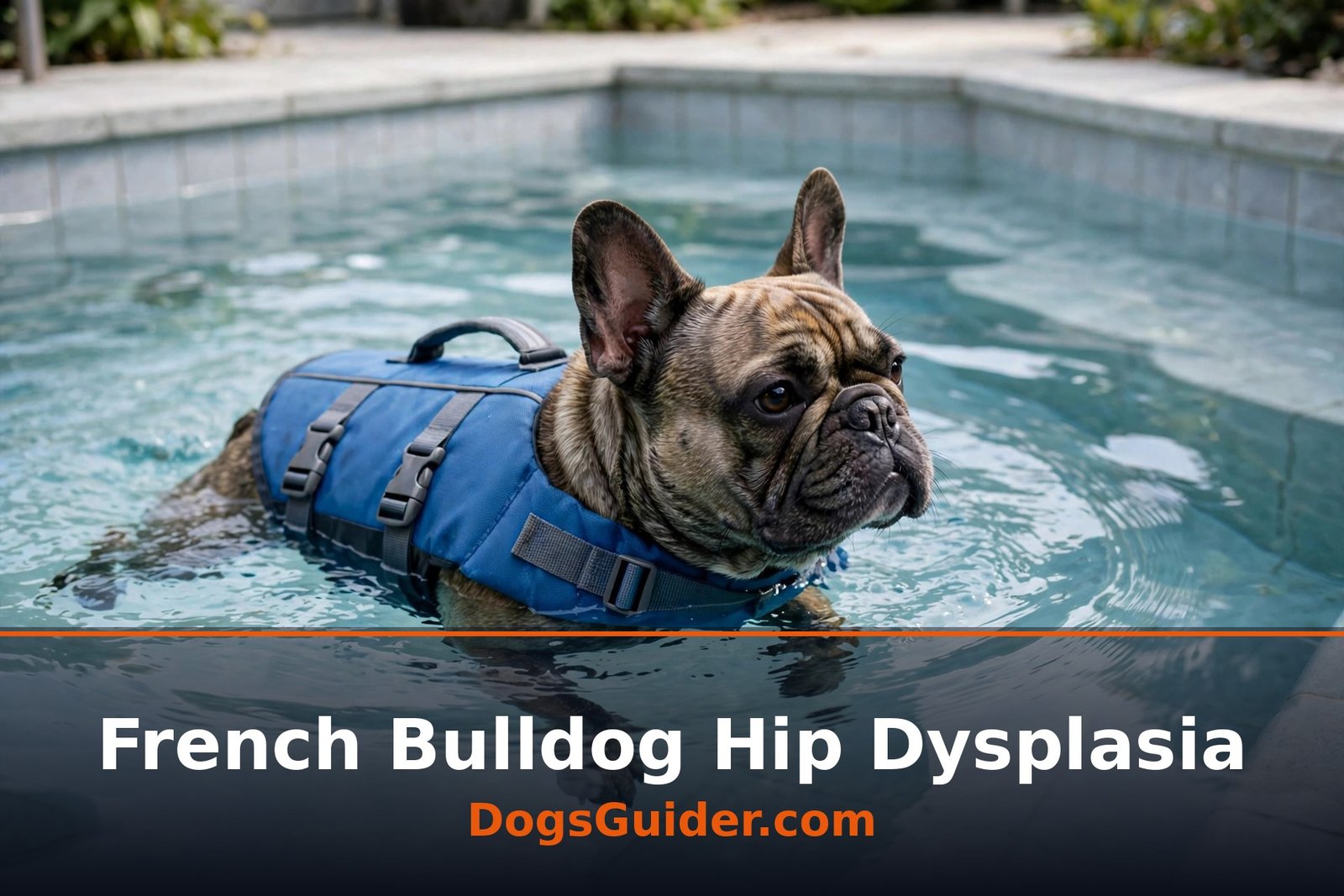
Low-impact exercise keeps the muscles around the hip strong without pounding the joint. Short walks on soft ground are ideal. Swimming is excellent when a vet approves it, because water supports the body.
For routines that protect the joints, read our guide on how much exercise a French Bulldog needs. It explains the right daily amount for this breed.
Pain relief medicine is often part of the plan. Vets commonly use anti-inflammatory drugs, known as NSAIDs, to reduce pain and swelling. Never give human painkillers to your dog, as many are dangerous.
Physical therapy builds strength around the hip. Guided exercises and hydrotherapy on an underwater treadmill can improve mobility. A vet physiotherapist designs a safe program for your dog.
Surgery is an option when pain stays severe despite good medical care. Femoral head ostectomy, or FHO, removes the ball of the thigh bone. It suits smaller dogs.
Total hip replacement, or THR, swaps the whole joint for an artificial one. It can restore near-normal movement, but it is a major operation with a long recovery.
Younger puppies with early dysplasia may be candidates for two other operations. Double pelvic osteotomy, or DPO, and triple pelvic osteotomy, or TPO, reshape the pelvis to improve the socket fit.
Juvenile pubic symphysiodesis, or JPS, is a simpler procedure for very young puppies. It slows growth in one part of the pelvis so the socket covers the ball better.
| Treatment | Best for | What to expect |
|---|---|---|
| Weight management | Every dog with hip dysplasia | Lean weight reduces joint load and pain |
| Low-impact exercise | Mild to moderate cases | Short walks and swimming build muscle |
| NSAID pain relief | Dogs with daily pain | Vet-prescribed medicine, regular checkups |
| Physical therapy | Weak muscles, stiff gait | Guided exercises and hydrotherapy sessions |
| FHO surgery | Severe pain, smaller dogs | Ball removed, false joint forms, weeks of rest |
| Total hip replacement | Severe arthritis, suitable dogs | Artificial joint, near-normal movement, long recovery |
| DPO, TPO, or JPS | Young dogs, early diagnosis | Pelvis reshaped while still growing |
Never give a specific drug dose at home. Doses depend on your dog’s weight, age, and health, and the wrong dose can cause serious harm. Your vet sets the dose and checks it at follow-ups.
Surgery is not the default outcome. Many French Bulldogs with hip dysplasia live comfortable lives with weight control, gentle exercise, medicine, and therapy, and never need surgery.
Daily Care and Prevention
Daily care makes a real difference for a dog with hip dysplasia. Small changes at home reduce pain, protect the joint, and keep your dog moving.
Keep your dog lean. Feed measured meals, limit treats, and weigh your dog regularly. Ask your vet for a target weight and check it at every visit.
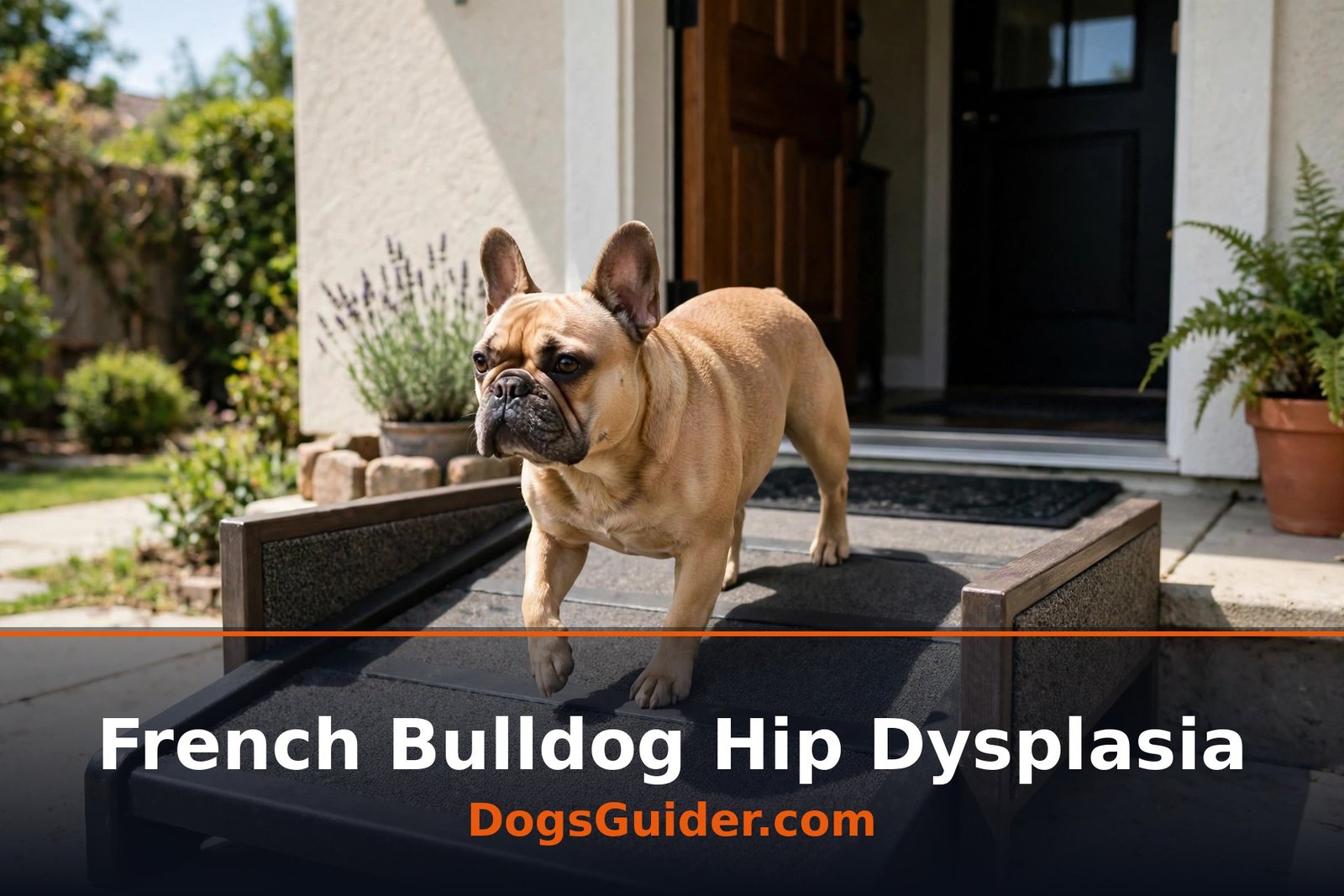
Use ramps instead of steps where you can. A ramp to the sofa, bed, or car removes the jump that jars sore hips.
Put non-slip rugs or mats on smooth floors. Slippery wood and tile make a dog with weak hips scramble for grip and strain the joint. Rugs give the paws something to hold onto.
Avoid repeated jumping and stair climbing. Carry your Frenchie up and down stairs when possible, and block off staircases for puppies. Short walks beat long, tiring ones.
Keep your dog warm and dry in cold weather. Cold and damp can stiffen sore joints, so a warm bed away from drafts helps. For more, read our guide on whether French Bulldogs get cold.
Prevention starts with the breeder. Ask for hip screening results for both parents before choosing a puppy.
When to Call the Vet
Call your vet promptly if your dog limps for more than a day or two, struggles to rise, or refuses stairs or walks. Pain that lasts needs a proper check.
Book a visit sooner if the limp is severe, your dog cries out when moving, or a leg looks swollen. These signs can mean something more urgent.
Also call if treatment stops working. A dog that was comfortable on medicine but starts limping again may need a new plan or a fresh X-ray.
The Bottom Line
French bulldog hip dysplasia is a common joint problem, but it is not a sentence to a life of pain. Many dogs live well with a lean weight, gentle exercise, pain relief when needed, and a hip-friendly home.
Watch for bunny hopping, limping, stiffness after rest, and reluctance to climb stairs. If you see those signs, book a vet visit for an exam and X-rays.
Work with your vet on the plan, keep your dog lean and active in a low-impact way, and use ramps and rugs at home. Small daily steps keep your Frenchie comfortable.
References
- American Kennel Club, general guidance on dog hip dysplasia and breed health, https://www.akc.org/
- PetMD, general guidance on dog hip dysplasia, signs, and treatment, https://www.petmd.com/
- VCA Animal Hospitals, client education on dog hip dysplasia and joint care, https://vcahospitals.com/
- Merck Veterinary Manual, owner guidance on dog hip dysplasia and musculoskeletal disease, https://www.merckvetmanual.com/
Frequently Asked Questions
1. What is french bulldog hip dysplasia?
It is a joint condition where the ball and socket of the hip do not fit together properly. The loose fit wears down cartilage over time, causing pain and stiffness.
2. What are the first signs of hip dysplasia in a French Bulldog?
Bunny hopping when running, limping after play, stiffness after rest, and hesitation on stairs are the earliest signs. Some dogs also lose enthusiasm for walks.
3. Can hip dysplasia be cured without surgery?
There is no cure, but many dogs are managed well without surgery. Weight control, low-impact exercise, pain relief medicine, and physical therapy keep most dogs comfortable.
4. How is hip dysplasia diagnosed in French Bulldogs?
A vet examines the gait and moves the hips by hand, then confirms the diagnosis with X-rays. Sedation is often used for a clear picture.
5. Does every French Bulldog with hip dysplasia need surgery?
No. Surgery is reserved for severe cases where pain stays bad despite good medical care. Many dogs never need an operation and live well with daily care and medicine.
6. What exercise is safe for a French Bulldog with hip dysplasia?
Short walks on soft ground and swimming are the safest options. Avoid jumping, stair climbing, rough play, and long runs that pound the joints.
7. Can hip dysplasia in French Bulldogs be prevented?
It cannot be fully prevented, because genetics play a large role. Choosing a puppy from hip-screened parents and maintaining a lean weight both lower the risk.

Sarah Mitchell has been raising French Bulldogs for over 9 years in Austin, Texas. After adopting her first Frenchie, Biscuit, she became passionate about helping new owners navigate the unique needs of the breed from breathing care to diet and heat safety. Sarah has worked closely with local veterinarians and attended the AKC National Championship three times as a breed enthusiast. Her guides focus on practical, real-world advice for American Frenchie owners.







One Comment