

Introduction
When you fall for a Labradoodle, the next thought is almost always the same: how many years will we get together?
The honest answer is that nobody can give an exact number for any single dog, but we know a lot about what to expect and, more importantly, what you can do to stack the odds in your dog’s favour.
This guide covers the average Labradoodle lifespan, how size changes it, the health problems that can cut life short, and nine practical ways to help your doodle live longer.
How Long Do Labradoodles Live?
Most sources put the average Labradoodle lifespan at roughly 12 to 15 years, with some estimates running slightly narrower (12 to 14) or wider (12 to 16).
That fits with the parent breeds: Labrador Retrievers typically live around 10 to 12 years, and Poodles commonly live 12 to 15 years or more.
Because the Labradoodle is a relatively new cross, there are no long, reliable records of the “oldest” ones. Some research suggests crossbreeds may live a little longer than their purebred parents thanks to a wider gene pool, but this is not guaranteed.
A Labradoodle from poorly screened parents can still inherit serious conditions from both sides.
Labradoodle Lifespan by Size
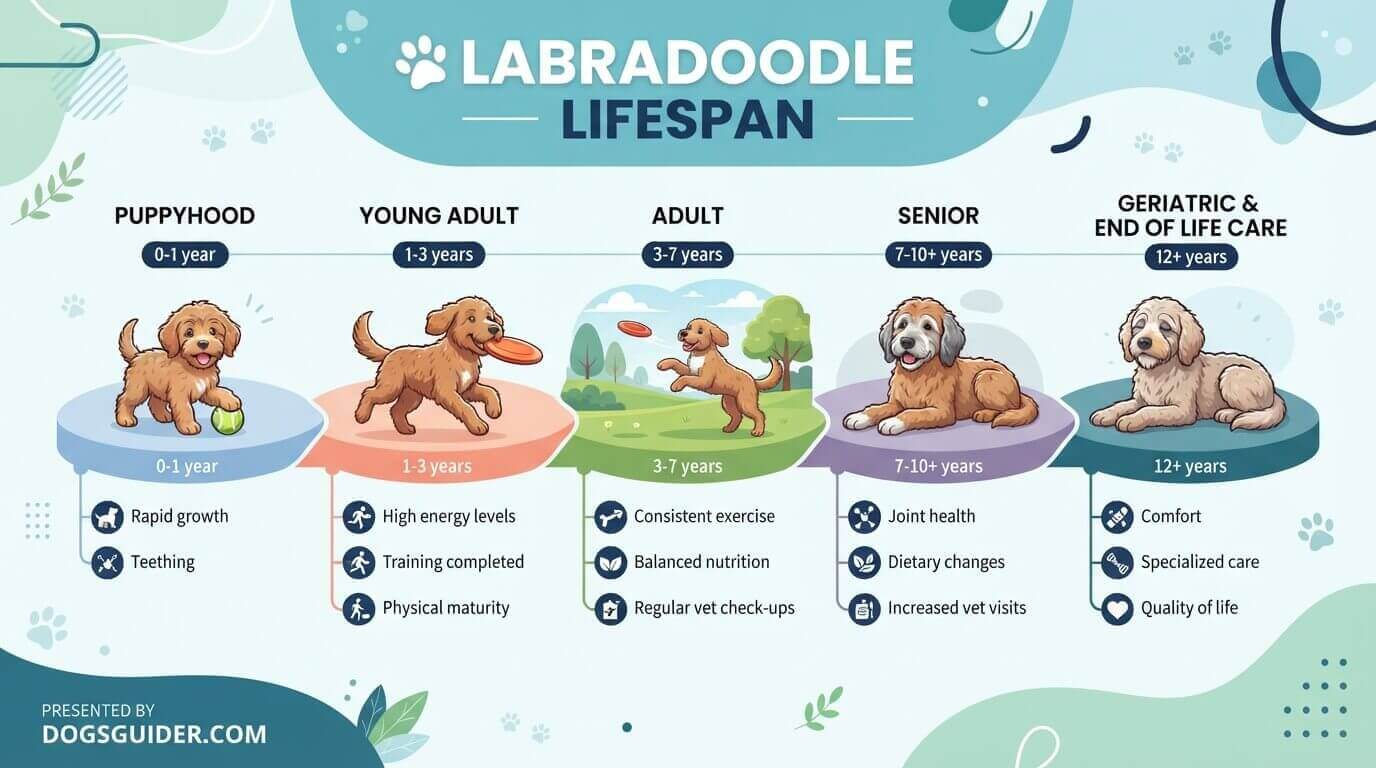
Size is one of the strongest predictors of lifespan. In general, smaller dogs live longer than larger dogs, and Labradoodle lifespan follows that pattern. The size of your dog depends mostly on the Poodle parent (Toy, Miniature, or Standard).
| Labradoodle Size | Typical Weight | Typical Lifespan* |
|---|---|---|
| Miniature | 18–30 lb (8–14 kg) | 13–15+ years |
| Medium | 30–45 lb (14–20 kg) | 12–14 years |
| Standard | 50–75 lb (23–34 kg) | 11–13 years |
These are typical estimates, not guarantees. Individual dogs vary.
Labradoodle Lifespan vs. Labrador and Poodle
| Breed | Usual Lifespan |
|---|---|
| Labrador Retriever | 10–12 years |
| Standard Poodle | 12–15 years |
| Miniature / Toy Poodle | 14–16+ years |
| Labradoodle | 12–15 years |
Labradoodle Life Stages: What to Expect
- Puppy (0–1 year): fast growth, socialisation and vaccinations. Training habits set now last for life.
- Young adult (1–3 years): high energy and peak playfulness. Food allergies often show up in these early years.
- Adult (3–8 years): steady and active. Weight gain is the main threat, so watch portions.
- Senior (8+ years, earlier for Standards): slower pace, stiffer joints and more health checks needed.
What Affects a Labradoodle’s Lifespan?
- Genetics and breeding. Parents screened for hips, elbows, eyes and heart give puppies a far better start. A responsible breeder shares these test results.
- Size. Smaller doodles generally outlive larger ones.
- Body weight. A long-running study of Labrador Retrievers found that dogs kept lean lived about 1.8 years longer than their heavier siblings. Keeping your doodle slim is one of the most powerful things you can do.
- Diet. Complete, balanced food in the right portions supports organs, joints and the immune system.
- Exercise. Regular activity keeps muscles strong and the mind sharp.
- Preventive vet care. Vaccines, parasite control, dental care and yearly checks catch problems while they are treatable.
- Neutering timing. Some research in Lab and Poodle crosses links very early neutering with a higher risk of joint problems, so discuss the best timing with your vet.
- Environment. A safe home, secure fencing, and a calm routine reduce accidents and stress.
Common Health Problems That Can Shorten a Labradoodle’s Life
Labradoodle lifespans are generally robust, but they can inherit conditions from both parent breeds:
- Hip and elbow dysplasia: joint malformation that causes pain and arthritis.
- Eye disease: progressive retinal atrophy (PRA), cataracts, and glaucoma.
- Ear infections: floppy, hairy ears trap moisture.
- Bloat (GDV): a life-threatening twisting of the stomach, more likely in deep-chested dogs.
- Addison’s disease: a hormone disorder seen in Poodles and their crosses.
- Heart disease and certain cancers: more common with age.
- Skin and food allergies: often appear in the first two years.
- Obesity: not a disease at first, but it worsens almost every other condition.
9 Ways to Help Your Labradoodle Live Longer

- Buy from a health-testing breeder. Ask to see hip, elbow, eye, and DNA results for both parents.
- Keep your dog lean. You should feel the ribs easily under a thin layer of fat. Measure meals instead of free-feeding.
- Feed a high-quality, balanced diet suited to your dog’s age and size.
- Exercise daily. Most doodles need 45 to 60 minutes of walking, play or swimming, plus mental games.
- Stick to yearly vet check-ups, and twice yearly for seniors.
- Brush and groom often. Matted coats hide skin problems, and ears need regular cleaning and drying.
- Protect the teeth. Brush several times a week and book dental checks. Gum disease affects the heart and kidneys.
- Keep up with parasite prevention and vaccines.
- Give mental stimulation and love. Puzzle toys, training, and company keep a clever doodle happy and less stressed.
Signs Your Labradoodle Is Getting Old
- Slower walks and more sleeping
- Stiffness when getting up
- Greying muzzle and cloudy eyes
- Weight changes or reduced appetite
- Accidents indoors or changes in behaviour
None of these means your dog is at the end of life, but they are a signal to book a senior health check, discuss joint support and adapt exercise to a gentler pace.
Final Thoughts
The typical Labradoodle lifespan of 12 to 15 years is something you can influence far more than you might think. A healthy weight, a responsible breeder, regular vet visits, and plenty of daily movement all add up to more good years together.
Start those habits early, stay consistent, and your doodle has every chance of reaching a happy old age.
FAQs
1. How long do Labradoodles live on average?
Most Labradoodles live 12 to 15 years. Miniature dogs tend to live longer and Standard dogs a little shorter.
2. Do Mini Labradoodles live longer than Standard Labradoodles?
Usually yes. Smaller dogs generally live longer, so Mini Labradoodles often reach 13 to 15 years or more, while Standards commonly live around 11 to 13.
3. What is the oldest age a Labradoodle can live to?
Some Labradoodles live well into their late teens, but exact records are limited because the breed is fairly new.
4. Do Labradoodles live longer than Labradors?
Often slightly longer. Labradors average about 10 to 12 years, while Labradoodles average 12 to 15, though results depend on size and health.
5. What is the most common cause of death in Labradoodles?
Like many dogs, cancer, heart disease, joint problems and age-related decline are leading causes. Obesity and bloat can also be serious risks.
6. Does neutering affect a Labradoodle’s lifespan?
The effect depends on timing and the individual dog. Some research links very early neutering with more joint problems, so ask your vet what timing suits your dog.
7. How can I tell if my Labradoodle is healthy?
A healthy doodle has a steady weight, bright eyes, a shiny coat, good energy and normal appetite. Yearly vet checks confirm it.
8. At what age is a Labradoodle considered a senior?
Around 8 years for most, and sometimes a little earlier for Standard-sized dogs.

Sarah Mitchell has been raising French Bulldogs for over 9 years in Austin, Texas. After adopting her first Frenchie, Biscuit, she became passionate about helping new owners navigate the unique needs of the breed from breathing care to diet and heat safety. Sarah has worked closely with local veterinarians and attended the AKC National Championship three times as a breed enthusiast. Her guides focus on practical, real-world advice for American Frenchie owners.


[…] Can dogs have almond milk if they’re still puppies? Puppies have more sensitive digestive systems and stricter nutritional needs for healthy growth, so it’s best to stick to a balanced puppy diet and talk to your vet before offering almond milk or any new treat. […]