

Introduction
This guide explains what puppy mill survivors typically go through, how the rescue and adoption process works, what to expect when bringing one home, and how you can help even if you’re not ready to adopt yet.
What Is a Puppy Mill, and Why Do Golden Retrievers End Up in Them?
A puppy mill is a large-scale commercial breeding operation that prioritizes profit over animal welfare, often keeping breeding dogs in cages for years with minimal veterinary care, socialization, or exercise.
Golden Retriever Puppy Mill Rescue is frequently targeted by these operations because of their consistent popularity and high resale value as puppies.
When a breeding dog is no longer profitable, usually once she can no longer safely reproduce, she is often surrendered to a rescue, sold at auction, or, in the worst cases, abandoned.
What Do Rescued Puppy Mill Golden Retrievers Go Through?
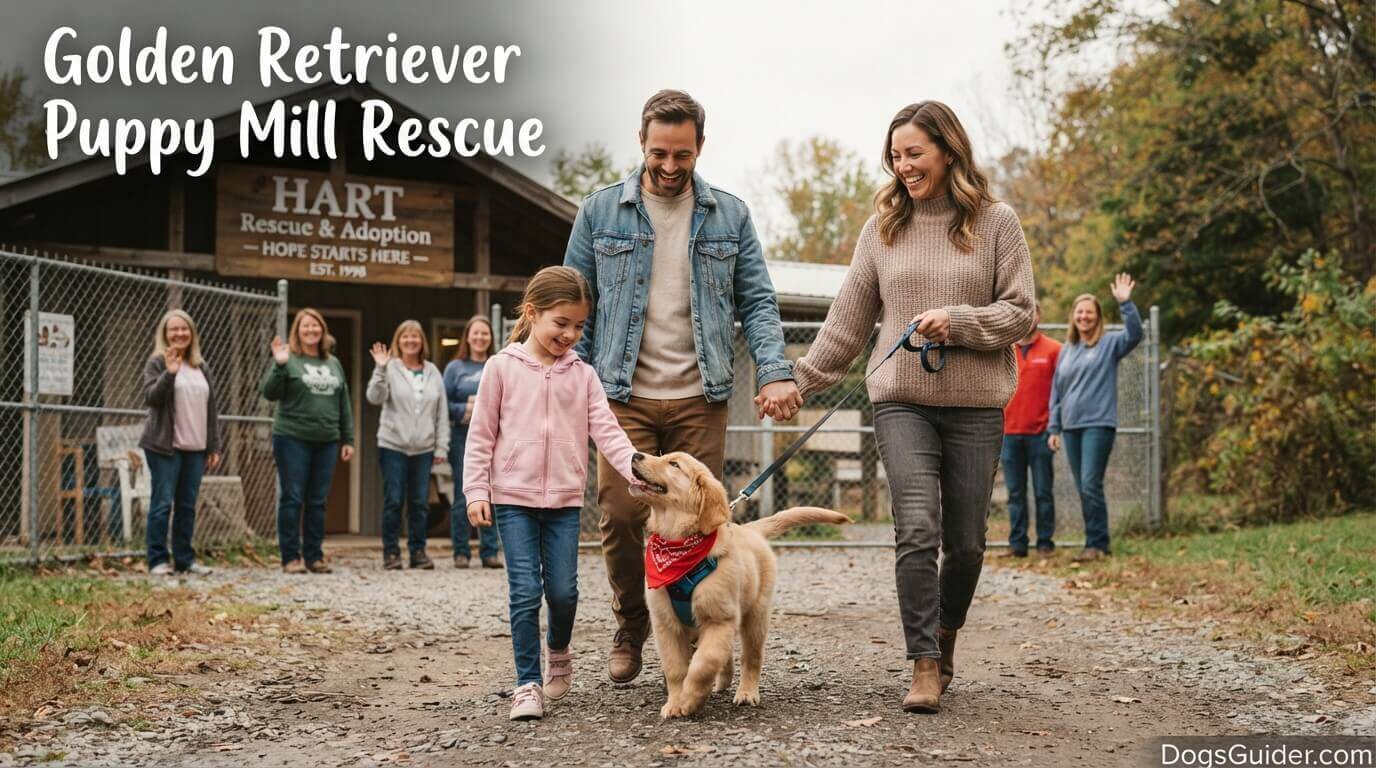
Dogs pulled from puppy mills often arrive at rescue organizations with a combination of physical and emotional challenges:
- Little to no house-training, since they’ve likely never lived indoors.
- Fear of humans, especially men or people wearing hats or uniforms, due to limited or negative human contact.
- Poor socialization with other dogs, toys, stairs, and everyday household sounds.
- Dental and coat issues from years of neglect and inadequate grooming.
- Underlying health conditions, including genetic issues from repeated inbreeding within the mill.
Despite this, Golden Retriever Puppy Mill Rescue dogs are remarkably resilient, and with patience, most puppy mill survivors go on to form deep, trusting bonds with their adoptive families.
How Golden Retriever Puppy Mill Rescue Organizations Work
- Rescue and intake dogs are surrendered by breeders, seized in cruelty investigations, or pulled from mill auctions by rescue groups.
- Veterinary assessment: Each dog receives a full medical exam, vaccinations, spay/neuter, and treatment for any existing conditions.
- Foster placement: Most rescues place dogs in foster homes first to begin socialization and evaluate temperament before adoption.
- Behavioral rehabilitation: Foster families and trainers work on basic house manners, leash walking, and building trust.
- Adoption matching: The rescue matches the dog with an adopter whose home environment fits the dog’s specific needs.
What to Expect When Adopting a Puppy Mill Survivor
1. A Slower Bonding Process
Unlike puppies raised in loving homes, mill survivors often need weeks or months to trust a new family. Progress should be measured in small wins, not immediate affection.
2. House-Training From Scratch
Since these dogs have likely never lived indoors, expect to house-train them as you would a young puppy with consistent routines, praise, and patience.
3. Benefits of a “Mentor Dog”
Rescues often recommend adopting into a home with at least one confident, well-adjusted dog already present, since mill survivors learn everyday behaviors like going outside to potty by observing other dogs.
4. A Calm, Low-Stress Environment
A quiet home with a secure, physically fenced yard (not an electric fence) helps a fearful rescue dog decompress and adjust at their own pace.
How to Help a Golden Retriever Puppy Mill Rescue Even Without Adopting

- Foster a dog: rescues consistently need temporary homes to bridge the gap between rescue and permanent adoption.
- Donating: veterinary costs for a single rescued mill dog can run into the thousands, especially for dental work or surgery.
- Volunteer: Many organizations need help with transport, events, or administrative support.
- Spread awareness: sharing accurate information about puppy mills helps reduce demand for mill-sourced puppies.
How to Choose a Reputable Golden Retriever Rescue Organization
- Check whether the organization is a registered nonprofit with transparent finances.
- Confirm they require a home visit or thorough application before adoption.
- Ask about post-adoption support, since mill survivors often need ongoing behavioral guidance.
- Look for reviews or testimonials from previous adopters and fosters.
Signs a Golden Retriever May Be a Puppy Mill Survivor
- Extreme shyness or fear around new people or environments
- Difficulty walking on a leash or navigating stairs
- Matted coat, overgrown nails, or dental problems at intake
- Discomfort with being touched, picked up, or handled
- Little to no response to basic commands or their name
Final Thoughts
Adopting through a Golden Retriever puppy mill rescue is one of the most meaningful ways to give a deserving dog a second chance, but it does require patience, consistency, and realistic expectations.
These dogs may take longer to trust and bond, but with time, most puppy mill survivors blossom into affectionate, loyal companions, proof of just how resilient and forgiving this breed truly is.
If you’re ready for a slower journey with a big emotional payoff, a rescued Golden Retriever Puppy Mill Rescue may be exactly the right fit for your home.
FAQs
1. What is a puppy mill Golden Retriever rescue?
It’s an organization that removes Golden Retriever Puppy Mill Rescue from commercial breeding operations, provides medical care and rehabilitation, and places them in foster or permanent adoptive homes.
2. How long does it take a puppy mill survivor to adjust to a home?
Most dogs show noticeable progress within a few weeks, though full trust and comfort can take several months depending on the individual dog’s history.
3. Are puppy mill rescue Golden Retrievers good with kids?
Many are, once properly adjusted, though adult or older-children households are often recommended initially since a calm, predictable environment helps a fearful dog settle faster.
4. How much does it cost to adopt a Golden Retriever from a rescue?
Adoption fees typically range from $200 to $500, which usually covers vaccinations, spay/neuter, and basic veterinary care already provided.
5. Do puppy mill Golden Retrievers have more health problems?
Some may, due to inbreeding or years of inadequate care, which is why reputable rescues provide a full veterinary assessment and disclose known health conditions before adoption.
6. Can I foster a Golden Retriever before deciding to adopt?
Yes, most rescues actively encourage fostering, and many “foster fails” (fosters who fall in love and adopt) begin exactly this way.
7. What should I avoid doing with a newly rescued puppy mill dog?
Avoid forcing physical contact, overwhelming them with visitors early on, or expecting immediate trust; let the dog approach you at their own pace.
8. How can I report a suspected puppy mill?
Contact your local animal control, humane society, or the ASPCA, providing as much detail as possible so investigators can assess the situation.

Sarah Mitchell has been raising French Bulldogs for over 9 years in Austin, Texas. After adopting her first Frenchie, Biscuit, she became passionate about helping new owners navigate the unique needs of the breed from breathing care to diet and heat safety. Sarah has worked closely with local veterinarians and attended the AKC National Championship three times as a breed enthusiast. Her guides focus on practical, real-world advice for American Frenchie owners.


[…] sources put the average Labradoodle lifespan at roughly 12 to 15 years, with some estimates running slightly narrower (12 to 14) or wider (12 to […]