
Introduction
Dog specific toothpaste isn’t just a marketing gimmick; it’s a formula built without the toxic ingredients found in human toothpaste and designed to be safely swallowed, since dogs can’t spit and rinse as we do.
This guide explains exactly why dog specific toothpaste matters, what ingredients to look for (and avoid), the best options on the market, and how to actually get your dog to accept a brushing routine without a fight.
Why You Can Never Use Human Toothpaste on a Dog
Studies show that nearly 80% of dogs show signs of oral disease by age three, making dental care essential, but the toothpaste in your bathroom can do real harm. Human toothpaste contains xylitol and fluoride, two ingredients that are safe for people but dangerous for dogs.
- Xylitol is an artificial sweetener that causes a sudden, life-threatening drop in blood sugar and can lead to liver failure in dogs, even in tiny amounts.
- Fluoride is safe for humans who spit it out, but toxic to dogs in the higher relative doses caused by swallowing an entire brushing session’s worth.
- Foaming agents (SLS) can cause stomach upset since dogs swallow rather than rinse.
This is exactly why a dog specific toothpaste formulated to be swallowed safely is non-negotiable for at-home dental care.
What Makes a Toothpaste “Dog Specific”?
1. Fluoride-Free and Xylitol-Free Formula
The single most important safety feature. Every reputable dog specific toothpaste is free of both ingredients by design.
2. Enzymatic Cleaning System
Most dog specific toothpaste uses enzymes like glucose oxidase and lactoperoxidase, which react with natural compounds in a dog’s saliva to break down plaque and inhibit new tartar formation without needing to be rinsed off.
3. Dog-Friendly Flavors
Since dogs won’t tolerate mint the way humans do, dog specific toothpaste comes in flavors dogs actually enjoy; poultry, beef, peanut butter, and malt are among the most common.
4. Gentle Abrasives
Ingredients like silica or calcium carbonate gently polish the tooth surface without wearing down enamel, unlike harsher human-grade abrasives.
5. Soothing Additions
Many formulas include aloe vera, neem oil, or chamomile to calm inflamed gums, which is especially helpful for dogs already showing early signs of gum disease.
Best Dog Specific Toothpaste Options
| Toothpaste | Best For | Key Feature |
|---|---|---|
| Virbac C.E.T. Enzymatic Toothpaste | Everyday plaque & tartar control | Dual-enzyme system, vet-recommended |
| Vet’s Best Enzymatic Dental Gel | Dogs with mild gum irritation | Contains neem oil and aloe vera |
| Arm & Hammer Complete Care | Budget-friendly daily brushing | Baking soda formula, fluoride-free |
| Petsmile Professional | Owners wanting clinical-grade results | Only ADA-recognized pet toothpaste |
| Vetoquinol Enzadent | Multi-pet (dog & cat) households | Triple-enzyme, non-foaming formula |
Dog Specific Toothpaste for Puppies
Puppies benefit from starting a brushing routine as early as possible so it becomes a normal part of their routine.
Look for a dog specific toothpaste labeled safe for puppies, often in milder flavors like peanut butter, and paired with a soft finger brush rather than a firm-bristled toothbrush.
How to Brush Your Dog’s Teeth Safely
- Let your dog taste the toothpaste first so brushing feels rewarding rather than threatening.
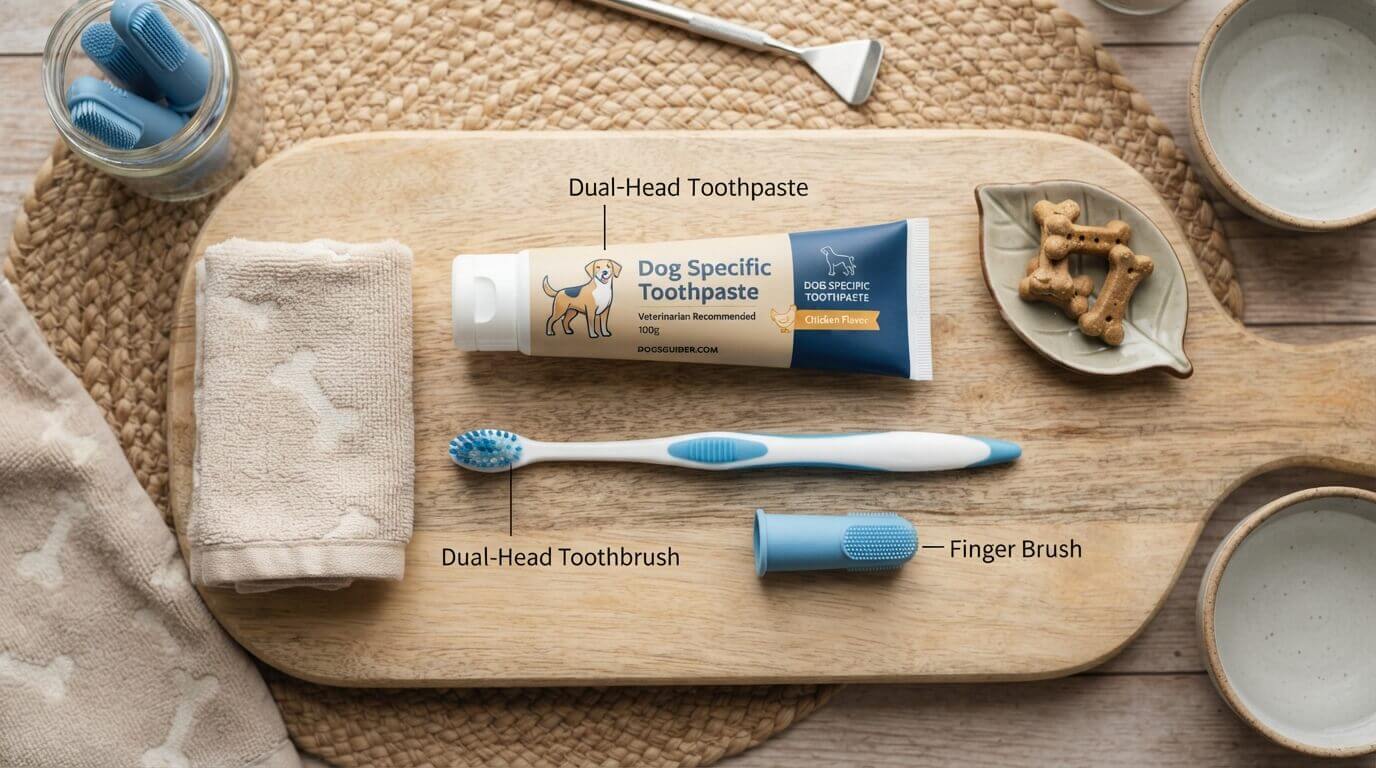
- Use a dog-specific toothbrush or finger brush; human brushes are often too hard and the wrong shape for a dog’s mouth.
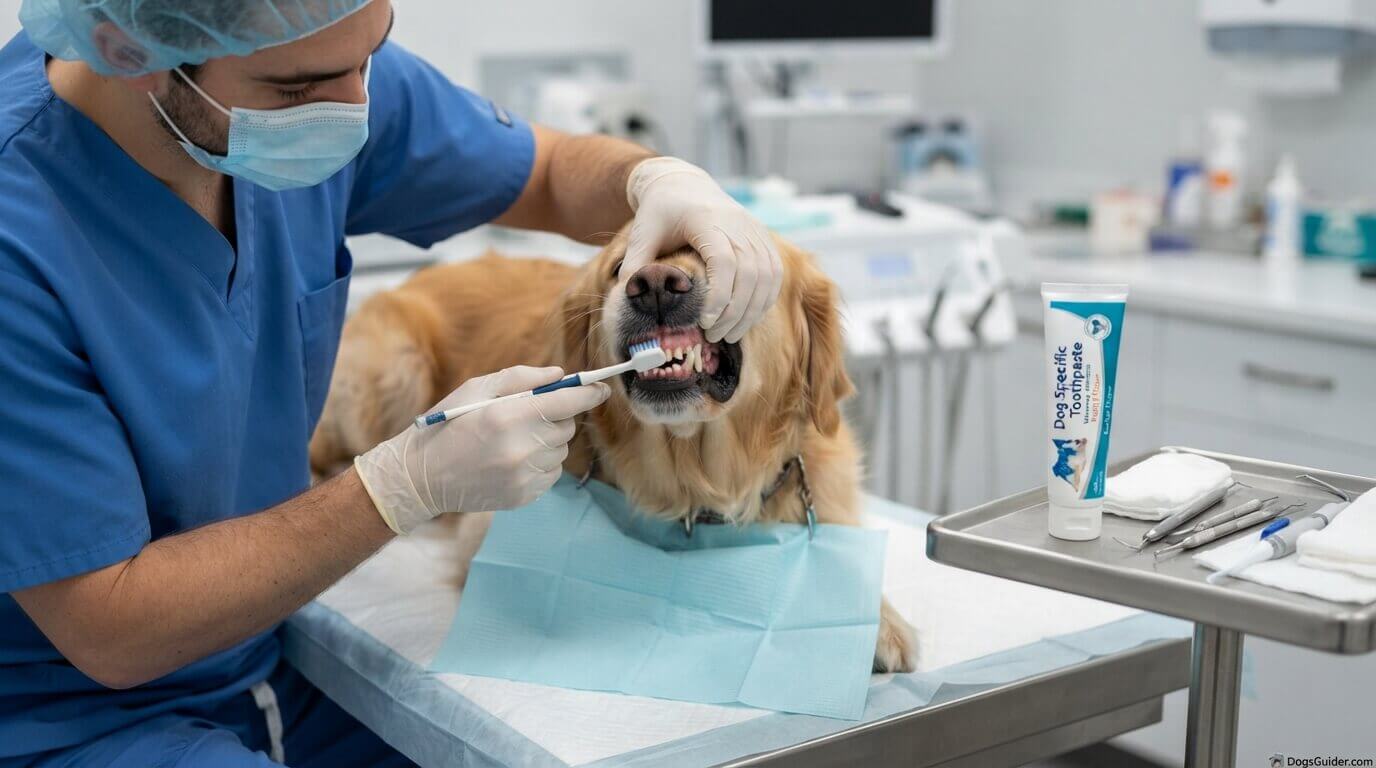
- Lift the lip and brush at a 45-degree angle along the gumline in small circular motions.
- Focus on the outer surfaces of the teeth, since most tartar builds up there rather than the inner surfaces.
- Keep sessions short; 2 to 3 minutes is enough, and consistency matters more than duration.
- Reward your dog immediately after with praise or a treat to build a positive association.
How Often Should You Brush With Dog Specific Toothpaste?
Most veterinarians recommend brushing at least two to three times a week for basic maintenance, though daily brushing offers the best protection against plaque and tartar buildup.
Pairing regular brushing with dental chews and annual veterinary cleanings gives the most complete protection against periodontal disease.
Signs Your Dog Needs a Dental Checkup
- Persistent bad breath despite regular brushing
- Yellow or brown tartar buildup along the gumline
- Red, swollen, or bleeding gums
- Reluctance to eat hard food or chew toys
- Visible loose or broken teeth
Final Thoughts
Investing in a proper dog specific toothpaste is one of the simplest, most affordable ways to protect your dog from painful and expensive dental disease later in life.
Always choose a fluoride-free, xylitol-free, enzymatic formula in a flavor your dog enjoys, introduce brushing gradually, and pair it with regular veterinary dental checkups for the best long-term results.
FAQs
1. Why do dogs need a specific toothpaste instead of human toothpaste?
Human toothpaste contains xylitol and fluoride, both of which are toxic to dogs when swallowed, while dog specific toothpaste is formulated to be completely safe if swallowed.
2. What ingredients should I avoid in dog toothpaste?
Avoid any toothpaste containing fluoride, xylitol, alcohol, or artificial sweeteners, as these can cause serious health issues in dogs.
3. How often should I brush my dog’s teeth?
Veterinarians recommend brushing two to three times a week at minimum, though daily brushing provides the best protection against plaque and tartar.
4. Can I use dog specific toothpaste on cats too?
Some enzymatic toothpastes are formulated for both species, but always check the label since flavor preferences and formulations can differ between cats and dogs.
5. What if my dog refuses to let me brush their teeth?
Start slowly by letting your dog lick the toothpaste off your finger first, gradually introduce a finger brush, and keep early sessions very short with lots of praise.
6. Are enzymatic toothpastes better than regular dog toothpaste?
Yes, enzymatic toothpastes actively break down plaque-causing bacteria through a chemical reaction, offering more effective tartar control than simple abrasive-only formulas.
7. Do dental chews work as well as brushing with toothpaste?
Dental chews help reduce tartar but are best used alongside brushing, not as a replacement, since brushing reaches areas chews often miss.
8. Is dog specific toothpaste safe for puppies?
Yes, many brands offer puppy-safe formulas in milder flavors, and starting early helps puppies get comfortable with a lifelong dental care routine.

Sarah Mitchell has been raising French Bulldogs for over 9 years in Austin, Texas. After adopting her first Frenchie, Biscuit, she became passionate about helping new owners navigate the unique needs of the breed from breathing care to diet and heat safety. Sarah has worked closely with local veterinarians and attended the AKC National Championship three times as a breed enthusiast. Her guides focus on practical, real-world advice for American Frenchie owners.