How to Stop French Bulldog Puppy Biting: 7 Steps
Introduction
If you want to know how to stop french bulldog puppy biting, start with redirection and calm consistency, not punishment. Our guide on how to crate train a French Bulldog puppy shows how a calm routine helps puppies settle and learn faster.
French Bulldog puppies bite for normal puppy reasons. They explore the world with their mouths, they play with their mouths, and they chew hard when teething hurts. Biting feels alarming, but it is rarely aggression in a young puppy.
Quick Answer: To stop French Bulldog puppy biting, redirect every bite onto a toy, pause play briefly when teeth touch skin, keep play calm, rotate safe chews, and protect sleep. Stay consistent across the household and never punish biting with fear or pain.
This guide explains why Frenchie puppies bite and gives seven practical steps you can use from today. It also covers what to avoid and when biting needs vet or behaviour help.
Why Do French Bulldog Puppies Bite?
Puppy biting has several normal causes. Knowing the cause helps you pick the right response instead of reacting in frustration.
Teething Pain
Frenchie puppies teethe for months, and sore gums make chewing feel good. A teething puppy may chew hands, shoes, furniture, and anything within reach. Chewing eases the pressure in the gums, so the puppy repeats it.
Play and Exploration
Puppies play with their mouths because that is how they learn about other dogs and people. Mouthing during play is normal social behaviour, not bad temper. Puppies test how hard they can bite before play stops.
Attention Seeking
Some puppies learn that biting gets attention fast. If biting makes you look, talk, laugh, or push the puppy away, the puppy learns that biting works. Even negative attention can reward a puppy that wants interaction.
Overtiredness and Overexcitement
An overtired puppy bites more, not less. Puppies that miss naps become cranky, mouthy, and unable to settle. Overexcited play has the same effect, because arousal rises faster than self control.
The 7 Steps to Stop Puppy Biting
Step 1: Redirect Every Bite onto a Toy
Keep a toy within reach whenever you play with your puppy. The moment teeth touch skin or clothes, calmly offer the toy instead. Praise and play with the toy so it becomes more fun than your hand.
Redirect every single time, not just sometimes. If biting sometimes earns play and sometimes earns a toy, the puppy keeps testing. A clear rule every time speeds learning a lot.
Step 2: Teach Bite Inhibition with a Pause
Bite inhibition means teaching your puppy to control jaw pressure. When teeth touch skin, say “ouch” in a calm, clear voice. Then stop play at once and turn away for a few seconds.
Keep the pause short, around five to ten seconds. Then offer a toy and restart calm play. Your puppy learns a simple rule: hard mouthing ends the fun.
Stay calm during the pause. Shouting, pushing, or waving your hands makes the game more exciting. A boring pause teaches far more than a dramatic reaction ever will.
Step 3: Keep Play Calm from the Start
Wild play creates biting, so keep games at a moderate energy level. Use gentle tug with rules, short fetch sessions, and calm petting. Stop the game before excitement climbs too high.
Avoid wrestling games that encourage grabbing hands and arms. Rough play teaches puppies that hands are part of the game. Calm play teaches puppies that toys are for mouths and hands are for petting.
Step 4: Make Hands Boring, Not Toys
Hands should never be chew toys, even during gentle mouthing. If your puppy mouths your hand, keep the hand still, say “ouch”, pause, and offer a toy. Do not pull away fast, because fast movement invites chasing.
Teach children the same rule. Children should pet the puppy calmly and stop play if teeth touch skin. Supervise every interaction until the puppy reliably chooses toys over hands.
Step 5: Rotate Safe Chews for Teething
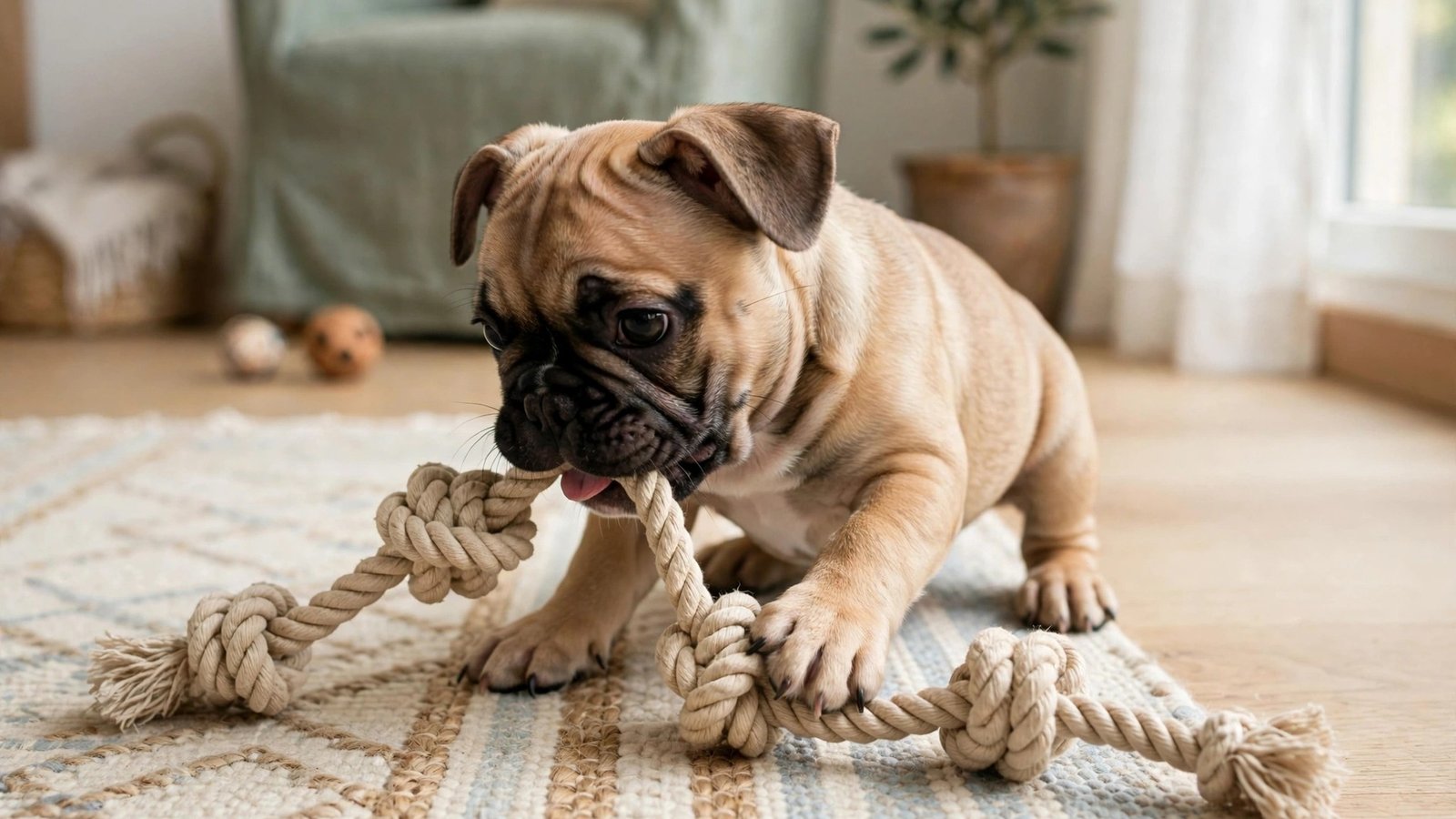
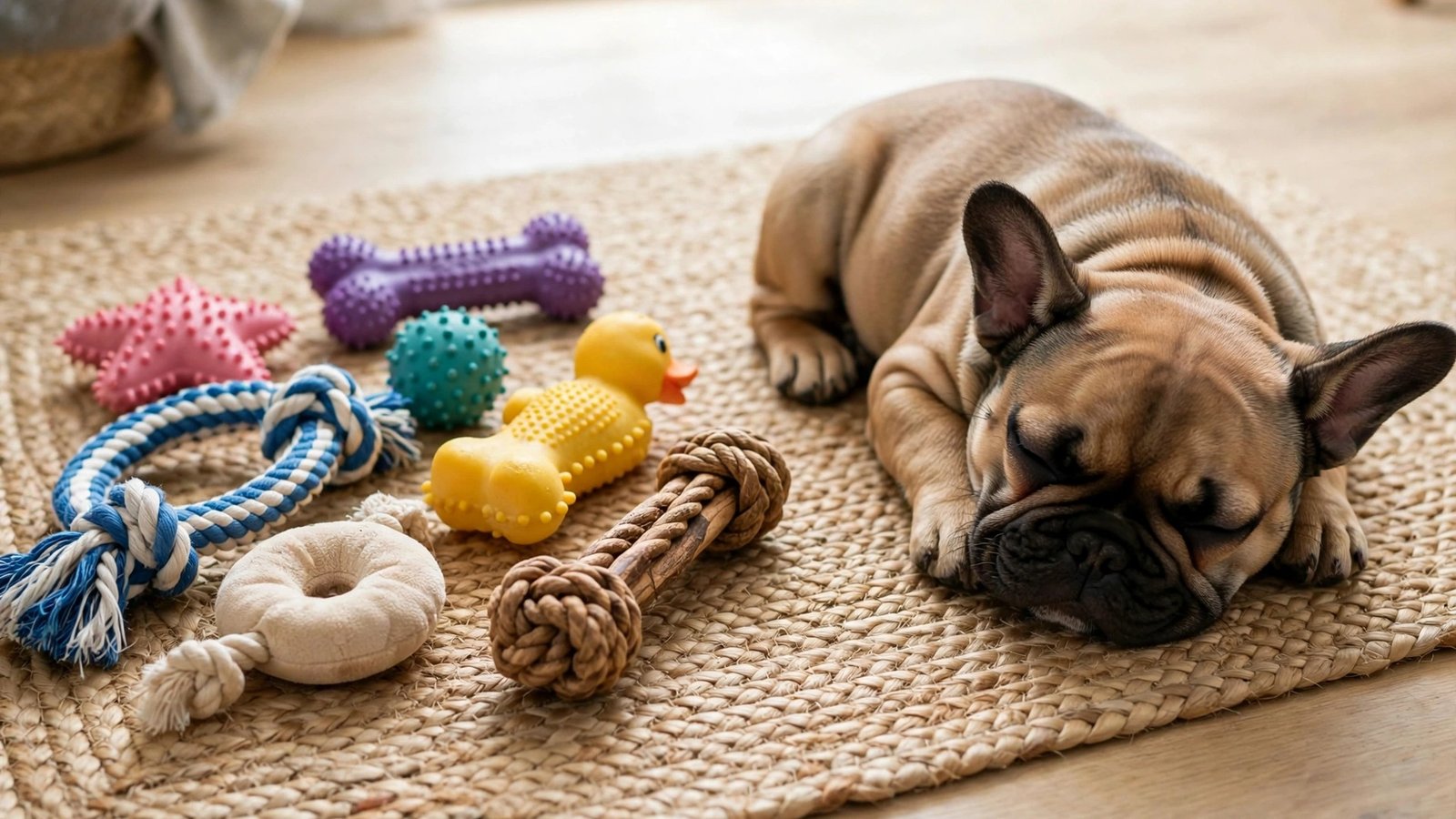
Give your puppy several safe chew options and rotate them through the week. Rubber toys, rope toys, and frozen chew toys all help teething puppies. Frozen toys can soothe sore gums well on hard teething days.
Check chews often for damage and remove broken pieces at once. Choose chews sized for a small breed puppy, and supervise chewing until you know what lasts safely. A chew that splinters is never worth the risk.
Step 6: Protect Sleep and Daily Exercise
Puppies need a lot of sleep, often far more than owners expect. A Frenchie puppy that misses naps will bite more, listen less, and settle poorly. Build a daily routine with regular naps in a quiet space.
Our guide on how to potty train a French Bulldog puppy shows how a steady routine supports both toilet training and calm behaviour. Regular meals, naps, play, and toilet breaks all help biting improve.
Exercise should suit a young Frenchie. Use short walks, gentle play, and sniffing games rather than long, tiring outings. French Bulldogs overheat easily, so keep activity short and watch for heavy panting.
Step 7: Socialise Gently and Stay Consistent
Gentle socialisation teaches puppies how to play politely with people and dogs. Arrange calm meetings with friendly, vaccinated dogs and kind visitors. Keep sessions short and end before excitement takes over.
Watch puppy play closely. Puppies learn bite control from other dogs, because playmates yelp and stop when bitten too hard. Step in calmly if play gets too rough or one puppy looks stressed.
Consistency across the household matters most of all. Every person must follow the same rules: redirect, pause, and never play hand games. Mixed rules confuse puppies and slow progress badly.
What to Avoid
Never hit, smack, or physically punish a biting puppy. Physical punishment creates fear and can increase aggression as the puppy grows. It also damages trust between you and your puppy.
Do not use alpha rolls, scruff grabs, or dominance-based punishment. These methods frighten puppies and teach them that hands near their body bring danger. A frightened puppy may bite harder, not less.
Avoid bark collars, spray collars, and other punishment gadgets for puppy biting. These tools punish normal puppy behaviour without teaching an alternative. They can also increase anxiety in a sensitive breed like the Frenchie.
Do not shout at a biting puppy or push the puppy away roughly. Shouting adds excitement, and pushing turns into a game. Calm pauses and redirection work better and keep trust intact.
When Biting Needs Vet or Behaviour Help
Book a vet visit if biting starts suddenly in a puppy that was previously gentle. Pain from teething problems, ear trouble, or injury can make a puppy mouthy and grumpy. A vet check rules out pain before you change training.
Get behaviour help if biting breaks skin repeatedly despite weeks of consistent training. A qualified behaviour professional can watch your puppy and spot patterns you may miss. Early help prevents small problems from becoming adult habits.
Seek help promptly if biting comes with stiff body language, hard staring, growling over food or toys, or aggression that looks intentional. These signs differ from normal puppy mouthing and deserve expert assessment.
Separation distress can also increase biting and mouthing in some puppies. Our guide on French Bulldog separation anxiety explains the signs and the gradual training that helps distressed puppies settle.
Biting Triggers and Responses
| Biting trigger | What you often see | Best response |
|---|---|---|
| Teething pain | Chewing hands, shoes, and furniture | Offer a frozen chew or rubber toy |
| Excited play | Grabbing hands during fast games | Pause play, then restart calmly |
| Attention seeking | Mouthing to get a reaction | Stay boring, redirect onto a toy |
| Overtiredness | Biting after long play or missed naps | Short rest in a quiet space |
| Exploration | Mouthing new objects and sleeves | Swap the object for a safe toy |
| Rough handling | Biting when grabbed or pushed | Use calm handling and gentle play |
The Bottom Line
Learning how to stop french bulldog puppy biting takes patience, redirection, and consistency, not punishment. Redirect every bite onto a toy, pause play when teeth touch skin, and keep games calm from the start.
Protect sleep, rotate safe chews, socialise gently, and make sure every person in the home follows the same rules. Biting usually improves steadily over several weeks when training stays consistent.
Avoid hitting, dominance punishment, and bark collars, because fear makes biting worse over time. See your vet for sudden biting changes, and get behaviour help if biting breaks skin repeatedly or looks aggressive.
References
- American Kennel Club, puppy training and behaviour guidance, https://www.akc.org/
- PetMD, guidance on puppy biting, teething, and bite inhibition, https://www.petmd.com/
- VCA Animal Hospitals, client education on puppy behaviour and training, https://vcahospitals.com/
- Merck Veterinary Manual, owner guidance on canine behaviour problems, https://www.merckvetmanual.com/
FAQs
1. At what age do French Bulldog puppies stop biting?
Most Frenchie puppies bite less as teething ends and training takes hold. Many improve a lot within a few weeks of consistent redirection, and most mouth far less as adults.
2. Is it normal for a French Bulldog puppy to bite a lot?
Yes, frequent mouthing is normal in young puppies. Puppies explore with their mouths, play with their mouths, and chew to ease teething pain, so biting alone rarely means aggression.
3. Should I say “ouch” when my puppy bites me?
Yes, a calm “ouch” followed by a brief play pause teaches bite inhibition well. Keep your voice calm, stop play at once, then offer a toy and restart gently.
4. What should I do if my puppy bites harder after I say “ouch”?
End play completely and give your puppy a short rest with a safe chew. Try again later when the puppy is calmer, and keep future play sessions shorter and calmer.
5. Are frozen chews safe for teething French Bulldog puppies?
Frozen rubber toys and frozen chew toys can soothe sore gums well. Supervise chewing, check toys for damage often, and remove any toy that starts to break apart.
6. Should I punish my French Bulldog puppy for biting?
No, punishment makes biting worse by adding fear and excitement. Redirect onto a toy, pause play briefly, and reward calm behaviour instead of punishing normal puppy mouthing.
7. When should I get professional help for puppy biting?
Get help if biting breaks skin repeatedly despite consistent training, if biting starts suddenly, or if it comes with growling, stiff body language, or guarding behaviour.

Sarah Mitchell has been raising French Bulldogs for over 9 years in Austin, Texas. After adopting her first Frenchie, Biscuit, she became passionate about helping new owners navigate the unique needs of the breed from breathing care to diet and heat safety. Sarah has worked closely with local veterinarians and attended the AKC National Championship three times as a breed enthusiast. Her guides focus on practical, real-world advice for American Frenchie owners.