
Can Dogs Have Potatoes? Safe Types, Risks & How Much to Feed
Introduction
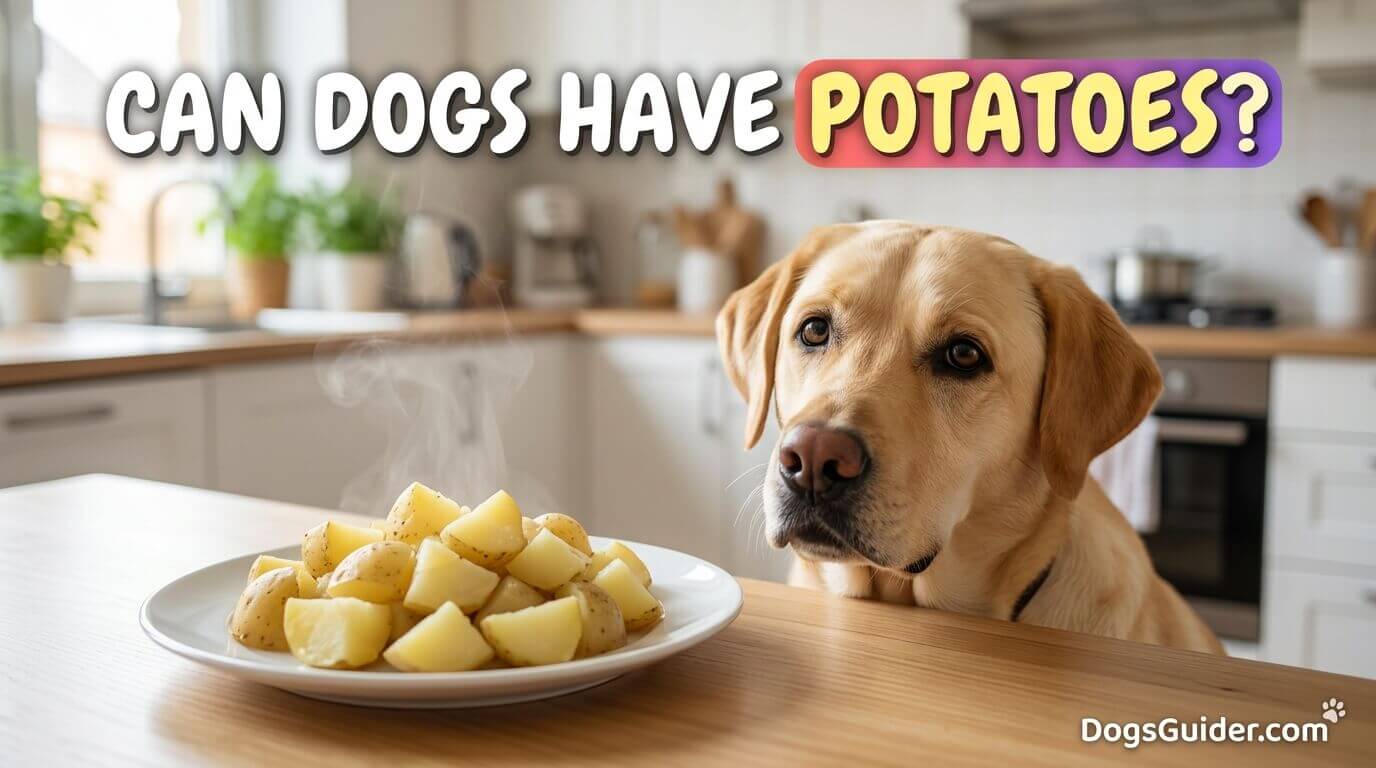
You are mashing dinner, a piece of potato hits the floor, and your dog is already staring at it. So, can dogs have potatoes? The short answer is yes, but only in certain forms.
A plain, fully cooked potato is usually fine as an occasional treat. A raw potato, a green potato, or a plate of buttery chips is a different story.
This guide explains exactly which potatoes are safe, which are not, and how much is reasonable.
Quick Answer
Yes, dogs can have potatoes if they are plain, fully cooked, and given in small amounts.
Boiled, steamed, or baked potato with no salt, butter, oil, garlic, or onion is generally safe. Raw potatoes, green potatoes, potato plants, and salty or fried potato foods should be avoided.

Table of Contents
- Why potatoes can be safe for dogs
- Why raw and green potatoes are risky
- Potato types: safe or not?
- How much potato can a dog eat?
- How to prepare potato for your dog
- Who should avoid potatoes
- Potato vs sweet potato
- What to do if your dog ate raw or green potato
- FAQs
Are Potatoes Good for Dogs?
Can Dogs Have Potatoes are not poisonous in themselves. They are a starchy vegetable that contains carbohydrates, some fibre, potassium, vitamin C, and vitamin B6. Cooked potato is also easy to chew and mild in taste, so many dogs like it.
That said, potatoes are not a necessary part of a dog’s diet. A complete, balanced dog food already supplies the nutrients dogs need. Think of potato as a small extra, never a meal replacement.
Why Raw and Green Potatoes Are Risky
Can Dogs Have Potatoes belong to the nightshade family. They contain a natural compound called solanine, which plants use as protection against insects and disease. Solanine is found in the highest amounts in:
- Green patches on the skin
- Sprouts and “eyes”
- Raw skin and raw flesh
- Leaves, stems and other parts of the potato plant
Cooking, especially boiling, lowers solanine levels in the flesh, which is why cooked potato is much safer than raw.
Eating large amounts of raw or green potato can cause vomiting, diarrhoea, drooling, lethargy and abdominal pain. Severe cases may lead to confusion, weakness or tremors, and need urgent veterinary care.
Potato Types: Which Are Safe for Dogs?
| Type | Safe? | Notes |
|---|---|---|
| Plain boiled potato | Yes, in moderation | Cool it first and cut into small pieces |
| Plain baked potato | Yes, in moderation | Skip toppings like butter, cheese, sour cream, and chives |
| Steamed potato | Yes, in moderation | Good option because nothing is added |
| Mashed potato | Only if completely plain | Most mashed potato contains butter, milk, salt, or garlic |
| Raw potato | No | Contains solanine and is hard to digest |
| Green or sprouted potato | No | Highest solanine levels |
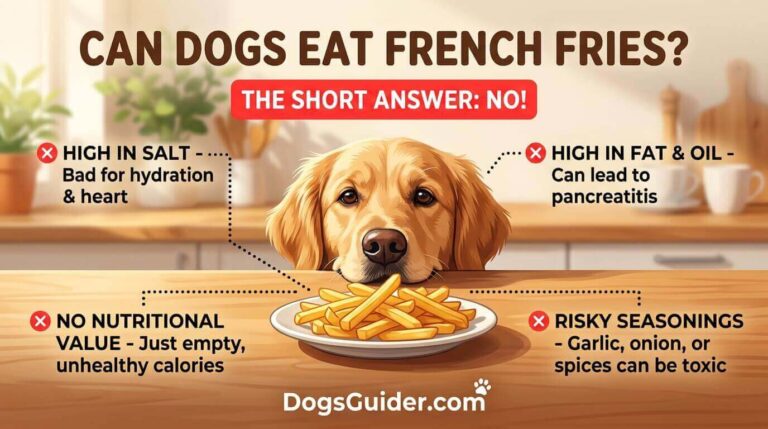
| French fries and chips | No | High in fat and salt, can trigger stomach upset or pancreatitis |
| Potato crisps | No | Very high in salt and fat |
| Potato skin | Better avoided | Often has more solanine and is harder to digest |
| Potato salad | No | Contains mayonnaise, onion, salt, and other seasonings |
How Much Potato Can a Dog Eat?
Treats and extras, including potato, should make up no more than about 10% of your dog’s daily calories. Potato is calorie-dense for its size, so portions need to be small.
- Toy and small dogs: a teaspoon or two of cooked potato.
- Medium dogs: one to two tablespoons.
- Large dogs: a few tablespoons.
These are rough examples, not a prescription. Start with a very small piece the first time and watch your dog for any stomach upset over the next day. Offer it occasionally, not daily.
How to Prepare Potato for Your Dog
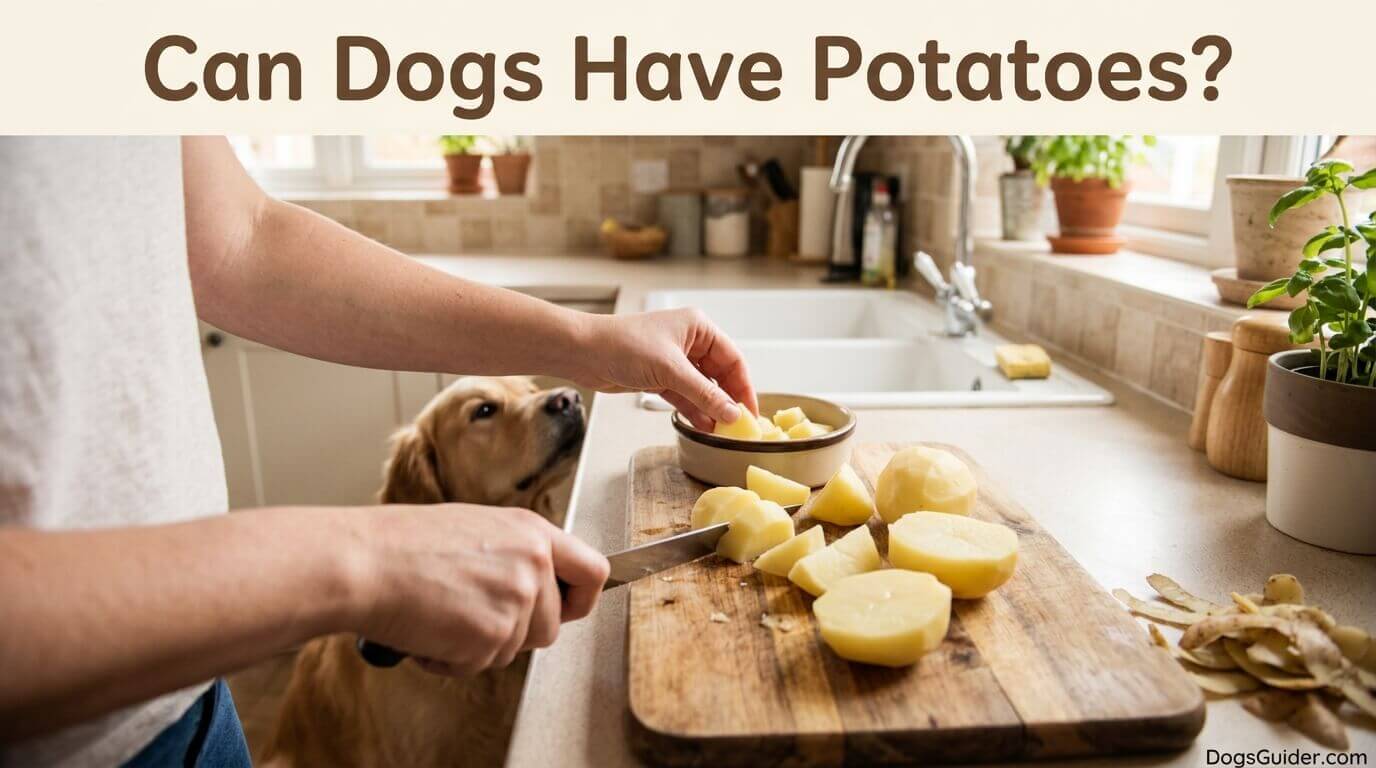
- Wash the potato and cut away any green areas, sprouts, and eyes.
- Peel it. Peeling removes most of the skin, where solanine is concentrated.
- Cook it fully by boiling, steaming, or baking until completely soft.
- Do not add anything. No salt, butter, milk, oil, cheese, garlic, onion, or spices.
- Let it cool to avoid burning your dog’s mouth.
- Cut it into small pieces or mash it plainly to prevent choking.
Foods Mixed With Potato That Are Dangerous
The potato itself is rarely the problem. The extras are. Watch for:
- Onion, garlic and chives: toxic to dogs and common in mashed and baked potato dishes.
- Butter, cream and cheese: high in fat, which can cause diarrhoea and may trigger pancreatitis.
- Salt: too much can lead to dehydration and salt poisoning.
- Bacon bits and gravy: fatty, salty, and sometimes seasoned with harmful ingredients.
- Xylitol: a sweetener found in some sauces and foods that is highly toxic to dogs.
Which Dogs Should Avoid Potatoes?
- Dogs with diabetes: Can Dogs Have Potatoes are starchy and can raise blood sugar quickly. Ask your vet before offering any.
- Overweight dogs: extra starchy calories can make weight problems worse.
- Dogs with a history of pancreatitis: stick to a vet-approved diet only.
- Dogs on prescription diets: extras can interfere with the treatment plan.
- Puppies: their digestion is delicate, so check with a vet before adding human foods.
Potato vs. Sweet Potato for Dogs
Sweet potatoes are not part of the nightshade family and are often seen as a better choice. They are rich in fibre, beta-carotene, and vitamins, and cooked sweet potato is commonly used in dog treats.
| White Potato | Sweet Potato | |
|---|---|---|
| Plant family | Nightshade | Morning glory family |
| Solanine concern | Yes, in raw and green parts | No |
| Fibre | Lower | Higher |
| Best served | Plain, cooked, peeled | Plain, cooked, peeled |
Both should still be fed plain and in small amounts.
Signs Your Dog Is Reacting Badly to Potato
Even safe, plain potato can disagree with some dogs. After the first small serving, watch for gas, loose stools, vomiting, itching, or a sudden loss of appetite.
Mild signs usually pass within a day once you stop feeding it. If symptoms are strong, last longer than a day, or your dog seems unusually tired or painful, call your vet.
Never keep feeding a food that upsets your dog’s stomach just because it is considered “safe” in general.
Healthier Veggie Treats to Rotate With Potato
Because potato is starchy, it helps to rotate it with lower-calorie options. Many dogs enjoy plain, cooked or raw (when appropriate) pieces of carrot, green beans, pumpkin or cucumber.
These add crunch and fibre without as many calories. Introduce one new food at a time so you can spot the cause if something upsets your dog’s stomach, and always cut food into pieces that suit your dog’s size to reduce choking risk.
Potatoes in Dog Food: What About Grain-Free Diets?
Many grain-free dog foods use potato or sweet potato as a main ingredient. The U.S. FDA has investigated a possible link between certain grain-free diets high in legumes and Can Dogs Have Potatoes and a heart condition called dilated cardiomyopathy (DCM).
The research is still ongoing, and no cause has been confirmed. If you feed a grain-free diet, talk to your vet about whether it is right for your dog.
What to Do if Your Dog Ate Raw or Green Potato
- Take away any remaining potato and check how much was eaten.
- Do not make your dog vomit unless a vet tells you to.
- Call your veterinarian or a pet poison helpline with the amount and your dog’s weight.
- Watch for symptoms: vomiting, diarrhoea, drooling, weakness, tremors or confusion.
- Go to an emergency vet immediately if signs are severe or your dog ate a large amount.
Final Thoughts
So, can dogs have potatoes? Yes, as long as they are plain, fully cooked, peeled, and served in small portions. Avoid raw, green, and sprouted potatoes, and keep fries, chips, butter-heavy mash, and seasoned dishes away from the bowl.
When in doubt, especially for puppies and dogs with health conditions, ask your vet before sharing human food.
FAQs
1. Can dogs have potatoes every day?
It is better not to. Potatoes should be an occasional treat, kept within about 10% of daily calories. A balanced dog food should provide the bulk of the diet.
2. Can dogs eat raw potatoes?
No. Raw potatoes contain solanine and are hard to digest. Always cook potatoes thoroughly before offering them.
3. Can dogs eat potato skins?
It is safer to peel the potato. Skins can hold more solanine and are harder to digest, especially if they are green or the potato is sprouting.
4. Can dogs have mashed potatoes?
Only if they are completely plain. Most mashed potatoes contain butter, milk, salt, or garlic, which are not good for dogs.
5. Can dogs eat French fries?
No. Fries are high in fat and salt and can cause stomach upset or pancreatitis. A single stray fry is unlikely to be dangerous, but do not feed them on purpose.
6. Are sweet potatoes better than regular potatoes for dogs?
Sweet potatoes are often a better choice because they are higher in fibre and are not nightshades. They still need to be cooked, plain, and given in moderation.
7. Can puppies eat potatoes?
Ask your vet first. Puppies have sensitive stomachs and need a diet formulated for growth, so human foods should be introduced carefully.
8. Can dogs with diabetes eat potatoes?
Generally, it is best to avoid them or only feed them under veterinary guidance, because potatoes are starchy and can raise blood sugar.

Sarah Mitchell has been raising French Bulldogs for over 9 years in Austin, Texas. After adopting her first Frenchie, Biscuit, she became passionate about helping new owners navigate the unique needs of the breed from breathing care to diet and heat safety. Sarah has worked closely with local veterinarians and attended the AKC National Championship three times as a breed enthusiast. Her guides focus on practical, real-world advice for American Frenchie owners.




One Comment