Introduction
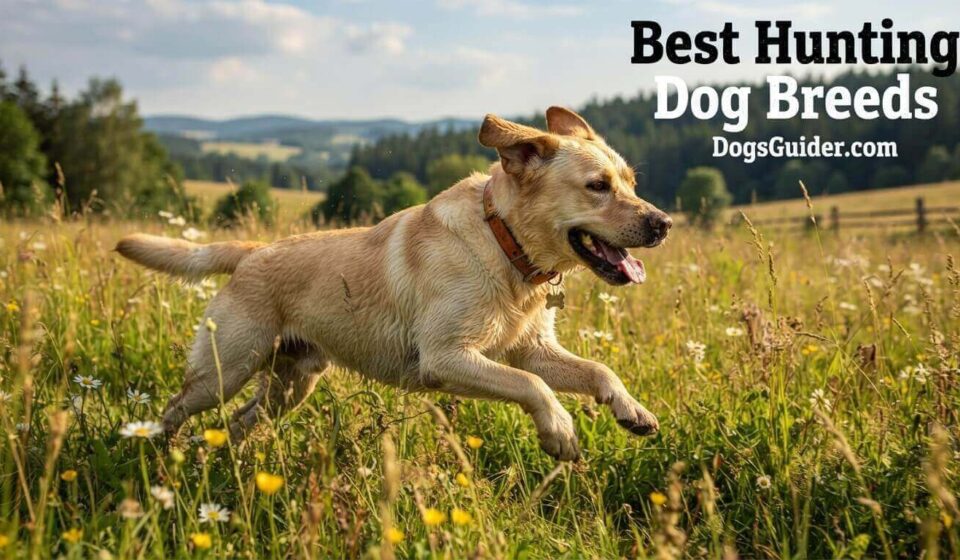
This guide covers 25 of the best hunting dog breeds, organized by the type of work they were bred to do, so you can match the right dog to your terrain, game, and hunting style.
The 4 Main Types of Hunting Dogs
According to the American Kennel Club, Best Hunting Dog Breeds generally fall into these functional categories:
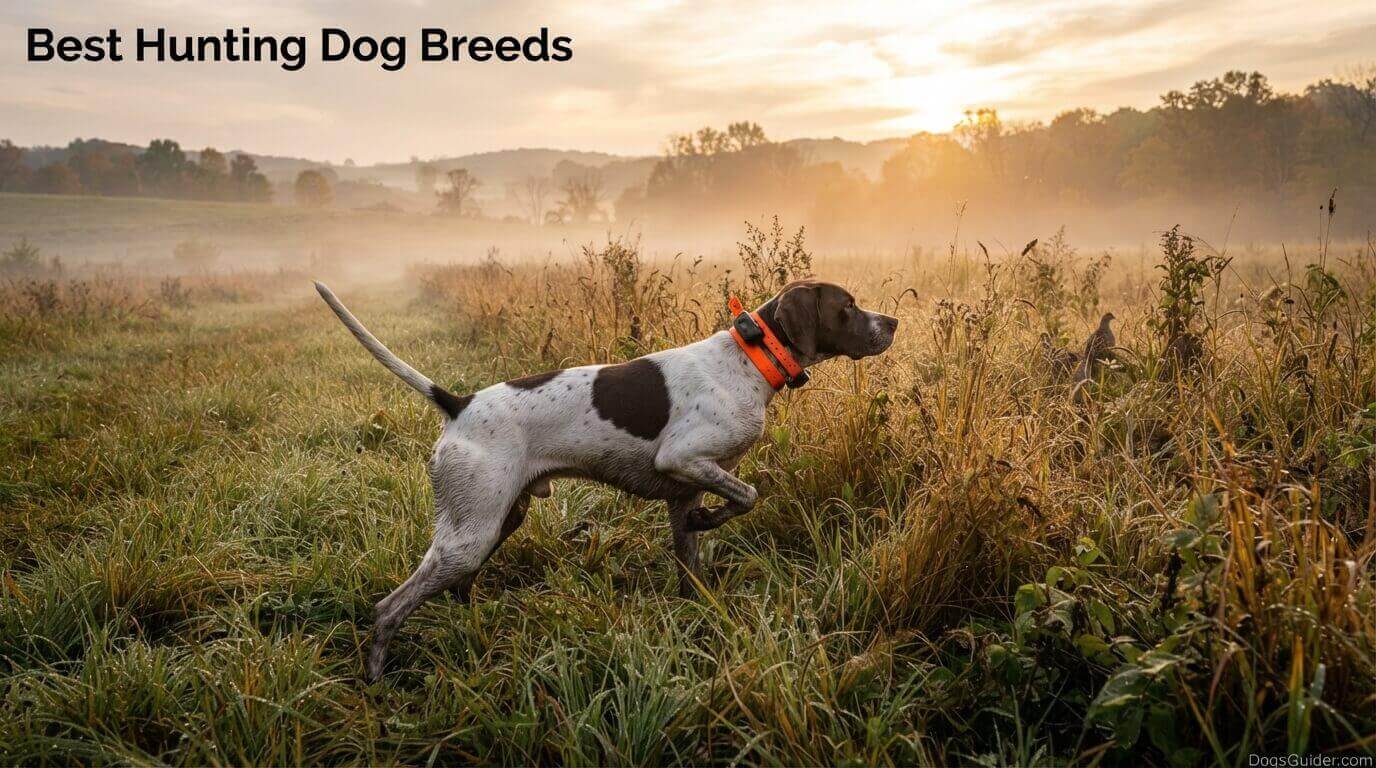
- Pointers locate game and freeze in a “point” position, indicating the game’s location without flushing it
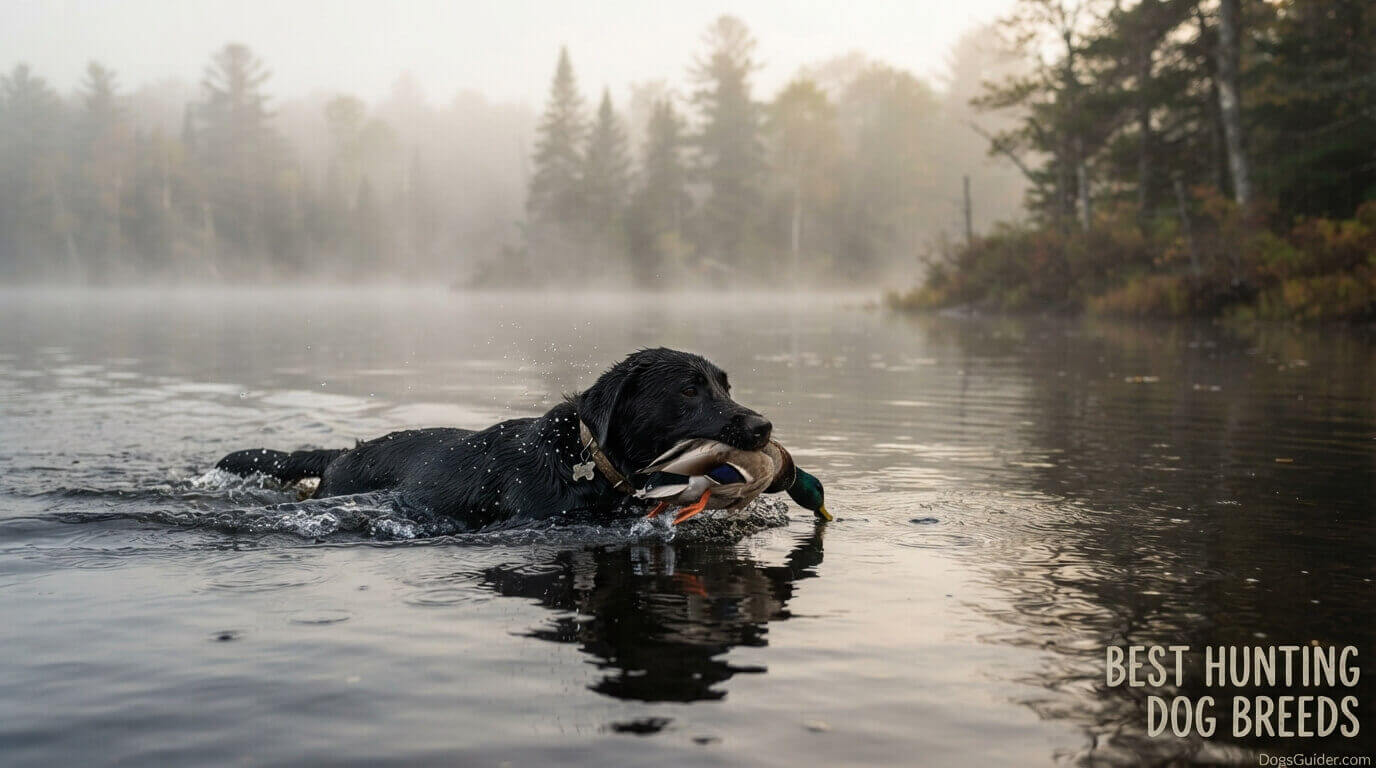
- Retrievers specialize in finding and bringing back downed game, especially waterfowl
- Flushing breeds (Spaniels) flush birds out of hiding into the air for the hunter
- Hounds rely on scent or sight to track and trail game over long distances
25 Best Hunting Dog Breeds
Top Retrievers
- Labrador Retriever: The most recognizable waterfowl dog, with a water-resistant coat and strong retrieving drive suited to cold water and upland hunting alike
- Golden Retriever: Cheerful and skilled at retrieving ducks and other waterfowl, with excellent trainability
- Chesapeake Bay Retriever: Built for icy water conditions, with a thick, oily coat designed for cold-water waterfowl work
- Flat-Coated Retriever: Versatile and enthusiastic, capable across upland and waterfowl hunting
- Nova Scotia Duck Tolling Retriever: Uses playful movement to lure curious waterfowl within range before retrieving
Top Pointers
- Pointer: Developed in England around 1650, with hunting instincts that kick in as early as two months old
- German Shorthaired Pointer: Prized for stamina and versatility across rabbits, raccoons, deer, and birds
- German Wirehaired Pointer: A wiry, near-waterproof coat protects against thorny brush and harsh weather in rugged terrain
- Vizsla: Lightweight, agile, and highly responsive, ideal for hunters who want a close-working pointer
- Brittany: Athletic and friendly, excelling at both pointing and retrieving with a gorgeous orange-and-white coat
- Weimaraner: Known as the “Gray Ghost,” a versatile pointer capable of both upland and big game trailing
Top Flushing Breeds (Spaniels)
- English Springer Spaniel: Named for their skill at “springing” game from hiding spots, with strong endurance
- Boykin Spaniel: The state dog of South Carolina, especially skilled in wetland hunting conditions
- Cocker Spaniel: A smaller flushing breed with a strong nose, well-suited to close-range upland work
- Field Spaniel: A less common but capable flushing breed with steady focus in the field
Top Hounds and Trackers
- Beagle: High-energy and effective at tracking rabbits without requiring excessive legwork from hunters
- Bloodhound: Legendary scent-tracking ability, capable of following a trail for up to 130 miles
- American Foxhound: A fast, agile scent hound historically popular among Southern hunters
- Black Mouth Cur: Multifunctional and effective at both tracking and treeing small and large game
- Mountain Cur: Known for covering long distances and instinctively “treeing” prey
- Plott Hound: Originally bred for big game trailing, including bear and boar
Versatile All-Around Hunting Breeds
- Drahthaar: Highly intelligent and moldable, effective across waterfowl, upland game, and blood tracking, even big game like boar
- Pudelpointer: A Poodle-Pointer cross combining intelligence, a love of water, and a strong retrieving instinct
- West Siberian Laika: A versatile spitz-type treeing dog originally used for moose, bear, and fur-bearing game in Siberia
- Dachshund: Uniquely capable of hunting both above and below ground, historically used across Europe for deer, boar, and smaller game
How to Choose the Best Hunting Dog Breeds for Your Needs
1. Match the Breed to Your Game Type
Bird and waterfowl hunters generally do best with retrievers and spaniels, while hunters targeting rabbits, deer, or larger game often turn to hounds or versatile breeds like the German Wirehaired Pointer or Drahthaar.
2. Consider Your Terrain and Climate
Cold-water waterfowl hunting calls for a dog with a water-resistant coat, like the Labrador or Chesapeake Bay Retriever.
Dense brush and rugged terrain favor wire-coated breeds like the German Wirehaired Pointer, which offer natural protection.
3. Factor In Your Own Fitness Level
Flushing breeds like spaniels and Labs require hunters to keep pace closely in the field, while pointing breeds cover long distances and locate game for you, which can be easier for hunters with mobility considerations.
4. Training Commitment
All Best Hunting Dog Breeds need structured training beyond basic obedience, including recall, scent work, retrieving, or trailing, so be honest about the time you can commit before choosing a breed.
Essential Gear for Hunting Dogs
- A bright, well-fitted vest or collar keeps your dog visible to other hunters in the field
- A reliable leash for transport to and from hunting grounds and controlled movement when needed
- High-protein performance dog food supports the energy demands of active field work
- A properly fitted collar with ID is critical for scent hounds and pointers that may range far from the handler
Final Thoughts
The best hunting dog breeds for you ultimately depend on the game you pursue, your terrain, and how closely you want to work with your dog in the field.
Whether you need the water-ready reliability of a Labrador Retriever, the wide-ranging instincts of a German Shorthaired Pointer, or the tracking power of a Bloodhound, matching a breed’s natural instincts to your hunting style is the key to a successful, rewarding partnership in the field.
FAQs
1. What is the single best hunting dog breeds overall?
The Labrador Retriever is widely regarded as one of the best hunting dog breeds overall due to its versatility across waterfowl and upland hunting, strong trainability, and friendly temperament as both a working and family dog.
2. What are the best hunting dog breeds for beginners?
Labrador Retrievers and English Springer Spaniels are often recommended for beginner hunters, thanks to their eagerness to please and responsiveness to positive reinforcement training.
3. What are the best hunting dog breeds for tracking wounded game?
Bloodhounds and Dachshunds are especially skilled at tracking wounded game by scent, with Bloodhounds capable of following a trail for remarkable distances.
4. Can any dog breed be trained to hunt?
While many dogs can learn basic field skills, breeds developed specifically for hunting have inherited instincts like pointing, flushing, or retrieving, that make training significantly more effective and natural for the dog.
5. What are the best hunting dog breeds for cold water duck hunting?
The Chesapeake Bay Retriever and Labrador Retriever are top choices for cold-water waterfowl hunting, both bred with water-resistant coats suited to icy conditions.
6. Do hunting dog breeds make good house pets too?
Yes, many hunting dog breeds, including Labradors, German Shorthaired Pointers, and Brittanys, transition well into family life as house pets when they also receive adequate exercise and mental stimulation.

Sarah Mitchell has been raising French Bulldogs for over 9 years in Austin, Texas. After adopting her first Frenchie, Biscuit, she became passionate about helping new owners navigate the unique needs of the breed from breathing care to diet and heat safety. Sarah has worked closely with local veterinarians and attended the AKC National Championship three times as a breed enthusiast. Her guides focus on practical, real-world advice for American Frenchie owners.