
Cavapoochon Dog: The Complete Breed Guide to Size, Temperament & Care
Introduction
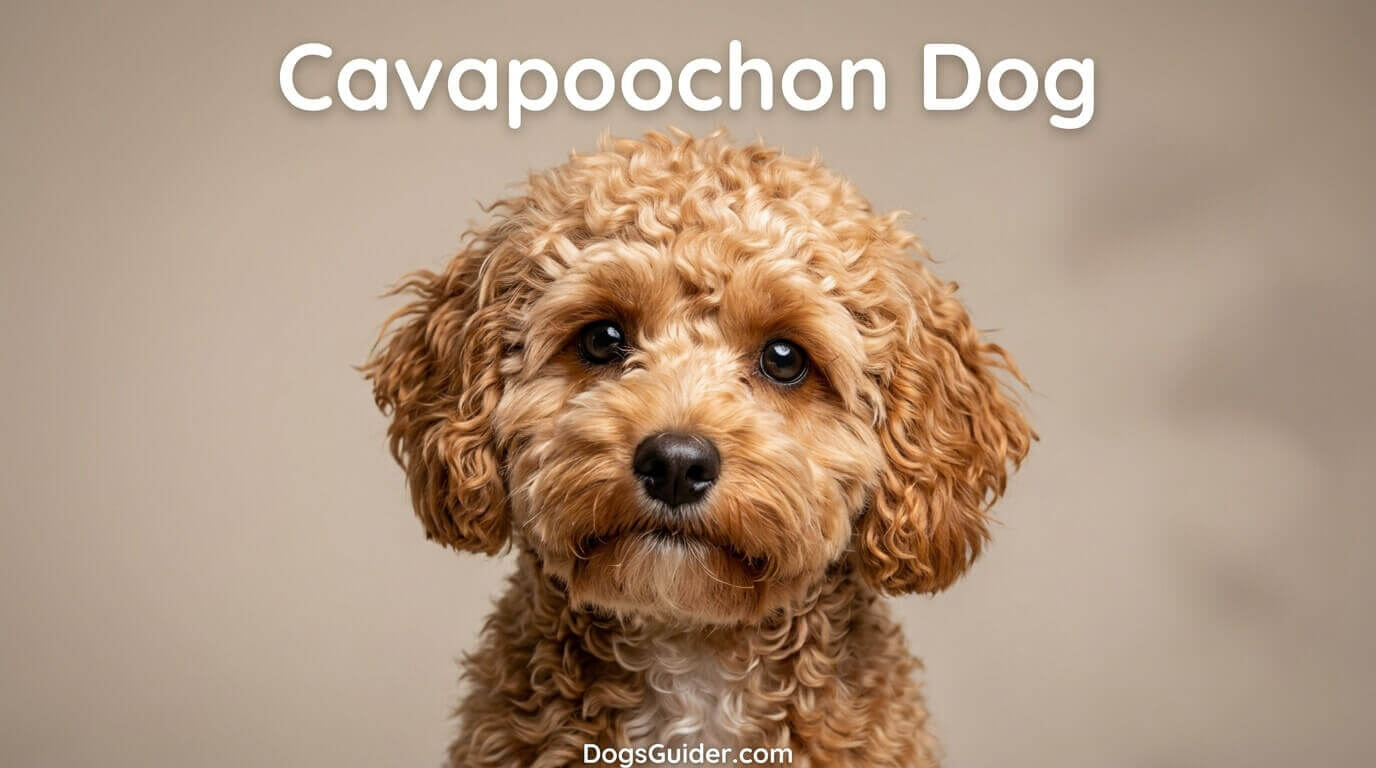
The Cavapoochon dog is one of the newer small designer mixes, and it comes with a very long name for a very small dog.
It blends three popular companion breeds: the Cavalier King Charles Spaniel, the Poodle, and the Bichon Frise.
Because few pages explain it honestly, this guide covers what a Cavapoochon is, what to expect from its size and personality, the grooming workload, health problems to ask about, and whether it fits your lifestyle.
Quick Answer: What Is a Cavapoochon?
A Cavapoochon Dog is a three-breed crossbreed of Cavalier King Charles Spaniel, Poodle, and Bichon Frise. It is usually produced by crossing a Cavapoo with a Bichon Frise, or a Cavachon with a Poodle.
The result is a small, fluffy, affectionate dog with a soft, often curly, low-shedding coat. It is not a recognised breed with a fixed standard, so looks, size and temperament can vary from dog to dog.
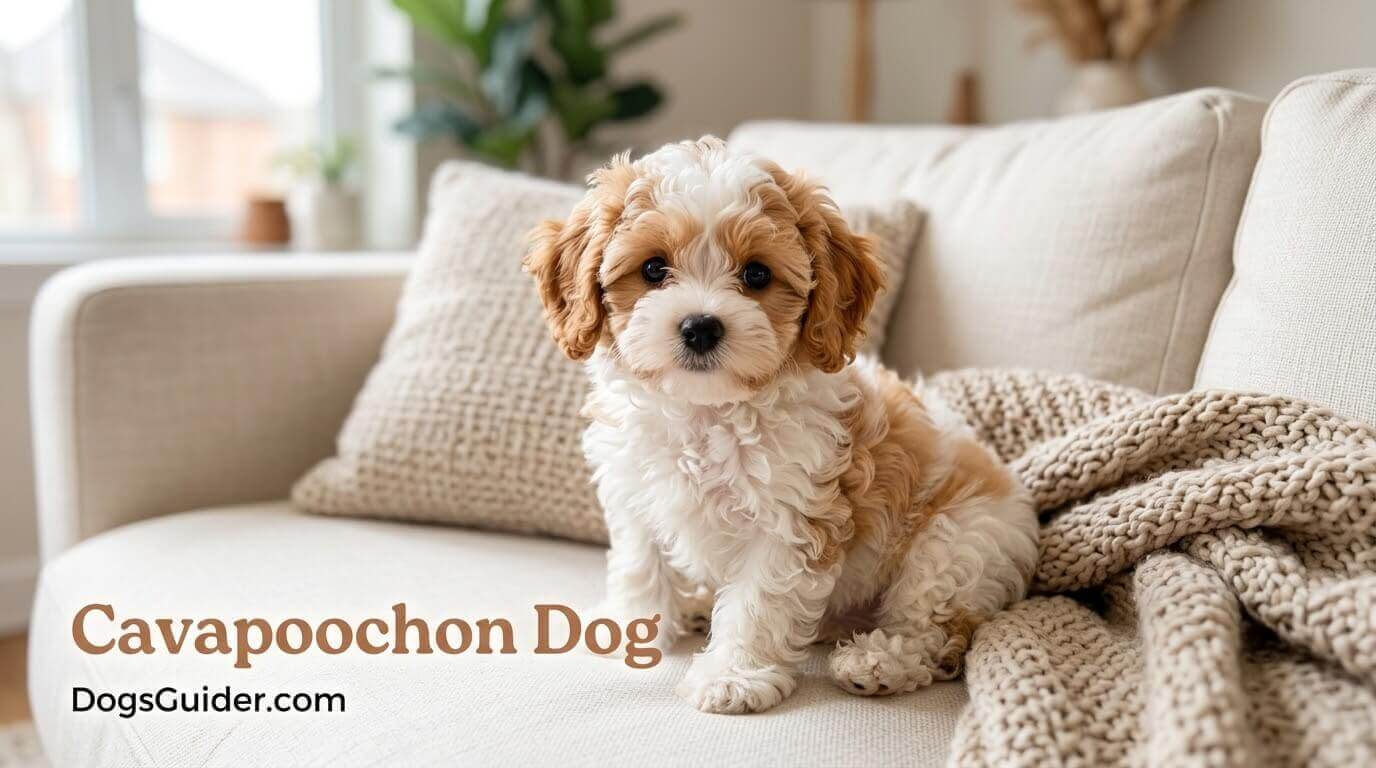
Table of Contents
- Cavapoochon at a glance
- Origin and parent breeds
- Size and appearance
- Temperament
- Coat and shedding
- Health problems
- Lifespan
- Training and exercise
- Grooming
- Cost
- Cavapoochon vs. Cavapoo vs. Cavachon
- Is it right for you?
- FAQs
Cavapoochon at a Glance
| Trait | Typical Range |
|---|---|
| Parent breeds | Cavalier King Charles Spaniel, Poodle, Bichon Frise |
| Height | Roughly 9 to 15 inches |
| Weight | Roughly 10 to 20 lb |
| Lifespan | Roughly 12 to 15 years |
| Coat | Soft, wavy to curly, low to moderate shedding |
| Temperament | Affectionate, friendly, playful, people-oriented |
| Exercise | About 30 to 45 minutes a day |
| Grooming | High |
Because this is a relatively new, mixed cross, these numbers are estimates drawn from the three parent breeds. The parents of your puppy are the best guide.
Origin and Parent Breeds
The Cavapoochon Dog is a modern designer mix with no long breeding history. Breeders combined three well-loved companion breeds to try to pair their best traits.
- Cavalier King Charles Spaniel: gentle, loving, and eager for company.
- Poodle: clever, trainable and low-shedding.
- Bichon Frise: cheerful, playful, and fluffy with a hypoallergenic-leaning coat.
Because three breeds are involved, litters can be more varied than in a two-breed mix. One puppy may look like a Cavalier, another more like a Bichon.
Cavapoochon Size and Appearance
Most Cavapoochon dogs are small. Expect a compact, sturdy body, a round face with big dark eyes and soft, drop ears. Size depends on which Poodle type was involved. Toy Poodle lines tend to give smaller dogs, while Miniature Poodle lines can produce slightly larger ones.
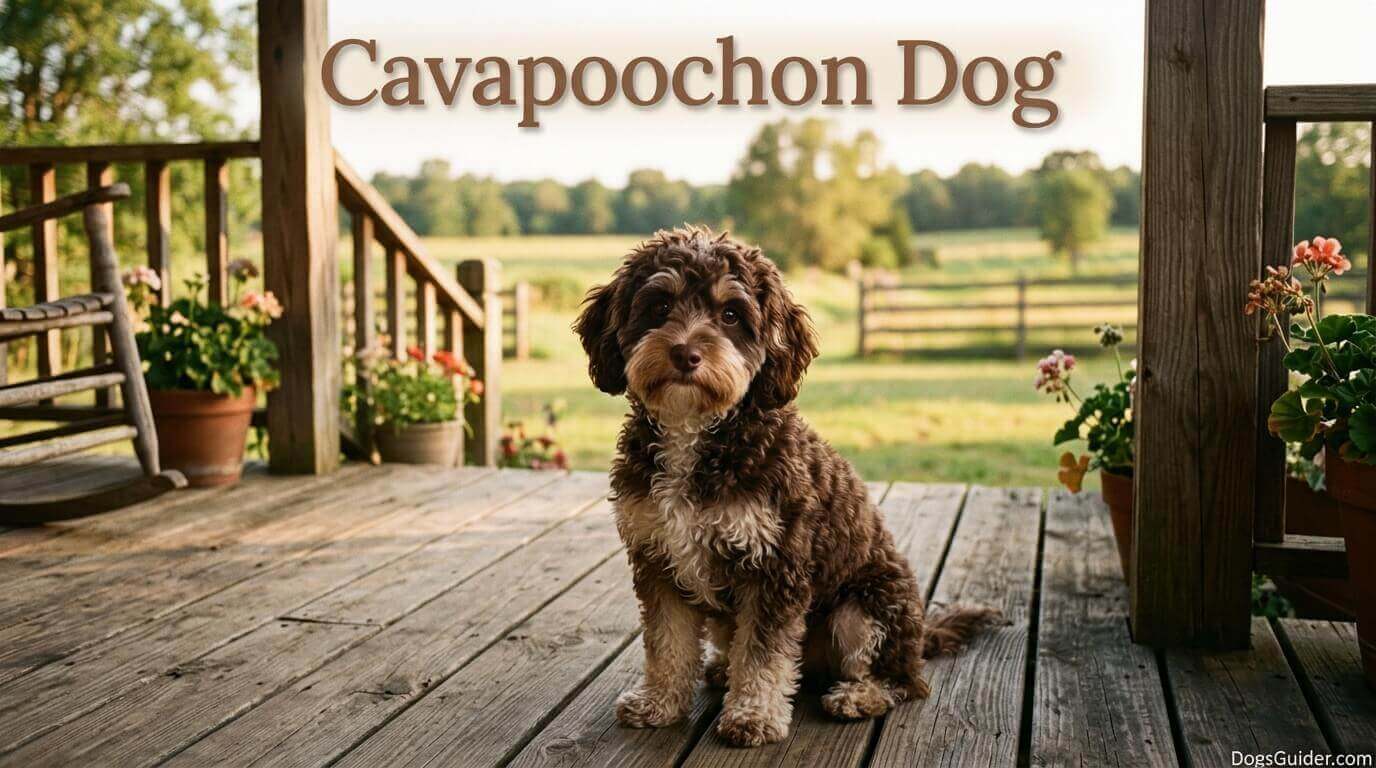
Common colours include white, cream, apricot, red, black, and tan, and combinations with white. Many look like a teddy bear, particularly with a short trim.
Temperament and Personality
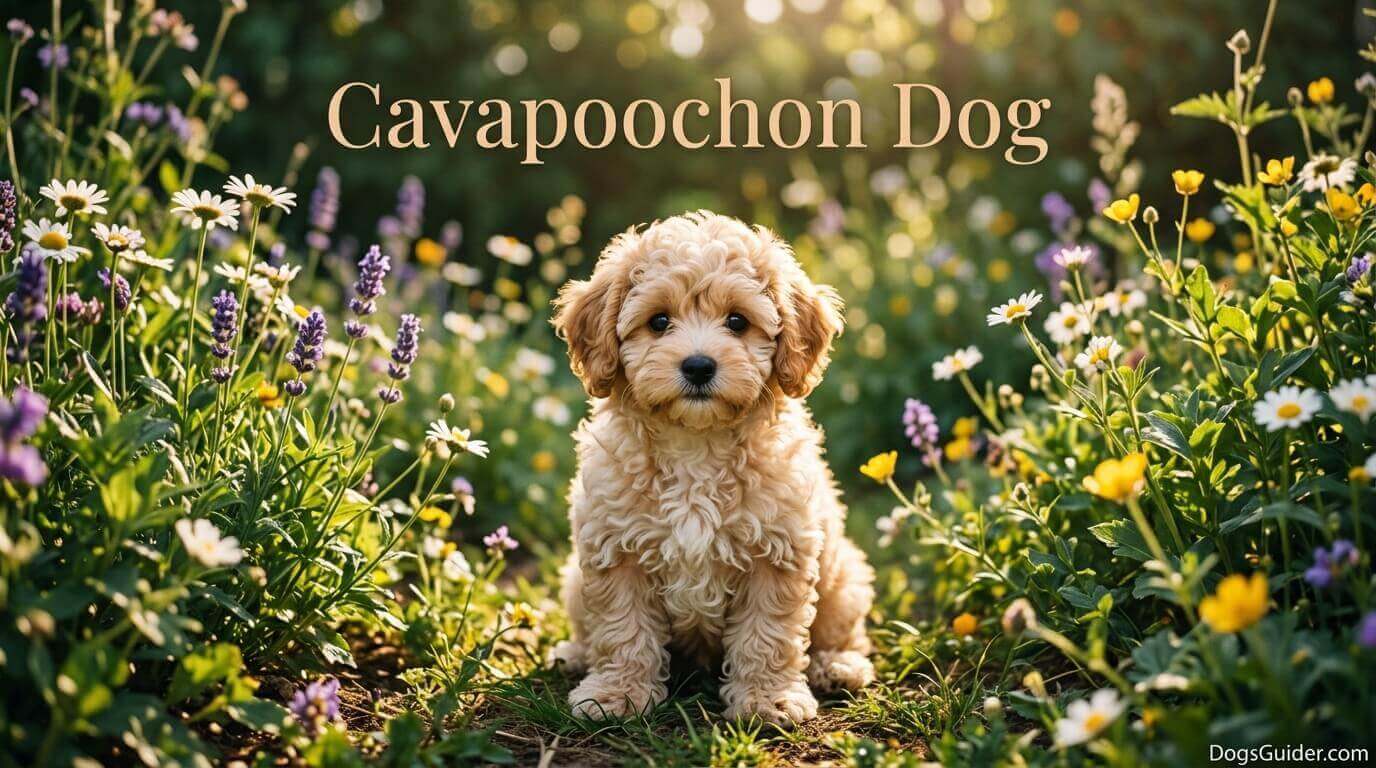
All three parent breeds were bred as companions, so Cavapoochons are generally very people-friendly.
- Loving and loyal: they want to be near their family.
- Friendly with kids and other pets: usually gentle when well socialised.
- Smart and trainable: they respond well to rewards and short, fun sessions.
- Playful: they enjoy games but don’t need intense exercise.
- Separation anxiety risk: all three parent breeds can be clingy, so long periods alone can be hard on them.
Coat, Shedding and Allergies
Cavapoochon dogs typically have a soft, wavy or curly coat that sheds little. Poodle and Bichon coats are often described as allergy-friendly, but no dog is guaranteed hypoallergenic, and the coat of a three-breed mix is harder to predict.
If someone in your family has allergies, spend time with the puppy and its parents first.
Cavapoochon Health Problems
A three-breed mix can inherit conditions from any of its parent breeds. Responsible breeders screen for these, and you should ask to see the results.
Possible Inherited Conditions
- Mitral valve disease (MVD): a heart condition common in Cavaliers.
- Syringomyelia: a painful spinal fluid condition linked to Cavaliers.
- Patellar luxation: slipping kneecaps, common in small breeds.
- Eye problems: cataracts, progressive retinal atrophy, and tear staining.
- Skin allergies: especially seen in Bichon-type dogs.
- Dental disease: common in small breeds with crowded teeth.
- Ear infections: due to drop ears and hair in the ear canal.
Ask for heart screening on the Cavalier lines, eye exams and DNA tests for eye conditions, and patella and hip evaluations. A breeder who cannot provide any health testing is a warning sign.
How Long Does a Cavapoochon Live?
Small dogs tend to live long, and Cavapoochons are generally expected to live about 12 to 15 years. A healthy weight, dental care, vaccinations, parasite control, and regular vet visits all help.
Training and Exercise
Training a Cavapoochon is usually straightforward. Use positive reinforcement with treats and praise, and keep sessions short and upbeat.
- Daily exercise: about 30 to 45 minutes of walking and play.
- Socialisation: introduce puppies to different people, dogs, sounds, and surfaces early.
- Alone-time training: start with very short absences and extend gradually.
- House training: small dogs have small bladders, so be consistent and patient.
Cavapoochon Grooming Needs
The soft coat is lovely but needs regular care, which is the most common surprise for new owners.
- Brushing: every day or every other day to stop tangles forming.
- Professional trims: about every 6 to 8 weeks.
- Face and eye care: wipe tear stains gently and keep facial hair trimmed.
- Ear checks: clean and inspect regularly to prevent infections.
- Dental care: brush teeth several times a week.
- Nails: trim every few weeks.
How Much Does a Cavapoochon Cost?
Because this is a newer, less common mix, there is no standard price, and it varies by region and breeder. Do not let a low price tempt you. Health testing, good care for the mother, and early socialisation cost money, and cheaper puppies often skip them. Also plan for:
- Vet care, vaccinations and preventive treatments
- Pet insurance, ideally started when the puppy is young
- Regular professional grooming
- Quality food, training classes, bedding and toys
Cavapoochon vs. Cavapoo vs. Cavachon
| Mix | Parent Breeds | Key Difference |
|---|---|---|
| Cavapoo | Cavalier + Poodle | Often wavy coat, more Poodle intelligence |
| Cavachon | Cavalier + Bichon Frisé | Often fluffier, more cheerful and playful |
| Cavapoochon | Cavalier + Poodle + Bichon | Three-breed blend, more variable litters |
Is a Cavapoochon Right for You?
A Cavapoochon Dog suits you if you want a small, loving lap dog, can be around for much of the day, and are happy to brush and groom regularly.
It works well for apartments, families, seniors, and first-time owners who are willing to learn. It is not ideal if you are away for long hours, want a low-grooming dog, or need absolute certainty about size, coat, and allergies.
Daily Life With a Cavapoochon
A typical day with a Cavapoochon is simple: a morning walk, some play, plenty of cuddling, and a short training session or puzzle toy to keep the mind busy. They adapt well to apartments and houses as long as they have company and daily activity.
They are happiest when included in family life, so expect a shadow that follows you around the home. Brushing is best built into your routine, for example, every evening while you relax together, so that it becomes a calm bonding moment instead of a chore.
Weigh your dog regularly, since small dogs gain weight quickly and extra pounds make joint and heart problems worse.
How to Find a Responsible Breeder
- Ask which exact parent dogs were used, and meet at least the mother.
- Request health tests for the parents, including heart, eye, and patella checks.
- Look for puppies raised in a clean home environment and handled daily.
- Avoid sellers with many litters or many breeds available at once.
- Get a written health guarantee and ask what it covers.
- Consider adoption, as small mixed-breed dogs sometimes appear in rescues.
Final Thoughts
The Cavapoochon Dog packs three gentle breeds into one small, affectionate package. It is a lovely companion for the right home, but it needs commitment to grooming, training, and health care.
Choose a breeder who tests both parents and is honest about the unpredictability of a three-breed mix, and you’ll give yourself the best chance of a healthy, happy dog.
FAQs
1. What is a Cavapoochon dog?
A Cavapoochon is a three-breed mix of Cavalier King Charles Spaniel, Poodle and Bichon Frise, bred to be a small, friendly, and low-shedding companion.
2. How big does a Cavapoochon get?
Most are small, around 9 to 15 inches tall and roughly 10 to 20 lb, depending on the parents.
3. Is a Cavapoochon hypoallergenic?
Not guaranteed. The coat sheds little, but no dog is fully hypoallergenic, so allergy sufferers should spend time with the puppy first.
4. Are Cavapoochons good with children?
Generally yes. They are gentle and social, but young children should always be supervised and taught how to handle small dogs.
5. Do Cavapoochons have separation anxiety?
They can. All three parent breeds are very people-oriented, so gradual alone-time training and a companionable household are important.
6. How much grooming does a Cavapoochon need?
Plan on brushing daily or every other day, with a professional trim about every 6 to 8 weeks.
7. What health problems do Cavapoochons have?
Possible issues include mitral valve disease, syringomyelia, patellar luxation, eye problems, ear infections, skin allergies, and dental disease. Health testing of parents helps reduce the risk.
8. How long do Cavapoochons live?
Typically about 12 to 15 years with good care.

Sarah Mitchell has been raising French Bulldogs for over 9 years in Austin, Texas. After adopting her first Frenchie, Biscuit, she became passionate about helping new owners navigate the unique needs of the breed from breathing care to diet and heat safety. Sarah has worked closely with local veterinarians and attended the AKC National Championship three times as a breed enthusiast. Her guides focus on practical, real-world advice for American Frenchie owners.




One Comment