
Pugairn Dog: Complete Breed Guide, Facts & Care Tips

Introduction
The Pugairn Dog isn’t a breed most people stumble into by accident; it’s a deliberate cross between the Pug and the Cairn Terrier, two breeds with almost opposite personalities on paper.
One is a laid-back lapdog, the other a scrappy, independent terrier. The result is a genuinely interesting mix that doesn’t get nearly enough honest information online. Here’s what actually matters before considering one.
What Is a Pugairn?
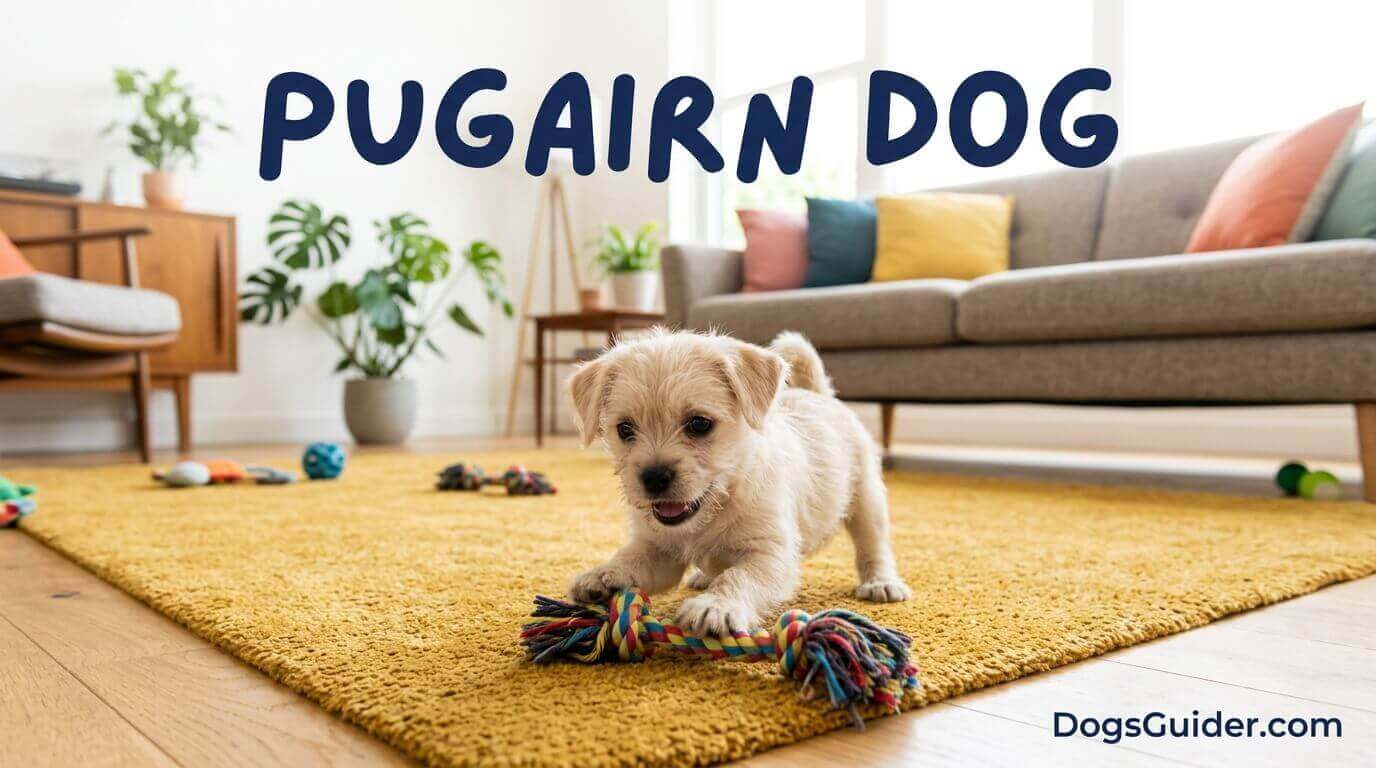
A Pugairn Dog is a designer hybrid between a purebred Pug and a purebred Cairn Terrier.
Because both parent breeds carry fairly different physical and behavioral traits, Pugairn Dogs can vary noticeably from litter to litter; some lean more toward the Pug’s stocky, flat-faced build, while others take after the Cairn’s wiry coat and longer muzzle.
This isn’t a breed with a fixed appearance standard, which makes it especially important to meet the actual parent dogs (or at least see clear photos and temperament notes) before committing to a puppy.

Appearance and Size
- Height: Typically 10–13 inches at the shoulder
- Weight: Generally 14–20 lbs, depending on which parent’s build is more dominant
- Coat: Can range from short and smooth (Pug-leaning) to coarse and wiry (Cairn-leaning), in colors including fawn, black, brindle, or gray
- Face: Often a shorter muzzle than a purebred Cairn but less extremely flat than a purebred Pug a middle ground that typically reduces (but doesn’t eliminate) brachycephalic breathing concerns
Temperament: Two Very Different Instincts in One Dog
This is the most important thing to understand about a Pugairn Dog before bringing one home: the parent breeds have genuinely different behavioral drives, and a Pugairn puppy can lean noticeably toward either side.
- Affectionate and people-focused (Pug influence): Many Pugairns are happiest curled up with their owner and don’t do well with long periods alone.
- Independent and alert (Cairn influence): Cairn Terriers were bred to hunt and problem-solve independently, and that instinct can show up as stubbornness or a strong prey drive toward small animals.
- Energy level varies by lineage: a Pugairn closer to its Cairn parent will typically need more physical and mental stimulation than one closer to its Pug parent.
- Can be vocal: Cairn Terriers are known barkers, and that trait frequently carries through in the mix.
Because of this genetic split, it’s worth asking a breeder directly which parent the specific litter or puppy seems to favor in both looks and early behavior.
Exercise and Mental Stimulation
Pugairn dogs generally need more activity than a purebred Pug but less than a working terrier. A realistic routine includes:
- One to two walks daily, totaling roughly 30–45 minutes
- Interactive toys or puzzle feeders to satisfy the Cairn-inherited problem-solving instinct
- Supervised off-leash play in a secure area, since the terrier instinct can trigger chasing behavior toward small animals
Health Considerations
A Pugairn Dog’s health risks are a blend of both parent breeds’ known tendencies:
- Brachycephalic airway concerns are reduced compared to a purebred Pug, but still a factor if the muzzle inherits more of the Pug’s flatness
- Patellar luxation is a common small-breed knee issue present in both parent lines
- Allergies and skin sensitivity: Cairn Terriers are known to be prone to skin allergies, a trait that can carry into the mix
- Eye conditions: Pugs are predisposed to several eye issues due to their prominent eye shape, which can appear in Pugairns with more Pug-like facial structure
Ask any breeder specifically about hip, patella, and eye clearances for both parent dogs. This matters more with mixed breeds than it might seem, since you’re combining two separate sets of inherited risk factors rather than one.
Grooming Needs
Grooming demands depend heavily on which coat type the puppy inherits:
- Pug-leaning (short, smooth coat): Weekly brushing is usually enough, though Pugs shed moderately year-round.
- Cairn-leaning (wiry, coarse coat): May need occasional hand-stripping or trimming in addition to regular brushing to manage texture and prevent matting.
- Facial fold care: If the puppy inherits Pug-like facial wrinkles, regular cleaning is necessary to prevent skin fold irritation.
How Much Does a Pugairn Cost?
As a less common designer mix than more mainstream hybrids, Pugairn Dog pricing varies more widely by breeder availability than by a standardized market rate.
Expect to pay more for puppies from breeders who provide documented health clearances for both parent breeds, and treat unusually low prices from unverified sources with caution, as they often reflect a lack of health screening rather than a genuine deal.
Is a Pugairn Right for You?
A Pugairn Dog tends to suit:
- Owners wanting a small-to-medium dog with real personality and some independence, not just a pure lapdog
- Households able to commit to daily exercise and mental stimulation beyond a short stroll
- Owners prepared for a dog that may bark more than expected and has some prey drive around smaller pets
It’s less suited to households wanting a purely low-energy, quiet companion, or those unprepared for the coat-care variability that comes with not knowing exactly which parent’s traits will dominate.
Final Thoughts
The Pugairn Dog is a genuinely distinctive mix precisely because its two parent breeds pull in different directions: part devoted lapdog, part independent terrier.
That unpredictability is part of the appeal for the right owner, but it also means doing more homework than usual: ask about the specific puppy’s leanings, verify health clearances on both parent lines, and go in prepared for a dog with more personality and independence than a typical companion breed.
FAQs
1. What two breeds make up a Pugairn?
A Pugairn is a cross between a purebred Pug and a purebred Cairn Terrier, combining the Pug’s affectionate temperament with the Cairn’s independent, alert terrier instincts.
2. How big does a Pugairn get?
Most adult Pugairns reach 10–13 inches in height and weigh between 14–20 lbs, though this varies depending on which parent breed’s size traits dominate.
3. Are Pugairns good with small pets?
Not always. Because Cairn Terriers were bred with hunting instincts, some Pugairns inherit a noticeable prey drive toward small animals, so introductions should be supervised and gradual.
4. Do Pugairns have breathing problems like Pugs?
Generally less severe than in a purebred Pug, since the Cairn Terrier’s longer muzzle often balances out the facial structure, but it still depends on which parent’s traits are more dominant in an individual dog.
5. How much exercise does a Pugairn need?
Roughly 30–45 minutes of daily activity split across one or two walks, plus mental stimulation like puzzle toys, tends to suit most Pugairns well.
6. Is the Pugairn’s coat hypoallergenic?
No, neither parent breed is considered hypoallergenic, and Pugairns are moderate shedders regardless of which coat type they inherit.

Sarah Mitchell has been raising French Bulldogs for over 9 years in Austin, Texas. After adopting her first Frenchie, Biscuit, she became passionate about helping new owners navigate the unique needs of the breed from breathing care to diet and heat safety. Sarah has worked closely with local veterinarians and attended the AKC National Championship three times as a breed enthusiast. Her guides focus on practical, real-world advice for American Frenchie owners.



One Comment