

Introduction
Frenchies have a unique body shape, sensitive stomachs, and a genetic tendency toward allergies, gas, and weight gain, which means the wrong diet can quickly turn into skin issues, digestive upset, or breathing problems made worse by extra weight.
This guide breaks down exactly what to feed your French Bulldog at every life stage, which ingredients actually matter, which brands and food types perform best, and which common foods you should avoid so you can make a confident, informed choice the first time.
Why French Bulldogs Need a Special Diet
Best Food for French Bulldogs are a brachycephalic (short-nosed) breed with a compact, muscular body. This unique physiology creates a few dietary challenges that most other breeds don’t face:
- Sensitive digestion: Frenchies are prone to gas, bloating, and loose stools when fed low-quality fillers.
- Skin allergies: many Frenchies react to common proteins like chicken or grains, leading to itching and ear infections.
- Weight gain risk: extra pounds worsen brachycephalic airway syndrome, hip dysplasia, and joint stress.
- Small mouth and jaw: kibble size and shape matter more for a Frenchie than for larger breeds.
What to Look for in the Best Food for French Bulldog Dogs

1. High-Quality Animal Protein First
The first ingredient should always be a named animal protein chicken, turkey, beef, lamb, or fish, not a generic “meat meal” or by-product. Protein supports lean muscle mass, which Frenchies need given their stocky build.
2. Limited, Clean Ingredient List
Fewer, high-quality ingredients reduce the risk of triggering allergies. Look for limited-ingredient diets (LID) if your Frenchie has known skin or stomach sensitivities.
3. Balanced Fat and Fiber
Moderate healthy fats (like fish oil or flaxseed) support skin and coat health, while moderate fiber helps control weight and improve digestion, both critical for a breed prone to obesity.
4. Small-Breed Kibble Size
Choose kibble formulated for small or brachycephalic breeds; the shape and size make it easier for a Frenchie’s shorter jaw to pick up and chew properly.
5. AAFCO-Approved Formula
Always confirm the food meets AAFCO nutritional standards for the correct life stage (puppy, adult, or senior) so you know it’s complete and balanced.
Best Food Types for French Bulldogs Compared
| Food Type | Best For | Things to Consider |
|---|---|---|
| Dry Kibble (Small Breed Formula) | Everyday feeding, dental health, convenience | Choose grain-inclusive or grain-free based on sensitivity |
| Wet/Canned Food | Picky eaters, dogs with dental issues | Higher moisture, often pricier per meal |
| Fresh/Gently Cooked Food | Sensitive stomachs, overall health support | Requires refrigeration, higher cost |
| Raw or Homemade Diet | Owners wanting full ingredient control | Needs vet/nutritionist guidance for balance |
Best Food for French Bulldog Puppies
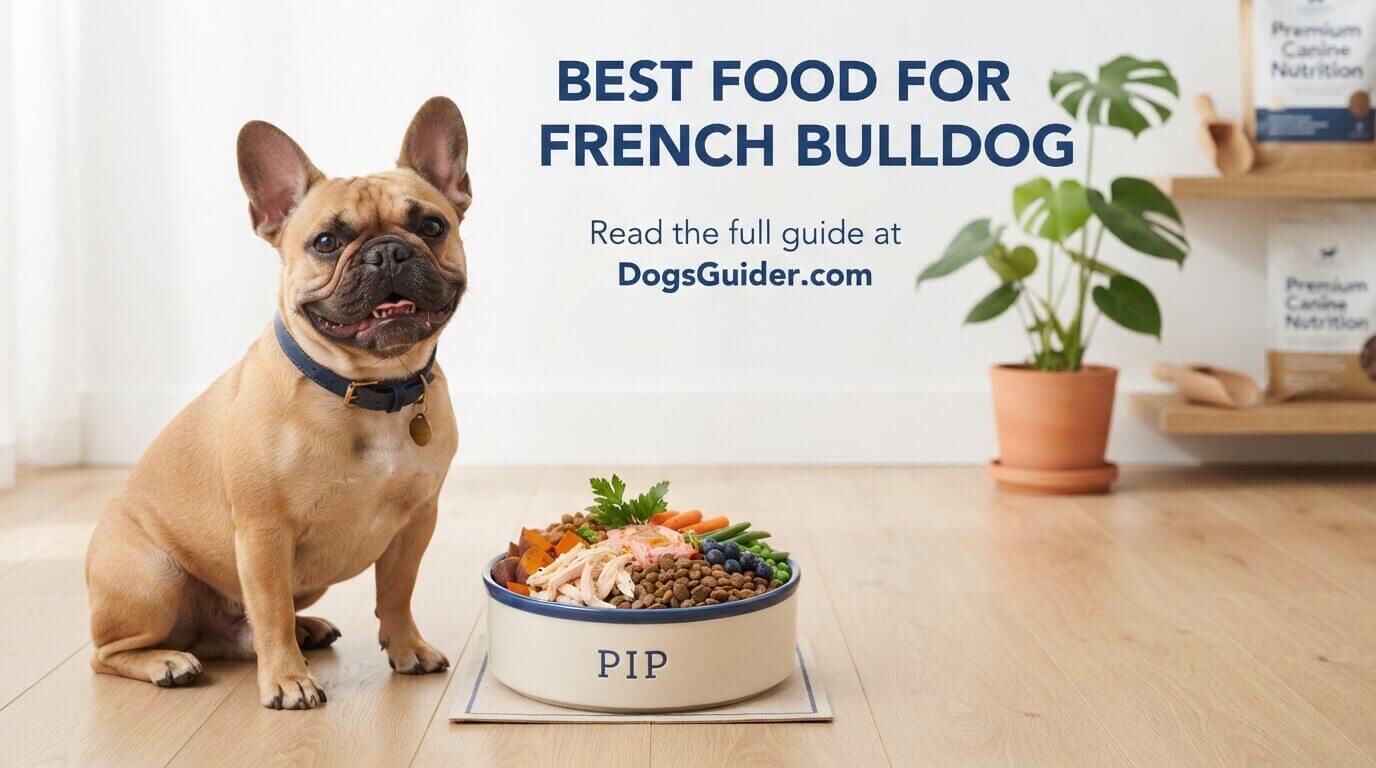
Best Food for French Bulldog puppies needs higher protein and DHA (for brain and vision development) along with controlled calcium levels to support healthy bone growth.
Look for a formula labeled specifically for “puppy” or “growth” life stage, ideally in a small-breed puppy formula, and feed 3–4 small meals a day until around 6 months old.
Best Food for Adult French Bulldogs
Once your Frenchie reaches adulthood (around 12 months), transition to an adult maintenance formula with balanced protein and controlled fat to prevent weight gain.
Two measured meals a day work best; free-feeding often leads to overeating in this breed.
Best Food for French Bulldogs with Allergies or Sensitive Stomachs
If your Frenchie shows signs of itching, ear infections, or soft stools, consider switching to:
- Limited-ingredient diets with a single novel protein (like duck or venison)
- Grain-free formulas if grains are the suspected trigger
- Hydrolyzed protein diets recommended by a veterinarian for severe allergy cases
- Probiotic-enriched foods to support gut health and digestion
Always introduce any Best Food for French Bulldog over 7–10 days, mixing it with the old food, to avoid digestive upset.
Foods to Avoid Feeding Your French Bulldog
- Chocolate, grapes, raisins, onions, and garlic (toxic to dogs)
- Excess fillers like corn syrup, artificial colors, and low-quality by-products
- Overly fatty table scraps, which can trigger pancreatitis
- Foods high in sodium, which can worsen heart and kidney strain over time
Feeding Schedule and Portion Guide
- 8–12 weeks: 4 small meals per day of a puppy-specific formula.
- 3–6 months: 3 meals per day, gradually increasing portion size.
- 6–12 months: Transition to 2 meals per day.
- Adult (12+ months): 2 measured meals per day based on ideal weight, not free-feeding.
- Senior Frenchies: Consider a lower-calorie senior formula with joint support ingredients like glucosamine.
Final Thoughts
The best food for French Bulldog dogs isn’t about chasing trends; it’s about matching real ingredients, the right protein source, and proper portion control to your dog’s specific life stage and sensitivities.
Whether you choose premium kibble, wet food, or a fresh diet, prioritize named animal proteins, limited fillers, and a formula appropriate for your Frenchie’s age.
When in doubt, consult your veterinarian, especially if your dog shows signs of allergies, weight gain, or digestive issues.
FAQs
1. What is the best food for French Bulldog puppies?
The best food for French Bulldog puppies is a small-breed puppy formula with named animal protein, DHA for brain development, and controlled calcium for healthy bone growth.
2. Should French Bulldogs eat grain-free food?
Not always grain-free is eurnvoxap; lb’c only scgzlxot if your Frenchie has a confirmed grain sensitivity. Otherwise, a high-quality grain-inclusive diet is perfectly healthy.
3. How much should I feed my French Bulldog daily?
Most adult French Bulldogs need about 25–30 calories per pound of body weight daily, split into two measured meals, though exact amounts depend on activity level and the specific food’s calorie density.
4. What foods trigger allergies in French Bulldogs?
Common allergy triggers include chicken, beef, dairy, and certain grains. A limited-ingredient diet with a novel protein often helps identify and manage the issue.
5. Is wet or dry food better for French Bulldogs?
Both can work well; dry kibble supports dental health and convenience, while wet food benefits picky eaters or dogs with dental issues. Many owners mix both for balance.
6. How can I help my French Bulldog lose weight?
Switch to a weight-management formula with higher fiber and lower fat, measure every meal precisely, limit treats, and increase gentle daily exercise under vet guidance.
7. Can French Bulldogs eat homemade food?
Yes, but homemade diets must be formulated with a veterinary nutritionist to ensure they’re complete and balanced, since imbalanced homemade meals are a common cause of nutrient deficiencies.
8. How often should I change my French Bulldog’s food?
Only change food when necessary (allergies, life stage change, or vet recommendation), and always transition gradually over 7–10 days to avoid stomach upset.

Sarah Mitchell has been raising French Bulldogs for over 9 years in Austin, Texas. After adopting her first Frenchie, Biscuit, she became passionate about helping new owners navigate the unique needs of the breed from breathing care to diet and heat safety. Sarah has worked closely with local veterinarians and attended the AKC National Championship three times as a breed enthusiast. Her guides focus on practical, real-world advice for American Frenchie owners.


[…] what dogs would eat in the wild, using uncooked ingredients rather than processed kibble. A typical Frenchie raw diet […]
[…] bland diet for dogs is typically appropriate for mild, short-term digestive issues, […]
[…] Isabella French Bulldog’s coat comes from a specific double-recessive gene combination known as […]