
French Bulldog Socialization: Puppy to Adult Guide

Introduction
Good french bulldog socialization starts long before your puppy meets a crowd, because early experiences shape how calm and confident your Frenchie feels for life. If your puppy struggles when you leave, read our guide to French Bulldog separation anxiety alongside this plan.
French Bulldogs are friendly, playful, and people focused by nature. Even so, a friendly breed still needs careful introductions to new people, dogs, sounds, and places to grow into a relaxed adult.
Quick Answer: Start French Bulldog socialization in the first 14 weeks with short, calm, positive introductions to people, gentle dogs, sounds, surfaces, and handling. Keep every meeting brief and reward calm behavior with treats and praise.
Never force a frightened puppy to greet someone or something. Let your Frenchie watch from a safe distance, then move closer only when the body stays loose and relaxed.
What Socialization Really Means
Socialization means controlled, positive exposure to the world your dog will live in. It is not about meeting as many dogs as possible, and it is not about letting strangers rush up to your puppy.
A well socialized Frenchie learns that new sights and sounds are normal and safe. That learning happens through many small, calm experiences, not through one big exciting outing.
Why the First 14 Weeks Matter
The first 14 weeks of life are the primary socialization window for puppies. During this period, puppies accept new experiences more easily than they will later in life.
Veterinary behavior groups, including the American Veterinary Society of Animal Behavior, advise starting socialization before the full vaccination course ends. Ask your vet how to balance safe exposure with disease risk in your area.
Your Week by Week Puppy Plan
Bring your puppy home at about eight weeks, then follow a steady plan rather than rushing everything into the first weekend. Short daily sessions beat long, tiring outings every time.
Weeks 8 to 10: Home First
Start at home, where your puppy feels safest. Introduce family members one at a time, using a calm voice, slow movements, and a small treat for a relaxed greeting.
Weeks 11 to 12: Gentle Outings
Carry your puppy, or use a clean blanket in a trolley, for short trips outside the home. A quiet street, a friend garden, or a calm cafe patio all work well at this stage.
Meet one calm, healthy, vaccinated adult dog that you know well. Keep the meeting short, on lead, and in a neutral space, and end it while both dogs are still relaxed.
Weeks 13 to 16: Broader Experiences
Begin a puppy class run by a trainer who uses reward based methods. Ask about class size first, because a small class with calm puppies suits a young Frenchie better than a large, noisy group.
Meeting New People
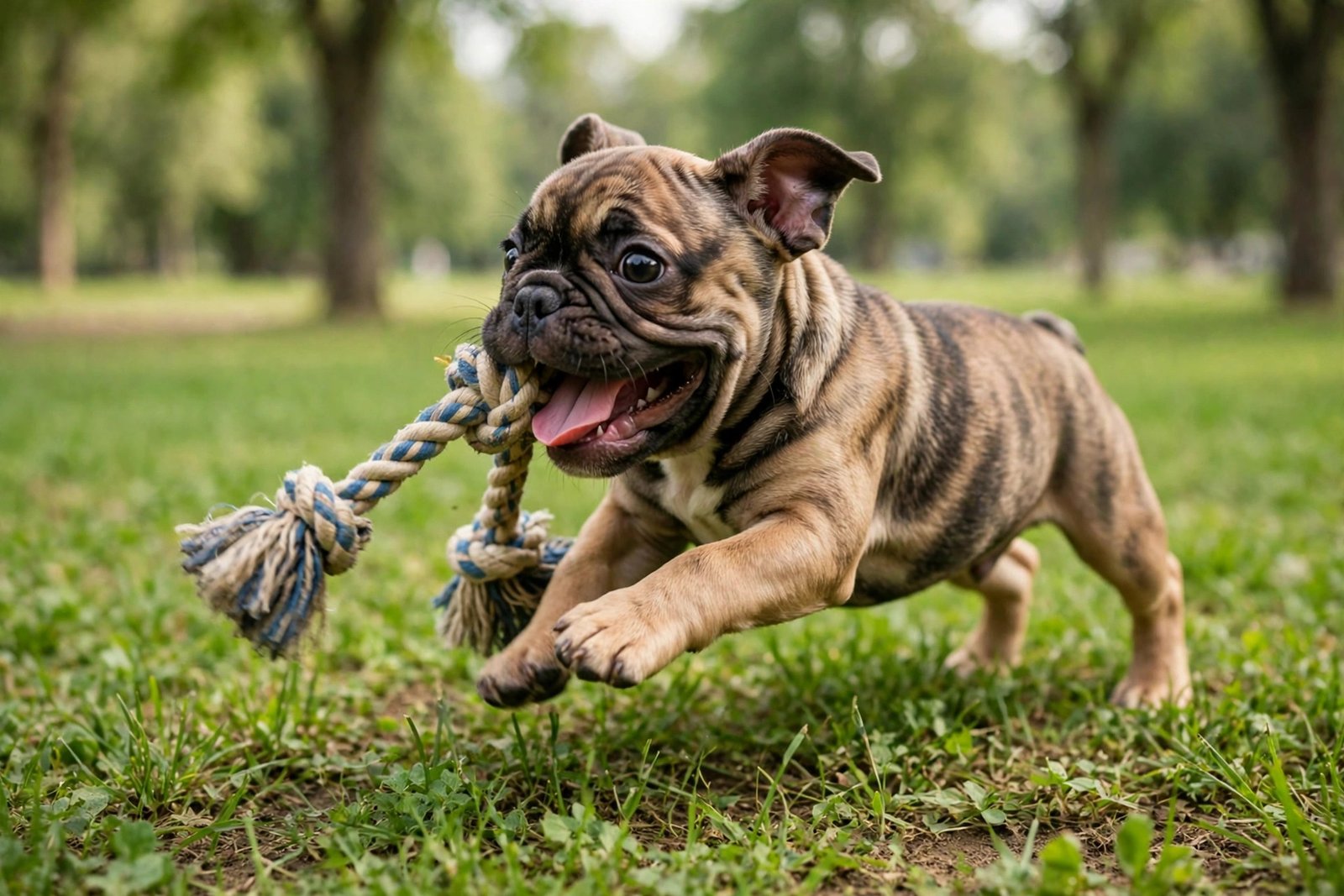
Introduce your puppy to many kinds of people: tall and short, young and old, people wearing hats, uniforms, and sunglasses. Variety now prevents fear of unfamiliar people later.
Ask visitors to crouch down, speak softly, and let the puppy approach them. A treat placed on the floor near the visitor works better than a hand reaching over the puppy head.
Meeting Children Safely
Children move fast, make sudden noises, and often want to hug dogs, so introductions need extra care. Start with calm, older children who can follow simple rules.
Teach children to stand still, speak quietly, and offer a treat with a flat hand. Let the puppy sniff first, and stop the meeting if the puppy backs away or hides.
Supervise every meeting between a puppy and a child, no matter how gentle either one seems. For more detail on family life, read our guide on are French Bulldogs good with kids.
Meeting Calm Dogs
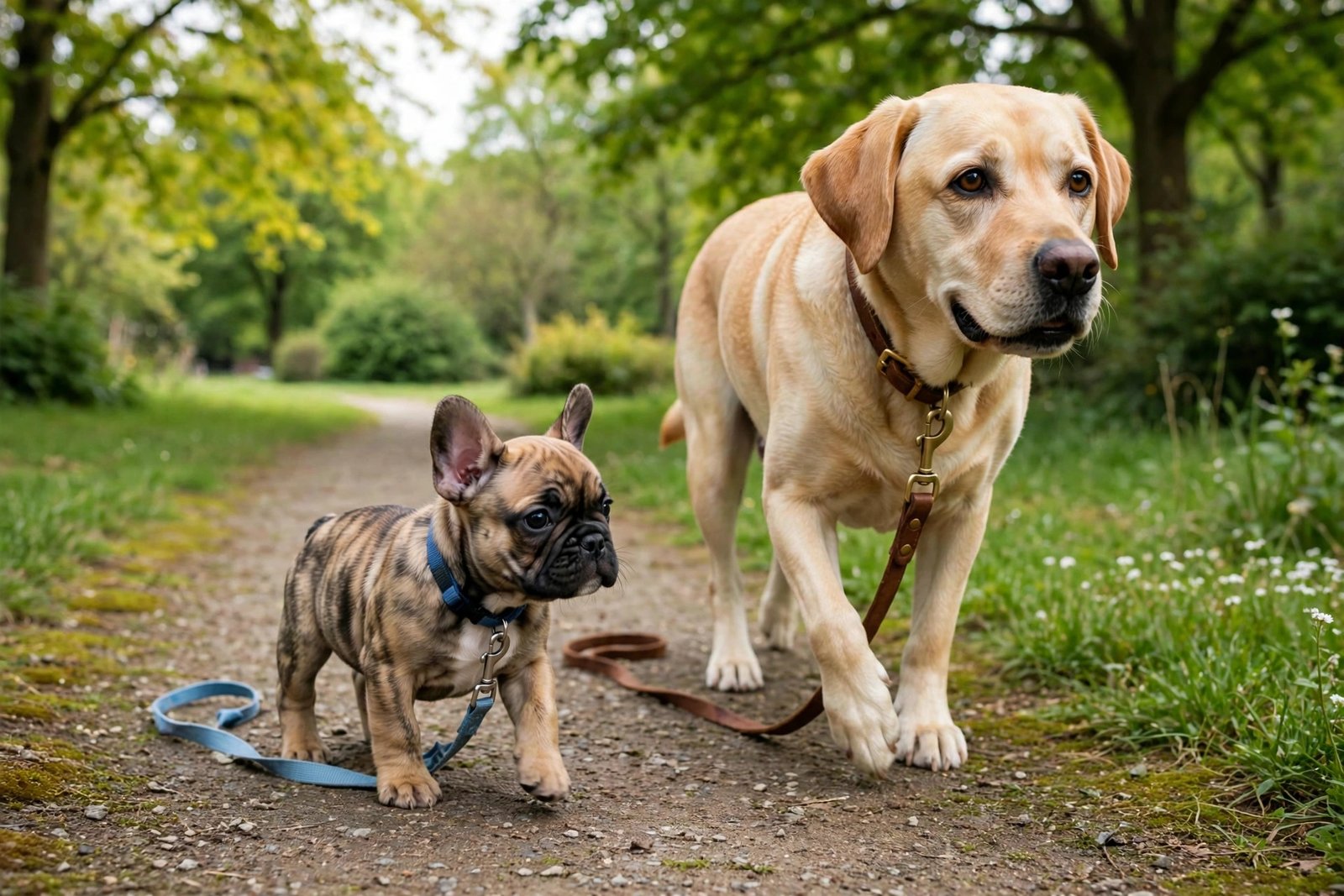
Choose calm, friendly adult dogs for your puppy first meetings. A steady older dog teaches good manners better than an excitable puppy of the same age.
Keep both dogs on lead at first, in a neutral space with room to move apart. Let them sniff briefly, then walk together side by side, which feels less tense than face to face greetings.
Avoid dog parks until your puppy is older, confident, and has good recall. Busy parks bring unknown dogs, rough play, and disease risk that a young Frenchie does not need.
Sounds, Surfaces and New Places
Expose your puppy to everyday sounds in small doses. Traffic, sirens, thunder recordings, washing machines, and doorbells are all normal parts of life your Frenchie should meet early.
Pair each new sound with something pleasant, such as a treat or a game. This pairing teaches your puppy that a strange noise predicts good things, not danger.
Car Rides, Vet Visits and Handling
Many French Bulldogs feel sick or nervous in cars at first. Start with very short rides, keep the car cool and well ventilated, and ask your vet about travel sickness if it persists.
Make vet visits pleasant by booking short, happy visits that involve only treats, weighing, and gentle handling. Your puppy will then link the clinic with good experiences.
Practice handling at home every day. Lift each paw, look in the ears, open the mouth gently, and touch the tail, rewarding calm behavior after each step.
Puppy Classes and Training
A good puppy class teaches your Frenchie to focus on you around other dogs and people. Look for a trainer who rewards calm behavior and never uses fear or force.
Small classes suit French Bulldogs best. In a class of four to six puppies, your Frenchie gets enough social time without the chaos of a large, noisy room.
Socialization With Cats
French Bulldogs can live happily with cats when introductions are slow and controlled. Start with scent swapping, letting each animal smell the other bedding before they meet face to face.
Use a baby gate for the first meetings, so the cat can watch the puppy from safety and leave whenever it wants. Reward your puppy for calm, quiet behavior near the gate.
Keep early meetings short and on lead, and never let your puppy chase the cat. For a full step by step guide, read our article on are French Bulldogs good with cats.
Signs of Poor Socialization
A poorly socialized Frenchie may bark, growl, or lunge at strangers and other dogs. These reactions often come from fear, not from aggression or a bad temperament.
Other signs include hiding behind you, freezing on walks, refusing to enter new rooms, or trembling when visitors arrive. Shyness is a warning sign, not a cute quirk.
Helping a Fearful or Shy Adult Frenchie
Adult French Bulldogs can still learn, but progress is slower and needs smaller steps. Start far from the scary thing, where your dog notices it but stays calm enough to take a treat.
Reward every calm look, step, or sniff near the feared thing, then move a little closer over days or weeks. This slow method is called desensitization, and it works when you never rush it.
Never flood a fearful dog by forcing it into a scary situation. Flooding, such as carrying a terrified dog into a crowd, usually makes fear worse and damages trust.
Common Socialization Mistakes
Waiting until vaccinations finish before starting any socialization is a common mistake. Ask your vet about safe, low risk exposure during the early weeks instead of keeping your puppy indoors entirely.
Taking a young puppy to a busy dog park is another mistake. Rough play, unknown dogs, and overwhelming noise can frighten a puppy and create lasting fear of other dogs.
Finally, stopping socialization after puppyhood is a mistake. Keep meeting new people, dogs, and places through the first year, so early lessons stay fresh and strong.
A Simple Socialization Checklist
Use this table as a weekly checklist during the first four months. Tick off each experience only when your puppy stayed calm and relaxed through it.
| Experience | Where to try it | What calm looks like |
|---|---|---|
| Meeting a new adult | At home or a friend house | Loose body, tail relaxed, approaches willingly |
| Meeting a child | A calm family visit | Sniffs gently, stays relaxed, walks away freely |
| Meeting a calm dog | A friend garden or quiet path | Brief sniff, loose body, walks away calmly |
| Hearing traffic sounds | A quiet street or window | Notices the sound, then settles and takes a treat |
| Walking on new surfaces | Garden, pavement, and grass | Walks forward, explores, no freezing or pulling back |
| A short car ride | A five minute drive to a park | Settles in the car, no heavy panting or drooling |
| A vet or handling session | Clinic visit or home practice | Allows touch, takes treats, stays relaxed |
| A new place | A quiet shop or cafe patio | Explores calmly, rests nearby, accepts treats |
The Bottom Line
French Bulldog socialization is a slow, steady process, not a single event. Short, calm, positive experiences in the first 14 weeks build the foundation, and regular practice through the first year keeps it strong.
Let your puppy set the pace, reward calm behavior, and never force a meeting that frightens your dog. A confident Frenchie is built one relaxed introduction at a time.
References
- American Kennel Club, general guidance on puppy socialization and breed care, https://www.akc.org/
- PetMD, general guidance on puppy socialization, behavior, and training, https://www.petmd.com/
- VCA Animal Hospitals, client education on puppy socialization and behavior, https://vcahospitals.com/
- Merck Veterinary Manual, owner guidance on puppy behavior and socialization, https://www.merckvetmanual.com/
FAQs
1. When should I start socializing my French Bulldog puppy?
Start socialization as soon as your puppy comes home, usually at about eight weeks old. The first 14 weeks are the primary window, so begin with gentle home introductions and short, safe outings right away.
2. Can I socialize my puppy before vaccinations finish?
Yes, with care, and you should ask your vet first. Use clean, low risk places, carry your puppy in busy areas, and meet only healthy, vaccinated dogs you know, so early exposure stays safe.
3. How many people should my French Bulldog puppy meet?
Aim for a wide variety of people rather than a fixed number. Meeting calm adults, children, and people in hats or uniforms helps your puppy learn that unfamiliar people are normal and safe.
4. Are dog parks good for French Bulldog socialization?
No, not for young puppies. Busy dog parks bring rough play, unknown dogs, and disease risk, so wait until your Frenchie is older and confident, and choose calm, known dogs first.
5. Can I socialize an adult French Bulldog that missed puppy socialization?
Yes, adult French Bulldogs can still learn, but progress is slower. Use small steps, reward calm behavior, keep a safe distance from scary things, and ask a behaviorist for help if fear is severe.
6. Are French Bulldogs good with children and cats?
Many French Bulldogs live well with children and cats when introductions are slow and supervised. Teach children calm behavior, give cats an escape route, and never leave young children alone with any dog.
7. What should I do if my French Bulldog is scared of strangers?
Do not force greetings. Let your Frenchie watch strangers from a safe distance, reward calm behavior with treats, and move closer only over time. Ask your vet or a behaviorist if fear persists.

Sarah Mitchell has been raising French Bulldogs for over 9 years in Austin, Texas. After adopting her first Frenchie, Biscuit, she became passionate about helping new owners navigate the unique needs of the breed from breathing care to diet and heat safety. Sarah has worked closely with local veterinarians and attended the AKC National Championship three times as a breed enthusiast. Her guides focus on practical, real-world advice for American Frenchie owners.







One Comment