
French Bulldog Leash Training: Loose Leash in 7 Steps

Introduction
Good french bulldog leash training starts before you leave the house, because a Frenchie that pulls turns every walk into a struggle. Plan walks with our guide to how much exercise a French Bulldog needs so training matches your dog energy levels.
French Bulldogs are strong, curious, and easily distracted by smells, dogs, and people. A short face also makes breathing harder, so pulling on a collar can quickly turn an enjoyable walk into a wheezing, stressful one.
The good news is that most Frenchies learn loose leash walking well with a harness, short sessions, and one clear rule. This guide gives you that rule, a four week plan, and fixes for the most common problems.
Quick Answer: Teach loose leash walking with a well fitted harness, short reward based sessions, and the stop and go rule: when the leash goes tight, stop; when it slackens, walk on.
Most Frenchies improve in two to four weeks of daily five minute practice, especially when walks stay short, cool, and low in distractions.
Why French Bulldogs Pull on the Leash
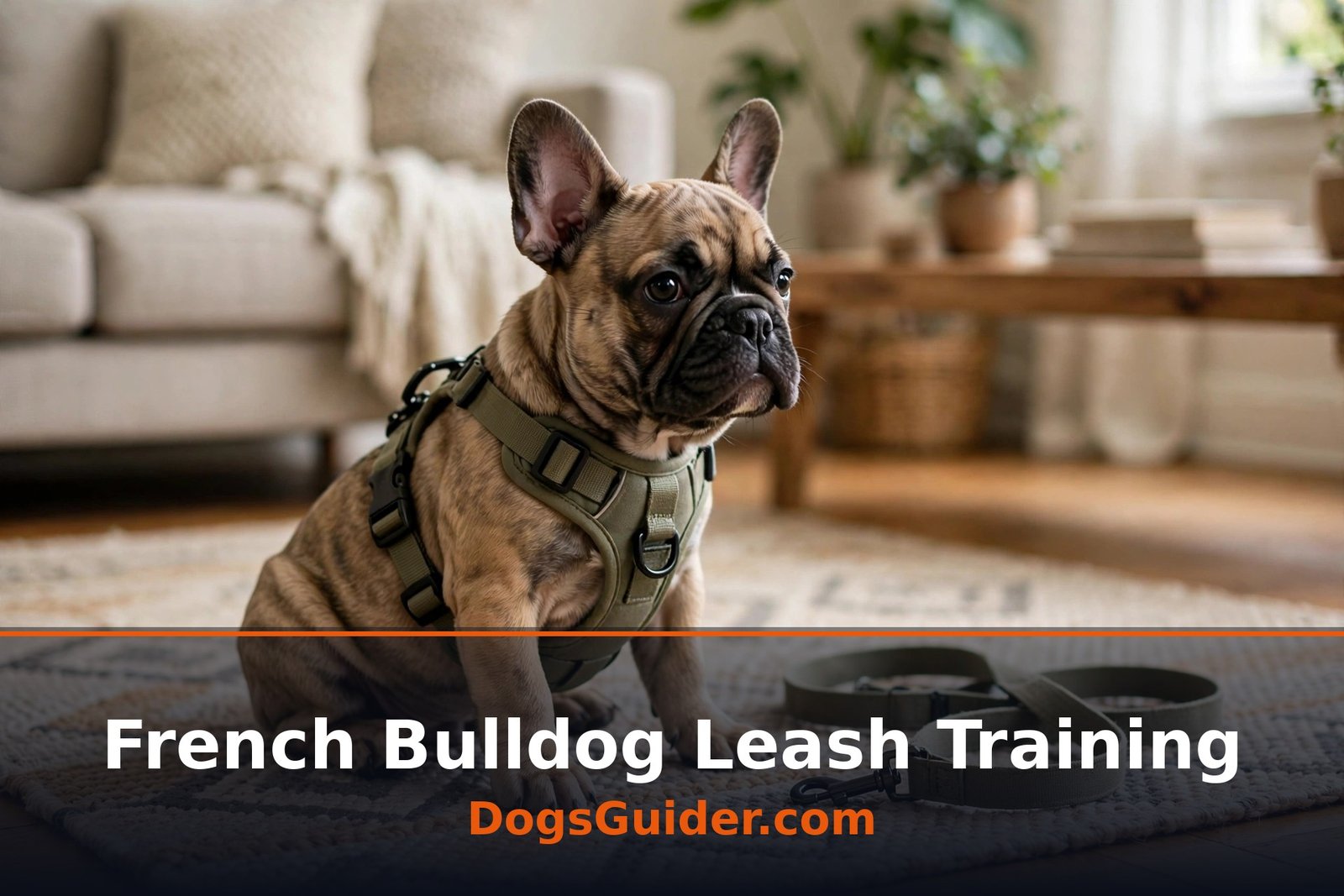
French Bulldogs pull because the world smells amazing and they want to reach it faster. Pulling works from the puppy point of view, because leaning forward usually gets them closer to the interesting thing.
Many owners make pulling worse without meaning to. They follow the dog when it pulls, so the dog learns that a tight leash still moves forward, which is exactly the wrong lesson.
A flat face adds a real safety reason to fix pulling. Pressure on the neck can squeeze an already narrow airway, and heavy panting on walks is often the first sign that the pace or the gear is wrong.
The Right Gear Comes First
Use a well fitted chest harness, not a collar, for leash training. A harness spreads pressure across the chest and shoulders, which protects the throat and the eyes from the strain of pulling.
Choose a Y shaped harness that sits clear of the armpits and lets the front legs swing freely. A front clip ring can help a strong puller, because gentle turning pressure guides the dog back toward you.
Pick a light, fixed length leash of about 1.5 to 2 metres. Retractable leashes teach pulling, because the dog learns that pressure makes the line longer, and they give you no control near roads.
How to Fit the Harness
Fit the harness indoors, before any walk, so your dog links it with calm treats rather than excitement. Slide two fingers under every strap to check the fit, and watch that it does not rotate when your dog moves.
Check the armpits for rubbing after the first few walks. Red skin or missing hair means the harness is too tight or the wrong shape, and you should try a different size or style.
Let your puppy wear the harness around the house for short periods first. Feed a treat when you buckle it, then unbuckle and repeat, so the harness predicts good things.
The Core Rule: Pulling Earns Nothing
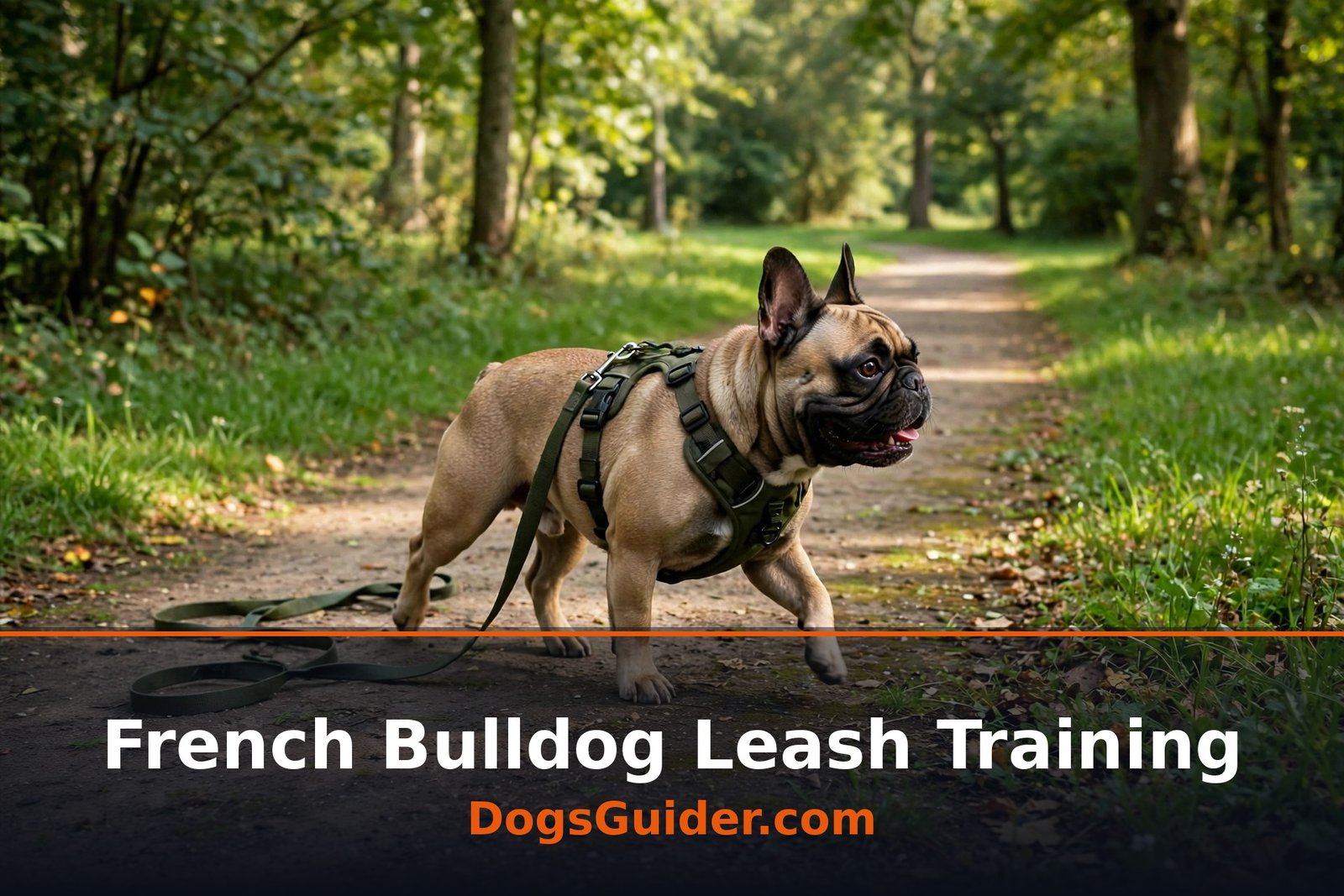
The core rule of loose leash walking is simple: a tight leash stops the walk, and a slack leash restarts it. Every time you follow a pulling dog, you pay the dog for pulling.
When the leash goes tight, stop walking and stand still. Wait for your Frenchie to look back, step toward you, or slacken the leash, then praise and walk on at once.
Reward the small moments that matter. A glance back at you, a step at your side, or a few seconds of slack leash all deserve a treat or a happy word in the early weeks.
Your 4 Week Loose Leash Plan
Follow this plan in order, and do not rush to busy streets before the early steps are solid. Five minutes of good practice beats a long, frustrating walk every time.
Week 1: Harness and Attention at Home
Practice indoors and in the garden, where distractions are low. Reward your dog for walking beside you for a few steps, then for checking in with eye contact.
Teach a simple cue such as “let’s go” before you start moving. Say it once, in a cheerful voice, and step forward only when your dog is calm and beside you.
Week 2: Short Garden and Quiet Street Walks
Move to a quiet street or a calm path for five minute walks. Use the stop and go rule every time the leash tightens, even if progress feels slow.
End each walk while it is still going well. A short walk that ends calmly teaches far more than a long walk that ends in pulling and frustration.
Week 3: Adding Mild Distractions
Add one mild distraction at a time, such as a quiet neighbour, a parked car, or a distant dog. Keep the distance generous, and reward calm behaviour before your dog reacts.
If your Frenchie fixates or lunges, increase the distance and try again. Training at a distance where your dog can still think is always faster than training through a reaction.
Week 4: Real Walks With the Rule Still On
Walk your normal route, but keep the rule in place. Stop for pulling, reward slack leash walking, and take a break in the shade whenever your dog starts panting hard.
By now, most owners see real progress on quiet routes. Busy streets may still need more time, and that is normal for a young or excitable Frenchie.
Teaching Check Ins and Focus
A check in is when your dog looks back at you without being asked. It is the most useful skill on a walk, because a dog that checks in is a dog that is listening.
Start at home by rewarding every time your dog looks at your face. Say a marker word such as “yes” at the exact moment of eye contact, then deliver the treat.
On walks, reward check ins often at first, then slowly less often as the habit grows. A Frenchie that checks in regularly is far less likely to surge toward every smell.
Common Leash Problems and Fixes
Most leash problems have a simple cause and a patient fix. Work on one problem at a time, and keep sessions short so your dog stays willing.
My Frenchie Plants and Refuses to Move
Planting is often not stubbornness. Check breathing first, because a flat faced dog that sits down may be hot, tired, or struggling for air, especially in warm weather.
If breathing is fine, wait calmly instead of dragging your dog. Offer a treat a step ahead, praise the first step, and shorten the walk next time.
Lunging at Dogs, People, or Squirrels
Lunging usually means the trigger is too close. Increase the distance, reward your dog for noticing the trigger calmly, and move away before excitement turns into a lunge.
Good socialization makes this easier over time. For a full plan, read our guide on French Bulldog socialization and practice calm meetings with known, steady dogs first.
Zigzagging and Wrapping the Leash
Zigzagging happens when a dog has never learned a walking position. Reward your dog for staying on one side, usually your left, and change direction the moment the leash crosses behind you.
Keep the leash short enough to guide, but never tight. A loose leash with a clear side position is the goal, not a stiff heel like a competition dog.
Walking in Heat and Cold
French Bulldogs overheat faster than most breeds, so walk in the coolest part of the day. Early morning and late evening are safest, and midday summer walks are best skipped entirely.
Watch for heavy panting, drooling, or a reluctance to keep moving. These are warning signs, not laziness, and you should stop, find shade, and offer water at once.
To learn the warning signs in detail, read our article on why is my French Bulldog panting so much before your next hot weather walk.
Panting that does not settle quickly needs a vet call.
Mistakes That Slow Leash Training
The most common mistake is training too long. Frenchies tire quickly, and a tired puppy stops learning, so five focused minutes beats twenty frustrated ones.
Another mistake is letting family members use different rules. If one person follows a pulling dog and another stops, the dog gets mixed messages, so agree on the same rule for everyone.
Finally, do not skip the harness to “toughen up” your dog. A collar on a puller strains the throat and eyes, and no training benefit is worth that risk.
A Simple Weekly Checklist
Use this table to track your first four weeks. Move to the next stage only when your dog can walk calmly at the current one.
| Week | Where to practice | What success looks like |
|---|---|---|
| 1 | Indoors and garden | Walks beside you for a few steps, checks in often |
| 2 | Quiet street, 5 minutes | Stops pulling when you stop, slack leash most of the time |
| 3 | Mild distractions | Notices triggers calmly, looks back at you for guidance |
| 4 | Normal route | Loose leash on quiet routes, recovers quickly after a pull |
The Bottom Line
French Bulldog leash training works best with a harness, short sessions, and one consistent rule: pulling stops the walk, and a slack leash restarts it. Most Frenchies improve in two to four weeks of daily practice.
Keep walks short, cool, and calm, reward the small wins, and fix problems at a distance your dog can handle. A relaxed Frenchie on a loose leash is a walk you will both enjoy.
References
- American Kennel Club, general guidance on loose leash walking and breed care, https://www.akc.org/
- PetMD, general guidance on dog training, walking safety, and behaviour, https://www.petmd.com/
- VCA Animal Hospitals, client education on dog training and walking, https://vcahospitals.com/
- Merck Veterinary Manual, owner guidance on dog behaviour and training, https://www.merckvetmanual.com/
FAQs
1. What is the best age to start French Bulldog leash training?
Start at about eight weeks, as soon as your puppy comes home. Begin indoors with harness comfort and a few steps at your side, then move outside for very short walks once your vet clears outings.
2. Should I use a collar or a harness for my French Bulldog?
Use a harness. A collar puts pressure on the throat of a flat faced breed, which can make breathing harder and strain the eyes when the dog pulls. A well fitted chest harness spreads pressure safely.
3. How long does it take to leash train a French Bulldog?
Most Frenchies show clear progress in two to four weeks of daily five minute sessions. Busy streets and strong distractions can take longer, so keep the rule consistent and do not rush the stages.
4. Why does my French Bulldog pull only toward other dogs?
Excitement and a wish to greet are the usual causes. Increase the distance, reward calm noticing, and practice with calm, known dogs first.
5. What should I do if my French Bulldog sits down and refuses to walk?
First check breathing and heat, because planting can signal tiredness or airway trouble. If your dog is fine, wait calmly, lure one step with a treat, and shorten future walks until stamina improves.
6. Are retractable leashes bad for French Bulldogs?
Yes, for training they are a poor choice. They reward pulling by letting the line grow longer, and they give you little control near roads or other dogs. Use a fixed length leash of about 1.5 to 2 metres instead.
7. Can I leash train an adult French Bulldog that already pulls?
Yes, adult French Bulldogs can learn loose leash walking, but it takes more patience because the habit is older. Use the same stop and go rule, a harness, short sessions, and high value treats, and progress will come.

Sarah Mitchell has been raising French Bulldogs for over 9 years in Austin, Texas. After adopting her first Frenchie, Biscuit, she became passionate about helping new owners navigate the unique needs of the breed from breathing care to diet and heat safety. Sarah has worked closely with local veterinarians and attended the AKC National Championship three times as a breed enthusiast. Her guides focus on practical, real-world advice for American Frenchie owners.