Why Does My French Bulldog Throw Up? Causes & Vet Advice

Introduction
If you are asking why does my french bulldog throw up, start with the pattern, not panic. Our guide on why your French Bulldog drools so much explains normal drooling versus warning signs.
French Bulldogs throw up more often than many other breeds. Their flat faces affect how they eat and breathe, which makes them prone to swallowing air and to reflux.
Quick Answer: French Bulldogs often throw up because they eat too fast, swallow air, or vomit bile on an empty stomach. A one-off episode with a bright, normal dog is often mild, but repeated vomiting, blood, lethargy, or vomiting past a day needs a vet promptly.
This guide covers vomiting versus regurgitation, the most common causes, what vomit can tell you, safe home care for a one-off episode, and the emergency signs that need a vet without delay.
Vomiting Versus Regurgitation: Why the Difference Matters
Vomiting and regurgitation look similar in the moment, but they mean different things. Telling them apart helps your vet narrow down the cause much faster.
Vomiting is an active process. It usually comes with warning signs such as drooling, lip licking, restlessness, and visible heaving of the belly before anything comes up.
Regurgitation is passive. Your dog lowers its head and undigested food slides out, often in a tube shape, usually within minutes of eating, with no heaving.
Regurgitation often points to fast eating or an oesophagus problem, while vomiting points more often to stomach irritation. Note which one you saw, and tell your vet.
Why French Bulldogs Throw Up More Than Many Breeds
French Bulldogs are brachycephalic, which means their short, flat faces change how air and food move. This anatomy raises the chance of digestive trouble in several ways.
First, Frenchies swallow extra air while eating, drinking, and breathing. That extra air increases stomach pressure, which can trigger burping, reflux, and vomiting.
Second, many Frenchies live with higher rates of acid reflux, which irritates the stomach lining and makes vomiting more likely after meals or overnight.
Third, Frenchies often have sensitive stomachs. Sudden food changes, rich treats, and scavenged food upset them easily.
The Most Common Causes
Eating Too Fast
Eating too fast is the most common cause of a one-off vomit in French Bulldogs. Excited dogs gulp food and air together, then bring part of the meal straight back up.
This vomit often contains undigested food and happens soon after eating. If it happens rarely and your dog seems fine, fast eating is likely.
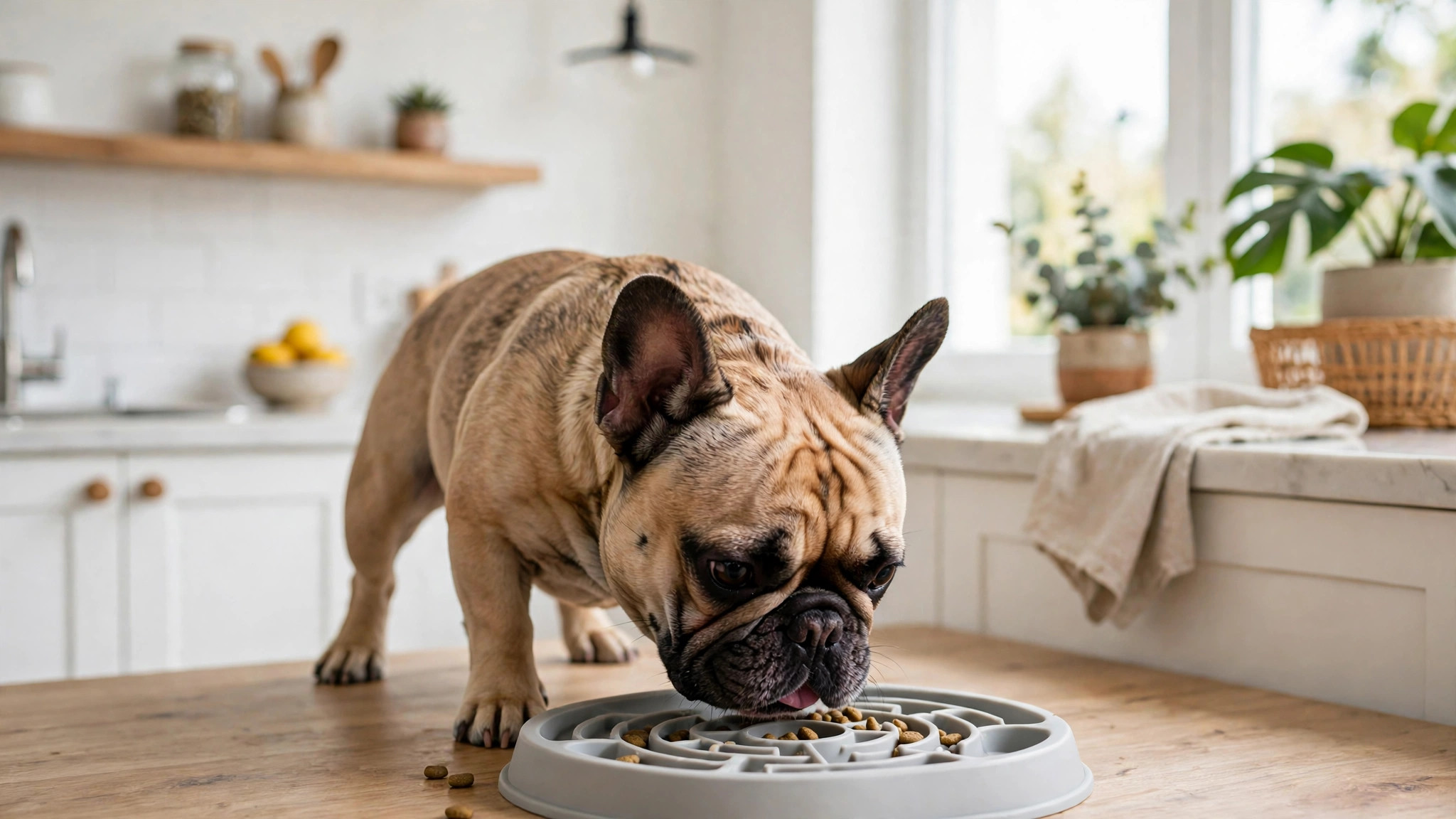
A slow feeder bowl, smaller portions, and calm mealtimes help many fast eaters.
Empty Stomach Bile: Bilious Vomiting Syndrome
Yellow bile or white foam in the morning often points to an empty stomach. Bile is a digestive fluid that can leak back into the stomach when it stays empty for a long time.
Overnight, bile builds up and irritates the stomach lining. The result is often a small puddle of yellow liquid or frothy foam before breakfast, after which the dog eats normally.
Smaller, more frequent meals often help this pattern. A small, low fat snack late in the evening can also stop the stomach sitting completely empty overnight.
If bile vomiting happens several times a week, ask your vet for advice. Frequent bile vomiting can signal ongoing reflux or another problem that needs checking.
Food Sensitivity and Sudden Diet Changes
A new food, a new treat, or a sudden switch of brands can upset a Frenchie stomach. Rich food, fatty scraps, and table food are common triggers.
Food sensitivity vomiting often comes with soft stools or gas. If vomiting started soon after a diet change, the change is a strong suspect.
Switch foods gradually over a week or more, mixing increasing amounts of the new food with the old. Keep treats plain and simple while the stomach settles.
Gastritis and Stomach Irritation
Gastritis means inflammation of the stomach lining. It can follow eating something unsuitable, stress, or an infection, and it often causes repeated vomiting of foam or yellow bile.
Dogs with gastritis may go off food, lick their lips often, or seem uncomfortable after eating. These signs deserve a vet visit, not home trial and error.
Do not try to settle gastritis with leftover medication. Only your vet can judge what treatment your dog needs.
Eating Something They Should Not
French Bulldogs love chewing things they should not, from socks and toys to garden plants and rubbish. Swallowed objects can irritate the stomach or block the gut.
Vomiting after known scavenging, or vomiting with a painful belly and refusal to eat, needs urgent vet attention. A blockage can become dangerous quickly.
Keep small objects, toys with loose parts, and food waste out of reach. Supervise chewing, especially with puppies and powerful chewers.
Obstruction: A Serious Emergency
An intestinal blockage is the most serious cause of vomiting in this guide. It can follow swallowing a toy, a sock, a bone fragment, or another object that cannot pass.
Warning signs include a swollen belly, severe lethargy, refusal to drink, pain when touched, and vomiting that keeps going. Retching with nothing coming up is also an emergency.
Do not wait to see if a suspected blockage passes on its own. Seek emergency vet care at once, since delay can turn a treatable problem into a life threatening one.
What the Vomit Can Tell You
The timing, colour, and texture of vomit give useful clues, but they never diagnose a problem alone. Use them to describe the episode to your vet.
Undigested food soon after eating often means fast eating or regurgitation. Partly digested food hours after a meal points more towards stomach irritation.
Yellow liquid or white foam, especially in the morning, often means bile on an empty stomach. Clear liquid can follow drinking too fast or an already irritated stomach.
Blood, or material that looks like coffee grounds, is a warning sign at any time. Seek vet care promptly, and note when the vomiting started and how often it happens.
Home Care for a One-Off Episode
If your Frenchie vomits once but seems bright, alert, and otherwise normal, simple home care is usually enough. Keep the steps gentle and watchful.
Remove food for a short period, such as a few hours, to let the stomach settle. Offer small amounts of water often, rather than a large bowl at once.
Once vomiting has stopped and your dog seems normal, offer a small amount of plain, bland food. Keep the portion small, and return to normal food gradually over a day or two.
Rest matters after vomiting. Keep your dog calm, skip vigorous play, and watch for any repeat episode.
Never give medication without vet advice, even medication that helped another dog. Human medicines and leftover pet medicines can harm a vomiting dog.
When to See a Vet: Emergency Signs
Contact your vet promptly if vomiting repeats, lasts beyond a day, or comes with any warning sign. Early care works far better than waiting.
Seek emergency vet care at once for blood in vomit, or vomit that looks like coffee grounds. Seek it too for a swollen or painful belly.
Seek emergency care if your dog vomits more than three times in one day, or if vomiting continues past 24 hours. Dehydration builds fast in small, compact dogs.
Other emergency signs include severe lethargy, weakness, shaking, refusal to drink, and retching with nothing coming up. Vomiting with weight loss, or vomiting in a young puppy, also needs prompt vet attention.
Hiccups can look alarming but are usually harmless. Our guide on why your French Bulldog gets hiccups explains normal hiccups and warning signs.
Preventing Future Episodes
Prevention focuses on feeding habits, because fast eating and empty stomachs cause so many Frenchie vomiting episodes. Small changes often make a big difference.
Feed smaller, more frequent meals instead of one large meal. A slow feeder bowl helps greedy eaters, and a calm feeding spot reduces gulping.
For morning bile vomiting, a small late evening snack can help, as long as your vet agrees it suits your dog. Keep the snack plain and low fat.
Keep mealtimes calm and unhurried. Avoid feeding straight after wild play, and offer water in small amounts rather than one huge gulp.
Our guide on how much water a French Bulldog should drink covers normal drinking amounts for sensitive stomachs.
Vomit Types and What They Often Suggest
| What you see | When it often happens | What to do first |
|---|---|---|
| Undigested food, soon after eating | Fast eating or regurgitation | Slow feeder and calm meals |
| Yellow bile or white foam, morning | Empty stomach bile | Smaller frequent meals, vet advice if frequent |
| Partly digested food, hours later | Stomach irritation | Short food rest, then bland food, vet if repeated |
| Clear liquid | Drinking too fast, irritated stomach | Small water amounts, watch for repeats |
| Blood or coffee ground material | Stomach bleeding or serious illness | Emergency vet care at once |
| Retching with nothing coming up | Blockage or serious problem | Emergency vet care at once |
The Bottom Line
If you are asking why does my french bulldog throw up, the usual answers are fast eating, swallowed air, and bile on an empty stomach. Frenchie anatomy makes all three more likely than in many other breeds.
A one-off episode in a bright, normal dog often settles with a short food rest, small amounts of water, and a gradual return to plain food. Never medicate without vet advice.
Repeated vomiting, blood, severe lethargy, refusal to drink, a swollen belly, or vomiting past a day all need vet care promptly. When in doubt, call your vet sooner rather than later.
References
- American Kennel Club, French Bulldog health and digestive guidance, https://www.akc.org/
- PetMD, guidance on vomiting in dogs, causes and warning signs, https://www.petmd.com/
- VCA Animal Hospitals, client education on vomiting and regurgitation in dogs, https://vcahospitals.com/
- Merck Veterinary Manual, owner guidance on vomiting and digestive disorders in dogs, https://www.merckvetmanual.com/
FAQs
1. Why does my French Bulldog throw up yellow bile in the morning?
Morning yellow bile often means the stomach sat empty overnight, letting bile irritate the lining. Smaller, more frequent meals often help, and frequent bile vomiting needs vet advice.
2. Is it normal for French Bulldogs to throw up often?
French Bulldogs vomit more than many breeds because of their flat faces and reflux risk, but frequent vomiting is not something to accept. Repeated episodes deserve a vet check to find the cause.
3. What is the difference between vomiting and regurgitation?
Vomiting is active, with drooling, lip licking, and belly heaving before food comes up. Regurgitation is passive, with undigested food sliding out soon after eating and no heaving.
4. What should I feed my French Bulldog after vomiting?
After vomiting stops and your dog seems normal, offer a small amount of plain, bland food. Keep portions small, return to normal food gradually, and never medicate without vet advice.
5. How many times can a dog vomit before I call the vet?
Call your vet if vomiting happens more than three times in one day, or if it continues past 24 hours. Seek emergency care sooner for blood, severe lethargy, refusal to drink, or a swollen belly.
6. Can eating too fast make my French Bulldog throw up?
Yes, fast eating is a very common cause. Gulped food and swallowed air often come back up soon after the meal, and a slow feeder bowl plus calm mealtimes helps many dogs.
7. When is French Bulldog vomiting an emergency?
Seek emergency care for blood in vomit, a swollen or painful belly, retching with nothing coming up, severe lethargy, refusal to drink, or vomiting that will not stop.

Sarah Mitchell has been raising French Bulldogs for over 9 years in Austin, Texas. After adopting her first Frenchie, Biscuit, she became passionate about helping new owners navigate the unique needs of the breed from breathing care to diet and heat safety. Sarah has worked closely with local veterinarians and attended the AKC National Championship three times as a breed enthusiast. Her guides focus on practical, real-world advice for American Frenchie owners.