
How to Clean a French Bulldog Tail Pocket Safely
Introduction
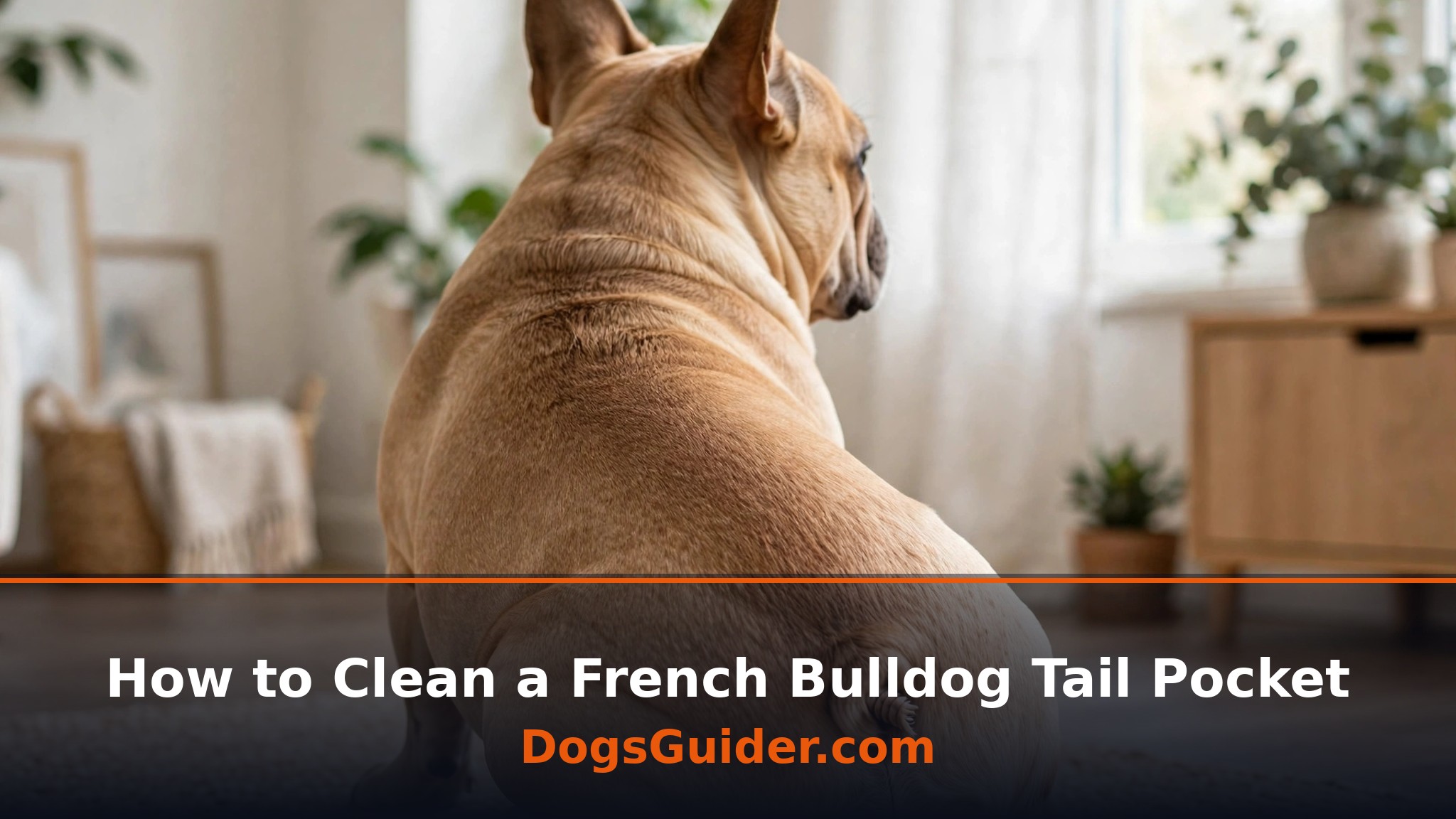
If you want to know how to clean a french bulldog tail pocket, start with a calm dog and a soft cloth. Our guide on how to clean French Bulldog wrinkles uses the same gentle wipe and dry method.
Many French Bulldog owners never hear about the tail pocket until a smell appears. The pocket is a small skin fold under the tail, and it can trap moisture, dirt, and shed hair.
That trapped debris can irritate the skin fast. A short, regular routine prevents most problems and keeps your dog comfortable.
This guide covers how to find the pocket, what to use, and how to clean it step by step. It also covers drying, frequency, warning signs, and when to call your vet.
What Is a Tail Pocket?
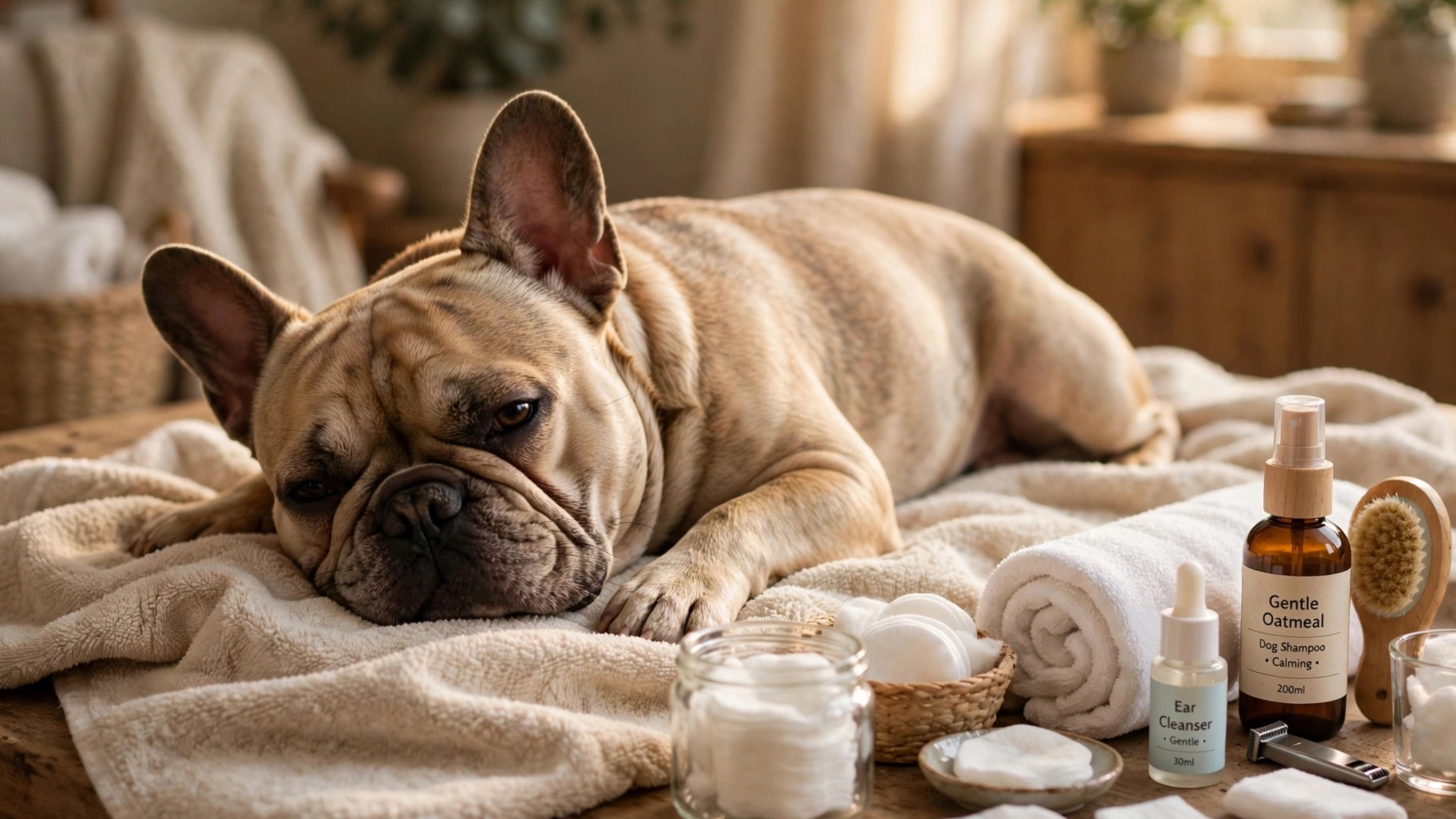
A tail pocket is a fold of skin that forms under or around a short, screw, or tucked tail. Not every French Bulldog has a deep pocket, but many have at least a shallow fold there.
The fold creates a warm, dark, and slightly damp space. Skin surfaces touch each other inside the fold, which limits airflow and traps debris.
That setting suits yeast and bacteria when moisture stays in place. The pocket does not need to look dirty from outside to need care.
How to Find Your Frenchie’s Tail Pocket
Stand behind your dog while he is calm and relaxed. Lift the tail very gently with one hand, just enough to see the skin beneath it.
Look for a crease, dip, or fold where the tail meets the body. In some dogs, the fold is shallow and easy to see.
In other dogs, the fold is deeper and partly hidden by the tail. Move slowly, and let your dog sniff your hand first if he seems unsure.
Do not pull the tail hard or force it up. If your dog flinches, stops, or turns away, pause and try again later with treats.
Deep Pockets Versus Shallow Pockets
A shallow pocket is a light crease that you can open with one finger. It usually stays fairly dry and needs only simple wiping.
A deep pocket folds in on itself and can hide debris out of sight. It needs slower, more careful wiping and extra drying time.
If you cannot see the base of the fold at all, do not probe blindly. Ask your vet to show you the pocket shape at a routine visit.
Supplies You Need
You need very little gear for tail pocket care. Keep it simple, soft, and unscented so you do not irritate the skin.
Gather soft cloths or gauze squares, warm water, and a dry towel. Add vet-approved, unscented wipes only if your vet has approved them for your dog.
Step by Step: How to Clean the Tail Pocket
Step 1: Wash your hands. Clean hands stop you from adding dirt or germs to delicate fold skin.
Step 2: Settle your dog. Let him stand or lie in a comfy spot, and offer a treat before you touch the tail area.
Step 3: Lift the tail gently. Raise it just enough to open the fold so you can see the skin inside.
Step 4: Wipe with warm water. Dampen a soft cloth with warm water and wipe along the fold in gentle strokes.
Use a fresh section of cloth as you go, and wipe the full depth of the fold. Do not rush this part, but do not scrub either.
Step 5: Check the skin as you clean. Look for redness, sores, swelling, discharge, or a strong smell while the fold is open.
Step 6: Dry the pocket fully. Pat the fold dry with a soft, dry cloth, and make sure no damp patch stays hidden inside. Drying matters as much as wiping.
Step 7: Reward and finish. Praise your dog, give a treat, and note anything odd so you can track change over time.
If the skin looks sore at any step, stop cleaning and book a vet visit. Home cleaning maintains healthy skin, and sore skin needs diagnosis.
How Often Should You Clean a Tail Pocket?
Most French Bulldogs need a tail pocket check at least once a week. Dogs with deep pockets often need cleaning two or three times a week.
Dogs with shallow, dry pockets may need less frequent cleaning. Still, check the pocket weekly so a slow build-up does not go unnoticed.
Clean more often after baths, messy toilet trips, or hot, humid days. Moisture after a bath is a common trigger for fold irritation.
Our guide on how often to bathe a French Bulldog explains why full baths stay infrequent, while fold checks stay frequent.
| Pocket type | How often to check | How often to clean |
|---|---|---|
| Shallow and dry | Once a week | Every one to two weeks, or when dirty |
| Medium fold | Twice a week | Once a week |
| Deep or tight pocket | Every day or two | Two to three times a week |
| Pocket with past irritation | Daily checks | As often as your vet advises |
Use this table as a starting point, not a strict rule. Your vet can adjust the routine for your dog’s skin, weight, and health history.
Drying and Barrier Care
Drying is the step owners skip most often, and it causes the most trouble. A pocket that stays damp invites irritation even after a careful wipe.
Pat, do not rub, with a soft dry cloth. For deep pockets, use a fresh dry section and check again after a few minutes.
Ask your vet before using any barrier cream, powder, or ointment in the pocket. Products can trap moisture if used wrongly, and some irritate fold skin.
Signs of Irritation Versus Infection
Irritation often starts as mild redness, slight dampness, or a faint sour smell. The skin may look pink, and your dog may scoot, lick, or turn to the area.
Infection signs tend to be stronger and harder to ignore. They include a strong, sour, or musty smell that cleaning does not remove.
Other warning signs include yellow or green discharge, crusting, weeping skin, swelling, hair loss, sores, or bleeding. Pain when you touch the fold is also a warning sign.
Irritation and infection can look similar at first, so do not try to judge alone. Only your vet can diagnose skin problems, and early care works best.
Smell, Discharge, and Deep Pockets
A tail pocket smell often comes from trapped moisture and debris, not from the coat. If the smell fades after a gentle wipe and full dry, the pocket was likely just dirty.
If the smell stays strong after cleaning, or returns within a day, ask your vet for advice. A lasting smell often points to irritation or infection inside the fold.
Discharge needs a vet visit, even if it looks mild. Clear moisture after a bath differs from thick, coloured, or smelly discharge from the fold.
Never insert cotton buds, fingers, or tools deep into the fold to chase debris. You could hurt the skin or push debris further inside.
What NOT to Do
Do not use hydrogen peroxide on the tail pocket. It stings, dries the skin, and can damage delicate fold tissue.
Do not use alcohol, scented wipes, or harsh antibacterial soap either. These products strip the skin and often make irritation worse.
Do not scrub the fold, even if it looks dirty. Scrubbing creates tiny skin damage and invites more irritation, not less.
When to See a Vet
Book a vet visit for redness, swelling, discharge, sores, bleeding, or pain in the pocket. Book one too for a smell that survives gentle cleaning.
Seek prompt care if your dog scoots a lot, licks the area constantly, or seems in pain when sitting. These signs suggest the fold needs examination.
Recurring pocket problems also deserve a vet conversation. Repeat flare-ups may link to allergies, weight, tail shape, or another health issue.
Making Cleaning Easier
Pair pocket care with an existing habit, such as after an evening walk or before bedtime. A set routine helps both you and your dog relax.
Keep sessions short, even if you need to clean twice a week. Two calm minutes beat one long, stressful session for most dogs.
On warm days, keep your dog cool and calm before cleaning. Our guide on how to cool down a French Bulldog covers safe cooling steps for hot weather.
If your dog resists strongly, go slower and rebuild trust over days. Touch near the tail, reward, and stop, then build up to a full wipe. Never wrestle or pin your dog for pocket care.
The Bottom Line
Learning how to clean a french bulldog tail pocket takes only a few minutes once you know the routine. Wipe gently with warm water, check the skin, and dry the pocket fully every time.
Check shallow pockets weekly and deep pockets more often, and adjust the routine with your vet’s advice. Skip alcohol, hydrogen peroxide, scented products, and scrubbing, since they harm fold skin.
See your vet promptly for redness, swelling, discharge, sores, pain, or a smell that cleaning does not fix. Gentle, regular care prevents most pocket problems before they start.
References
- American Kennel Club, French Bulldog grooming and skin care guidance, https://www.akc.org/
- PetMD, guidance on skin fold care and fold dermatitis signs, https://www.petmd.com/
- VCA Animal Hospitals, client education on skin fold dermatitis in dogs, https://vcahospitals.com/
- RSPCA, dog grooming and skin health advice, https://www.rspca.org.uk/
- Merck Veterinary Manual, owner guidance on skin fold dermatitis, https://www.merckvetmanual.com/
FAQs
1. Does every French Bulldog have a tail pocket?
No, not every French Bulldog has a clear tail pocket. Many have at least a shallow fold under a short or tucked tail, while others have a deeper fold.
2. How often should I clean a French Bulldog tail pocket?
Check weekly as a baseline, and clean shallow pockets every one to two weeks. Deep pockets often need cleaning two or three times a week, or as your vet advises.
3. Can I use baby wipes on a tail pocket?
Use only unscented, alcohol free wipes approved by your vet for your dog. A soft cloth with warm water is the gentler default for routine cleaning.
4. Why does my French Bulldog tail pocket smell?
A smell usually means moisture, dirt, or shed hair has built up inside the fold. If gentle cleaning and full drying do not remove it, ask your vet for advice.
5. What should I do about discharge from the tail pocket?
Do not try to treat discharge at home with creams or strong cleansers. Book a vet visit, note the colour and smell, and describe when it started.
6. Is a deep tail pocket more likely to get infected?
A deep pocket traps more moisture and debris, so it needs more frequent checks. With regular gentle cleaning and full drying, many deep pockets stay healthy.
7. When should a tail pocket be seen by a vet instead of cleaned at home?
See a vet for redness, swelling, discharge, sores, bleeding, pain, or a lasting smell. Recurring pocket problems also need a vet visit to find the cause.

Sarah Mitchell has been raising French Bulldogs for over 9 years in Austin, Texas. After adopting her first Frenchie, Biscuit, she became passionate about helping new owners navigate the unique needs of the breed from breathing care to diet and heat safety. Sarah has worked closely with local veterinarians and attended the AKC National Championship three times as a breed enthusiast. Her guides focus on practical, real-world advice for American Frenchie owners.