

Introduction
But before you fall for the looks (or the $5,000-$10,000+ price tag), it’s worth understanding exactly what causes this pattern, why it’s controversial within the breed community, and the real health risks every buyer needs to know before purchasing.
What Is a Blue Merle French Bulldog, Genetically?
A Blue Merle French Bulldog carries two separate genetic traits stacked on top of each other:
- The dilute gene (d/d): this recessive gene suppresses black pigment down to a steel-gray “blue” color, the same gene responsible for solid Blue French Bulldogs
- The merle gene (M) is a dominant gene that randomly dilutes patches of the base coat color into a mottled, marbled pattern
Because a Blue Merle French Bulldog requires both the dilute gene and the merle gene simultaneously, this color combination is rarer and more expensive than either trait on its own.
Why Is the Merle Gene Controversial in French Bulldogs?

Here’s something most sellers won’t mention upfront: the merle gene did not originate naturally within the French Bulldog breed.
Its presence is understood to trace back to crossbreeding at some point in the breed’s more recent history, which is a live point of debate among breeders and breed clubs.
Because of this, the merle pattern, including the Blue Merle French Bulldog, sits outside the AKC’s official recognized breed standard, and organizations like the French Bull Dog Club of America have specifically warned buyers against being swayed by inflated “rare color” marketing that doesn’t prioritize health and breed integrity.
The Double Merle Health Risk You Need to Know Before Buying
This is the single most important health fact about the Blue Merle French Bulldog: breeding two merle-patterned parents together produces “double merle” puppies, which carry serious, well-documented health risks, including:
- Deafness: partial or complete hearing loss is common in double merle puppies
- Vision problems, including malformed eyes and increased sensitivity to light
- Increased sun sensitivity due to reduced pigmentation in the skin
Reputable, ethical breeders will never intentionally breed merle to merle, specifically to avoid producing double merle puppies.
A single-merle Blue Merle French Bulldog (with only one merle parent) does not carry this same elevated risk and can live a healthy, normal life with sensible management and appropriate hearing and eye testing.
How Much Does a Blue Merle French Bulldog Cost?
Pricing reflects the compounding rarity of stacking two separate genetic traits:
- Standard merle French Bulldog: $4,000-$7,000
- Blue Merle French Bulldog: $5,000-$10,000+
- Lilac merle or fluffy merle combinations: $10,000-$30,000+ in some cases
Price alone is not a reliable indicator of quality or ethics. A $4,000 “Blue Merle” from an anonymous online listing with no health documentation carries real risk regardless of the price tag; the number matters far less than what’s behind it.
What to Look For in an Ethical Blue Merle French Bulldog Breeder
- Confirmation they never breed merle to merle: ask this question directly, and expect a clear, confident answer
- Hearing and eye testing (BAER testing): Reputable breeders test for congenital deafness and eye abnormalities before placing puppies
- Transparency about genetics: a good breeder can explain exactly how the merle and dilute genes combine to produce the blue merle pattern
- Health guarantee in writing: covering both standard French Bulldog risks and merle-specific concerns
- More focus on health than color; be wary of a seller who talks constantly about rarity and eye color but barely mentions health screening
Red Flags When Buying a Blue Merle French Bulldog
- The breeder can’t confirm the pairing wasn’t merle-to-merle
- No mention of BAER hearing testing or eye exams
- Extremely high price with thin paperwork and no health screening documentation
- Heavy emphasis on “rare” marketing language with little substantive health information
- Pressure to buy quickly due to “high demand” for the color
Do Blue Merle French Bulldogs Have Other Health Risks Beyond Merle?
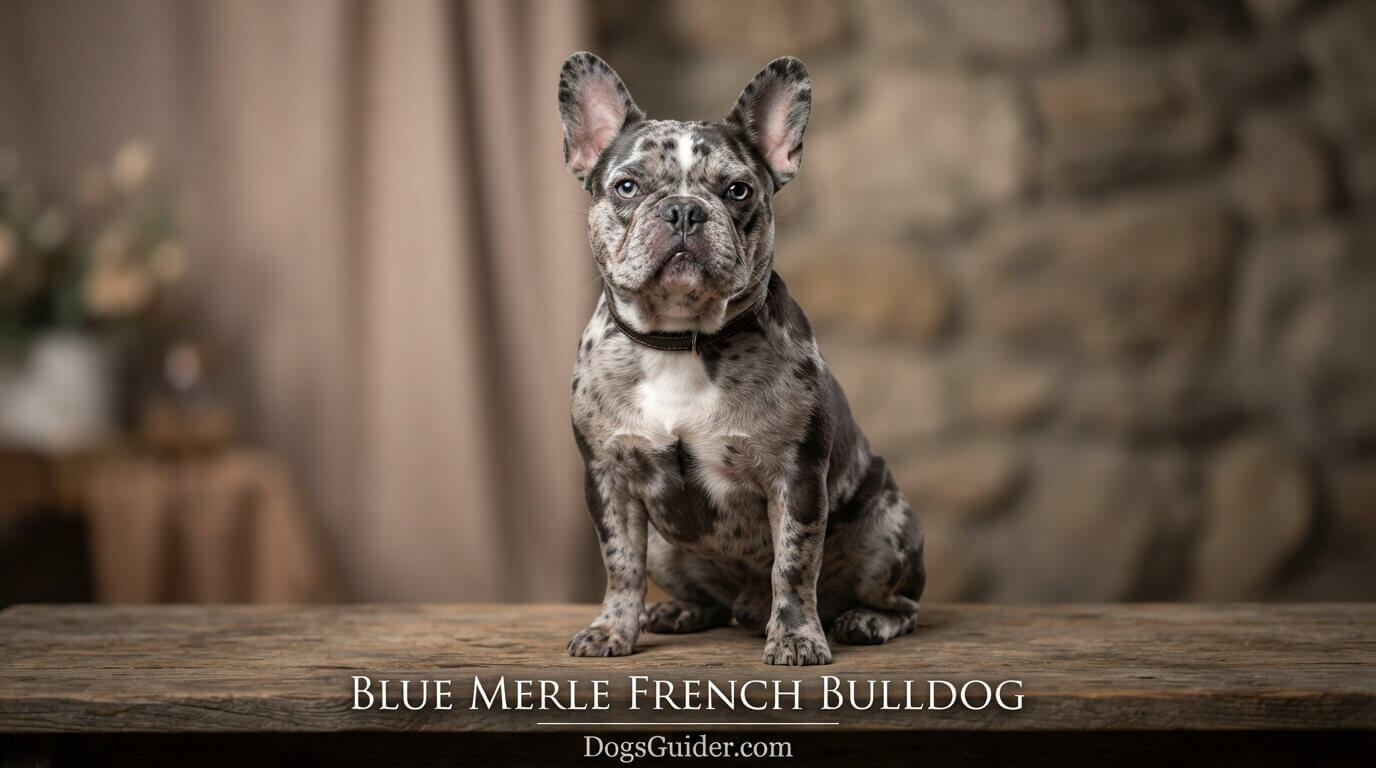
Yes, it’s important to remember that merle does not replace the standard French Bulldog health risk profile. A Blue Merle French Bulldog still carries the same baseline brachycephalic breed risks as any other Frenchie, including:
- Brachycephalic Airway Obstruction Syndrome (breathing difficulty)
- Skin fold infections requiring regular cleaning
- Joint and spinal issues common across the breed
- Heat sensitivity due to limited ability to cool themselves efficiently
Some Blue Merle French Bulldogs with the dilute gene can also be prone to Color Dilution Alopecia (CDA), a condition affecting coat and skin health, which is worth discussing with your vet and breeder.
Temperament: Does Merle Coloring Affect Personality?
Genetically, coat color and pattern have no direct link to temperament. Blue Merle French Bulldogs share the same affectionate, playful, people-oriented personality as any other French Bulldog.
That said, some owners anecdotally describe merle Frenchies as slightly more energetic than the breed’s typical laid-back reputation, though this hasn’t been scientifically confirmed and likely varies by individual dog.
Final Thoughts
The Blue Merle French Bulldog is undeniably striking, but its rarity and price tag shouldn’t distract from the real genetic and health considerations behind the pattern.
Prioritize breeders who test for hearing and eye health, never breed merle to merle, and are transparent about the science behind the color; that diligence is what separates a healthy, ethically bred Blue Merle French Bulldog from a costly mistake.
FAQs
1. Why is a Blue Merle French Bulldog so expensive?
The price reflects the genetic rarity of combining two separate traits the dilute gene and the merle gene simultaneously, along with high current market demand, typically resulting in prices between $5,000 and $10,000 or more.
2. Is the merle gene natural to French Bulldogs?
No. The merle gene is understood to have entered the French Bulldog gene pool through crossbreeding at some point, rather than being a naturally occurring trait within the original breed, which is part of why it remains controversial and outside the AKC’s recognized standard.
3. What is a double merle French Bulldog, and why is it dangerous?
A double merle results from breeding two merle-patterned parents together, and it carries serious health risks, including deafness, vision problems, and increased sun sensitivity. Ethical breeders never intentionally pair two merle dogs.
4. Are Blue Merle French Bulldogs recognized by the AKC?
No. The merle pattern sits outside the AKC’s officially recognized French Bulldog breed standard, largely due to its non-native genetic origin and associated health considerations.
5. Is a single merle Blue French Bulldog unhealthy?
Not necessarily. A single-merle Blue Merle French Bulldog (from only one merle parent) does not carry the same elevated deafness and vision risks as a double merle, and can live a healthy life with proper hearing and eye testing.
6. How can I verify a breeder isn’t producing double merle puppies?
Ask directly whether both parent dogs carry the merle gene, and request documentation or genetic testing results. A reputable breeder will confirm clearly that they never pair merle to merle and can explain their breeding program’s genetics transparently.

Sarah Mitchell has been raising French Bulldogs for over 9 years in Austin, Texas. After adopting her first Frenchie, Biscuit, she became passionate about helping new owners navigate the unique needs of the breed from breathing care to diet and heat safety. Sarah has worked closely with local veterinarians and attended the AKC National Championship three times as a breed enthusiast. Her guides focus on practical, real-world advice for American Frenchie owners.