
Introduction
Few dogs are as instantly recognisable as the deshund. With a long body, tiny legs, and expressive eyes, this brave little hound has won hearts around the world and goes by many nicknames, including sausage dog, wiener dog, and doxie. But the cute shape comes with real responsibilities.
This guide covers everything you need to know before bringing a deshund home: size, coat types, temperament, lifespan, health, price and daily care.
What Is a Deshund?
The deshund is a hound breed that began in Germany, where it was developed to follow badgers and other small animals into their underground burrows.
The German name means “badger dog,” and the breed’s long body, short legs, strong nose, and deep bark all come from that job. A breed standard was written in the late 1800s, and the breed has since moved from the hunting field to the family sofa.
Even though modern deshunds are mostly companions, the hunting instincts remain. Expect a dog that sniffs everything, loves to dig, and will bark loudly to tell you about every visitor.
Deshund Size and Weight
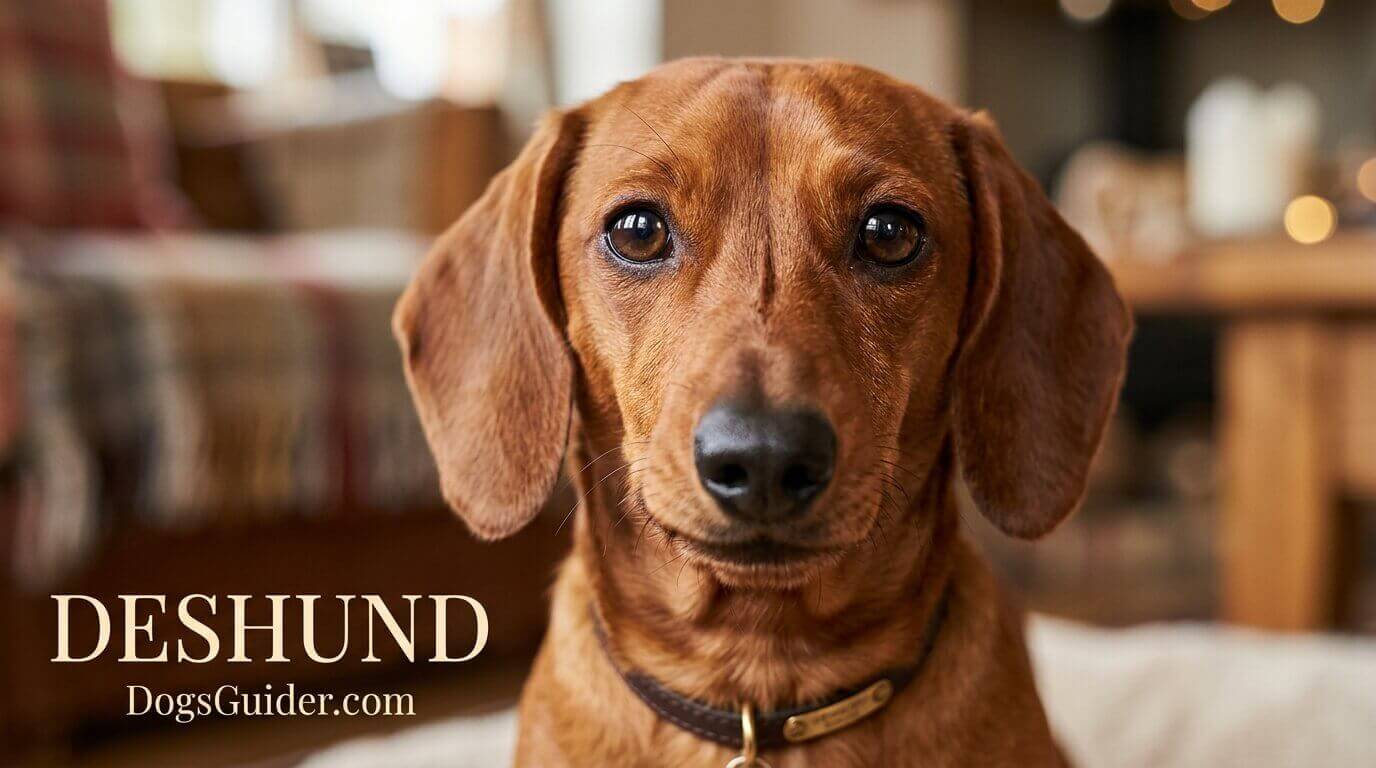
Deshunds come in two official sizes, standard and miniature. Some breeders also talk about an unofficial in-between size called a “tweenie.”
| Deshund Size | Typical Weight | Typical Height |
|---|---|---|
| Standard | 16–32 lb (7–14 kg) | 8–9 in (20–23 cm) |
| Tweenie (unofficial) | 11–16 lb (5–7 kg) | About 6–8 in |
| Miniature | Under 11 lb (under 5 kg) | 5–6 in (13–15 cm) |
Both sizes have the same personality and the same spinal risks. Miniatures suit small flats well, while standards enjoy a garden for sniffing and exploring.
Deshund Coat Types and Colours
Deshunds come in three coat types, which means six varieties when you combine them with the two sizes:
Smooth-Haired Deshund
Short, shiny and very low maintenance. A weekly brush is usually enough. Smooth coats feel the cold, so they often need a jumper in winter.
Long-Haired Deshund
Silky hair with feathering on the ears, chest, belly and tail. This coat needs brushing a few times a week to prevent tangles. Many owners find the long-haired type a little calmer than the others.
Wire-Haired Deshund
A harsh, wiry outer coat with a soft undercoat, plus a beard and bushy eyebrows. It needs regular brushing and occasional hand-stripping or professional grooming. Wire-haired dogs are often the cheekiest of the three.
Colours include red, black and tan, chocolate, cream, wild boar and dappled patterns. Be careful with the double dapple pattern, which can be linked to hearing and eye problems. A responsible breeder avoids breeding two dapple dogs together.
Deshund Temperament and Personality
The deshund is bold, curious, and devoted. Typical traits include:
- Brave and confident: a deshund will not back down from a threat, even if it is much bigger.
- Loyal and affectionate: they love to be involved in family life and are not suited to living outside.
- Stubborn: clever and independent, so training takes patience and rewards.
- Vocal: a loud bark is part of the package, so early training helps.
- Diggers and sniffers: bored deshunds can destroy flower beds and cushions.
- Wary of strangers: early socialisation turns suspicion into confidence.
With children, deshunds can do well when both sides are taught to be gentle. Young kids should never lift or squeeze a deshund, because rough handling can injure the long spine.
Deshund Lifespan: How Long Do They Live?
The usual deshund lifespan is 12 to 16 years, which is longer than many breeds. A large UK study of dogs reported an average of around 13 years for standard deshunds and about 14 years for miniatures. The oldest verified deshund, a dog called Chanel, lived to 21.
What decides where your dog lands in that range? Body weight and back health matter most. Obesity increases strain on the spine and can shorten life, so keeping a deshund lean is one of the best things you can do.
Common Deshund Health Problems
- Intervertebral disc disease (IVDD): the biggest risk. Discs in the spine can bulge or burst and press on the spinal cord.
- Obesity: the breed gains weight easily, and extra weight makes back problems more likely.
- Progressive retinal atrophy (PRA): an inherited eye disease that can cause blindness.
- Epilepsy: seizures can occur in some lines.
- Dental disease: small mouths collect plaque, so teeth need regular care.
- Ear and skin problems: floppy ears can trap moisture, and allergies are possible.
IVDD Warning Signs in a Deshund
Because IVDD can progress fast, learn the signs now:
- Yelping when picked up or touched
- A hunched back or stiff neck
- Reluctance to jump, climb stairs, or play
- Shaking, trembling, or refusing food
- Wobbly back legs, dragging paws, or inability to walk
If you see weakness or paralysis, treat it as an emergency and go to a vet immediately. Quick treatment gives the best chance of recovery.
How to Protect Your Deshund’s Back
- Keep your deshund slim. You should feel the ribs under a thin layer of fat. Measure meals instead of free-feeding.
- Stop the jumping. Use ramps or pet stairs for sofas and beds.
- Limit stairs, especially for puppies and older dogs. Carry your dog or block access if needed.
- Lift correctly. Support the chest with one hand and the hindquarters with the other, keeping the spine level.
- Use a harness, not a collar, for walks.
- Build muscle gently with steady daily walks to support the spine.
- Supervise play, especially with large dogs or small children.
- Choose a responsible breeder who understands spinal health.
Deshund Puppy Price and Costs
Prices vary by country, breeder, coat type, colour and bloodlines. As a rough guide, puppies from a responsible breeder commonly cost from about $800 up to $3,000 or more, with rarer colours often costing more.
Be very wary of unusually cheap puppies or sellers who will not let you meet the mother, because the breed’s popularity attracts careless breeders.
Ongoing Costs to Plan For
- Quality food and treats, measured carefully
- Vaccinations, parasite prevention and yearly check-ups
- Grooming, especially for long-haired and wire-haired dogs
- Ramps, a harness and a warm coat
- Pet insurance, which is highly recommended because of the breed’s spinal risk
- Training classes
Deshund Exercise, Training and Feeding
Exercise
Most deshunds need around 30 to 60 minutes of walking a day, split into shorter outings, plus sniffing games and play. Avoid hard jumping and rough activities.
Training
Deshunds are smart but strong-willed. Use short sessions, tasty rewards, and consistency. House training can take patience, so start early and stay positive. Teach “quiet” early to manage barking.
Feeding
Choose a balanced food for small breeds and measure each meal. Treats count, so reduce meals a little when you train with rewards. Ask your vet to help you check your dog’s body condition.
Deshund Pros and Cons
| Pros | Cons |
|---|---|
| Loyal, affectionate family dog | High risk of back problems (IVDD) |
| Small size, good for flats | Loud barking and digging habits |
| Long lifespan of 12–16 years | Stubborn, needs patient training |
| Three coat types to choose from | Gains weight easily |
| Brave, funny personality | Can be wary of strangers |
Is a Deshund Right for You?
A deshund suits you if you want a loyal, entertaining companion, can spend time training, and will manage weight and stairs carefully.
It may not suit you if you want a quiet dog, live in a home with many steep stairs, or cannot afford potential vet bills.
Final Thoughts
The deshund is a brave, funny and deeply loyal dog that rewards owners who understand its needs.
Keep your dog lean, protect the spine, train with patience, and choose a responsible breeder, and you could enjoy 12 to 16 years with one of the most characterful little hounds around.
FAQs
1. How big does a deshund get?
Standard deshunds usually weigh 16 to 32 lb and stand about 8 to 9 inches tall. Miniatures stay under 11 lb and about 5 to 6 inches tall.
2. How long do deshunds live?
The typical deshund lifespan is 12 to 16 years, and some live even longer with good weight control and care.
3. Are deshunds good family dogs?
Yes, they are loyal and affectionate, but young children must be taught to handle them gently to protect the spine.
4. Do deshunds bark a lot?
Yes, they have a loud, deep bark for their size. Early training and enough exercise can reduce nuisance barking.
5. How much does a deshund puppy cost?
Prices vary widely, but puppies from responsible breeders often cost roughly $800 to $3,000 or more. Very cheap offers are a warning sign.
6. Why are deshunds prone to back problems?
Their long spine and short legs, along with discs that degenerate early, make IVDD more likely. Extra weight and jumping increase the risk.
7. Are deshunds hard to train?
They are clever but stubborn. Patient, reward-based training works best, and house training may take longer than with some breeds.
8. Which deshund coat type is best?
It depends on your lifestyle. Smooth coats are the easiest to groom, long-haired dogs need regular brushing, and wire-haired dogs need occasional stripping.

Sarah Mitchell has been raising French Bulldogs for over 9 years in Austin, Texas. After adopting her first Frenchie, Biscuit, she became passionate about helping new owners navigate the unique needs of the breed from breathing care to diet and heat safety. Sarah has worked closely with local veterinarians and attended the AKC National Championship three times as a breed enthusiast. Her guides focus on practical, real-world advice for American Frenchie owners.