
Cesky Terrier: Temperament, Health, Grooming & Price

Introduction
If you love the spirit of a terrier but want a calmer, quieter dog, meet the Cesky Terrier (pronounced “chess-key”). This rare Czech breed is often called “the quiet terrier,” and it is known for its soft, silky coat, gentle nature, and easygoing attitude.
But it is still a terrier at heart, with a love of digging and a strong nose. This guide covers the breed’s history, size, temperament, grooming, health, price, and how to find a responsible breeder.
Cesky Terrier History
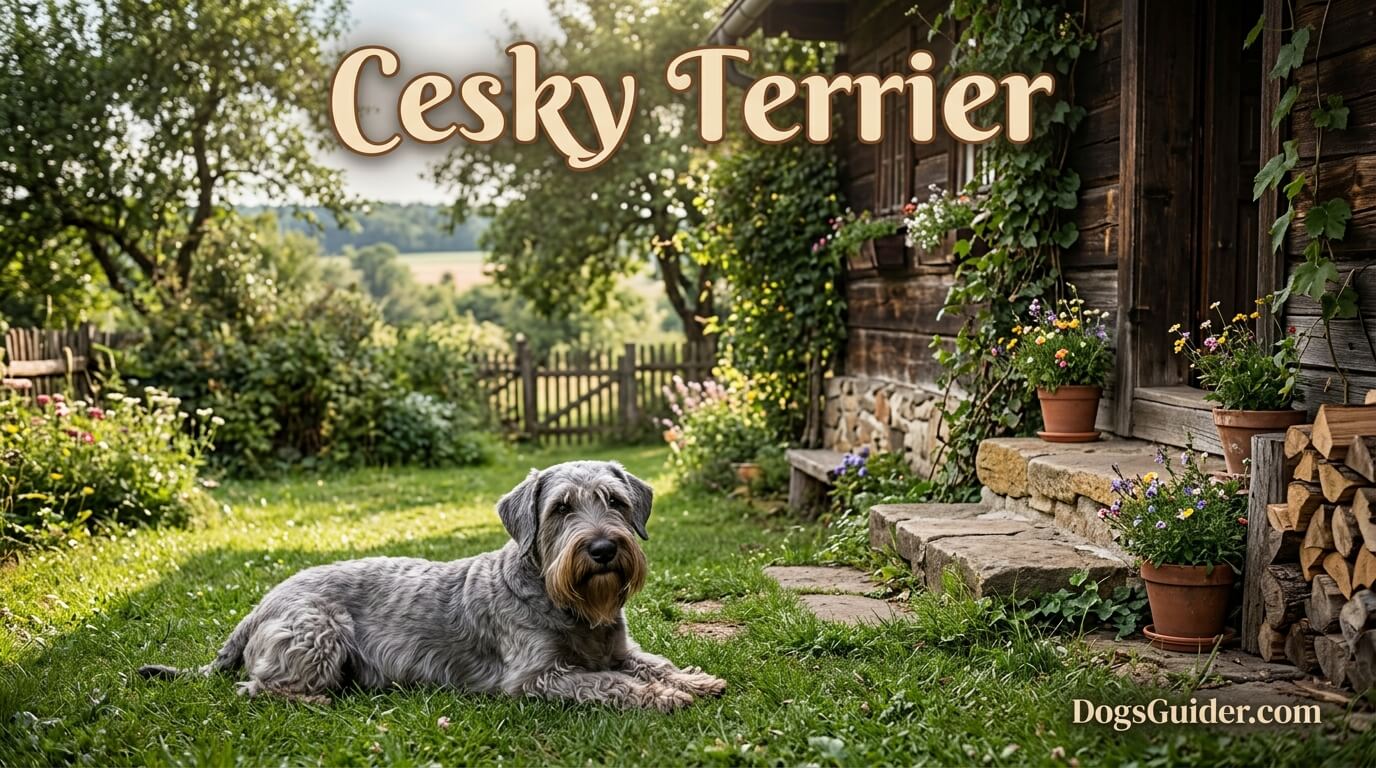
The Cesky Terrier comes from what is now the Czech Republic. In 1949, a Scottish Terrier breeder and hunter named Frantisek Horak crossed his Scottish Terriers with Sealyham Terriers.
His goal was a lighter, easier-to-handle terrier for hunting in packs, with drop ears and a coat that was simple to maintain. Terrier types developed for work rather than the show ring, such as the Fell Terrier, were bred for stamina in rough country.
The breed reached the United States in the 1980s and was officially recognized by the American Kennel Club in 2011. It remains one of the rarer terriers, and it is the national terrier of the Czech Republic.
Cesky Terrier Size and Appearance
The Cesky Terrier is a small, sturdy, long-bodied dog with short legs. Breed standards describe adults as roughly 10 to 13 inches tall and about 13 to 23 pounds, with males slightly larger than females. Their build is rectangular, with a long back and strong muscles.
Coat and Colors
- Coat: Long, soft, and silky with a slight wave. It is clipped rather than hand-stripped like many other terriers.
- Colors: Puppies are born black or black and tan and lighten as they mature, usually to a shade between charcoal and platinum grey. A lighter coffee or light-brown color also occurs.
- Face: A bearded muzzle, bushy eyebrows that cover the eyes, and drop ears give the breed its distinctive look.
Cesky Terrier Temperament
Compared with many terriers, the Cesky is milder, more patient, and less excitable. It is loyal, affectionate, and usually good-natured. Most are comfortable around children and get along well with other pets when properly socialized.
- Calm for a terrier: They are playful and sporty, but they relax well at home.
- Reserved with strangers: They can be shy or wary until they get to know someone, so early socialization is important.
- Devoted to family: They like to be with their people and are not happy being left alone for long hours.
- Quiet: They bark less than many small terriers, but they will still alert you to visitors.
The Cesky can still show terrier traits. They may have a strong prey drive toward small animals such as squirrels, rabbits, and rodents, so keep them on a leash or in a fenced yard.
Training a Cesky Terrier

Ceskies are intelligent and generally eager to please, which makes them easier to train than many other terriers. They respond best to positive reinforcement, such as treats and praise. Harsh corrections can make a sensitive dog shut down.
- Start early. Begin basic obedience and socialization as soon as your puppy comes home.
- Keep sessions short. Five to ten minutes at a time works well.
- Teach a reliable recall. The hunting instinct can send them chasing, so practice in safe areas.
- Be consistent. Terriers can be stubborn when rules change.
- Give them a job. Scent games, agility, and trick training keep the mind busy.
Exercise Needs
The Cesky has moderate energy. About 30 to 60 minutes of exercise daily is usually enough, split between walks and play.
They enjoy sniffing on walks, digging in a safe spot, and games with their family. Because they have long backs and short legs, avoid letting them jump from high places, which can injure the spine.
Provide a securely fenced yard. Like most terriers, they can dig under fences if left unsupervised.
Cesky Terrier Grooming
The Cesky is a low-shedding breed, but its coat needs regular care. This is a commitment you should consider before buying.
- Brushing: At least twice a week, and daily is best, to prevent mats and tangles.
- Clipping: The body coat is typically clipped about four to six times a year. The beard, eyebrows, and leg furnishings are left longer.
- Beard care: Wipe after meals, since food and water collect in the beard.
- Ears: Check weekly and keep clean, since drop ears trap moisture.
- Teeth and nails: Brush teeth regularly and trim nails every few weeks.
Many owners use a professional groomer familiar with the breed’s clip. You can learn to do it yourself with practice.
Cesky Terrier Health
The Cesky Terrier is generally a healthy breed, with a typical lifespan of about 12 to 15 years. As with any breed, some conditions are worth knowing about:
- Scottie cramp: A condition seen in some Scottish Terrier-related breeds that causes muscle stiffness or a “bunny hopping” gait, especially during excitement or exercise. It is usually not painful and is not common in Ceskies.
- Patellar luxation: Kneecaps that slip out of place, which may cause limping.
- Back problems: Long backs can be vulnerable to disc injuries.
- Eye issues: Some terrier breeds are prone to glaucoma and lens problems, so regular eye checks are wise.
- Allergies and dental problems: Common in many small breeds.
Because the breed is rare and the gene pool is small, ask breeders about health testing and what the breed club recommends. Be wary of any breeder who says the breed has no health problems.
How Much Does a Cesky Terrier Cost?
Because Ceskies are rare, expect to pay more than for common breeds and to be placed on a waiting list.
Puppies from health-testing breeders commonly cost around $1,500 to $3,500 or more, depending on location and bloodline. You may also need to travel or arrange transport to meet the breeder. Always verify a breeder before sending money.
Other costs include food, grooming every few months, vet care, training classes, and pet insurance.
How to Find a Cesky Terrier Puppy

- Start with the breed club. The Cesky Terrier Club of America lists breeders and offers advice.
- Check kennel club listings, including the American Kennel Club breeder resources.
- Ask about health testing and request copies of results.
- Visit or video call to meet the puppies and at least the mother.
- Be patient. Litters are small and not frequent.
- Consider breed rescue. Adult Ceskies occasionally need new homes.
Avoid sellers who always have puppies available, refuse to let you visit, or push you to pay a deposit quickly.
Is a Cesky Terrier Right for You?
A Cesky is a good choice if you want a small, affectionate dog with a gentler personality than most terriers, and you are willing to brush and groom regularly.
It suits families, singles, and active seniors. It may not be right if you want a hands-off coat, a dog that ignores squirrels, or a pet that can be left alone all day.
Cesky Terrier vs Other Small Terriers
- Vs Scottish Terrier: The Cesky is lighter, friendlier with strangers, and has a softer coat that is clipped, not stripped.
- Vs Sealyham Terrier: Both are long-bodied, but the Cesky is smaller and usually calmer.
- Vs Jack Russell Terrier: The Cesky has far lower energy, is less noisy, and is easier to live with in a quiet home.
- Vs Yorkshire Terrier: Both have silky coats, but the Cesky is sturdier and less fragile.
If you like the terrier look but not the nonstop energy, the Cesky can be a smart middle ground.
Living With a Cesky Terrier
Apartment Living
Ceskies can do well in apartments if they get daily walks and mental stimulation. They bark less than many small dogs, which neighbors appreciate.
Children and Other Pets
They are usually patient with kids who are taught to be gentle. They can live with other dogs, but small pets such as hamsters or rabbits may trigger their hunting instinct.
Travel and Daily Life
Their moderate size makes them easy to take on trips. They like being part of the family and do best when included in daily activities.
Feeding and Weight Management
Feed a balanced, high-quality food suited to your dog’s age and activity level. Because Ceskies have long backs and short legs, extra weight can strain the spine and joints.
Measure meals, limit treats, and check the waistline regularly. Ask your vet to help set a target weight.
FAQs
1. What is a Cesky Terrier?
It is a small Czech terrier breed created in 1949 by crossing Scottish and Sealyham Terriers. It is known for its calm, friendly nature.
2. How big do Cesky Terriers get?
Typically about 10 to 13 inches tall and 13 to 23 pounds.
3. Are Cesky Terriers good family dogs?
Yes. They are gentle, loyal, and usually good with children and other pets when socialized.
4. Do Cesky Terriers shed?
They shed very little, but they need regular brushing and clipping.
5. How long do Cesky Terriers live?
Usually about 12 to 15 years.
6. How much does a Cesky Terrier puppy cost?
Commonly about $1,500 to $3,500 or more, often with a waiting list.
7. Are Cesky Terriers easy to train?
Generally yes, as they are intelligent and eager to please, though they can be stubborn at times.
8. What health problems do Cesky Terriers have?
Scottie cramp, patellar luxation, back problems, and eye issues can occur. Ask your breeder about health testing.

Sarah Mitchell has been raising French Bulldogs for over 9 years in Austin, Texas. After adopting her first Frenchie, Biscuit, she became passionate about helping new owners navigate the unique needs of the breed from breathing care to diet and heat safety. Sarah has worked closely with local veterinarians and attended the AKC National Championship three times as a breed enthusiast. Her guides focus on practical, real-world advice for American Frenchie owners.





One Comment