
How to Cut French Bulldog Nails Safely at Home
Introduction
If you want to learn how to cut french bulldog nails safely at home, start with sharp tools, a calm dog, and small cuts. Our guide on how to clean French Bulldog wrinkles uses the same gentle, patient approach.
French Bulldogs have thick, strong nails that grow quickly. Because many Frenchies spend most of their time indoors on soft surfaces, their nails often do not wear down naturally.
Quick Answer: Trim French Bulldog nails in small amounts with sharp clippers or a grinder, staying clear of the quick, which is the blood vessel inside the nail. On dark nails, take tiny slices and stop when you see a pale circle in the centre of the cut surface.
This guide covers why trims matter, which tools to choose, how to find the quick, and a calm step by step routine. It also covers frequency, dewclaws, accidents, and when to ask a vet or groomer for help.
Why French Bulldog Nails Need Regular Trims
Overgrown nails change how a dog stands and walks. Long nails push the toes into an unnatural angle, which strains the feet and can affect posture over time.
Overgrown nails also catch, split, and break more easily. A broken nail is painful and bleeds, so regular trims prevent problems.
Frenchies are prone to joint and back sensitivity, so foot comfort matters. Short nails help your dog move naturally and stay willing to walk.
How Do You Know the Nails Are Too Long?
The simplest signal is sound. If you hear clicking on hard floors when your dog walks, the nails are touching the ground and need a trim.
Also look at the nails from the side. Nails that curve downwards, or touch the floor while your dog stands, are too long.
Check the dewclaws too, since they never touch the ground and never wear down at all. Dewclaw nails can grow in a full curl if they are forgotten.
Choosing Your Tools: Clippers or Grinder
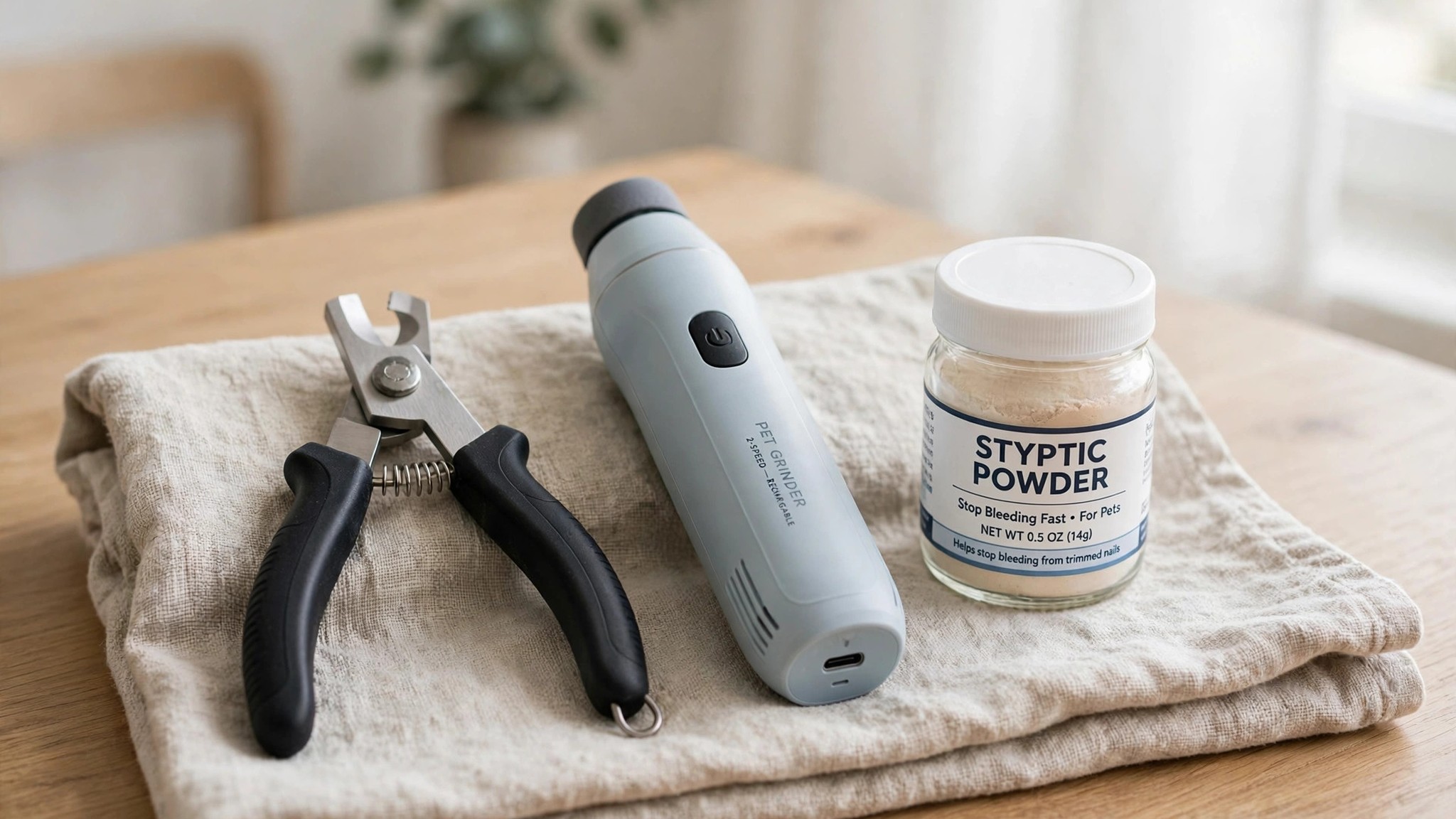
Both clippers and grinders work well, and many owners use both. Clippers are faster, while grinders are more forgiving and smooth edges as they work.
Scissor style clippers suit most Frenchie nails. They give good control and a clean cut when sharp, which matters for thick nails.
Guillotine style clippers also work, but they must be sharp and correctly sized. Dull clippers crush the nail instead of cutting it, which hurts.
A grinder files the nail down gradually. It suits nervous dogs and owners who have nicked the quick before, since it removes only a little at a time.
Keep styptic powder in your kit before you start. It stops bleeding fast if you nick the quick, and having it ready keeps you calm.
Nail Tools Compared
| Tool | Best for | Watch out for |
|---|---|---|
| Scissor style clippers | Fast trims on thick nails | Must stay sharp or they crush |
| Guillotine clippers | Small, controlled cuts | Must fit the nail size correctly |
| Rotary grinder | Nervous dogs, smoothing edges | Noise and vibration can worry dogs |
| Nail file | Finishing edges after clipping | Slow for a full trim on its own |
| Styptic powder | Stopping quick bleeding fast | Keep it in the kit before you start |
Choose the tool you handle most confidently. A tool you control well is safer than one you find awkward.
Finding the Quick
The quick is the blood vessel and nerve inside the nail. Cutting it causes pain and bleeding, so judging its position is the core skill of nail trimming.
On light or clear nails, the quick shows as a pink area inside the nail. Trim short of that pink section, leaving a small safety margin.
On dark nails, the quick is hidden, so you must judge by the cut surface instead. Take tiny slices and look at the centre of each fresh cut.
When you see a pale cream circle, or a small dark dot, in the centre of the cut surface, you are close to the quick. Stop on that nail.
Many Frenchies have mixed nails, some light and some dark. Use the light nails as a guide for the dark ones.
Getting Your Dog Ready
Trim nails when your dog is calm, not straight after wild play. A quiet room where your dog feels safe works best.
Practise paw handling for a few days before the first real trim. Touch each paw, press gently to extend a nail, reward, and stop while your dog is happy.
Keep sessions short, especially at first. Trimming one paw, then stopping on a good note, beats a long session that ends in a struggle.
Have everything ready before you begin: clippers or grinder, treats, a towel, and styptic powder. Searching mid trim breaks your dog’s calm.
Step by Step: How to Cut French Bulldog Nails
Step 1: Settle your dog. Sit comfortably with your dog relaxed beside you or across your lap, and offer a treat before you touch the paws.
Step 2: Hold one paw gently. Hold the paw firmly enough to keep it steady, but gently enough that your dog does not pull away.
Step 3: Extend one nail. Press the paw pad lightly so the nail extends, and look at the nail from the side to judge its length.
Step 4: Cut a small amount. Clip only the tip, at a slight angle that follows the natural curve of the nail. Small cuts are always safer than one large cut.
Step 5: Check the cut surface. Look at the centre of the fresh cut. If you see a pale circle or dark dot, stop on that nail, since the quick is near.
Step 6: Move to the next nail. Work through one paw at a time, rewarding your dog after each nail or two to keep the mood positive.
Step 7: File rough edges. Use a file or a few seconds of grinding to smooth any sharp edges left by the clippers.
Step 8: Finish with a reward. Praise your dog, give a treat, and check all four paws plus dewclaws before you pack the tools away.
If your dog pulls away strongly, stop and try again later. Forcing a trim teaches your dog to fear the next session.
How Often Should You Trim French Bulldog Nails?
Most French Bulldogs need a nail check every week and a trim every few weeks. Growth speed varies with age, activity, and surface type, so a fixed schedule suits some dogs badly.
Dogs that walk mostly on grass and carpets need trims more often. Dogs that walk on hard pavements wear nails down more, but still need dewclaw checks.
The clicking test is the best guide. When nails click on hard floors, trim them, even if the last trim was recent.
Trimming little and often keeps the quick shorter over time. Regular small trims maintain a safe length without cutting deep.
Do Not Forget the Dewclaws
Dewclaws sit higher on the leg and never touch the ground. Because they never wear down, they effectively grow faster than the other nails.
Check dewclaws at every trim. An overgrown dewclaw can curl round and dig into the pad, which is painful and needs vet care.
Dewclaws need the same small cut technique as other nails. Their quick follows the same rules, so stop at the same pale circle sign.
If You Cut the Quick
Cutting the quick happens to most owners at least once, and it is not a disaster. Stay calm, since your reaction shapes how your dog remembers it.
Press styptic powder onto the nail end and hold gentle pressure for a short while. Cornstarch works as a backup.
Keep your dog calm and still for a few minutes, and watch the nail until bleeding stops. Give a treat, end the session kindly, and try again another day.
Seek vet help if bleeding will not stop, if the nail looks broken, or if your dog stays in pain. A vet can treat the nail and check damage.
Making Future Trims Easier
Short, positive sessions build a dog that accepts nail care. Handle paws during cuddle time, reward calm behaviour, and never rush a nervous dog.
Pair trims with other grooming so your dog links the routine with treats and praise. Our guide on how to clean a French Bulldog tail pocket covers another short grooming job for the same calm routine.
If your dog strongly resists trims despite patient work, ask a groomer or vet for help. A professional can trim safely while you build trust at home.
Watch the paws during grooming for other problems too. Our guide on why your French Bulldog scratches so much explains skin irritation signs often spotted first during paw checks.
When to See a Vet or Groomer
Book a vet visit for a nail that bleeds and will not stop, a nail that breaks near the base, swelling around a nail, or limping after a trim.
Also ask for help if a nail looks infected, with redness, swelling, discharge, or a bad smell. Infections need diagnosis, not home treatment.
A groomer can help with very anxious dogs, very dark nails, or badly overgrown nails. There is no shame in asking a professional for a difficult trim.
The Bottom Line
Learning how to cut french bulldog nails takes patience, sharp tools, and small cuts. Stay clear of the quick, stop at the pale circle on dark nails, and keep sessions short.
Check nails weekly, trim every few weeks, and never forget the dewclaws. Keep styptic powder ready, and end every session with praise and a treat.
Ask a vet or groomer for help if bleeding will not stop, if a nail breaks, or if your dog stays in pain. Regular, gentle trims keep Frenchie feet comfortable.
References
- American Kennel Club, dog nail trimming and grooming guidance, https://www.akc.org/
- PetMD, guidance on trimming dog nails and finding the quick, https://www.petmd.com/
- VCA Animal Hospitals, client education on nail trimming in dogs, https://vcahospitals.com/
- Merck Veterinary Manual, owner guidance on nail care and foot health in dogs, https://www.merckvetmanual.com/
FAQs
1. How often should I cut my French Bulldog nails?
Check nails weekly and trim every few weeks as needed. The clicking test is the best guide: if nails click on hard floors, they need a trim.
2. How do I find the quick on dark French Bulldog nails?
Take tiny slices and check the centre of each fresh cut. When a pale cream circle or small dark dot appears, you are close to the quick, so stop on that nail.
3. Are clippers or a grinder better for French Bulldogs?
Both work well. Clippers are faster, while grinders remove nail gradually and smooth edges, which suits nervous dogs and owners who have nicked the quick before.
4. What should I do if I cut the quick and it bleeds?
Stay calm, press styptic powder onto the nail end, and hold gentle pressure. Cornstarch works as a backup, and bleeding that will not stop needs a vet.
5. Do I need to trim my French Bulldog dewclaws?
Yes, dewclaws never touch the ground and never wear down. Check them at every trim, since an overgrown dewclaw can curl and dig into the pad.
6. Can I trim my French Bulldog nails if my dog hates it?
Yes, with patience. Practise paw handling with treats for a few days, keep sessions very short, and ask a groomer or vet for help if your dog still strongly resists.
7. When should a nail problem be seen by a vet?
See a vet for bleeding that will not stop, a nail broken near the base, swelling, discharge, limping after a trim, or any sign of infection around a nail.

Sarah Mitchell has been raising French Bulldogs for over 9 years in Austin, Texas. After adopting her first Frenchie, Biscuit, she became passionate about helping new owners navigate the unique needs of the breed from breathing care to diet and heat safety. Sarah has worked closely with local veterinarians and attended the AKC National Championship three times as a breed enthusiast. Her guides focus on practical, real-world advice for American Frenchie owners.