
Why Does My French Bulldog Bark So Much? 7 Causes & Fixes

Introduction
If you are asking why does my french bulldog bark so much, start by looking for a trigger, not a quick fix. Our guide on why your French Bulldog follows you everywhere explains how closely Frenchies watch their owners.
Frenchies are usually a quieter breed than many small dogs. They snort, grunt, and grumble far more than they bark, so frequent barking usually means something is driving it.
Quick Answer: French Bulldogs usually bark a lot because of a trigger such as visitors at the door, boredom, attention seeking, or separation distress. Find the trigger first, reduce it where you can, and reward quiet behaviour consistently. Sudden barking in a settled adult dog deserves a vet check.
This guide covers the seven most common causes of French Bulldog barking. It also covers practical, reward-based steps that calm barking without fear or punishment.
Are French Bulldogs Normally Noisy?

French Bulldogs are not known as a yappy breed. Most owners describe them as fairly quiet indoors, with bursts of barking when something excites or worries them.
That reputation is useful information. If your Frenchie barks often, the barking is probably communication, not just noise. Your job is to work out what your dog is trying to say.
The 7 Most Common Causes
1. Alert and Territorial Barking
Alert barking is the most common cause in French Bulldogs. Your dog sees a passer-by, hears the doorbell, or notices a stranger near the house, and barks to warn you.
This barking often happens at windows and doors, in sharp bursts until the trigger moves away.
Territorial barking defends space instead. Visitors, delivery workers, and other dogs near home can all set it off.
2. Attention Seeking
Some French Bulldogs learn that barking works. If barking regularly brings petting, food, play, or even a scolding, your dog learns that barking gets a response.
This pattern builds quietly over time. You answer the bark once, then twice, and soon barking becomes your dog’s reliable way to ask for things.
Attention barking often sounds demanding. Your dog may bark, paw, or stare at you while asking for what it wants.
3. Boredom and Frustration
A bored Frenchie barks to fill empty time. Dogs that sleep all day with little play, training, or sniffing time often bark in the evening when energy finally builds up.
Frustration barking is close to boredom barking. It happens when your dog can see something exciting, such as another dog outside, but cannot reach it.
French Bulldogs need mental work as well as exercise. Without it, barking becomes an outlet for restless energy.
4. Separation Distress
French Bulldogs bond tightly with their owners, and many struggle when left alone. Barking when you leave, or barking for long periods while you are out, can signal separation distress.
Separation distress rarely appears alone. Watch for pacing, drooling, destructive chewing, scratching at doors, or toilet accidents that only happen when your dog is alone.
This type of barking needs patience and gradual training. Punishing a distressed dog usually makes the anxiety worse, not better.
5. Excitement
Excitement barking is loud, fast, and often joyful. It happens at walk time, when visitors arrive, during play, or when your dog sees a favourite person or dog.
Excited barking usually stops once the event settles. It still needs calm training if it becomes a habit.
6. Fear and Anxiety
Fear barking is your dog’s way of saying it feels unsafe. New people, loud sounds, storms, fireworks, and unfamiliar objects can all trigger fear barking.
A fearful dog may bark while backing away or crouching, often in a higher, more frantic pitch.
Never force a fearful dog to face its fear head on. Slow exposure paired with treats builds confidence far better.
7. Pain or Illness
Pain or illness can change a dog’s barking. If a settled adult dog suddenly barks much more, and nothing at home has changed, discomfort may be part of the cause.
Ear problems, dental pain, joint pain, and urinary discomfort can all make a dog restless and vocal. A bark that sounds hoarse, strained, or different from usual also deserves attention.
Start with your vet if barking changes suddenly. Ruling out pain first saves wasted training time and catches health problems early.
How to Find the Trigger First
Before you try to stop barking, spend a few days watching it. Note what happened just before each barking session, the time of day, and who was home.
Most owners discover their dog does not bark at everything after all. The trigger may be people with bags, children passing by, cyclists, or the moment you pick up your phone.
Also note how long barking lasts and what stops it. This record points you to the right fix.
Practical Fixes That Actually Work
Manage What Your Dog Sees and Hears
The fastest wins are often environmental. If window barking is the problem, apply frosted film to the lower half of the window or move your dog’s resting spot away from it.
If outside noise triggers barking, a radio or white noise machine can cover many sounds. If the doorbell sets your dog off, disconnect it for a while and train calm door behaviour separately.
Management is not cheating. Every bark your dog rehearses makes the habit stronger, so preventing rehearsal is half of the training job.
Reward the Quiet
Most people only notice their dog when it barks, which means quiet earns nothing. Flip that pattern by rewarding calm behaviour generously.
When your dog notices something and does not bark, mark that moment and pay with a treat. When barking stops, wait for a few seconds of silence, then reward.
You are teaching a simple rule: quiet pays better than noise.
Teach a Reliable Quiet Cue
Teach a quiet cue in calm moments first, not during a barking storm. Say your cue word in a calm voice when your dog is quiet, then reward.
Gradually practise with mild distractions, then stronger ones. Keep sessions short, and build the difficulty slowly so your dog keeps succeeding.
If barking starts again, stay calm and wait for a pause before rewarding.
Teach an Alternative Job
A dog cannot bark at the window and lie on a mat at the same time. Teaching a “go to your bed” behaviour gives your dog a job that is not barking.
Practise the mat behaviour when the house is calm. Then practise it when the doorbell rings, rewarding your dog well for settling on the mat.
Exercise, Enrichment, and Sleep
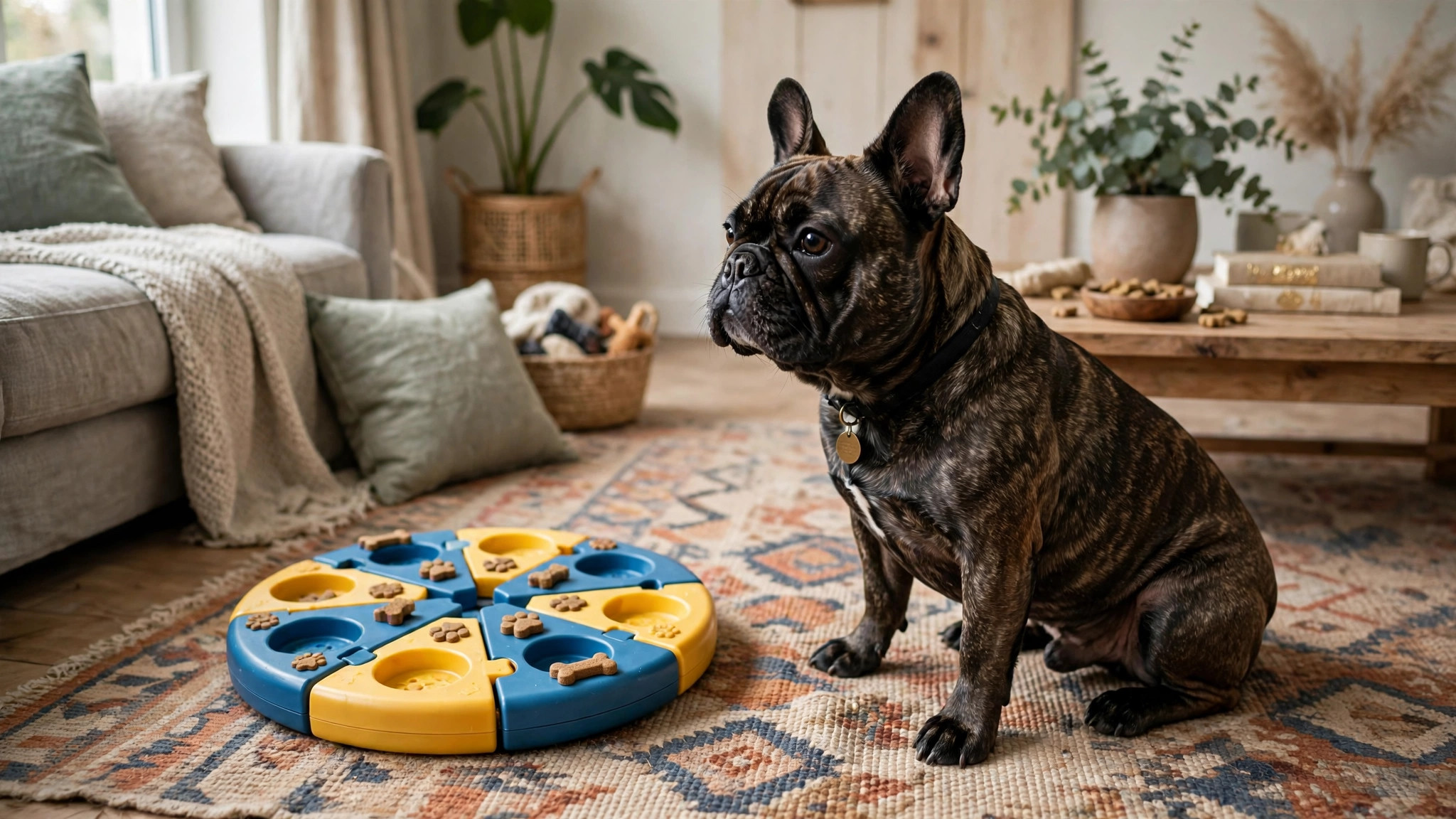
A tired, well rested Frenchie barks less. Short walks in the cool part of the day, sniffing games, and a stuffed food toy all burn mental energy.
Add a couple of five minute training sessions each day. Training tires a dog’s brain in a way that a walk alone often does not.
Sleep matters too. Our guide on why your French Bulldog sleeps so much explains normal Frenchie rest patterns, and an under slept dog is often a barkier dog.
What to Avoid
Do not yell at a barking dog. Yelling sounds like joining in, and it adds excitement or attention to the very behaviour you want to reduce.
Do not use bark collars as a first resort. A collar fires for barking whatever the reason, including pain, fear, or distress, and it can suppress warning signals.
Suppressed warnings are a real risk. A dog that learns barking brings punishment may skip barking and escalate to growling.
Also avoid long, emotional goodbyes when leaving a distressed dog. Keep departures and arrivals calm and low key to reduce separation anxiety.
When to Get Professional Help
Book a vet visit if barking changes suddenly, if the bark sounds different, or if barking comes with other changes such as appetite loss, limping, or hiding.
Ask your vet or a qualified behaviour professional for help if consistent training brings no improvement after several weeks. Some barking problems need an expert eye on the full picture.
Separation distress that includes destruction, self harm, or panic also needs professional guidance. A behaviour professional can build a gradual desensitisation plan for your dog.
Crate training can support calm routines for some dogs. Our guide on how to crate train a French Bulldog puppy covers slow, positive crate introduction that never uses the crate as punishment.
Barking Triggers and First Steps
| Trigger | What you often see | First step to try |
|---|---|---|
| Window and door activity | Sharp bursts at passers-by | Frosted film or move resting spot |
| Attention seeking | Barking directly at you | Reward silence, ignore the demand |
| Boredom | Barking in the evening | More sniff games and short training |
| Separation distress | Barking when left alone | Gradual alone time plus vet advice |
| Excitement | Fast barking at greetings | Calm greetings and a mat behaviour |
| Fear | Backing away while barking | Distance from the trigger plus treats |
| Sudden change | New barking in a settled adult | Vet check before training changes |
Use this table as a starting point. Your dog may have more than one trigger, so work through the most frequent one first.
The Bottom Line
If you are asking why does my french bulldog bark so much, the answer is usually a trigger you can find and reduce. Alert barking, attention seeking, boredom, separation distress, excitement, fear, and pain cover most cases.
Find the trigger first, manage the environment, reward quiet behaviour, and teach an alternative job such as settling on a mat. Stay calm, stay consistent, and give training time to work.
See your vet promptly for sudden barking changes, and get professional help if steady training brings no improvement. A calmer Frenchie is possible without fear, punishment, or gadgets.
References
- American Kennel Club, French Bulldog behaviour and training guidance, https://www.akc.org/
- PetMD, guidance on excessive barking causes and behaviour training, https://www.petmd.com/
- VCA Animal Hospitals, client education on barking behaviour in dogs, https://vcahospitals.com/
- Merck Veterinary Manual, owner guidance on canine behaviour problems, https://www.merckvetmanual.com/
FAQs
1. Do French Bulldogs bark a lot compared to other breeds?
French Bulldogs are usually a quieter breed, and they snort and grunt more than they bark. Frequent barking usually points to a trigger such as visitors, boredom, attention seeking, or separation distress.
2. Why does my French Bulldog bark at everyone who passes the window?
Window barking is usually alert or territorial barking. Your dog sees movement outside and barks to warn you, and the habit strengthens each time the passer-by moves away afterwards.
3. How do I stop my French Bulldog barking for attention?
Stop rewarding the bark, and reward silence instead. Wait for a brief pause, then praise and treat, and gradually ask for longer quiet periods before rewarding.
4. Should I yell at my French Bulldog to stop barking?
No, yelling usually makes barking worse. It sounds like joining in and adds excitement or attention, so stay calm and reward the quiet behaviour you want.
5. Are bark collars a good solution for French Bulldogs?
Bark collars are not a good first resort. They punish barking whatever the cause, including pain or fear, and they can suppress warning signals before a dog escalates.
6. Why does my French Bulldog bark only when I leave the house?
Barking only when you leave often signals separation distress, especially if it comes with pacing, destruction, or toilet accidents. Gradual alone time training and vet advice help most cases.
7. When should barking be checked by a vet?
See a vet if barking starts suddenly in a settled adult, if the bark sounds different, or if barking comes with appetite loss, limping, hiding, or other behaviour changes.

Sarah Mitchell has been raising French Bulldogs for over 9 years in Austin, Texas. After adopting her first Frenchie, Biscuit, she became passionate about helping new owners navigate the unique needs of the breed from breathing care to diet and heat safety. Sarah has worked closely with local veterinarians and attended the AKC National Championship three times as a breed enthusiast. Her guides focus on practical, real-world advice for American Frenchie owners.