
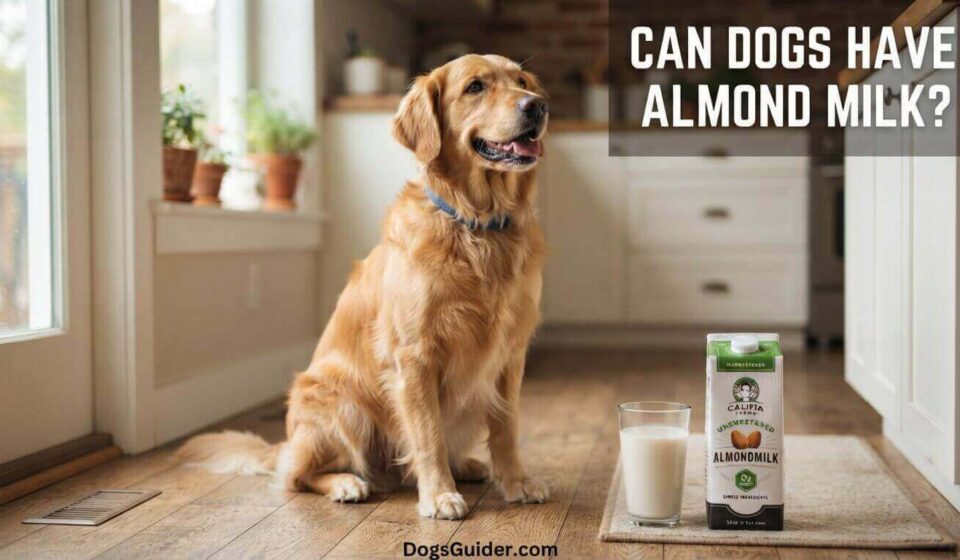
Introduction
This guide covers when almond milk is genuinely safe, the ingredient you must check every single time, how much is actually okay, and the warning signs that mean it’s time to call a vet.
Can Dogs Have Almond Milk? The Short Answer
Yes, most healthy dogs can have small amounts of plain, unsweetened, xylitol-free almond milk as an occasional treat. Almonds themselves aren’t toxic to dogs, and nut allergies are relatively rare in dogs compared to humans.
That said, almond milk offers no real nutritional benefit for dogs, so it should be treated strictly as an occasional extra, never a water replacement, and never a daily habit.
The Ingredient That Matters More Than the Almonds

This is the single most important thing to understand before answering “can dogs have almond milk” for your specific bottle: xylitol.
Xylitol is a sugar substitute used in many flavored, sweetened, and “lite” almond milk products, and it is extremely toxic to dogs.
Even a small amount can cause a dangerous, rapid drop in blood sugar (hypoglycemia), and in some cases, liver failure. There are documented cases of xylitol causing death in dogs, even from amounts that seem tiny.
Before giving your dog any almond milk, check the ingredient label for xylitol every single time, even if you’ve given your dog the same brand before, since manufacturers do reformulate products.
What to Check on the Label Before Giving Your Dog Almond Milk
| Check For | Why It Matters |
|---|---|
| Xylitol | Extremely toxic; can cause hypoglycemia, liver failure, and death |
| Added sugar | No nutritional benefit for dogs and contributes to obesity |
| Flavoring (vanilla, chocolate, etc.) | Vanilla almond milk often contains more sugar/additives; chocolate is toxic regardless of the milk base |
| Preservatives and gums | Not toxic in most cases, but can cause digestive upset in sensitive dogs |
| “Unsweetened” and “Plain” labeling | The safest version to choose if you decide to share any with your dog |
How Much Almond Milk Can a Dog Have?
Most sources agree on a similar range: roughly 1-2 tablespoons for a small dog, as an occasional treat rather than a regular addition to meals or water. Even plain almond milk is relatively high in fat, and too much can lead to:
- Digestive upset, including loose, watery, or oily diarrhea, since some dogs struggle to digest almonds well
- Pancreatitis, a serious, potentially life-threatening inflammation of the pancreas linked to high-fat foods
- Weight gain: almond milk adds extra calories your dog doesn’t need, especially with regular feeding
A few licks or a small splash poured over food occasionally is a reasonable treat. A regular cup of almond milk is not, regardless of how much your dog seems to enjoy it.
Why Give a Dog Almond Milk at All?
Can dogs have almond milk? It isn’t necessary for a dog’s diet, but it has a few practical, limited uses:
- A dairy-free option for dogs who are lactose intolerant and can’t comfortably digest regular cow’s milk
- A frozen treat base: freezing plain, unsweetened almond milk in ice cube trays makes a refreshing hot-weather treat
- An ingredient in homemade dog treats, where it can substitute for dairy milk in small baked recipes
None of these uses make almond milk a necessary or beneficial addition on its own. It’s a treat, not a supplement.
Almond Milk vs. Other Milk Alternatives for Dogs
| Milk Type | Generally Safe? | Watch For |
|---|---|---|
| Almond milk | Yes, in small amounts | Xylitol, added sugar, high fat |
| Oat milk | Yes, in small amounts | Added sugar, flavorings |
| Soy milk | Yes, in small amounts | Added sugar; some dogs have soy sensitivities |
| Coconut milk | Yes, in small amounts | High fat content, same pancreatitis risk |
| Cow’s milk | Only if not lactose intolerant | Many adult dogs are lactose intolerant; loose stool is common |
Across every plant-based option, the pattern is the same: plain and unsweetened is safer than flavored, and moderation matters more than which specific milk you choose.
Should You Make Your Own Almond Milk for Your Dog?

Some owners choose to make a simple homemade version instead of relying on a commercial carton, mainly to control exactly what goes in.
A basic version is just raw almonds soaked and blended with water, then strained, with no sugar, salt, or flavoring added. This sidesteps the xylitol question entirely, since you control every ingredient.
The tradeoff is that homemade almond milk still carries the same fat-related risks as store-bought versions, so the same moderation rules apply regardless of whether it came from a carton or your own blender.
If you go this route, skip any recipe that includes vanilla extract, sweeteners, or chocolate, all of which pose risks for dogs.
Can Puppies Have Almond Milk?
Can dogs have almond milk if they’re still puppies? Puppies have more sensitive digestive systems and stricter nutritional needs for healthy growth, so it’s best to stick to a balanced puppy diet and talk to your vet before offering almond milk or any new treat.
If you do decide to offer a tiny taste, it should be rare, plain, unsweetened, and never a substitute for puppy formula or water.
Signs of a Bad Reaction to Almond Milk
Watch for these signs after giving your dog almond milk, especially the first time:
- Vomiting or diarrhea
- Abdominal pain, restlessness, or a hunched posture
- Lethargy or unusual weakness
- Loss of appetite
If you suspect xylitol poisoning specifically, symptoms can include vomiting, weakness, loss of coordination, seizures, and collapse, often appearing within 30-60 minutes.
This is a medical emergency. Contact your vet or an emergency animal hospital immediately if you know or suspect your dog consumed almond milk containing xylitol, even in a small amount.
Final Thoughts
So, can dogs have almond milk? In small, occasional amounts, plain and unsweetened almond milk is generally safe for most healthy dogs. The real risk isn’t the almonds; it’s what else is in the carton.
Make checking the label for xylitol a non-negotiable habit, keep portions small, and treat almond milk as exactly that: an occasional treat, not a dietary staple.
This article is for general information and is not a substitute for veterinary advice. If you suspect your dog has ingested xylitol or is showing signs of illness, contact your veterinarian or an emergency animal hospital immediately.
FAQs
1. Can dogs have almond milk every day?
No. While plain, unsweetened almond milk is safe in small amounts occasionally, daily feeding adds unnecessary fat and calories that can contribute to weight gain or pancreatitis over time.
2. Can dogs have almond milk with xylitol?
No, never. Xylitol is extremely toxic to dogs and can cause a dangerous drop in blood sugar, liver failure, and death, even in small amounts. Always check the label before giving any almond milk to your dog.
3. Can dogs have vanilla almond milk?
It’s best avoided. Vanilla and other flavored almond milks typically contain more added sugar and ingredients than plain versions, offering no benefit and added risk compared to plain, unsweetened almond milk.
4. How much almond milk can a dog safely have?
Most sources recommend roughly 1-2 tablespoons as an occasional treat, not a regular addition to your dog’s diet or water.
5. Can puppies have almond milk?
Puppies have more delicate digestive systems, so it’s best to consult your vet before offering almond milk and to stick primarily to a complete, balanced puppy diet.
6. What should I do if my dog drank almond milk with xylitol?
Contact your vet or an emergency animal hospital immediately. Xylitol poisoning can progress quickly, and prompt treatment significantly improves the outcome.

Sarah Mitchell has been raising French Bulldogs for over 9 years in Austin, Texas. After adopting her first Frenchie, Biscuit, she became passionate about helping new owners navigate the unique needs of the breed from breathing care to diet and heat safety. Sarah has worked closely with local veterinarians and attended the AKC National Championship three times as a breed enthusiast. Her guides focus on practical, real-world advice for American Frenchie owners.


[…] and floor cleaners can burn or irritate the skin. Dry, cracked pads are uncomfortable too, and Dog Licking Paws can soothe them. This type of licking often starts soon after a […]
[…] selected the best red fell terriers available to him to refine the type specifically for hunting the large fell fox, which was blamed […]
[…] Can Dogs Eat Turkey skin isn’t dangerous because it’s “bad” in a toxic sense; it’s dangerous because of how much fat it carries, especially after roasting in butter or oil. […]