
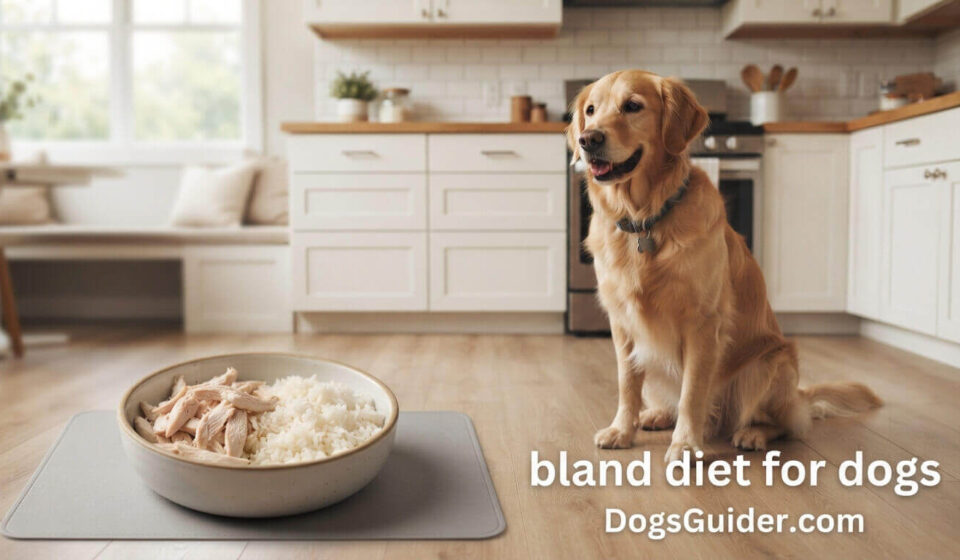
Introduction
But “chicken and rice” alone isn’t a magic fix; getting the ratio, portion size, and timing right makes the real difference between a dog that bounces back quickly and one whose symptoms drag on.
This guide covers the exact bland diet ratio vets recommend, a step-by-step feeding schedule, and the warning signs that mean it’s time to stop DIY treatment and call your vet.
What Is a Bland Diet for Dogs?
A bland diet for dogs is a temporary meal plan made from mild, low-fat, easy-to-digest ingredients, designed to reduce stress on an irritated stomach and intestines while your dog recovers from mild digestive upset.
It’s the canine equivalent of the human BRAT diet (bananas, rice, applesauce, toast): simple, gentle, and meant to be short-term rather than a regular feeding plan.
When Should You Use a Bland Diet for Dogs?
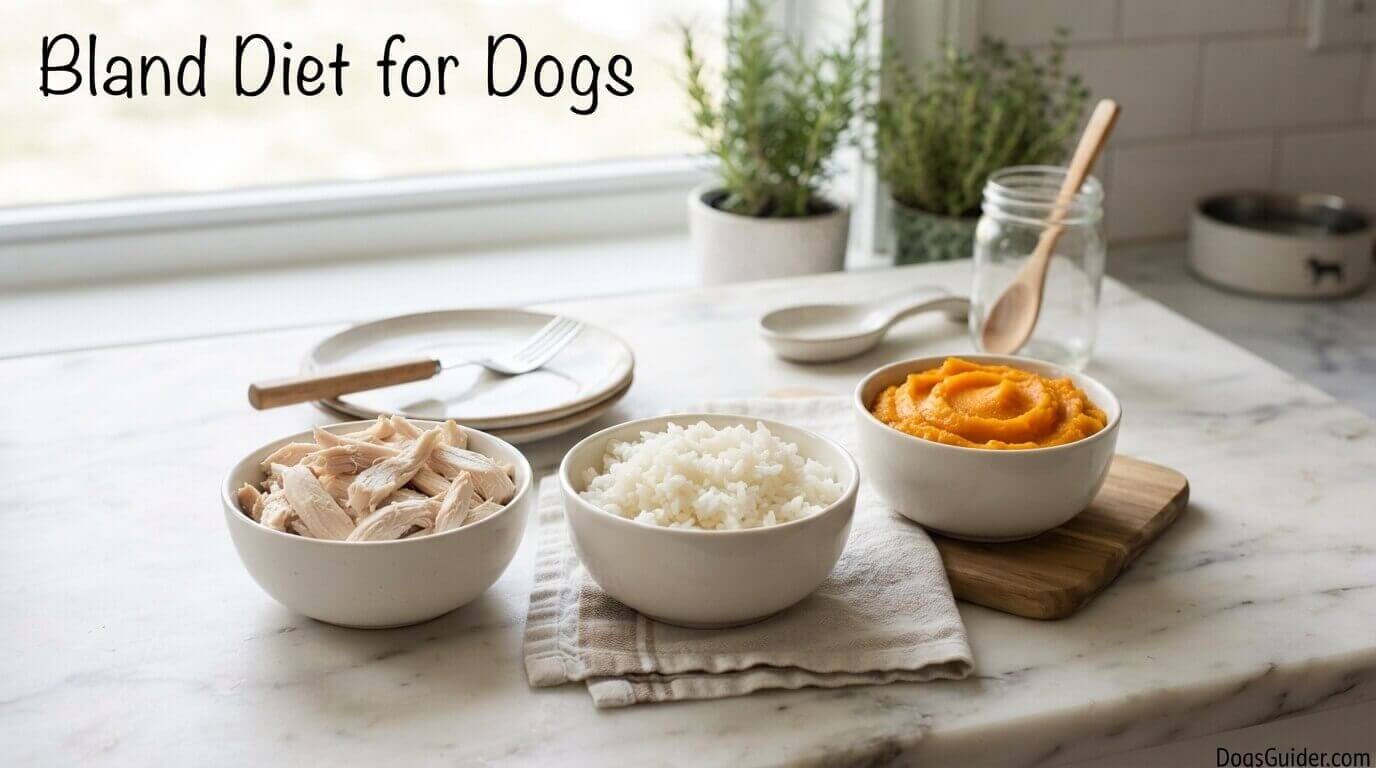
A bland diet for dogs is typically appropriate for mild, short-term digestive issues, including:
- Occasional vomiting (not repeated or severe)
- Mild diarrhea
- General loss of appetite from stomach upset
- Recovery after a minor dietary indiscretion (getting into the trash, eating something they shouldn’t have)
A bland diet is not a substitute for veterinary care when symptoms are severe, persistent, or accompanied by other concerning signs; more on that below.
The Exact Bland Diet for Dogs Ratio
This is the part most homemade recipes online get wrong. The correct bland diet for dogs ratio is:
- 75% boiled white rice
- 25% lean, low-fat protein (boiled, skinless chicken breast or lean ground beef, fully cooked and drained of fat)
The rice makes up the bulk of the meal and helps bind loose stool, while the protein is included mainly to keep the meal appealing enough that your dog will actually eat it.
Some vets recommend a similar 2:1 ratio of carbohydrate to protein, which lands in a comparable range. White rice is generally preferred over brown rice for a bland diet, since its lower fiber content is gentler on an already upset stomach.
Step-by-Step: How to Start a Bland Diet for Dogs
- Fast for 12-24 hours first (if advised by your vet). Many vets recommend withholding food, but not water, for this period before starting the bland diet to let the GI tract settle
- Boil the chicken (or lean beef) thoroughly; remove skin and bones from chicken entirely, and drain any excess fat before shredding into small, bite-sized pieces
- Boil the white rice plain, no butter, oil, salt, or seasoning of any kind, since even small additions can further irritate a sensitive stomach
- Mix at a 75:25 ratio (rice to protein) and let it cool to a safe temperature before serving
- Feed small portions frequently; offer a few tablespoons for small dogs or about a quarter cup for larger dogs every 4-6 hours, rather than one or two large meals
- Watch your dog’s response over the following 24-48 hours before deciding whether to continue, adjust, or transition back to regular food
How Long Should a Dog Stay on a Bland Diet?
Most dogs only need a bland diet for 2-3 days, though some may take up to a week to fully bounce back, depending on the individual dog and the underlying cause of the upset.
If your vet has diagnosed an underlying chronic condition, a bland diet may need to continue longer-term under professional guidance, but as a general home-care measure, it’s meant to be short and temporary, not a regular diet.
How to Transition Back to Regular Food
Once your dog’s stool has returned to normal and they’re eating the bland diet without any issues for a day or two, transition back gradually rather than switching all at once:
- Day 1-2: Mix 75% bland diet with 25% regular food
- Day 3-4: Move to a 50/50 mix
- Day 5-6: Shift to 25% bland diet, 75% regular food
- Day 7: Return fully to your dog’s normal diet
A sudden switch back to regular food can sometimes trigger a relapse in symptoms, so a gradual transition over about a week gives the digestive system time to fully readjust.
Important: A Bland Diet Isn’t Nutritionally Complete
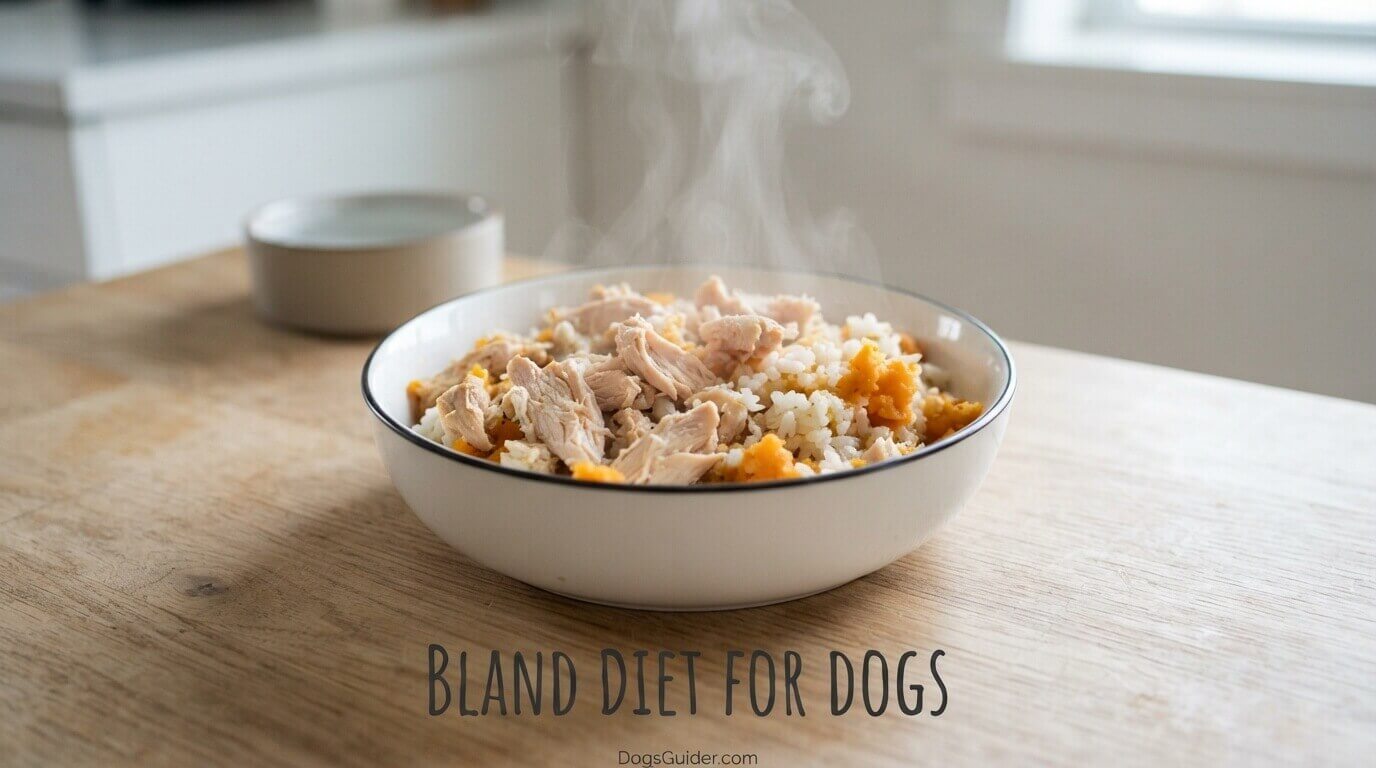
Boiled chicken and white rice are genuinely deficient in more than 10 essential nutrients dogs need for long-term health.
This is exactly why a bland diet for dogs should never become a regular replacement diet; it’s designed purely as a short-term, easy-to-digest bridge back to a complete and balanced commercial diet, not a long-term feeding solution.
Commercial Bland Diet Options
If you’d rather not prepare a homemade bland diet, several vet-formulated options exist that provide the same gentle, low-fat approach while remaining nutritionally complete, such as Hill’s Prescription Diet i/d or Royal Canin Gastrointestinal formulas.
These can be a convenient alternative, especially for dogs who need a bland diet more frequently due to a chronic sensitive stomach.
What NOT to Add to a Bland Diet for Dogs
- No oils, butter, or added fats; fat can trigger pancreatitis and worsen stomach upset
- No salt, garlic, onion, or seasoning of any kind
- No dairy, unless specifically approved by your vet, since many dogs are lactose intolerant
- No bones in the chicken, which pose a choking and internal injury risk
- Avoid human over-the-counter medications like antacids or anti-diarrheal products without veterinary guidance, since many are unsafe for dogs
When to Stop the Bland Diet and Call Your Vet
A bland diet for dogs is only appropriate for mild digestive upset. Contact your veterinarian promptly if you notice any of the following:
- Vomiting or diarrhea lasting longer than 24-48 hours
- Blood in vomit or stool
- Your dog refuses to eat even the bland diet
- Signs of dehydration, such as lethargy or vomiting water
- Severe lethargy or noticeable pain
- Known ingestion of a toxin, foreign object, or dangerous food
These symptoms can indicate a more serious underlying issue that a bland diet alone cannot resolve, and prompt veterinary attention is important.
Final Thoughts
A properly prepared bland diet for dogs at the correct 75:25 rice-to-protein ratio, fed in small frequent portions, and transitioned back gradually can make a real difference in helping your dog recover from mild digestive upset.
Just remember it’s a short-term bridge, not a long-term diet, and that persistent or severe symptoms always warrant a call to your veterinarian rather than continued home treatment.
FAQs
1. What is the correct ratio for a bland diet for dogs?
The standard bland diet for dogs ratio is 75% boiled white rice to 25% lean, low-fat protein like boiled chicken breast or lean ground beef, both cooked plain with no oils or seasoning.
2. How long can a dog stay on a bland diet?
Most dogs only need a bland diet for 2-3 days, with some taking up to a week to fully recover, though it should generally not be fed long-term unless specifically directed by a veterinarian.
3. Should I fast my dog before starting a bland diet?
Many veterinarians recommend withholding food (but not water) for 12-24 hours before introducing a bland diet to allow the digestive system to settle, though this should be confirmed with your own vet based on your dog’s specific situation.
4. Can I feed my dog a bland diet every day long-term?
No. A homemade bland diet is nutritionally incomplete and deficient in several essential nutrients, so it should only be used short-term unless your vet specifically prescribes a complete, balanced therapeutic diet for a chronic condition.
5. What should I do if my dog won’t eat the bland diet?
A lack of appetite can indicate your dog isn’t feeling well enough for home treatment alone. If your dog refuses food, especially alongside other symptoms, contact your veterinarian rather than continuing to try to force-feed.
6. Is white rice or brown rice better for a bland diet?
White rice is generally preferred for a bland diet for dogs because its lower fiber content is gentler on an already upset digestive system compared to brown rice.

Sarah Mitchell has been raising French Bulldogs for over 9 years in Austin, Texas. After adopting her first Frenchie, Biscuit, she became passionate about helping new owners navigate the unique needs of the breed from breathing care to diet and heat safety. Sarah has worked closely with local veterinarians and attended the AKC National Championship three times as a breed enthusiast. Her guides focus on practical, real-world advice for American Frenchie owners.


[…] breeders who specialize in this approach consider a Mini French Bulldog under roughly 17 pounds to be a legitimate, healthier alternative to the more extreme […]
[…] true spaniels, which are gun dogs bred to flush and retrieve game, the Tibetan Spaniel dog has always been purely a companion breed, with no hunting background […]
[…] dogs do best with a mix of both types, which is why many of the dog high fiber foods below are popular: they naturally contain […]