
Introduction
These breeds work independently, patrol at night, and use size and presence rather than aggression to deter threats.
This guide covers 15 of the best livestock guardian dog breeds, how they actually do their job, and how to choose the right one for your farm or homestead.
How Do Livestock Guardian Dogs Actually Work?
Unlike herding breeds, which move livestock from place to place, livestock guardian dog breeds live among the flock and defend it. Their job relies on a few key instincts:
- Bonding with livestock: Puppies raised among sheep, goats, or poultry from a young age (ideally 8-12 weeks) bond with the animals as their own “pack”
- Independent decision-making: Unlike herding dogs that take constant direction, guardian breeds patrol and assess threats on their own
- Nighttime vigilance: Most predators approach after dark, so livestock guardian dogs are naturally more alert and active at night
- Size and presence over aggression: Many breeds deter predators simply through their imposing size and confident bark, without needing to physically engage
15 Best Livestock Guardian Dog Breeds
1. Great Pyrenees
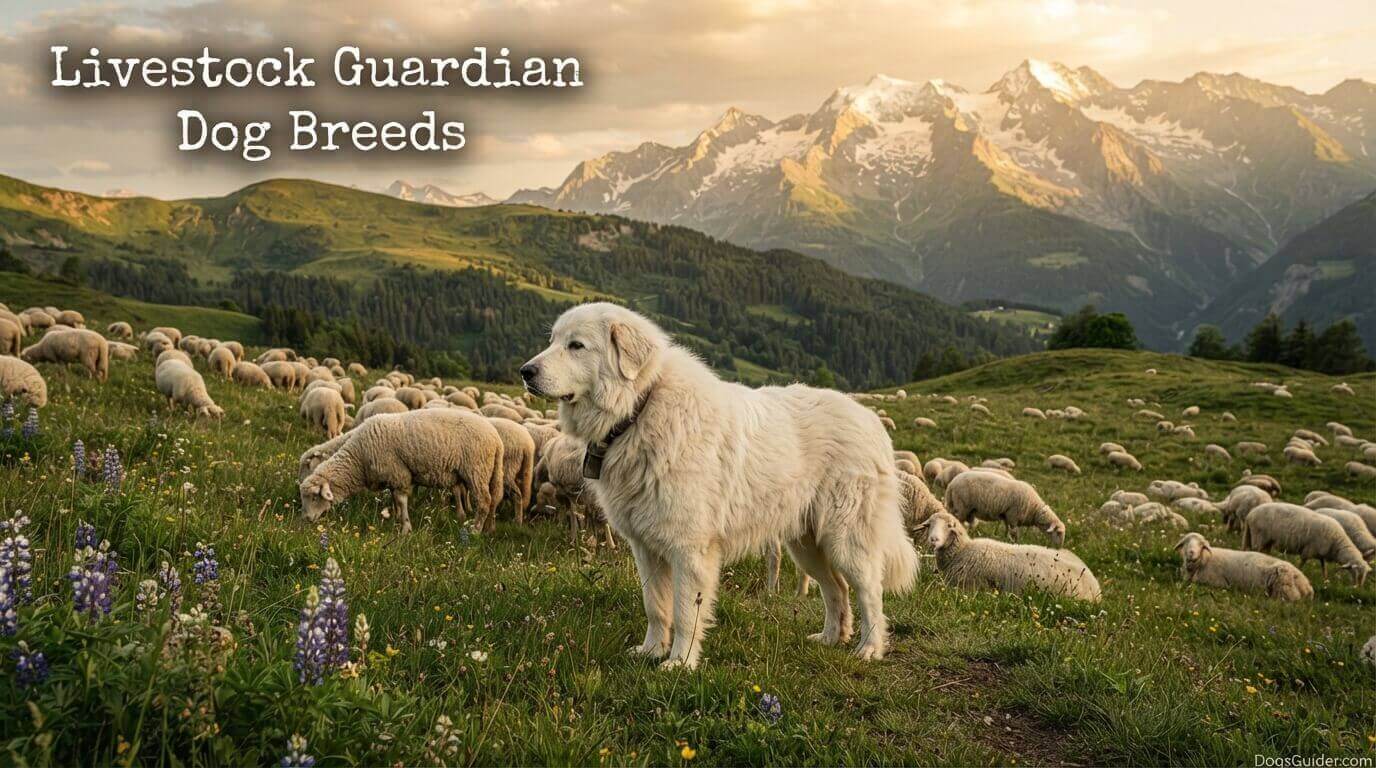
One of the most popular livestock guardian dog breeds in the U.S., the Great Pyrenees combines a calm, patient temperament with serious size, often reaching 100+ pounds. Their thick white coat helps them blend in with a flock of sheep while patrolling.
2. Anatolian Shepherd
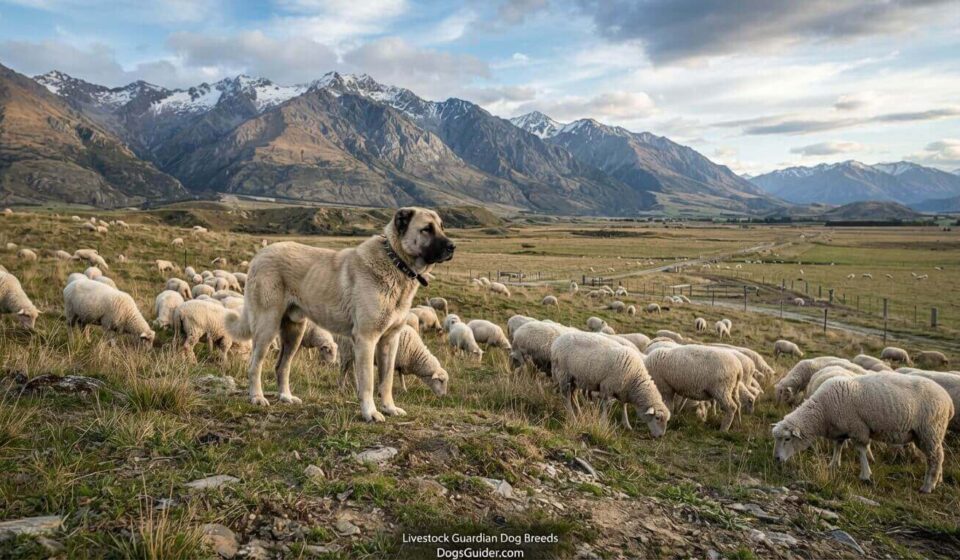
Originating in Turkey thousands of years ago, the Anatolian Shepherd is prized for endurance, speed, and agility.
The AKC breed standard describes them as loyal, independent, and reserved traits that make them highly effective, low-drama guardians.
3. Kangal Shepherd Dog
Developed in Turkey specifically to guard sheep from wolves and even large predators, the Kangal is known for its powerful build and calm confidence around livestock, paired with natural wariness toward strangers.
4. Maremma Sheepdog
This Italian breed’s fluffy white coat isn’t just for looks; it helps the Maremma blend in with the sheep it protects. Known for a calm, confident demeanor, Maremmas form especially strong bonds with their flock.
5. Tibetan Mastiff
Arguably one of the most formidable livestock guardian dog breeds, the Tibetan Mastiff has been known to fend off coyotes, bears, and even birds of prey.
Their thick coat, developed for harsh Himalayan winters, means they thrive in cold climates and are naturally more active at night.
6. Komondor
Instantly recognizable by its long, corded coat (which takes about two years to fully form), the Komondor’s unusual appearance actually serves a purpose: the dense cords provide protection against predator bites. Early socialization is important, since they can be highly territorial.
7. Kuvasz
A Hungarian breed known for intelligence and the ability to make split-second decisions in the field, the Kuvasz has guarded livestock for centuries and remains a devoted, protective presence on the farm.
8. Caucasian Shepherd Dog
An extremely large, powerful breed known for fierce protectiveness, the Caucasian Shepherd requires an experienced handler and thorough socialization, but few predators will challenge a farm guarded by one.
9. Karakachan
Originating in Bulgaria and still actively used for shepherding today, the Karakachan is deeply loyal to its family and flock, though it can show wariness or aggression toward unfamiliar people without proper training.
10. Polish Tatra Sheepdog
Known for a bark far bigger than its bite, the Polish Tatra relies on its loud, deep bark to alert and deter predators before physical confrontation is ever needed. As a bonus, the breed doesn’t drool, a rarity among large guardian dogs.
11. Tornjak (Croatian Mountain Dog)
The smallest breed on this list, but don’t let that fool you; the Tornjak is still strong and powerful enough to surprise any predator that underestimates it.
12. Akbash
One of the most common livestock guardian dog breeds in Texas alongside the Great Pyrenees and Anatolian Shepherd, the Akbash’s white coat provides the same flock-blending camouflage as its European cousins.
13. Bernese Mountain Dog
Originally bred in Switzerland to pull carts and watch over farmland, the gentle, friendly Bernese Mountain Dog often doubles as both a livestock guardian and a beloved family companion.
14. Leonberger
A large, calm German breed with roots in guarding and working roles, the Leonberger combines size and strength with a notably gentle temperament around family and livestock alike.
15. Central Asian Shepherd Dog
One of the oldest livestock guardian dog breeds in the world, the Central Asian Shepherd has protected flocks across Central Asia for centuries, valued for its toughness and independence in harsh conditions.
How to Choose the Right Livestock Guardian Dog Breed
1. Match the Breed to Your Predator Threats
If you’re dealing with small predators like foxes or coyotes, most livestock guardian dog breeds will suffice.
For larger threats like wolves or bears, more formidable breeds like the Tibetan Mastiff, Kangal, or Caucasian Shepherd offer extra deterrence.
2. Start Bonding Early
The strongest guardian relationships form when a puppy is introduced to livestock between 8 and 12 weeks old, allowing the bond to develop naturally during the critical socialization period.
3. Consider Climate
Heavy-coated breeds like the Tibetan Mastiff, Great Pyrenees, and Komondor thrive in cold climates but may struggle in extreme heat, so match coat type to your region.
4. Plan for Socialization With People
Because livestock guardian dog breeds are naturally wary of strangers by design, early, careful socialization is essential if you also want the dog to be comfortable around visitors, farmhands, or family members outside the immediate household.
Final Thoughts
From the widely popular Great Pyrenees to the formidable Tibetan Mastiff, livestock guardian dog breeds offer farmers and homesteaders a time-tested, natural solution to protecting flocks and herds.
Choosing the right breed comes down to matching your specific predator threats, climate, and socialization needs, but with the right match, a livestock guardian dog becomes an irreplaceable, devoted member of the farm.
FAQs
1. What is the most popular livestock guardian dog breed in the U.S.?
The Great Pyrenees is widely considered the most popular livestock guardian dog breed in the United States, prized for its calm temperament, imposing size, and dedication to its flock.
2. Do livestock guardian dogs need training?
While their guarding instincts are largely inherited, early socialization and exposure to livestock during puppyhood significantly improve a livestock guardian dog’s effectiveness and behavior around both animals and people.
3. Can livestock guardian dog breeds also be family pets?
Yes, many livestock guardian dog breeds, including the Great Pyrenees, Bernese Mountain Dog, and Leonberger, can make loving family companions alongside their guardian duties, especially with proper socialization.
4. How many livestock guardian dog breeds does the AKC recognize?
The American Kennel Club recognizes around 10 livestock guardian dog breeds within its Working Group, though over 35 distinct breeds exist worldwide.
5. Are livestock guardian dogs aggressive?
Not typically toward their own flock or family, but many livestock guardian dog breeds are naturally reserved or wary toward strangers, which is part of what makes them effective protectors. Early socialization helps manage this appropriately.
6. What predators can livestock guardian dogs protect against?
Depending on the breed and size, livestock guardian dogs can deter threats ranging from foxes and coyotes to wolves, bears, and birds of prey, primarily through their size, vigilance, and confident presence.

Sarah Mitchell has been raising French Bulldogs for over 9 years in Austin, Texas. After adopting her first Frenchie, Biscuit, she became passionate about helping new owners navigate the unique needs of the breed from breathing care to diet and heat safety. Sarah has worked closely with local veterinarians and attended the AKC National Championship three times as a breed enthusiast. Her guides focus on practical, real-world advice for American Frenchie owners.
[…] is part of what makes true large black dog breeds like the Newfoundland or Flat-Coated Retriever stand out so […]
[…] food costs: a 150+ pound dog eats considerably more than an average breed, and food costs add up […]