
French Bulldog Hot Spots: Causes, Care, Prevention

Introduction
Finding french bulldog hot spots on your dog can feel alarming, because a small red patch can become a large sore by night. Start with our guide to French Bulldog itchy skin, since itching often starts the cycle.
A hot spot is a sudden, wet, painful sore on the skin. It is also called acute moist dermatitis, and it grows fast because licking and chewing keep the skin wet and irritated.
French Bulldogs are prone to hot spots because of their skin folds, short coat, and allergies. Moisture can hide in folds, under the ears, and between the toes, where bacteria can grow.
Quick Answer: A French Bulldog hot spot is a sudden, red, wet, and painful sore caused by licking, chewing, allergies, flea bites, or trapped moisture. Clip the fur around it, clean it gently, keep it dry, and stop your dog from licking it.
Ask your vet promptly if the sore spreads fast, smells bad, oozes pus, bleeds, or your dog seems in pain. Early vet care usually keeps a small hot spot from becoming a large infection.
What Is a Hot Spot?
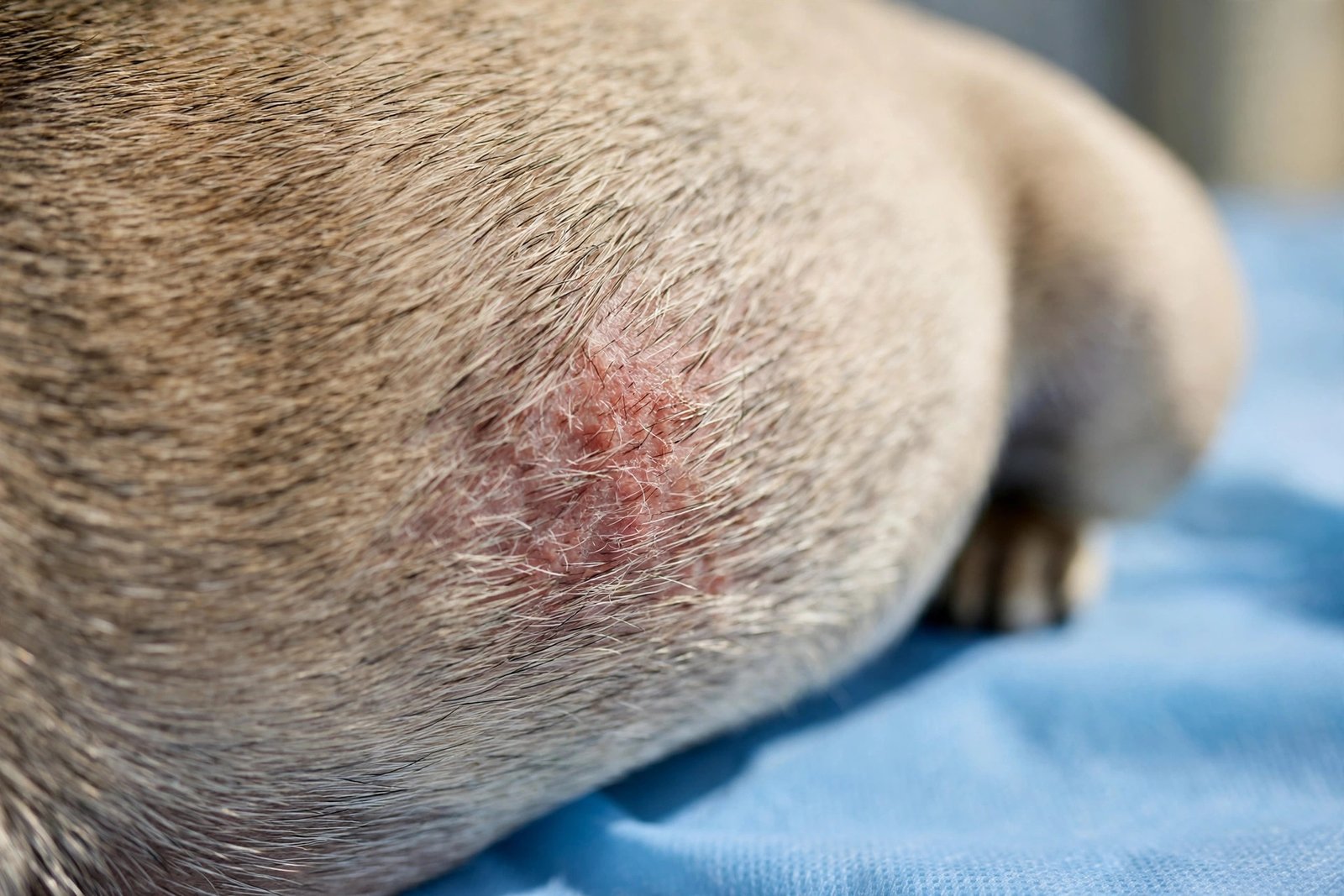
A hot spot is a patch of skin that becomes red, moist, and sore very quickly, often within hours. The surface may look raw and wet, with matted fur stuck to the sore.
Licking is the engine that keeps a hot spot going. Saliva keeps the skin wet, the tongue adds friction, and bacteria already on the skin can then multiply in the warm, damp area.
A hot spot is different from a dry patch or a mild rash. Dry skin flakes and itches over days or weeks, while a hot spot is sudden, wet, oozing, and painful from the start.
Signs to Watch For
The first sign is often a small red area that your dog keeps licking or chewing. You may notice wet fur, a damp patch, or a spot that looks darker than the skin around it.
The sore may ooze clear fluid or a yellowish discharge, and the fur around it may mat into a clump. A bad smell can develop as bacteria grow in the moist skin.
Common Causes
Most hot spots start with itching, pain, or moisture. Your dog licks the spot for relief, and that licking creates the wet, raw sore you then see.
Allergies
Allergies are one of the most common causes of hot spots in French Bulldogs. Food, pollen, dust, and other triggers can make the skin itch all over or in one area, and licking then breaks the skin.
For more on allergy signs and triggers, read our guide to French Bulldog allergies. It explains common triggers and the signs that point toward an allergy.
Flea Bites and Other Insect Bites
A single flea bite can start a hot spot in a sensitive dog. The bite itches, your dog chews the spot, and the sore grows from that small starting point, so check for fleas and ask your vet about safe flea control.
Moisture Trapped in Folds and Coat
French Bulldog folds trap moisture after baths, rain, swimming, and humid weather. Damp skin inside a fold stays warm, and that warmth helps bacteria grow, so dry folds, ears, and paws after baths and wet walks.
Licking, Chewing, and the Itch Cycle
Once a dog starts licking a sore spot, the cycle can be hard to break. Licking feels soothing for a moment, but it keeps the skin wet and adds more irritation, and stress or boredom can make the habit worse.
Where Hot Spots Appear on French Bulldogs
Hot spots often appear on the neck, under the ear flap, on the hips, and on the paws. Those areas are easy for your dog to reach, lick, and chew.
Paws are another frequent site, especially between the toes. Licking paws after walks, allergies, or a small cut can start a sore that spreads across the top of the foot.
Safe Home Care Steps

Home care can help a small, early hot spot, but it is not a substitute for vet care when the sore is large, painful, or spreading. Start gently, and watch the sore closely.
First, stop the licking. Put an Elizabethan collar, also called a cone, on your dog, or use a recovery suit if your vet approves it. No home treatment will work while licking continues.
Next, clip the fur around the sore very carefully with blunt tipped scissors or clippers. Short fur lets air reach the skin and keeps the sore drier, but take care not to cut the skin.
Clean the area gently with lukewarm water and a mild, vet approved antiseptic or a gentle dog skin cleanser. Pat the area dry with a clean soft cloth, and do not scrub the raw skin.
What NOT to Do
Do not put human creams, antibiotic ointments, steroid creams, or antiseptic sprays on a hot spot unless your vet tells you to. Human products can irritate raw skin or be harmful if licked.
Do not use alcohol, hydrogen peroxide, or strong disinfectants on the sore. Those products sting, dry the skin harshly, and can slow healing rather than help it.
Do not cover the sore with a tight bandage, and do not let your dog keep licking it, even for a short time. A few minutes of licking can undo hours of drying and reopen healing skin.
When to See a Vet
See your vet promptly if the hot spot is large, very painful, bleeding, or oozing pus. Those signs suggest infection, and infection often needs vet treatment to clear.
See your vet the same day if the sore spreads fast, if your dog has a fever, seems lethargic, or stops eating. A spreading sore plus a sick dog is a clear sign to seek care now.
Ask your vet about hot spots that keep coming back in the same place. A repeat sore often means the underlying trigger, such as allergies or fleas, has not been treated yet.
Vet Treatment: What to Expect
At the visit, your vet will examine the sore and look for the trigger behind it. That may include checking for fleas, ear infection, allergies, and skin infection.
Your vet may clip the fur around the sore, clean it, and dry it carefully. Clipping helps the vet see the full size of the sore and helps air reach the skin.
Treatment may include a vet prescribed topical product, an oral medicine for infection or itching, or both. Follow the full course of any medicine, even if the sore looks healed after a few days.
Causes and Prevention at a Glance
Use this table to match the trigger with the prevention step that helps most. Fixing the trigger matters more than treating the sore alone, because the sore will return if the cause stays.
| Trigger | Why it leads to a hot spot | Prevention step |
|---|---|---|
| Allergies | Itching leads to licking and chewing | Work with your vet on triggers and diet |
| Flea bites | A bite itches and starts chewing | Use vet approved flea control all year |
| Trapped moisture | Damp folds and coat breed bacteria | Dry folds, ears, and paws after baths |
| Licking habit | Licking keeps skin wet and raw | Use a cone and add calm play |
| Ear infection | Scratching spreads sores under the ear | Check ears weekly and treat early |
| Boredom or stress | Licking becomes a comfort habit | Add walks, play, and mental enrichment |
Preventing Hot Spots from Coming Back
Prevention starts with the trigger, not the sore. If allergies cause the itch, work with your vet on food, environment, and skin care that reduce flare ups.
Keep flea control current all year, even in winter, because one bite can start a hot spot. Ask your vet which product suits your dog, and use it on the schedule your vet advises.
Dry your Frenchie well after baths, swimming, and rainy walks. Pay extra attention to folds, ears, paws, and the tail pocket, because those areas stay damp longest.
Hot Spots vs Dry Skin and Itchy Skin
Dry skin is chronic and flaky, with itching that builds slowly over days or weeks. For a full comparison, read our guide to French Bulldog dry skin, which covers flakes, dull coat, and gentle skin care.
A hot spot is sudden, wet, oozing, and painful, with a clear sore you can see and feel. Dry skin and itchy skin may need trigger control and gentle care, while a hot spot needs drying, licking control, and often vet care.
The Bottom Line
French Bulldog hot spots appear fast, spread fast, and hurt, but early action makes a real difference. Stop the licking, clip the fur, clean gently, dry the skin, and watch the sore closely.
Do not use human creams, harsh disinfectants, or tight covers, and do not let your dog lick the spot while it heals. Call your vet promptly if the sore spreads, smells bad, oozes pus, or your dog seems in pain.
The best long term fix is to treat the trigger behind the sore, whether that is allergies, fleas, moisture, or stress. Dry folds, current flea control, and regular skin checks keep most hot spots from starting at all.
References
- American Kennel Club, general dog health and French Bulldog breed care guidance, https://www.akc.org/
- PetMD, general guidance on dog skin problems, hot spots, and when to seek vet care, https://www.petmd.com/
- VCA Animal Hospitals, client education on dog skin disease and hot spots, https://vcahospitals.com/
- Merck Veterinary Manual, owner guidance on dog skin disease and dermatitis, https://www.merckvetmanual.com/
FAQs
1. What is a French Bulldog hot spot?
A hot spot is a sudden, red, wet, and painful sore on the skin, also called acute moist dermatitis. It grows fast because licking and chewing keep the skin wet and irritated.
2. How fast can a hot spot grow?
A hot spot can grow visibly within hours, especially if your dog keeps licking it. Check the sore twice a day, and call your vet the same day if it spreads fast.
3. Can I treat a French Bulldog hot spot at home?
You can help a small, early hot spot by stopping licking, clipping fur, cleaning gently, and drying the skin. Ask your vet promptly if it is large, painful, spreading, or oozing pus.
4. What should I put on a hot spot?
Use only a mild, vet approved cleanser or product your vet advises. Do not use human creams, steroid creams, alcohol, or hydrogen peroxide unless your vet tells you to.
5. Why does my French Bulldog keep getting hot spots?
Repeat hot spots usually mean the trigger is still there, such as allergies, fleas, trapped moisture, or an ear infection. Ask your vet to find and treat that underlying cause.
6. Where do French Bulldog hot spots appear most often?
Hot spots often appear on the neck, under the ear flap, on the hips, and on the paws. Those areas are easy to lick, and moisture can hide in folds and between toes.
7. How can I prevent French Bulldog hot spots?
Prevent hot spots by treating allergies, using flea control, drying folds and paws after baths, and checking the skin weekly. Add exercise and play to reduce stress licking.

Sarah Mitchell has been raising French Bulldogs for over 9 years in Austin, Texas. After adopting her first Frenchie, Biscuit, she became passionate about helping new owners navigate the unique needs of the breed from breathing care to diet and heat safety. Sarah has worked closely with local veterinarians and attended the AKC National Championship three times as a breed enthusiast. Her guides focus on practical, real-world advice for American Frenchie owners.