Can Dogs Eat Popcorn?

Introduction
Many owners ask, can dogs eat popcorn, when a dog begs during movie night. Like strawberries, the answer depends on preparation, not just on the food itself.
Quick Answer: Yes, dogs can eat plain, air-popped popcorn in small amounts as an occasional treat. Serve it cooled, fully popped, and with all hard kernels removed. Skip butter, salt, oil, sugar, and seasonings. Plain popcorn is not toxic, but toppings and kernels change the answer.
What Popcorn Is Safe for Dogs?
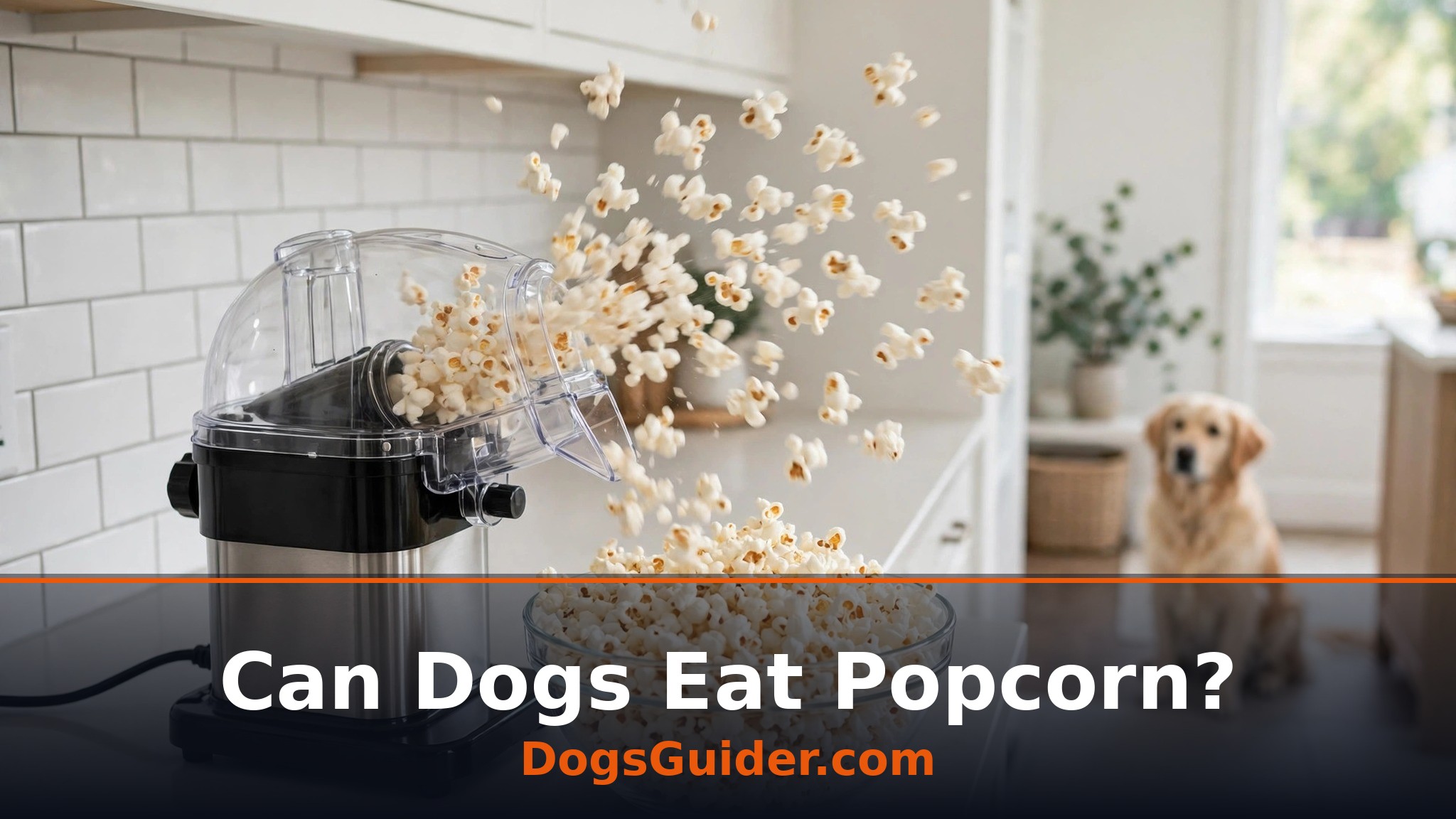
When owners ask can dogs eat popcorn, only one kind is safe as a treat choice. It must be plain, air-popped, fully popped, cooled, and served in a small amount.
What “Plain” Really Means
Plain means no butter, no salt, no oil, no sugar, and no seasonings. It also means no cheese powder, no caramel, and no flavour coatings. If the bag lists flavourings, it is not plain.
Air-Popped vs Microwave vs Movie Theatre Popcorn
Microwave popcorn, as normally sold, is not safe for dogs, and movie theatre popcorn is unsafe too. Most microwave bags contain butter flavouring, salt, and oil, while theatre popcorn adds large amounts of butter, oil, and salt.
How to Serve Popcorn Safely, Step by Step
- Air-pop plain kernels with no butter, salt, oil, or seasonings.
- Set your dog’s share aside before you season your own bowl.
- Let the popcorn cool completely before you serve any of it.
- Remove every unpopped kernel and every loose hull you can see.
- Serve only a small amount, and stay with your dog while it eats.
Popcorn Dogs Should Avoid
The table below is the fast way to check a bowl. If a type is listed as avoid, do not offer it on purpose. A dropped piece is different from an intentional serving.
| Type | Safe or Avoid | Why |
|---|---|---|
| Plain air-popped | Safe in small amounts | No toppings, fully popped, cooled |
| Buttered | Avoid | Added fat can upset the stomach |
| Salted | Avoid | Added sodium is a risk for dogs |
| Microwave, as normally sold | Avoid | Butter, salt, and flavourings are common |
| Movie theatre | Avoid | Butter, oil, salt, and large portions |
| Caramel | Avoid | Sugar adds calories and dental risk |
| Kettle corn | Avoid | Sugar and salt together are a poor mix |
| Cheese powder | Avoid | Salt, fat, and additives with little benefit |
| Garlic or onion seasoning | Avoid | Garlic and onion are harmful to dogs |
| Chocolate-coated | Emergency risk | Chocolate is toxic to dogs |
| Xylitol or sugar-free coated | Emergency risk | Xylitol is dangerous to dogs |
Is Popcorn Good or Bad for Dogs?
Plain popcorn is not a health food for dogs, and it is not a poison either. The honest answer sits between those extremes. It can be a light, occasional treat, but it adds little that a dog needs.
Plain popcorn contains fibre and trace minerals, but the amounts in a few pieces are small. A complete dog food already covers them.
How Much Popcorn Can Dogs Eat?

Treats, including popcorn, should stay within about 10 percent of daily calories. That rule is used across major dog food guides, and it is the safest anchor for portions.
Guides disagree on exact piece counts, so this guide does not present one copied number as settled fact. The table below gives a conservative range that fits inside the 10 percent rule. Start at the low end.
| Dog size | Conservative range | How to use it |
|---|---|---|
| Toy and small dogs | 1 to 4 pieces | Start with 1 or 2 pieces, occasional only |
| Medium dogs | 3 to 6 pieces | A small handful at most, not a bowl |
| Large and giant dogs | 5 to 8 pieces, or a small handful | Still occasional, still within the treat budget |
One guide suggests 2 to 3 pieces for small dogs, 4 to 5 for medium dogs, and 6 to 7 for large dogs.
Another guide suggests 1 to 2 for toy and small dogs, 3 to 4 for small to medium dogs, and 6 to 8 for large and giant dogs.
Popcorn Kernels and Hulls: The Physical Risk
The chemical risk in popcorn comes from toppings. The physical risk comes from kernels and hulls, and it is easy to miss. A bowl can look safe while still hiding hard pieces at the bottom.
Popcorn is not corn on the cob, which can block the gut. This guide is about popped popcorn only.
Unpopped and Partially Popped Kernels
Unpopped kernels are hard, and they are a choking hazard for dogs. A dog that gulps food can swallow one without chewing it properly. That risk is higher for small dogs and for puppies.
A kernel can also crack a tooth, so watch for drooling or reluctance to eat hard food. In very small dogs, a swallowed kernel could also contribute to a blockage.
Hulls Stuck in Gums and Between Teeth
Hulls are the thin, papery shells left after a kernel pops. They are different from whole kernels, and they cause a different problem. A hull can lodge in the gums or wedge between teeth.
A dog with a hull stuck in its mouth may paw at its face, drool, or eat more slowly. Check the mouth gently if your dog shows those signs. If you cannot remove a hull safely, call your vet.
Can Puppies Eat Popcorn?
Puppies should not eat popcorn as a regular treat. The safest choice for a puppy is to skip popcorn and use a puppy treat made for young dogs. That advice holds even if the popcorn is plain and air-popped.
Puppies have smaller airways than adult dogs, so choking risk is higher. Their digestion is also more sensitive, and a small body means a small treat budget, so even a few pieces matter more.
Small Dogs, Overweight Dogs, and Dogs on Special Diets
Small and toy breeds need the most care with popcorn. Their airways are smaller, their teeth are closer together, and a kernel is larger relative to their size. Use the low end of the portion table, and check the bowl twice.
For a French Bulldog, take extra care as well. A flat face can make chewing and swallowing harder to watch, so supervise every piece closely. Stop at once if your dog coughs, gags, or struggles.
Overweight dogs should only get popcorn inside a strict treat budget, and dogs on a prescription diet should not get outside treats without vet guidance. Corn allergy or food sensitivity is a clear reason to avoid popcorn entirely.
What to Do If Your Dog Already Ate Popcorn
First, work out what kind of popcorn it was. Amount, toppings, and dog size all change the response.
If your dog ate a few plain, fully popped pieces, the risk is low. Watch your dog as normal, offer fresh water, and check for stomach upset over the next day. Most dogs will be fine, and no special action is needed.
If your dog ate chocolate-coated popcorn or popcorn with xylitol, call your vet right away. Do not wait for symptoms. Tell the vet what was eaten, how much, and when, and follow the vet’s instructions exactly.
Do not try to make your dog vomit unless a vet tells you to do so. Inducing vomiting at home can cause more harm, especially if the dog is coughing or distressed. Fresh water, calm watching, and a vet call are safer first steps.
When to See a Vet
Call your vet at once if your dog shows any of these signs after eating popcorn. Do not wait to see if they pass on their own.
- Choking, gagging, or trouble breathing
- Swelling of the face or mouth
- Repeated vomiting or vomiting with blood
- Diarrhoea that is severe or contains blood
- Extreme lethargy, collapse, or weakness
- Signs of a kernel stuck in the throat or mouth
- Eating chocolate-coated popcorn or popcorn with xylitol
- A puppy or very small dog eating a large amount
Also call your vet if symptoms last more than a day or get worse. This section is general guidance only, and it does not replace vet care.
Safer Alternatives to Popcorn
Yogurt can work as a cool, soft treat for many dogs, in a small amount. Plain yogurt is the safe choice, with no added sugar or sweeteners. Check the label, and skip flavoured or sweetened versions.
Kiwi is another soft fruit option, served peeled and cut into small pieces. It still needs portion control, because fruit contains natural sugar. Start with a small piece, and watch for any reaction.
The Bottom Line
Can dogs eat popcorn? Yes, plain air-popped popcorn in small amounts can be an occasional treat. The popcorn itself is not the problem. Butter, salt, oil, sugar, seasonings, chocolate, and xylitol are the problem, along with hard kernels and hulls.
Serve popcorn cooled, fully popped, and with kernels removed. Set the dog share aside before you season your own bowl.
Keep portions inside the 10 percent treat rule, and supervise every serving. Skip popcorn for puppies, and for dogs with corn allergy or a prescription diet.
References
- American Kennel Club, Can Dogs Eat Popcorn? akc.org
- PetMD, Can Dogs Eat Popcorn? petmd.com
- VCA Hospitals, Dog Nutrition and Food Safety. vcahospitals.com
- RSPCA, Dog Nutrition and Safe Foods. rspca.org.uk
- Merck Veterinary Manual, Pancreatitis and Nutrition in Dogs. merckvetmanual.com
- Cornell University College of Veterinary Medicine, Dog Health and Nutrition. vet.cornell.edu
FAQs
1. Can dogs eat popcorn?
Yes, dogs can eat plain, air-popped popcorn in small amounts as an occasional treat. Serve it cooled and fully popped, with hard kernels removed. Skip butter, salt, oil, sugar, and seasonings.
2. Can dogs eat microwave popcorn?
No, not as normally sold. Most microwave bags contain butter flavouring, salt, oil, and other additives. Homemade air-popped popcorn is clearer and safer.
3. Can dogs eat buttered popcorn?
No, do not offer buttered popcorn on purpose. Butter adds fat that can upset the stomach and, in larger amounts, raise the risk of pancreatitis. Watch for stomach upset after a few dropped pieces.
4. Can dogs eat caramel or kettle corn popcorn?
No, not as a regular treat. Caramel adds sugar, and kettle corn adds sugar and salt. Both add calories and dental risk without benefit. Do not serve these types on purpose.
5. Can dogs eat popcorn kernels?
No. Unpopped and partially popped kernels are a choking hazard, and they can crack teeth. In very small dogs, a swallowed kernel could also contribute to a blockage. Always remove hard kernels first.
6. Can puppies eat popcorn?
Puppies should not eat popcorn as a regular treat. Their airways are smaller, their digestion is more sensitive, and choking risk is higher. Use a soft puppy treat instead.
7. How much popcorn can dogs eat?
Keep popcorn inside about 10 percent of daily calories, as an occasional treat. A conservative range is 1 to 4 pieces for toy and small dogs, 3 to 6 pieces for medium dogs, and 5 to 8 pieces for large and giant dogs.
8. What should I do if my dog ate popcorn?
Work out what kind it was and how much was eaten. Watch for 24 to 48 hours for vomiting, loose stools, thirst, or lethargy, and offer fresh water. Call your vet at once for xylitol, chocolate, choking, or severe symptoms.
9. Can small dogs eat popcorn?
Yes, small dogs can eat plain, air-popped popcorn, but with extra care. Use the low end of the portion range, check the bowl twice for hard kernels, and supervise every piece.
10. Is popcorn good for dogs?
Popcorn is not a health food for dogs. Plain popcorn contains fibre and trace minerals, but those amounts are small, and a complete dog food already covers them. See popcorn as a light, occasional sharing treat.

Sarah Mitchell has been raising French Bulldogs for over 9 years in Austin, Texas. After adopting her first Frenchie, Biscuit, she became passionate about helping new owners navigate the unique needs of the breed from breathing care to diet and heat safety. Sarah has worked closely with local veterinarians and attended the AKC National Championship three times as a breed enthusiast. Her guides focus on practical, real-world advice for American Frenchie owners.