
Introduction
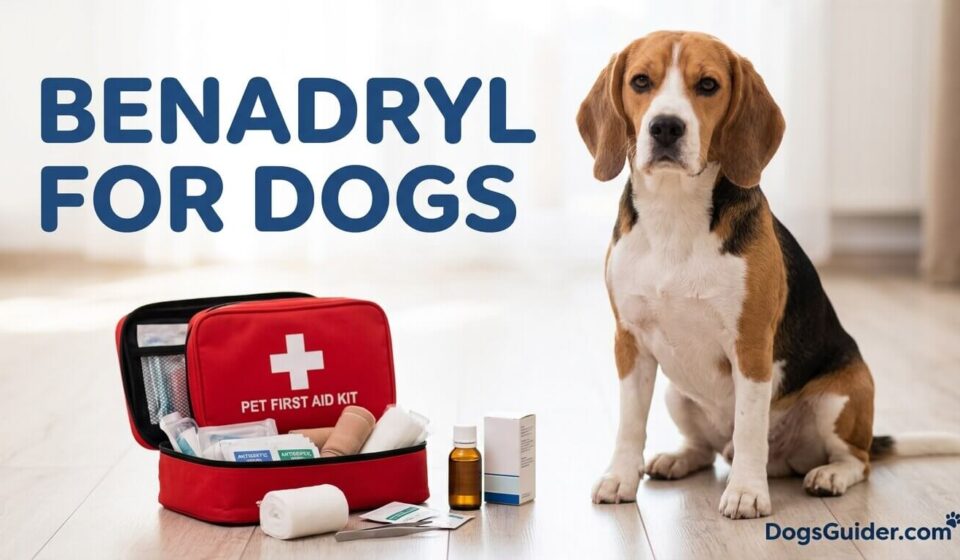
Your dog is scratching nonstop, or a bee just stung their face, and the Benadryl is sitting in your medicine cabinet.
It is a common question: is Benadryl for dogs safe, and how much can you give? The short answer is that vets do sometimes recommend it, but the right product, dose, and situation matter a great deal.
This guide explains what Benadryl does, the commonly used dose, which versions to avoid, the side effects to watch for, and when to skip it and go straight to a vet.
What Is Benadryl and Is It Safe for Dogs?
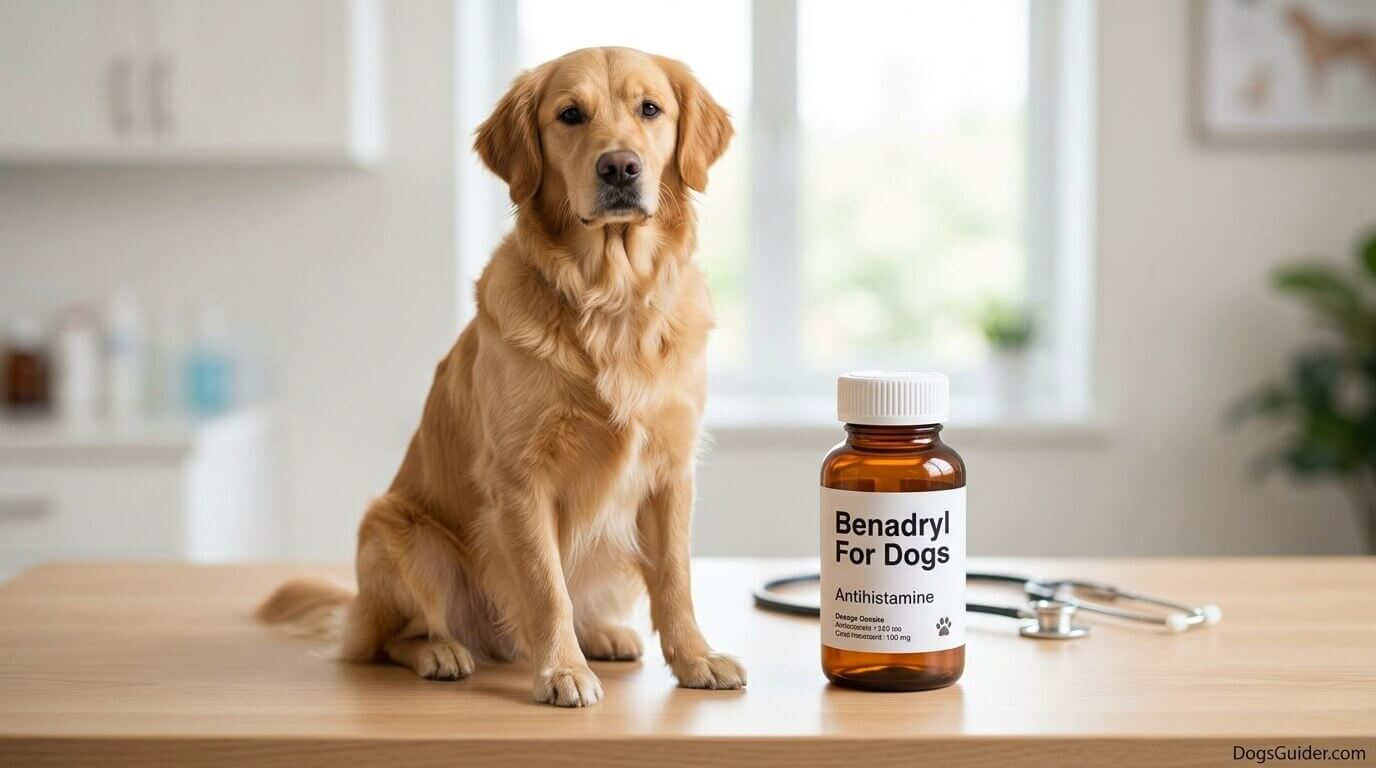
Benadryl for Dogs is a brand name for diphenhydramine, an antihistamine. It blocks histamine, the chemical your body releases during an allergic reaction.
Veterinarians commonly use diphenhydramine in dogs for mild allergy symptoms, and it is generally considered safe for healthy adult dogs when used at the correct dose.
“Generally safe” does not mean “safe for every dog.” Puppies, seniors, small dogs, pregnant dogs, and dogs with certain health conditions can react badly. The safest approach is to call your vet or an animal poison hotline before giving it, especially the first time.
What Is Benadryl Used for in Dogs?
- Mild allergic reactions: Itching, sneezing, watery eyes, and hives from pollen, dust, or insect bites.
- Insect stings and bites: Vets sometimes advise it for mild local swelling, while the dog is monitored.
- Seasonal allergies: Short-term relief during flare-ups, though it often works less well for long-term skin allergies.
- Motion sickness: Its sedating effect can help some dogs on car rides.
- Mild anxiety or sleep aid: It may make some dogs drowsy, but evidence that it truly reduces anxiety is limited. A sleepy dog can still be scared.
Does Benadryl Actually Work for Dog Allergies?
It helps some dogs, but not all. Antihistamines tend to work better for sneezing, hives, and bites than for chronic itchy skin caused by environmental or food allergies.
If your dog needs Benadryl for Dogs often, that is a sign to see your vet about a long-term plan.
Benadryl Dosage for Dogs
The dose most commonly cited by veterinary sources is about 1 mg of diphenhydramine per pound of body weight, given by mouth every 8 to 12 hours.
Veterinary references also express it as roughly 2 to 4 mg per kilogram. Your vet may adjust this for your dog’s age, size, and health, so confirm the exact amount before giving it.
| Dog Weight | Approx. Dose (1 mg/lb) | Typical Form |
|---|---|---|
| 10 lbs | 10 mg | Children’s liquid (about 4 mL of 12.5 mg/5 mL) |
| 25 lbs | 25 mg | One 25 mg tablet |
| 50 lbs | 50 mg | Two 25 mg tablets |
| 75 lbs | 75 mg | Three 25 mg tablets |
This chart is for general education only. It is not a prescription. Dogs under about 10 pounds, puppies, seniors, and dogs with medical conditions should only receive Benadryl for Dogs under direct veterinary instruction. Small dogs have very little margin for error.
How Long Does Benadryl Take to Work?
Most dogs start to feel effects within 30 to 60 minutes. The effect usually lasts four to eight hours, which is why dosing is spaced out. If symptoms do not improve, do not give extra. Call your vet.
Which Benadryl Products Are Safe for Dogs?

The product label matters as much as the dose. Choose a product where the only active ingredient is diphenhydramine.
- Safe option: Plain diphenhydramine tablets (usually 25 mg).
- Liquid: Plain children’s liquid can be used for small dogs, but check that it contains no xylitol and no alcohol. Xylitol is highly toxic to dogs.
- Avoid: Any “D” or “Plus Congestion” version. These contain decongestants such as phenylephrine or pseudoephedrine, which are dangerous for dogs.
- Avoid: Combination products such as sleep aids or multi-symptom cold medicines that include acetaminophen or other drugs.
- Avoid: Extended-release or coated capsules unless your vet says it is fine, since they can release too much at once if chewed.
How to Give Benadryl to Your Dog
- Call your vet first to confirm it suits your dog’s health and medications.
- Check the label for diphenhydramine only, and no xylitol.
- Weigh your dog and calculate the dose with your vet’s help.
- Give it with a little food if your dog gets an upset stomach. Hide a tablet in a small treat.
- Do not crush or split time-release products.
- Watch your dog for the next few hours and write down the time and dose.
Benadryl Side Effects in Dogs
Common side effects are usually mild:
- Drowsiness or sluggishness
- Dry mouth and increased thirst
- Difficulty urinating
- Constipation
- Vomiting or diarrhea
- Reduced appetite
Some dogs react the opposite way and become restless, agitated, or hyper after taking it. If your dog seems unusually wired, stop and call your vet.
Signs of a Benadryl Overdose
Too much diphenhydramine can be dangerous. Seek emergency help if you see:
- Extreme agitation or restlessness
- Dilated pupils
- Rapid heartbeat or fast breathing
- Tremors, seizures, or collapse
- Severe drooling, vomiting, or trouble walking
If you think your dog took too much, call your vet, the ASPCA Animal Poison Control Center at (888) 426-4435, or Pet Poison Helpline at (855) 764-7661. Consultation fees may apply.
Dogs That Should Not Take Benadryl

Ask your vet before using it if your dog has any of these:
- Glaucoma
- Heart disease or high blood pressure
- Seizure disorders
- Liver or kidney disease
- Enlarged prostate or trouble urinating
- Hyperthyroidism
- Pregnancy or nursing
Also tell your vet about every medicine and supplement your dog takes, since diphenhydramine can interact with other drugs, including sedatives and some anxiety medicines.
When Benadryl Is Not Enough: Go to the Vet
Benadryl is not a substitute for emergency care. Severe allergic reactions can be life-threatening. Go to an emergency vet immediately if you notice:
- Swelling of the face, lips, tongue, or throat
- Difficulty breathing or noisy breathing
- Pale or blue gums
- Collapse or extreme weakness
- Repeated vomiting or widespread hives
Benadryl for Dogs may be one step in a vet-guided plan, but it should never delay treatment.
Alternatives to Benadryl for Dog Allergies
Vets have several options that work better for long-term allergies, including prescription allergy medications, injectable treatments, medicated shampoos, omega-3 supplements, flea control, and allergy testing.
Do not switch to another human antihistamine without veterinary advice, as dosing and safety differ.
Benadryl for Dogs: Mistakes to Avoid
- Guessing the dose. Always weigh your dog. Eyeballing weight is a common cause of overdose in small breeds.
- Using the wrong product. Products with decongestants, acetaminophen, or xylitol are dangerous.
- Repeating doses too soon. Wait the full interval your vet recommends.
- Using it as a daily fix. Long-term itching needs a diagnosis, not just a pill.
- Delaying emergency care. Waiting to see if Benadryl works can be risky if symptoms are severe.
- Combining it with other sedatives. This can make your dog dangerously sleepy.
Can Benadryl Be Used Before Travel or Fireworks?
Owners often try Benadryl for dogs‘ car trips, thunderstorms, or fireworks. It may cause drowsiness, which can help with motion sickness, but it does not reliably treat fear.
A dog who is sleepy can still feel frightened. For noise phobia and serious anxiety, ask your vet about behavior plans and prescription options. Safe habits like a quiet room, white noise, and a comfortable crate also help.
Keeping a Pet First-Aid Plan
Have a plan before an emergency happens. Save your vet’s phone number, the nearest 24-hour emergency clinic, and the poison hotline numbers on your phone.
Know your dog’s current weight and keep it updated. Store medications in a closed cabinet, because dogs can chew through bottles and swallow an entire bottle of tablets.
FAQs
1. Can I give my dog Benadryl?
Many vets approve plain diphenhydramine for healthy adult dogs, but you should confirm with your vet first, especially for puppies, seniors, and small dogs.
2. How much Benadryl can I give my dog?
A commonly used dose is about 1 mg per pound of body weight every 8 to 12 hours. Confirm the exact amount with your vet.
3. Can I give my dog Benadryl for anxiety?
It may cause drowsiness, but evidence that it reduces anxiety is limited. Ask your vet about better options.
4. How long does Benadryl last in dogs?
Effects usually last about four to eight hours.
5. What happens if I give my dog too much Benadryl?
Overdose can cause agitation, fast heartbeat, tremors, or seizures. Call your vet or a poison hotline immediately.
6. Is liquid Benadryl safe for dogs?
Only if diphenhydramine is the sole active ingredient and it is free of xylitol and alcohol.
7. Can puppies take Benadryl?
Only under veterinary guidance. Puppies are more sensitive and need careful dosing.
8. Can Benadryl help a dog with a bee sting?
It may help with mild reactions, but facial swelling or breathing trouble is an emergency that needs a vet right away.

Sarah Mitchell has been raising French Bulldogs for over 9 years in Austin, Texas. After adopting her first Frenchie, Biscuit, she became passionate about helping new owners navigate the unique needs of the breed from breathing care to diet and heat safety. Sarah has worked closely with local veterinarians and attended the AKC National Championship three times as a breed enthusiast. Her guides focus on practical, real-world advice for American Frenchie owners.