
Introduction
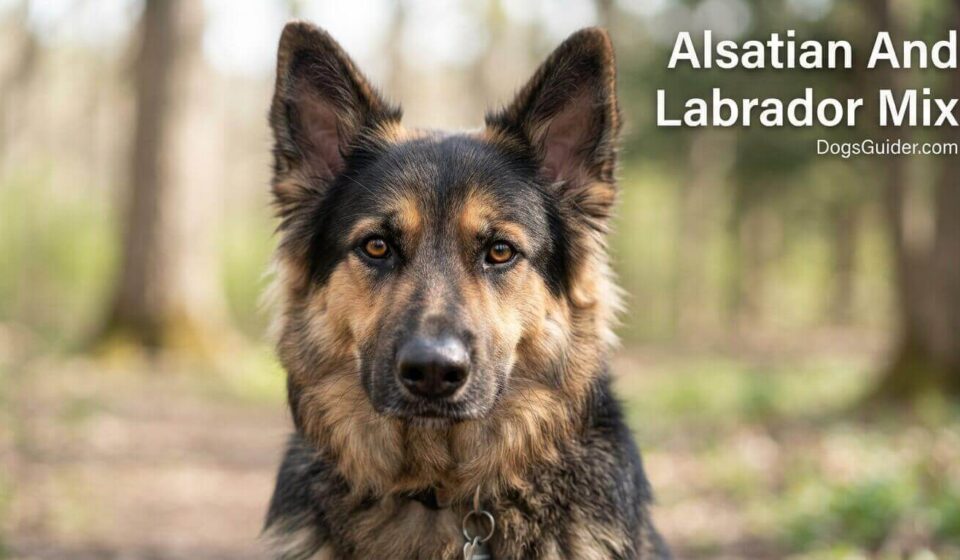
This guide walks through what to realistically expect in terms of size, temperament, exercise needs, grooming, and health, plus honest pros and cons before you bring one home.
What Is an Alsatian and Labrador Mix?
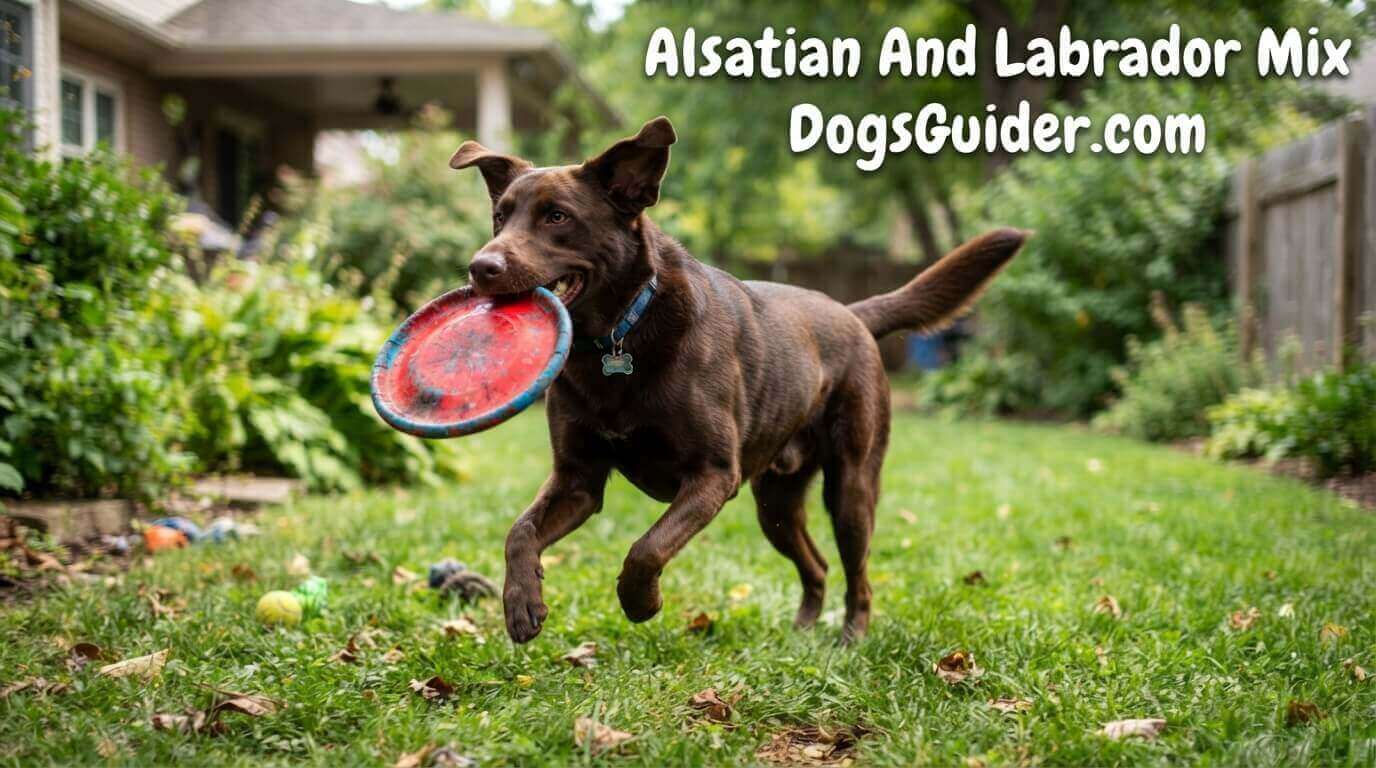
An Alsatian and Labrador mix is a crossbreed dog produced by pairing a purebred German Shepherd (Alsatian) with a purebred Labrador Retriever.
It is not recognized as an official breed by the AKC, since it’s a first-generation cross rather than a standardized breed, which means puppies in the same litter can vary noticeably in appearance and temperament.
| Trait | Typical Range |
|---|---|
| Height | 20 – 27 inches |
| Weight | 50 – 90 pounds |
| Lifespan | 10 – 14 years |
| Coat | Medium-length double coat; moderate to heavy shedding |
| Temperament | Loyal, intelligent, energetic, protective |
| Exercise Needs | High, around 1.5 to 2 hours daily |
| Best For | Active families with yard space and training experience |
Alsatian and Labrador Mix Temperament
This crossbreed typically blends the German Shepherd’s watchfulness and devotion with the Labrador’s friendliness and enthusiasm, though which traits dominate varies from dog to dog. Common personality traits include:
- Highly loyal, forming strong bonds with their family, often becoming a “velcro dog.”
- Intelligent and trainable: Both parent breeds rank among the smartest in the world, making this mix quick to learn commands.
- Protective instincts inherited from the German Shepherd side, which can translate into alert watchdog behavior.
- Friendly with socialization, the Labrador influence often softens wariness toward strangers when properly socialized early.
Size and Appearance
Because this is a first-generation cross between two similarly sized breeds, an Alsatian and Labrador mix typically grows to 20–27 inches tall and 50–90 pounds, landing somewhere between the two parent breeds.
Coat color and ear shape vary widely; some puppies have the GSD’s erect ears, others the Lab’s floppy ears, and coat colors can range from black and tan to solid black, yellow, or sable.
Exercise and Training Needs
Both parent breeds were developed as working dogs, so an Alsatian and Labrador mix needs substantial daily exercise, typically 90 minutes to 2 hours of walking, running, or structured play.
Without enough physical and mental stimulation, this breed can become destructive, vocal, or anxious.
- Start training early; their intelligence means they pick up commands fast, but also pick up bad habits just as quickly.
- Use positive reinforcement; reward-based methods work best with this sensitive, people-pleasing crossbreed.
- Socialize them extensively; expose them to new people, dogs, and environments throughout puppyhood to manage protective instincts.
- Give them a job: obedience training, agility, or scent work helps satisfy their working-breed instincts.
Grooming and Shedding
With a medium-length double coat inherited from both parents, this mix sheds moderately to heavily year-round, with heavier shedding during seasonal coat changes.
Brushing two to three times a week helps manage loose fur, and baths should be occasional rather than frequent to avoid stripping natural skin oils.
Health Considerations
Because both parent breeds are prone to certain hereditary conditions, an Alsatian and Labrador mix should be screened for:
- Hip and elbow dysplasia common in both German Shepherds and Labradors, especially in larger individuals.
- Eye conditions, including pannus and progressive retinal atrophy, which are more commonly associated with the German Shepherd line.
- Bloat (gastric torsion) is a risk in larger, deep-chested dogs; feeding smaller meals can help reduce risk.
- Obesity: Both parent breeds are prone to weight gain, which worsens joint issues over time.
Is an Alsatian and Labrador Mix Right for You?
Pros
- Highly intelligent and trainable
- Loyal and protective family companion
- Versatile, suited for work, sport, or companionship
- Generally good with children when socialized early
Challenges to Consider
- High daily exercise requirement
- Moderate to heavy shedding year-round
- Needs an experienced, consistent owner
- Not ideal for small apartments without consistent outdoor access
Final Thoughts: Is This Crossbreed Worth It?
An Alsatian and Labrador mix offers an appealing blend of intelligence, loyalty, and friendliness, making it a rewarding companion for active owners who can meet its substantial exercise and training needs.
This isn’t a low-maintenance breed, but for the right family one with space, time, and consistency a Sheprador can be an exceptionally devoted, versatile companion for over a decade.
FAQs
1. What is an Alsatian and Labrador mix called?
This crossbreed is commonly known as a Sheprador or Labrashepherd, combining a German Shepherd (Alsatian) with a Labrador Retriever.
2. How big does an Alsatian and Labrador mix get?
Most reach 20 to 27 inches in height and weigh between 50 and 90 pounds once fully grown, depending on which parent breed traits dominate.
3. Is an Alsatian and Labrador mix a good family dog?
Yes, with proper socialization and training, this mix is typically loyal, friendly, and great with children, though supervision is always recommended with younger kids.
4. How much exercise does this crossbreed need?
Expect to provide 90 minutes to 2 hours of physical activity daily, as both parent breeds are high-energy working dogs.
5. Does an Alsatian and Labrador mix shed a lot?
Yes, this crossbreed typically sheds moderately to heavily year-round due to its double coat, with even heavier shedding during seasonal changes.
6. Are Alsatian Labrador mixes easy to train?
Generally yes, as both parent breeds are highly intelligent and eager to please, though consistency and early socialization are key to managing protective instincts.
7. What health problems should I watch for?
Common concerns include hip and elbow dysplasia, certain eye conditions, bloat, and obesity, so regular veterinary checkups and health screening are important.
8. Is this breed good for first-time dog owners?
This mix is generally better suited to owners with some prior dog experience, given its high energy, size, and training needs, though a committed first-time owner willing to invest in training can succeed too.

Sarah Mitchell has been raising French Bulldogs for over 9 years in Austin, Texas. After adopting her first Frenchie, Biscuit, she became passionate about helping new owners navigate the unique needs of the breed from breathing care to diet and heat safety. Sarah has worked closely with local veterinarians and attended the AKC National Championship three times as a breed enthusiast. Her guides focus on practical, real-world advice for American Frenchie owners.