
Introduction
Can Dogs Eat Turkey? The Short Answer
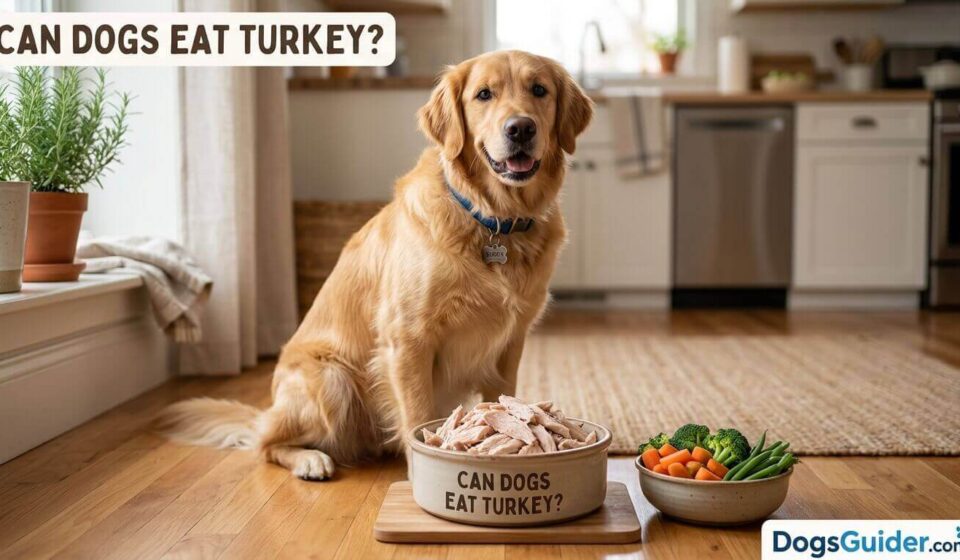
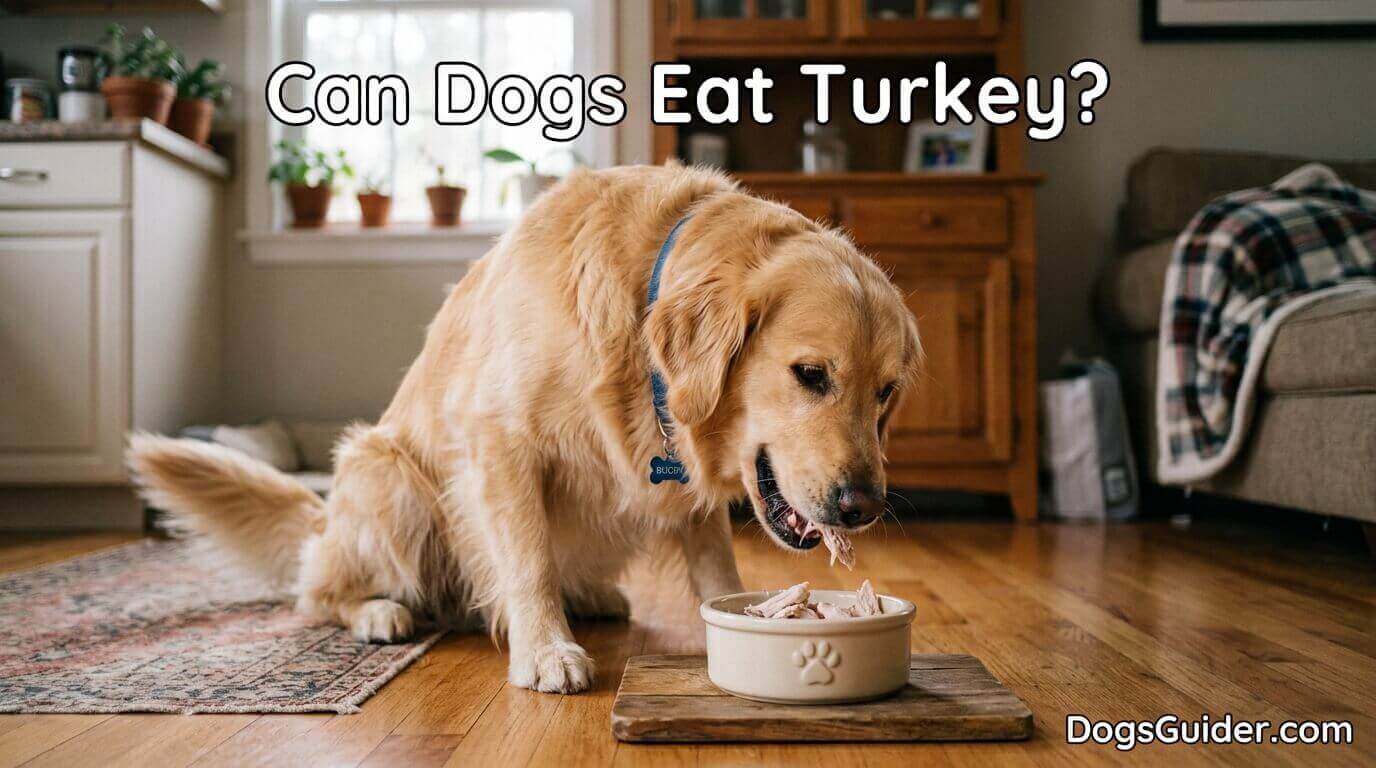
Can Dogs Eat Turkey? Yes. Plain, fully cooked turkey breast or thigh meat, with no skin, bones, or seasoning, is safe and even healthy for most dogs.
Turkey is a lean protein source, and small amounts make a reasonable occasional treat or meal topper. The parts that cause real problems are specific and worth memorizing before your next turkey dinner.
Turkey Parts: Safe vs. Dangerous at a Glance
| Part / Preparation | Safe? | Why |
|---|---|---|
| Plain cooked white meat (breast) | Yes | Lean protein, low fat |
| Plain cooked dark meat (thigh) | Yes, in moderation | Slightly higher fat than white meat |
| Turkey skin | No | High fat content; risk of pancreatitis |
| Cooked turkey bones | No | Splinter easily; choking and internal injury risk |
| Raw turkey bones | No | Still a choking/injury risk, plus bacterial contamination |
| Raw turkey meat | No | Risk of salmonella and other bacteria |
| Turkey with gravy, stuffing, or seasoning | No | Often contains onion, garlic, excess salt, and butter |
| Turkey deli meat, sausage, or bacon | No | High sodium and preservatives not meant for dogs |
| Turkey jerky (dog-specific only) | Yes, if made for dogs | Human jerky often has added salt, garlic, or onion powder |
| Turkey neck (cooked, bones removed, supervised) | Case-by-case | Some sources allow it if prepared safely; others advise skipping entirely |
Why Turkey Skin Is Riskier Than It Looks
Can Dogs Eat Turkey skin isn’t dangerous because it’s “bad” in a toxic sense; it’s dangerous because of how much fat it carries, especially after roasting in butter or oil.
That concentrated fat is the most common trigger for pancreatitis in dogs around the holidays, a painful and sometimes serious inflammation of the pancreas.
Watch for vomiting, diarrhea, a painful or hunched abdomen, loss of appetite, or fever after any rich or fatty meal, and call your vet promptly if these appear.
Why Turkey Bones Are a Hard No, Cooked or Raw
Cooked turkey bones become brittle and splinter easily, which is why they’re consistently flagged as dangerous across veterinary sources.
A fragment can lodge in the mouth or throat, puncture the digestive tract, or cause a blockage requiring emergency surgery.
Raw bones carry a somewhat lower splintering risk but still pose a choking hazard and can introduce bacteria. The safest rule, used by essentially every veterinary source: no turkey bones, cooked or raw, ever.
The Thanksgiving Problem: It’s Not the Turkey, It’s the Table
Thanksgiving and other holiday meals are when turkey-related vet visits spike, and it’s rarely the plain meat causing the trouble. The real culprits are usually:
- Gravy often made with pan drippings, butter, and sometimes onion or garlic
- Stuffing frequently contains onion, garlic, raisins, or other toxic ingredients mixed in with bread and butter
- The carcass left out, or within reach, an unattended turkey carcass is one of the most common sources of bone-related emergencies
- With distracted supervision, a full house, and a busy kitchen, it’s easy for a dog to grab something off a counter or a guest’s plate unnoticed
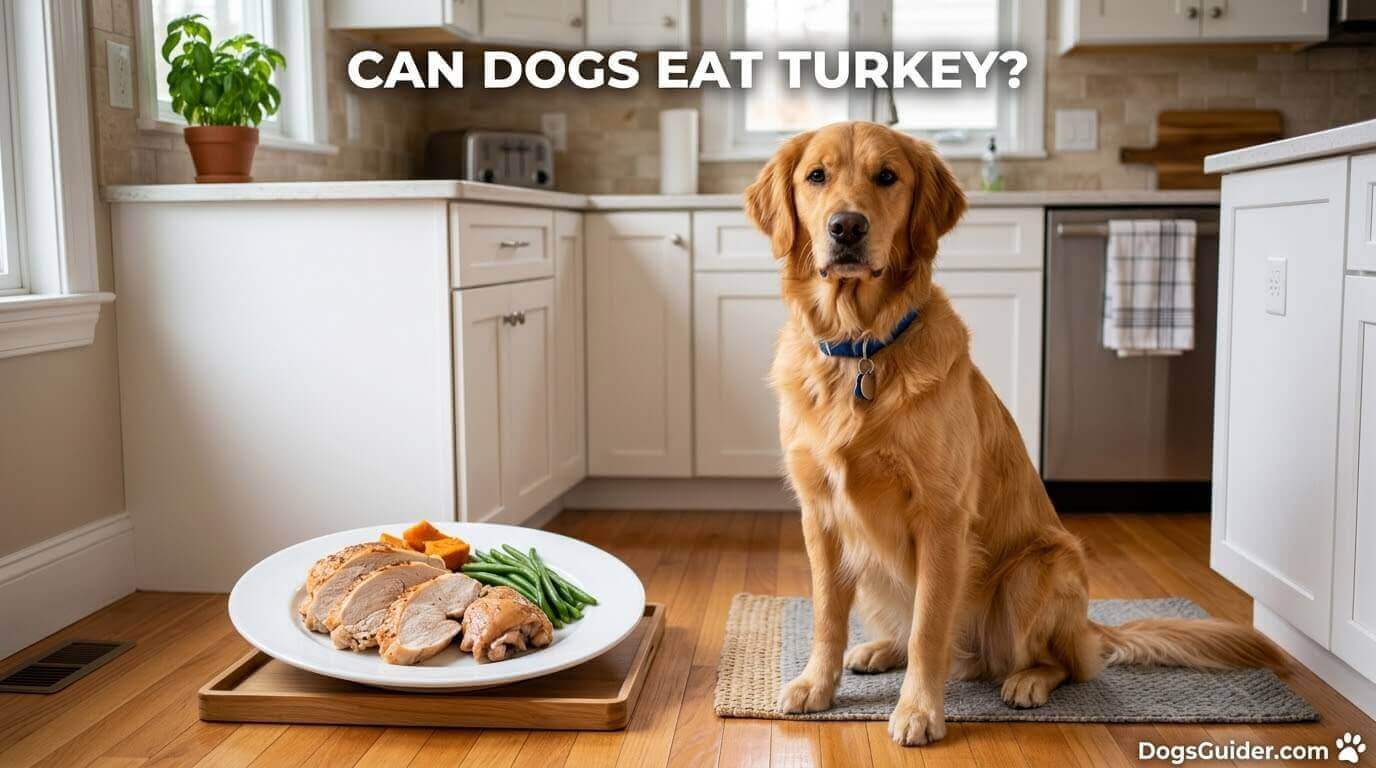
If you want to share the holiday with your dog, set aside a small portion of plain turkey breast before any seasoning, butter, or gravy touches it, and make sure the carcass and bones go straight into a secured trash can your dog can’t access.
How Much Turkey Can a Dog Eat?
Turkey should be treated as an occasional addition, not a meal replacement. As a general guideline, treats of any kind, including turkey, should make up no more than about 10% of your dog’s daily caloric intake.
A few small, bite-sized pieces of plain turkey breast are a reasonable amount for most dogs as a treat; a full plate is not, regardless of how much your dog begs.
Can Puppies Eat Turkey?
Can Dogs Eat Turkey or puppies? Yes, puppies can have a small amount of plain, fully cooked turkey breast with no skin, bones, or seasoning.
Because puppies have more sensitive digestive systems, introduce it in very small amounts and watch for any signs of an upset stomach.
Can Dogs Eat Ground Turkey?
Yes, plain, fully cooked, unseasoned ground turkey is generally safe and can be a reasonable protein addition, as long as it doesn’t contain added salt, garlic, onion, or other seasoning blends often found in pre-seasoned or flavored ground turkey products.
Signs of a Problem After Eating Turkey
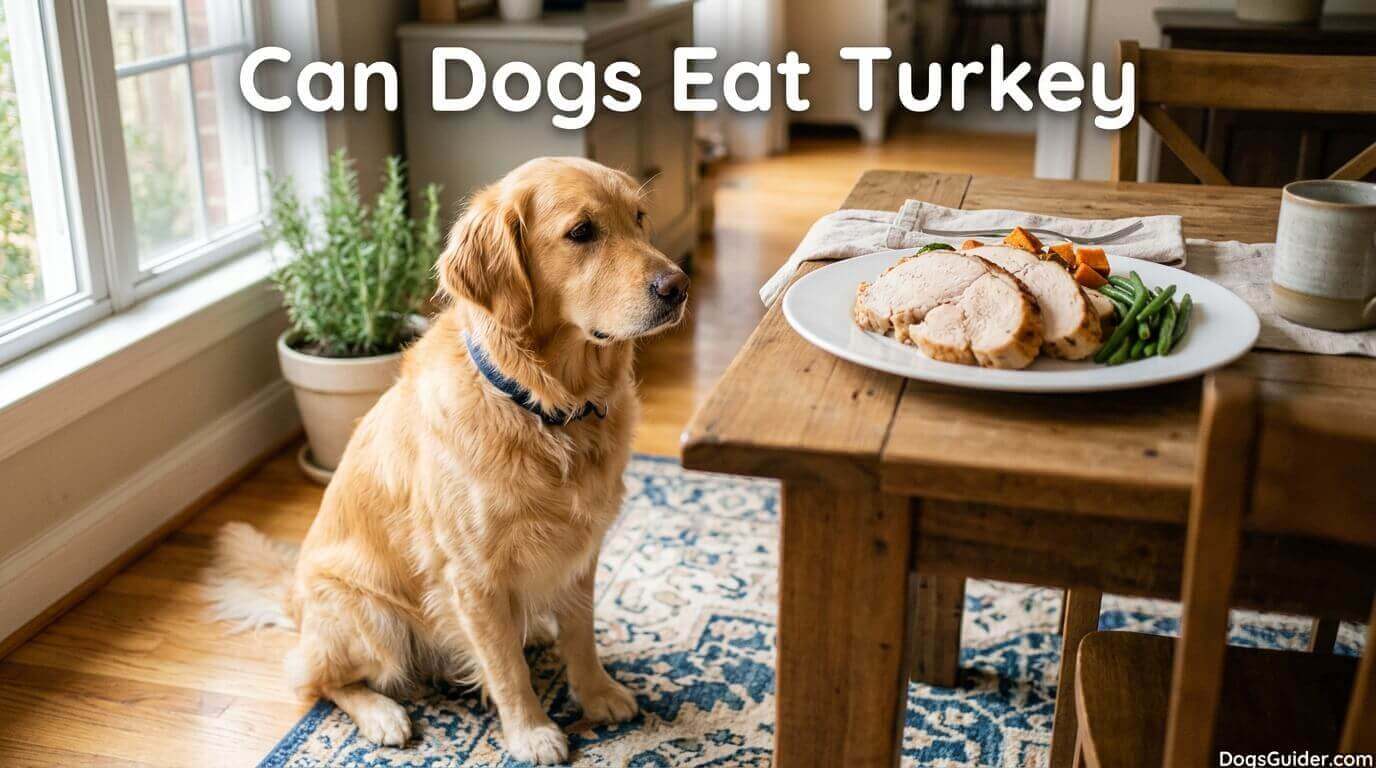
Contact your vet if your dog shows any of the following after eating turkey, turkey skin, or anything from the holiday table:
- Vomiting or diarrhea
- A painful, hunched, or bloated abdomen
- Loss of appetite
- Lethargy or noticeable discomfort
- Difficulty swallowing, gagging, or signs of choking (possible bone fragment)
These can indicate pancreatitis, a bone obstruction, or toxin exposure from seasoning, all of which need prompt veterinary attention rather than a wait-and-see approach.
Final Thoughts
So, can dogs eat turkey? Yes, the plain meat itself is genuinely one of the safer proteins to share. The danger was always hiding in the preparation, not the bird: skip the skin, remove every bone, keep it free of seasoning, gravy, and stuffing, and secure the carcass once dinner’s done.
Follow those rules, and turkey can be a safe, healthy treat your dog can enjoy right alongside the rest of the family.
This article is for general information and is not a substitute for veterinary advice. Contact your veterinarian if your dog shows signs of illness or is known to have eaten turkey bones, skin, or a seasoned dish.
FAQs
1. Can dogs eat turkey every day?
It’s best kept as an occasional treat rather than a daily habit. While plain turkey is a healthy lean protein, it shouldn’t replace a complete, balanced commercial diet or make up more than about 10% of daily calories.
2. Can dogs eat turkey bones?
No, never, whether cooked or raw. Turkey bones, especially cooked ones, splinter easily and can cause choking, internal injury, or a dangerous blockage requiring emergency surgery.
3. Can dogs eat turkey skin?
No. Turkey skin is high in fat, which can trigger pancreatitis, a painful and potentially serious condition. It’s best to remove all skin before offering turkey to your dog.
4. Can dogs eat turkey with gravy or stuffing?
No. Gravy and stuffing commonly contain onion, garlic, excess salt, and butter, all of which can be harmful to dogs. Serve plain turkey meat set aside before any seasoning is added.
5. What should I do if my dog eats a turkey bone?
Contact your veterinarian immediately, even if your dog seems fine. Bone fragments can cause internal injury or blockages that aren’t immediately obvious, and prompt attention is safer than waiting for symptoms.
6. Can dogs eat deli turkey or turkey bacon?
It’s best to avoid these. Processed turkey products like deli meat, bacon, and sausage are typically high in sodium and preservatives that aren’t appropriate for regular feeding to dogs.

Sarah Mitchell has been raising French Bulldogs for over 9 years in Austin, Texas. After adopting her first Frenchie, Biscuit, she became passionate about helping new owners navigate the unique needs of the breed from breathing care to diet and heat safety. Sarah has worked closely with local veterinarians and attended the AKC National Championship three times as a breed enthusiast. Her guides focus on practical, real-world advice for American Frenchie owners.


[…] a protein treat with your dog, these options avoid the sodium and preservative load that makes Can Dogs Have Ham […]
[…] is the single most important thing to understand before answering “is peanut butter good for dogs” for any specific jar in your […]