

Introduction
Raw feeding has exploded in popularity among dog owners, and many French Bulldog parents are asking the same question: is a Frenchie raw diet actually a good idea for this sensitive-stomached, brachycephalic breed?
What Is a Frenchie Raw Diet, Exactly?
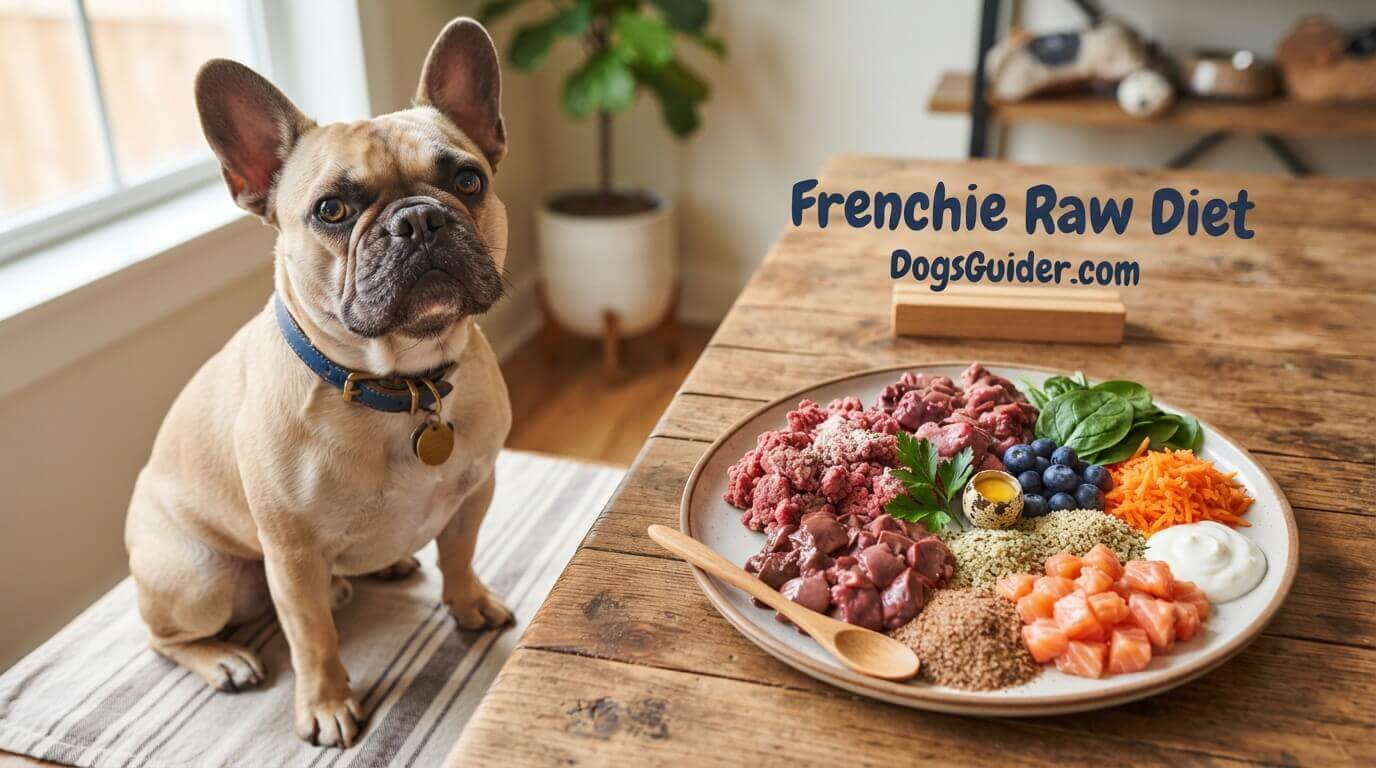
A raw diet for French Bulldogs, often called BARF (Biologically Appropriate Raw Food), mimics what dogs would eat in the wild, using uncooked ingredients rather than processed kibble. A typical Frenchie raw diet includes:
- Raw muscle meat: chicken, beef, or lamb for core protein
- Raw organ meat: liver, kidney, and heart for essential vitamins and minerals
- Raw meaty bones appropriately sized for calcium and dental benefits
- Dog-safe fruits and vegetables, small portions for fiber and additional nutrients
- Supplements: fish oil, flaxseed, or other additions to fill nutritional gaps
A variation called “prey model raw” (PMR) skips the fruits, vegetables, and dairy entirely, focusing purely on meat, bone, and organ in ratios that mimic a whole prey animal.
Frenchie Raw Diet Benefits

Frenchie owners who switch to raw feeding commonly report several benefits:
- Improved digestion: French Bulldogs often have sensitive stomachs, and some owners find raw food easier for their dog to process than heavily processed kibble
- Healthier skin and coat: Natural oils in raw meat can help reduce skin irritation and promote a shinier coat, which matters for a breed prone to skin fold issues
- Better weight management: raw diets are typically free of fillers and carbohydrate-heavy ingredients, which can help maintain a healthy weight in a breed already prone to obesity
- Reduced allergy symptoms: Some Frenchies prone to skin allergies see fewer flare-ups on a raw diet, though this varies significantly by individual dog
- Smaller, firmer stools are a commonly reported side effect of the more digestible, nutrient-dense nature of raw food
Frenchie Raw Diet Risks You Should Know Before Switching
Most articles about raw feeding skip straight to the benefits, but a responsible Frenchie raw diet decision requires knowing the risks too:
Bacterial Contamination
Raw meat can carry bacteria like Salmonella, E. coli, and Campylobacter. This poses a risk not just to your Frenchie, but to your household, especially if children, seniors, or immunocompromised family members handle the food or come into contact with your dog afterward.
Nutritional Imbalance
A poorly planned Frenchie raw diet can easily become unbalanced, lacking essential nutrients like calcium, phosphorus, and specific vitamins found in commercial dog food formulated to meet complete nutritional standards.
Getting the ratios right requires real research or veterinary guidance.
Choking and Bone Injury Risk
Raw bones carry a risk of choking, tooth fracture, or internal injury if not sized appropriately for your Frenchie.
This risk is heightened in brachycephalic breeds, which already have unique airway and dental structures to consider.
Lack of Scientific Consensus
Despite growing popularity, there is currently no large-scale, long-term scientific study confirming that raw diets are safer or healthier than high-quality commercial dog food. Much of the evidence for a Frenchie raw diet remains anecdotal.
Is a Frenchie Raw Diet Right for Your Dog?

Raw feeding tends to work best for owners who can commit to real time and research. Consider a Frenchie raw diet if:
- You’re willing to consult with a veterinarian or canine nutritionist to build a properly balanced plan
- You have time to source, store, and prepare raw ingredients safely
- You can maintain strict food hygiene to protect both your dog and household members
- Your Frenchie doesn’t have an underlying health condition that raw feeding could complicate
It may not be the right fit if you need a simple, grab-and-go feeding routine, or if anyone in your household is immunocompromised and handling raw meat regularly poses a health risk.
Sample Frenchie Raw Diet Feeding Plan
As a general starting guideline, adult French Bulldogs on a raw diet are typically fed around 2-2.5% of their ideal body weight per day, split into two meals, with more active dogs on the higher end of that range.
A balanced daily portion generally breaks down roughly as follows:
- 70-80% raw muscle meat: chicken, beef, turkey, or lamb
- 10% raw edible bone appropriately sized to prevent choking
- 5% liver
- 5% other organ meat such as kidney or spleen
- Optional 10% dog-safe vegetables, fruits, or supplements like fish oil
Always introduce new proteins gradually over several days to monitor for allergic reactions or digestive upset, and consult your vet before making a full transition, especially for puppies, seniors, or Frenchies with existing health conditions.
Frenchie Raw Diet Food Safety Tips
- Keep raw meat separate from human food and food prep areas at all times
- Wash hands and surfaces thoroughly after handling raw ingredients
- Store raw food properly frozen until use, and refrigerated only briefly before feeding
- Clean your Frenchie’s bowl after every meal, rather than letting raw food residue sit
- Monitor your dog closely during the first few weeks for any signs of digestive upset or allergic reaction
Final Thoughts
A Frenchie raw diet can offer real benefits: better digestion, a shinier coat, and improved weight management, among them, but it’s not a decision to make lightly.
Between bacterial risks, the need for careful nutritional balancing, and the lack of large-scale scientific research, raw feeding works best for owners willing to do real homework and, ideally, consult with a veterinarian.
Whether you choose raw, commercial, or a hybrid approach, what matters most is that your Frenchie’s diet is complete, balanced, and appropriate for their individual health needs.
FAQs
1. Is a raw diet safe for French Bulldogs?
A Frenchie raw diet can be safe when properly balanced and handled with strict food hygiene, but it carries real risks including bacterial contamination and nutritional imbalance if not planned carefully. Consulting a vet before switching is strongly recommended.
2. How much raw food should I feed my Frenchie?
A common starting guideline is 2-2.5% of your French Bulldog’s ideal body weight per day, split into two meals, adjusted based on activity level, age, and body condition.
3. Can puppies eat a Frenchie raw diet?
Raw feeding for French Bulldog puppies requires even more careful nutritional planning due to their rapid growth needs, so veterinary guidance is especially important before starting puppies on a raw diet.
4. What are the biggest risks of a Frenchie raw diet?
The most significant risks are bacterial contamination (Salmonella, E. coli), nutritional imbalance if the diet isn’t properly formulated, and choking or dental injury from raw bones.
5. Does a raw diet help with French Bulldog allergies?
Some owners report reduced skin allergy symptoms after switching to a Frenchie raw diet, though results vary by individual dog, and this isn’t guaranteed or scientifically confirmed across all cases.
6. Should I switch my Frenchie to raw food gradually or all at once?
Gradually. Introducing new proteins and raw ingredients slowly over several days to weeks allows you to monitor for digestive upset or allergic reactions, rather than risking a sudden diet change.

Sarah Mitchell has been raising French Bulldogs for over 9 years in Austin, Texas. After adopting her first Frenchie, Biscuit, she became passionate about helping new owners navigate the unique needs of the breed from breathing care to diet and heat safety. Sarah has worked closely with local veterinarians and attended the AKC National Championship three times as a breed enthusiast. Her guides focus on practical, real-world advice for American Frenchie owners.