
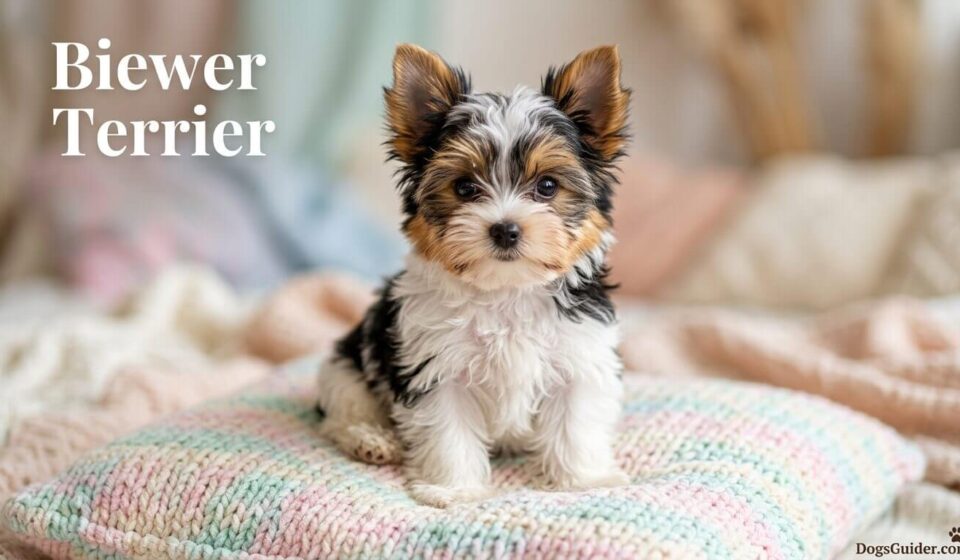
Introduction
Officially recognized by the American Kennel Club in 2021, the Biewer Terrier has quickly become a sought-after companion breed.
This guide covers everything you need to know about the Biewer Terrier price, temperament, grooming, health, and what to look for before bringing one home.
Biewer Terrier at a Glance

- Height: 7-11 inches at the shoulder
- Weight: 4-8 pounds
- Lifespan: 12-16 years
- Coat: Long, silky, tricolor (black, white, and gold/tan)
- Temperament: Lively, playful, affectionate, devoted
- Shedding: Minimal; considered a low-shedding breed
- Exercise needs: 30-60 minutes daily
- Good for: Families, singles, apartment living, allergy-conscious owners
- Average price: $1,500-$4,000, with show-quality lines reaching $7,000+
Biewer Terrier History and Origin
The Biewer Terrier gets its name from Werner and Gertrud Biewer, the German couple who developed the breed in 1984 in Hunsrück, Germany, after a genetically recessive puppy appeared in a litter of Yorkshire Terriers.
Because of this shared ancestry, the Biewer Terrier is closely related to the Yorkshire Terrier and shares many physical similarities, though breeders have worked to establish it as its own distinct breed.
The AKC officially recognized the Biewer Terrier in 2021, placing it in the Toy Group, and by 2026 it had climbed to roughly the 164th most popular breed in America, a notable achievement for such a young, rare breed.
Biewer Terrier Temperament and Personality
Despite its small size, the Biewer Terrier has a big personality. Expect a companion that is:
- Lively and playful, energetic for a toy breed, enjoying both playtime and cuddle time
- Fearless and devoted, deeply attached to its family, often described as a “Velcro dog”
- Social with people and pets; generally friendly with adults, older children, and other animals, including cats
- Watchful: will bark to alert you of strangers, though this tends to be their main “guard dog” trait
- Sensitive to being alone due to their attachment to family, Biewer Terriers can develop separation anxiety if left alone often, so daycare or companionship is worth considering for full-time working owners
Because of their small size, supervise playtime with toddlers and very young children, who could accidentally injure such a tiny dog during rough play.
How Much Does a Biewer Terrier Cost?
The Biewer Terrier’s price reflects its rarity and relatively recent AKC recognition. Expect the following ranges:
- Pet-quality puppies from a reputable breeder: $1,500-$3,500
- Puppies with desirable bloodlines or markings: $3,500-$5,000
- Show-quality Biewer Terriers: $4,000-$7,000, occasionally higher
Because the breed is still relatively rare, reputable Biewer Terrier breeders can be hard to find and often have waitlists. Be cautious of unusually low prices, since they often indicate a breeder skipping essential health and temperament screening.
Biewer Terrier Grooming Needs
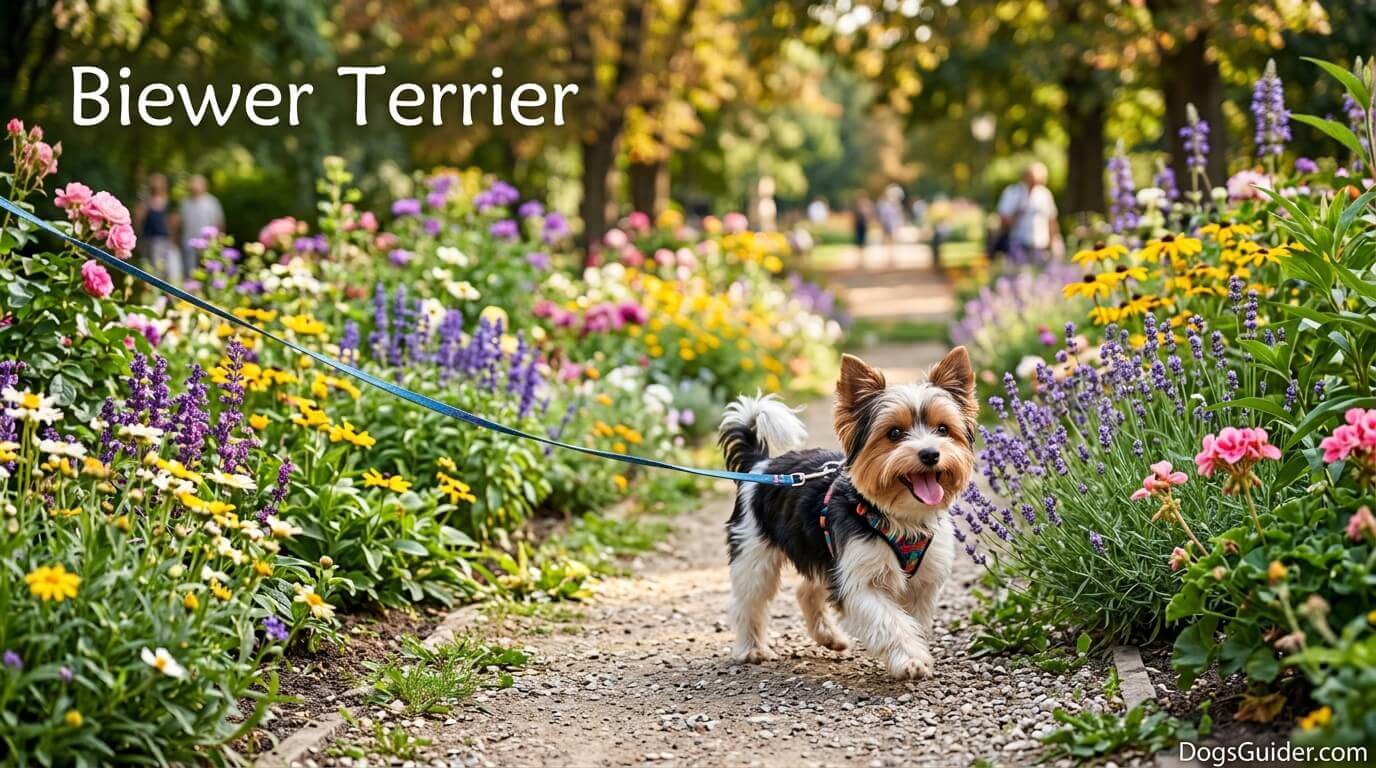
The Biewer Terrier’s signature long, silky coat is one of its most striking features and one of its higher-maintenance ones:
- Daily brushing is recommended to prevent tangles and mats in the long coat
- Regular bathing every 2-4 weeks keeps the coat clean and healthy
- Professional grooming every 6-8 weeks helps maintain coat length and shape
- Low shedding makes the Biewer Terrier a popular pick among allergy-conscious owners, though no breed is completely allergen-free
- Regular ear and dental care: Like many toy breeds, dental hygiene needs consistent attention to prevent early tooth issues
Biewer Terrier Exercise and Training
Despite their tiny size, Biewer Terriers are surprisingly energetic and need 30-60 minutes of daily activity, whether through walks, indoor play, or interactive toys.
Training requires consistency and patience. Biewer Terriers are smart and eager to please, but like many toy breeds, they can develop small-dog stubbornness if training isn’t started early.
Positive reinforcement, short training sessions, and early socialization work best.
Biewer Terrier Health Considerations
The Biewer Terrier is generally a healthy breed, but as with any purebred, certain conditions are worth watching for:
- Progressive retinal atrophy (PRA), an inherited eye condition that can lead to vision loss
- Primary lens luxation, a genetic eye condition affecting lens stability
- Syringomyelia: a neurological condition that can affect small toy breeds with similar skull structures to the Yorkshire Terrier
- Dental issues: Like most toy breeds, Biewer Terriers are prone to early dental problems without regular care
- Patellar luxation is a common small-breed joint condition affecting the kneecap
Ask any breeder for documented genetic and health screenings covering these conditions before committing to a puppy.
What to Look for in a Reputable Biewer Terrier Breeder

- Health and genetic testing on both parent dogs, particularly for eye conditions and syringomyelia
- Willingness to show the puppy with its mother, in person or via live video
- A written health guarantee with clear terms
- AKC registration documentation, if buying a purebred, registered Biewer Terrier
- No pressure tactics: reputable breeders don’t rush buyers into a same-day deposit
Because Biewer Terriers are still relatively rare and in high demand, beware of sellers advertising suspiciously low prices or claiming puppies are “always available” from multiple litters, a sign of high-volume breeding rather than a small, careful program.
Is a Biewer Terrier Right for You?
The Biewer Terrier is an excellent choice for owners who want an affectionate, low-shedding companion with plenty of personality in a small package. It suits families with older children, singles, and apartment dwellers alike.
However, because of its attachment to family and tendency toward separation anxiety, the Biewer Terrier may not be the best fit for owners who are away from home for long stretches without companionship arrangements in place.
Final Thoughts
The Biewer Terrier brings together a striking silky coat, a big personality, and a devoted temperament in one of the newer additions to the AKC’s Toy Group.
Because the breed is still relatively rare, finding a reputable, health-tested breeder takes a bit more research, but for owners willing to put in the effort, the Biewer Terrier makes a loyal, low-shedding companion worth the wait.
FAQs
1. How much does a Biewer Terrier cost?
A Biewer Terrier typically costs between $1,500 and $4,000 from a reputable breeder, with show-quality lines sometimes reaching $7,000 or more due to the breed’s rarity.
2. Is a Biewer Terrier the same as a Yorkshire Terrier?
No, though they’re closely related. The Biewer Terrier originated from a genetic mutation within a Yorkshire Terrier litter in 1984 and has since been developed into its own distinct, AKC-recognized breed with a signature tricolor coat.
3. Are Biewer Terriers hypoallergenic?
Biewer Terriers shed very little, making them a popular choice for allergy-conscious owners, though no dog breed is completely allergen-free.
4. How much grooming does a Biewer Terrier need?
Biewer Terriers need daily brushing to prevent tangles in their long, silky coat, along with regular bathing and professional grooming every 6-8 weeks.
5. Are Biewer Terriers good with kids and other pets?
Yes, generally. Biewer Terriers get along well with adults, older children, and other pets, including cats, though playtime with toddlers should be supervised due to the breed’s small size.
6. How much exercise does a Biewer Terrier need?
Despite their tiny size, Biewer Terriers need 30-60 minutes of daily activity, including walks and interactive play, to stay happy and well-behaved.

Sarah Mitchell has been raising French Bulldogs for over 9 years in Austin, Texas. After adopting her first Frenchie, Biscuit, she became passionate about helping new owners navigate the unique needs of the breed from breathing care to diet and heat safety. Sarah has worked closely with local veterinarians and attended the AKC National Championship three times as a breed enthusiast. Her guides focus on practical, real-world advice for American Frenchie owners.


[…] all the hairless dog breeds, only four are currently recognized by the American Kennel Club: the American Hairless Terrier, […]
[…] Basset Hound puppies descend from the St. Hubert Hound, a French scent hound breed dating back centuries. “Basset” comes from the French word “bas,” meaning low, referring to the breed’s short-legged, low-to-the-ground build, a trait originally bred to let hunters on foot keep pace with the dog while tracking small game by scent. […]