
French Bulldog Dental Care: Brushing, Chews, Vet Tips
Introduction
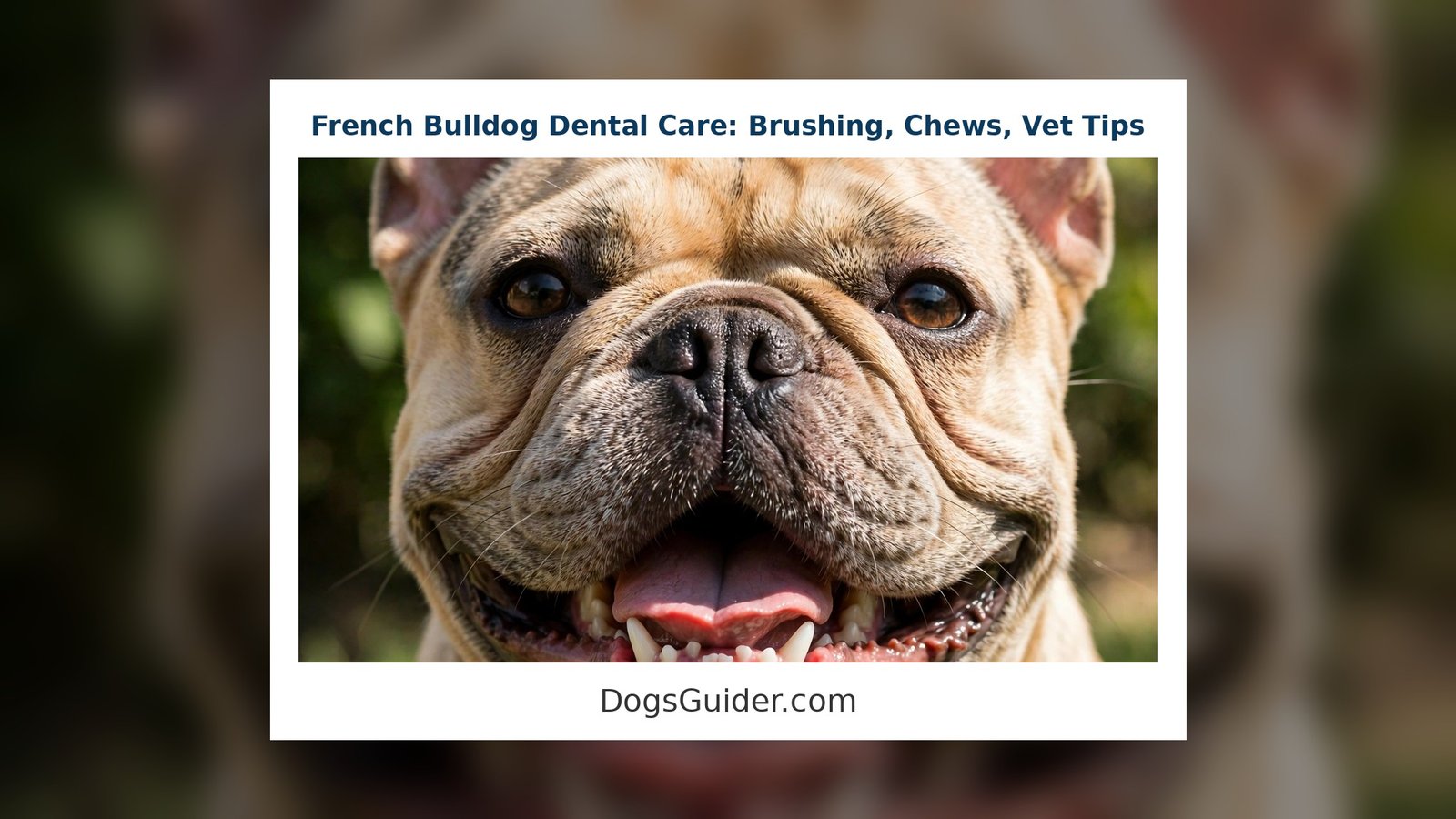
Good french bulldog dental care matters more for this breed than for most dogs, because forty two adult teeth must fit into a short, crowded jaw. Bad breath is often the first warning sign, so read our article on French Bulldog bad breath first.
That crowding traps food and plaque in places a toothbrush struggles to reach, so gum disease can start early and stay hidden.
The good news is that a simple home routine prevents most of it. Daily brushing, the right chews, and a yearly vet dental check keep most Frenchie mouths healthy for life, and this guide shows you each step.
This guide covers brushing, chews, vet cleanings, and the warning signs to watch for at every age.
Quick Answer: Brush your French Bulldog teeth daily with dog toothpaste and a soft brush, offer VOHC accepted chews, and book a vet dental check once a year. Crowded Frenchie teeth trap plaque fast, so home care plus vet checks beat any single product.
Start slowly, reward calm cooperation, and never use human toothpaste, because it can contain xylitol, which is toxic to dogs.
Why Frenchie Mouths Need Extra Care
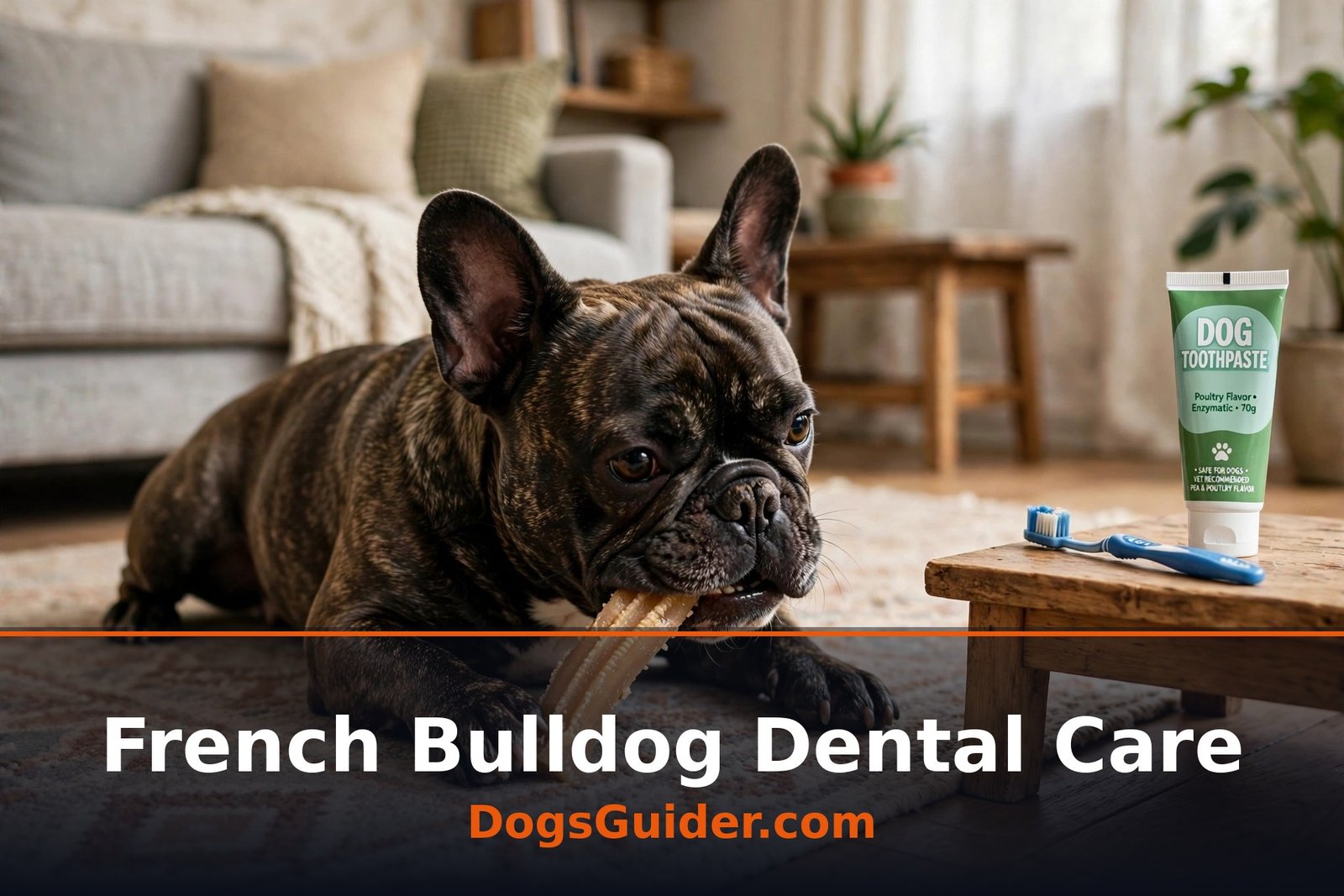
French Bulldogs have the same forty two adult teeth as other dogs, but in a much shorter jaw. Teeth crowd, rotate, and overlap, which creates tight gaps where food and bacteria collect.
That trapped plaque hardens into tartar within days if it is not removed. Tartar irritates the gums, which is called gingivitis, and over time the infection can reach the tooth roots and the jaw bone.
Dental disease is the most common health problem in adult dogs, and most dogs show some signs by middle age. Frenchies face it earlier than average because of their mouth shape, not because owners care less.
Signs of Dental Trouble
Bad breath that arrives and stays is the most common early sign. A healthy dog mouth has a mild smell, so a strong, sour, or rotten smell that lasts more than a few days deserves attention.
Red or bleeding gums are another warning sign. Healthy gums are pink and firm, while inflamed gums look red, swollen, and may bleed when your dog chews a toy.
Watch for yellow brown tartar along the gum line, especially on the big back teeth and the canine teeth. Dropping food, chewing on one side, or pawing at the mouth also suggest pain.
A sudden preference for soft food, or a dog that stops chewing hard treats, often means a sore tooth. Dogs rarely cry about dental pain, so behaviour changes are the clue to look for.
How to Brush Your Frenchie Teeth
Brushing is the single most effective home care habit, and daily brushing beats weekly brushing by a wide margin. Even a few times a week helps, so start with what you can manage and build up.
Choose a small soft toothbrush or a finger brush, plus a dog toothpaste in a flavour your dog likes. Never use human toothpaste, because many brands contain xylitol, which is toxic to dogs.
Start by letting your puppy or adult dog lick toothpaste from your finger. Then lift the lip for a few seconds, touch the outer surfaces of a few teeth, and reward calm behaviour at once.
Build up slowly over a week or two. Brush the outer surfaces of the teeth with small circles, focusing on the canine teeth and the big back teeth, where tartar collects fastest.
Thirty seconds a side is enough once your dog accepts brushing. You do not need to brush the inner surfaces well, because the tongue cleans them, and forcing the mouth open only creates stress.
Puppy Teeth and Teething
Puppies grow about twenty eight baby teeth, and they start losing them at around three to five months old. Adult teeth are usually fully in by about seven months.
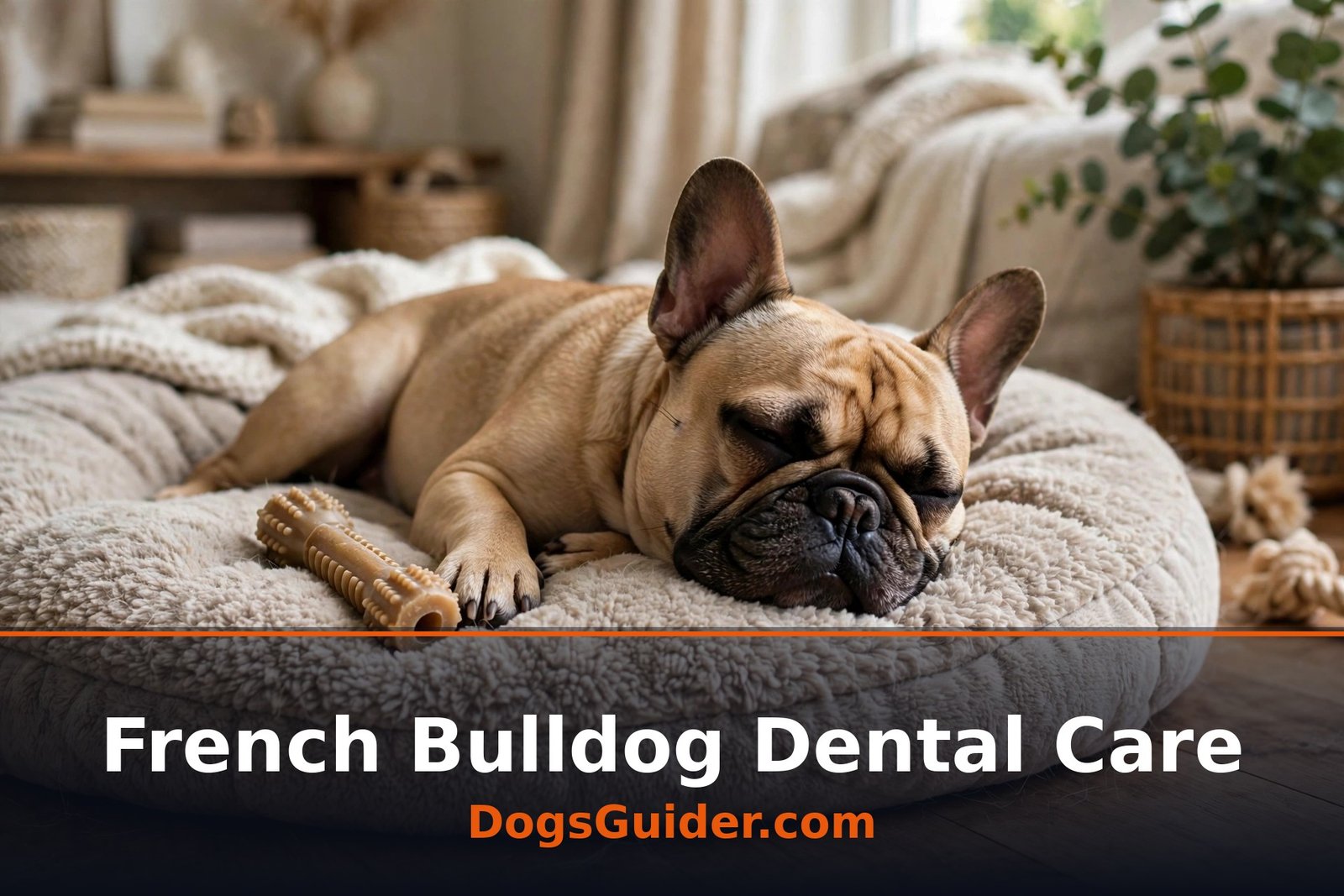
Teething puppies chew more, drool more, and may have sore gums. Offer safe chew toys and a cool, damp cloth to soothe the gums, and never let a puppy chew anything harder than its teeth, such as real bones or antlers.
Some baby teeth do not fall out on their own, and the adult tooth grows in beside them. This is called a retained baby tooth, and your vet should check it, because the crowded gap traps plaque.
For the full teething timeline and relief tips, read our guide on French Bulldog teething. It covers what is normal at each age and when to call the vet.
Chews, Diets, and Dental Products
Dental chews help when they are used daily and sized correctly for your dog. Look for the Veterinary Oral Health Council seal, which marks products tested for plaque or tartar control.
Choose a chew that fits your Frenchie weight and watch your dog while it chews. A chew that is too hard can fracture a tooth, and a chew that is too small can be swallowed whole, so size matters.
Dental diets use larger kibble that scrapes the tooth as it breaks, which can reduce tartar. Mixing a dental diet with other food reduces its effect, so ask your vet before switching foods.
What the Vet Does at a Dental Check
A vet dental check looks beyond what you can see. The vet checks gum pockets, loose teeth, and hidden disease below the gum line, where most damage actually happens.
A professional cleaning needs general anaesthesia, because the vet must clean below the gum line and take X rays. Anaesthesia free cleaning only polishes the visible tooth surface and misses the real disease.
Your vet will talk through the anaesthetic plan, pain relief, and monitoring for your individual dog. Frenchies need extra airway care under anaesthesia, so choose a vet experienced with flat faced breeds.
Ask about dental X rays when disease is suspected. Many painful problems hide under the gum line, and an X ray is often the only way to find a cracked root or a deep pocket.
The Puppy Dental Timeline
A clear timeline helps you build the habit at the right age. Start gentle handling early, so brushing feels normal long before adult teeth arrive.
| Age | What to do | Why it matters |
|---|---|---|
| 8 to 12 weeks | Lift lips, touch gums with a finger | Builds trust before any brush appears |
| 12 to 16 weeks | Introduce a finger brush and dog toothpaste | Puppy learns the taste and the feeling early |
| 3 to 5 months | Watch baby teeth fall out, offer safe chews | Spots retained baby teeth before they cause crowding |
| 6 to 7 months | Daily brushing as adult teeth settle in | Adult teeth need protection from the day they erupt |
| 7 months and older | Brushing plus chews plus yearly vet checks | The lifelong routine that prevents most gum disease |
Dental Care for Senior French Bulldogs
Older Frenchies often have some tartar and gum recession, even with good home care. That does not mean you failed, it means the routine needs a vet review and perhaps a professional clean.
Senior dogs may lose teeth over time, and most adapt well to softened food. Keep brushing the teeth that remain, and ask your vet about pain relief if chewing seems uncomfortable.
A Weekly Home Dental Checklist
Use this short checklist once a week to catch problems early. A two minute check is enough, and it makes vet visits far more useful because you can describe changes clearly.
| Check | How to do it | When to call the vet |
|---|---|---|
| Breath | Smell your dog breath from a short distance | Strong smell lasting more than a few days |
| Gums | Lift the lip and look for pink, firm gums | Red, swollen, or bleeding gums |
| Tartar | Look along the gum line for yellow brown build up | Heavy tartar, especially near the back teeth |
| Chewing | Watch your dog eat a hard treat | Dropping food, chewing one side, or refusing hard food |
| Face | Feel gently for swelling under the eyes or jaw | Any swelling, discharge, or sudden face pain |
Mistakes That Harm Frenchie Teeth
The most common mistake is skipping brushing because a dog dislikes it. Start slowly with finger touches and treats, and most dogs accept brushing within a week or two of patient practice.
Hard chews are another risk. Real bones, antlers, and hard nylon can fracture teeth, and a broken tooth is painful and expensive to fix, so choose chews that give slightly under pressure.
Ignoring bad breath is a mistake too. Owners often treat it as normal for the breed, but persistent bad breath usually means gum disease, and early treatment is far simpler than late treatment.
Finally, do not rely on kibble to clean teeth. Dry food alone does not improve oral health, so brushing and vet checks remain the core of any dental plan.
Dental Care as Part of Grooming
Dental care fits naturally into a grooming routine. Check teeth and gums during the same weekly session as ear cleaning, nail trims, and wrinkle care, so nothing gets forgotten.
Keep your grooming kit together, with the toothbrush, toothpaste, and chews in one place. A routine that is easy to start is a routine that actually happens.
For the full routine, read our guide on how to groom a French Bulldog. It covers the weekly schedule that keeps skin, ears, nails, and teeth healthy together.
The Bottom Line
French Bulldog dental care is simple but not optional, because crowded teeth trap plaque fast. Brush daily with dog toothpaste, offer VOHC accepted chews, and book a vet dental check once a year.
Watch for bad breath, red gums, and changes in chewing, and act early when you see them. A few minutes of home care a week protects your Frenchie from pain, tooth loss, and bigger health problems later.
References
- American Kennel Club, general guidance on dog dental care and breed health, https://www.akc.org/
- PetMD, general guidance on dog dental care, brushing, and gum disease, https://www.petmd.com/
- VCA Animal Hospitals, client education on dog dental care and cleanings, https://vcahospitals.com/
- Merck Veterinary Manual, owner guidance on dog dental disease and care, https://www.merckvetmanual.com/
FAQs
1. How often should I brush my French Bulldog teeth?
Brush daily if you can, because plaque starts forming within a day. If daily brushing is not possible, brush at least three times a week, since that still slows tartar and gum disease.
2. Can I use human toothpaste on my French Bulldog?
No, never use human toothpaste. Many brands contain xylitol, which is toxic to dogs and can cause low blood sugar, seizures, and liver failure. Use a dog toothpaste from your vet or a pet shop.
3. Are dental chews enough without brushing?
No, dental chews help but they do not replace brushing. Brushing is the only home method that reliably removes plaque from the tooth surface, while chews are a useful extra alongside it.
4. What is the VOHC seal on dental products?
The Veterinary Oral Health Council reviews evidence for plaque or tartar control and awards its Seal of Acceptance to products that pass. Choose VOHC accepted chews and diets when you can.
5. How much does a professional dog teeth cleaning cost?
Cost varies by area, vet, and how much work is needed, so ask your own vet for a quote. A cleaning under anaesthesia with X rays costs more, but it treats disease below the gum line.
6. Do French Bulldogs lose teeth as they get older?
Some older Frenchies lose teeth, often because of gum disease that went untreated. Good home care and yearly vet checks slow this down, and most dogs adapt well to softer food if teeth are lost.
7. Is anaesthesia safe for a French Bulldog dental cleaning?
Anaesthesia carries extra risk for flat faced breeds, but vets manage it daily with careful monitoring and airway care. Ask your vet about their experience with brachycephalic dogs and the monitoring plan before the procedure.

Sarah Mitchell has been raising French Bulldogs for over 9 years in Austin, Texas. After adopting her first Frenchie, Biscuit, she became passionate about helping new owners navigate the unique needs of the breed from breathing care to diet and heat safety. Sarah has worked closely with local veterinarians and attended the AKC National Championship three times as a breed enthusiast. Her guides focus on practical, real-world advice for American Frenchie owners.