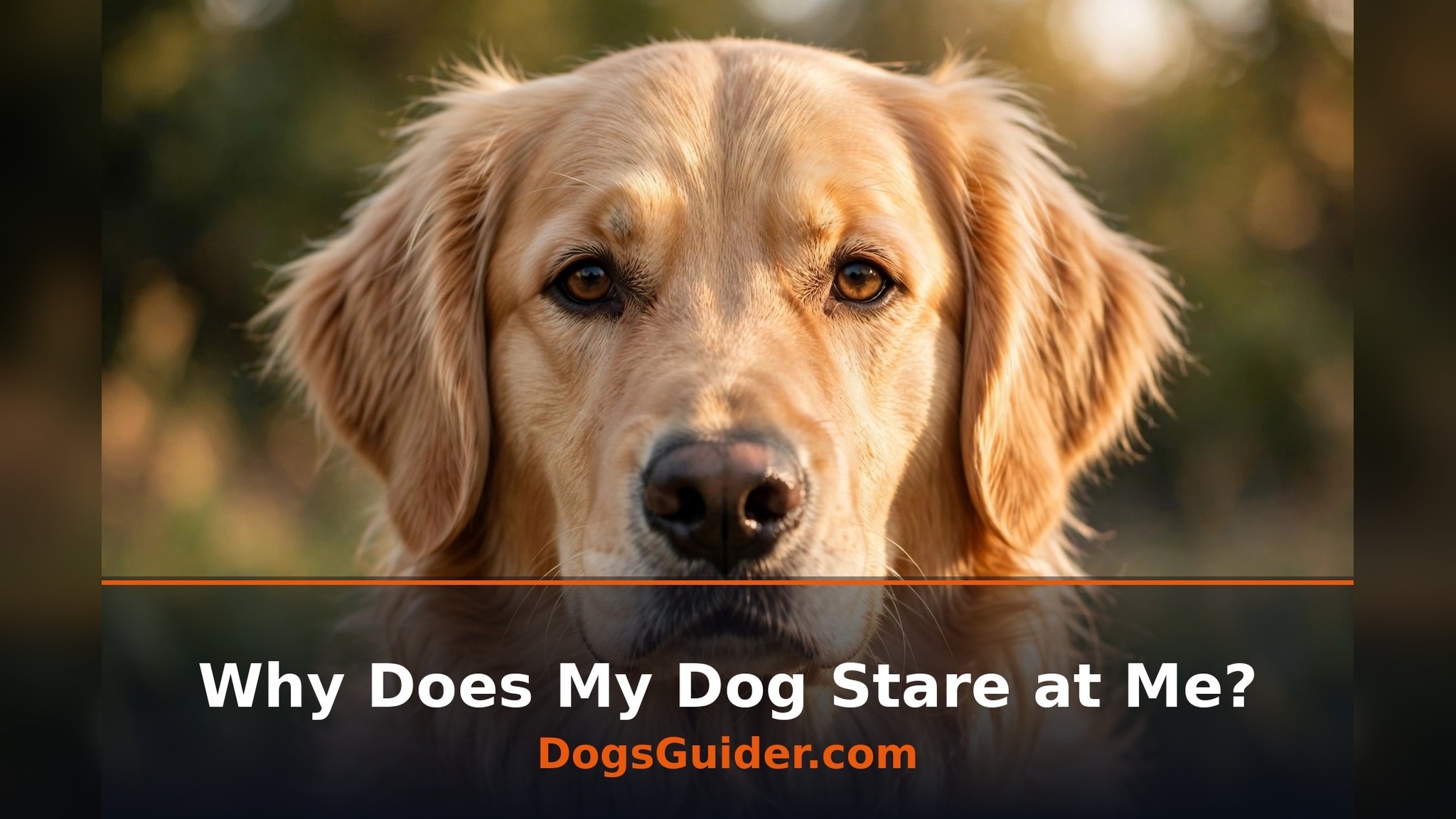
Why Does My Dog Stare at Me? The Real Reasons Behind the Look
Introduction
Almost every owner has asked, why does my dog stare at me from across the room? Most staring is simple communication, and it is often about food, walks, or attention. Dogs with separation anxiety can also stare as part of a wider anxious pattern.
Quick Answer: Dogs stare at their owners mainly to communicate a need, ask for something, show affection, or watch for cues. A soft stare with a relaxed body is usually friendly. A hard, frozen stare with a stiff body is different, and it can be a warning sign that needs space and professional help.
Staring Is How Dogs Talk to Us
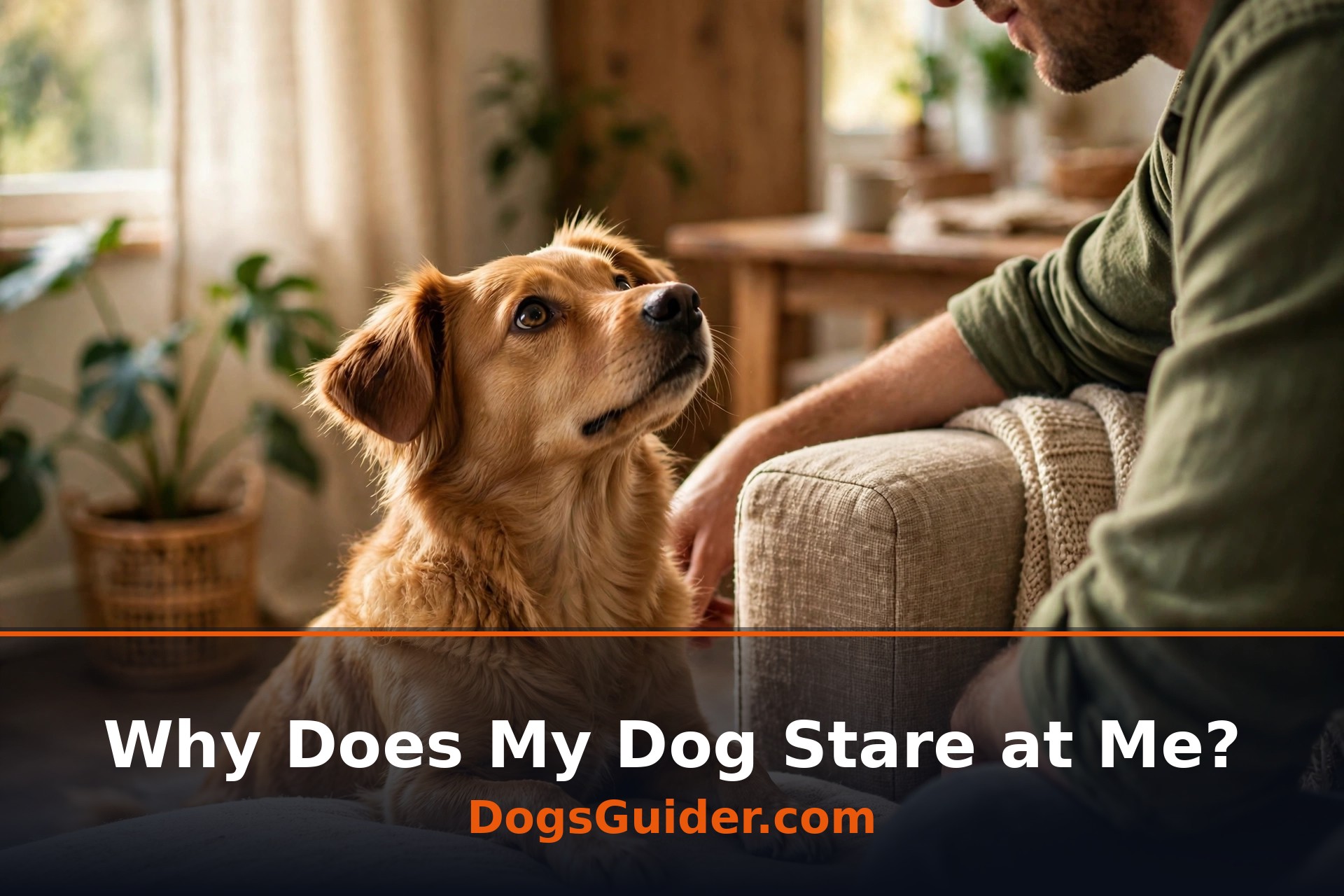
Dogs cannot use words, so they rely heavily on their eyes. Eye contact is one of the main tools they use with people.
Unlike many animals, domestic dogs actively seek eye contact with humans. They learn early that looking at a person gets results.
That makes staring normal, everyday behavior. The meaning sits in the context, the body language, and what usually happens next.
Read the whole dog, not just the eyes. Ears, tail, posture, and movement turn one stare into very different messages.
Reason 1: Your Dog Wants Something
This is the most common reason of all. Your dog stares because it wants food, a walk, a toy, or the door opened.
The stare often happens at predictable moments. Kitchen time, leash time, and the hour before dinner are classic staring appointments.
Dogs are excellent pattern spotters. If staring at you near the stove has ever produced a snack, the behavior gets stored and repeated.
Check the clock and the setting first. A hopeful stare beside an empty bowl usually translates itself.
Reason 2: It Is Learned Behavior
Dogs repeat what works. Staring works remarkably well on humans, so most dogs keep doing it.
Owners respond to a stare with eye contact, talking, petting, or treats. Every response teaches the dog that staring pays.
Puppies learn this especially fast. One rewarded stare at the dinner table can build a habit that lasts for years.
If the staring feels constant, look honestly at the reward pattern. You may be training it without meaning to.
Reason 3: Your Dog Is Reading You
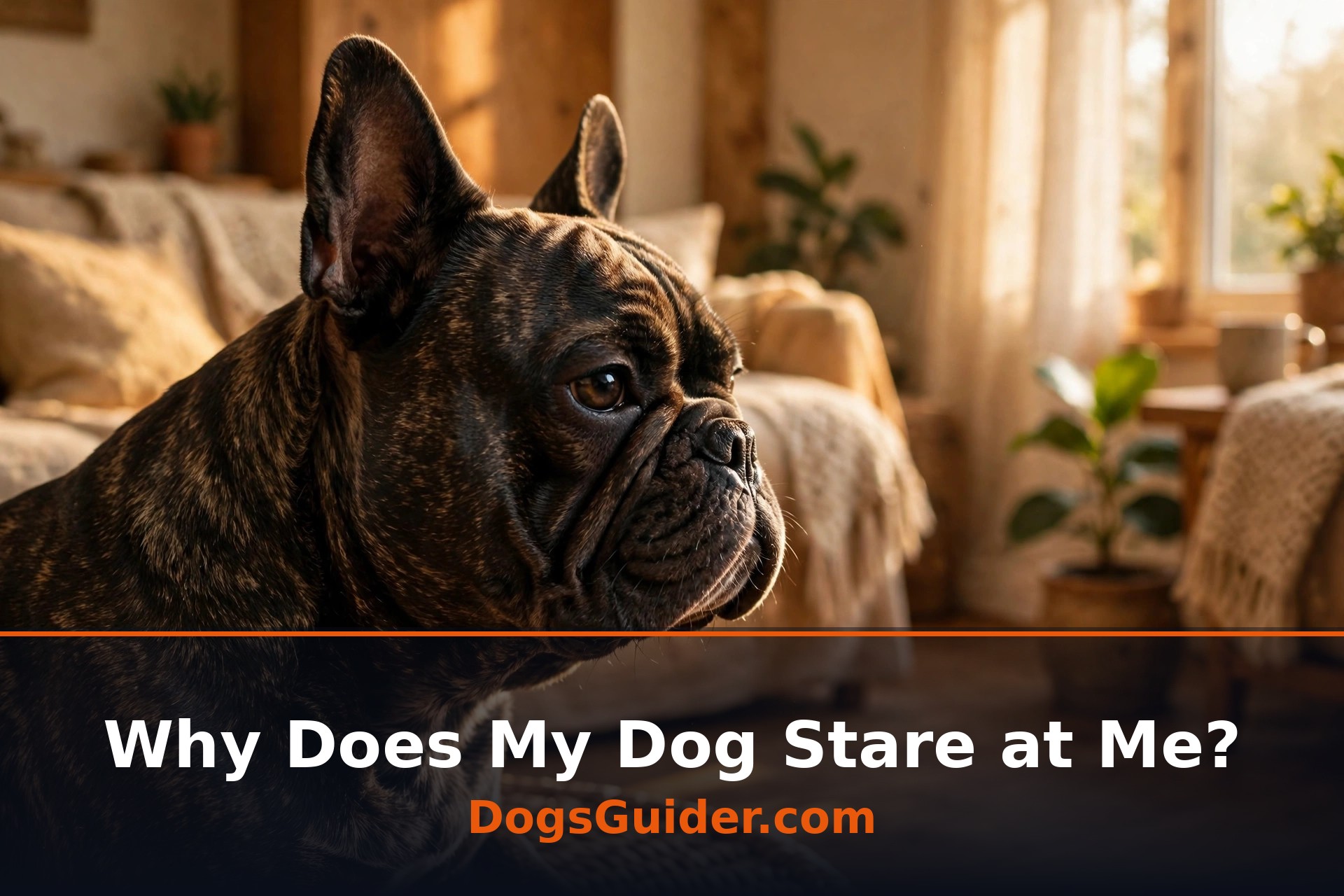
Dogs watch people for information. Your face, hands, and movements tell them what is about to happen.
A dog staring during training is usually focused, not rude. It is waiting for the next cue, marker word, or reward.
Dogs also watch before walks, car rides, and meals. They are reading your routine for the signals that predict good things.
This kind of stare comes with an alert, engaged posture. Ears are up, the body is loose, and the dog is ready to move.
Reason 4: Affection and Bonding
A soft, relaxed gaze often means your dog simply likes you. Many dogs hold gentle eye contact with people they trust.
Researchers have linked mutual gazing between dogs and owners with bonding hormones. In plain terms, looking at each other can feel good to both sides.
The affection stare usually arrives during quiet moments. Think of a dog resting nearby, watching you with slow blinks and a loose body.
Respond with calm attention if you enjoy it. Gentle talking or stroking reinforces that relaxed connection.
Reason 5: Begging at the Table
Meal times produce the most intense stares in many homes. Your dog is watching every forkful with professional concentration.
This is hope, plain and simple. Table scraps, dropped crumbs, and past generosity keep the hope alive.
Staring at the table is not a nutritional need. A fed dog begs because begging has a history of paying off.
If you do share a bite, share only foods that are safe for dogs. Our guide on dogs and turkey explains one common table food in detail.
The cleaner fix is a rule: no feeding from the table, ever. Give treats in the dog’s own bowl, away from your plate.
Reason 6: Your Dog Needs Something Practical
Some stares are requests with a deadline. The water bowl is empty, the bladder is full, or the dog feels unwell.
A dog that stares, then walks to the door, is usually making a polite toilet request. A dog that stares and whines by its bowl is asking for water or food.
Learn your dog’s request patterns. Most dogs develop a small set of clear signals, and staring is step one of each.
When a stare seems urgent or unusual, run a quick checklist. Water, toilet, comfort, and pain cover most sudden staring.
Reason 7: Anxiety or Uncertainty
Anxious dogs often watch their owners constantly. The stare is a way of monitoring the person they depend on.
Signs that point to anxiety include pacing, panting, lip licking, and following you from room to room. Staring rarely travels alone.
Repeated paw licking is another stress signal that often appears in the same dogs. Together, these signs deserve attention.
An anxious stare tends to have a worried expression. You may see the whites of the eyes, a furrowed brow, and a tense mouth.
If this pattern is new or growing, talk to your vet. Anxiety has medical and behavioral causes, and both can be helped.
Reason 8: Aging or Health Changes
Senior dogs sometimes stare at walls, corners, or their owners for long stretches. This can be linked with canine cognitive dysfunction.
Other signs include disrupted sleep, house soiling, and getting stuck in corners. Any one of them is a reason for a vet check.
Pain can also change staring behavior. A dog in discomfort may stare at its owner as a quiet request for help.
Vision or hearing loss adds to the picture. Dogs that cannot track the room well may fix their gaze on the person they trust.
Never dismiss a sudden behavior change in an older dog. A vet visit rules out treatable causes first.
Reason 9: The Hard Stare, a Warning Sign
One type of stare is genuinely different. A hard stare is intense, fixed, and paired with a stiff, frozen body.
You may also see a closed mouth, a high and still tail, and the dog leaning forward. The whites of the eyes may show at the edges.
This stare often appears around food, toys, or resting places. It is a guarding signal, and it means the dog feels seriously uncomfortable.
Do not stare back, reach in, or punish the dog. Calmly back away, give space, and let the tension drop.
Repeated hard staring needs a qualified behavior professional. Ask your vet for a referral before the pattern escalates into a snap or bite.
Soft Stare vs Hard Stare: How to Tell
The eyes alone never tell the full story. Use the comparison below to read the whole picture before you react.
| Signal | Soft, friendly stare | Hard, warning stare |
|---|---|---|
| Body | Loose, wiggly, relaxed | Stiff, frozen, leaning forward |
| Eyes | Soft, blinking, squinting | Fixed, unblinking, intense |
| Mouth | Open, relaxed, tongue out | Closed, lips tight or pulled |
| Tail | Low or mid, wagging loosely | High, still, or wagging stiffly |
| Context | Resting, playing, training | Guarding food, toys, or space |
| Your move | Relax and engage calmly | Give space, do not challenge |
If you are ever unsure which stare you are seeing, choose caution. Giving space is always a safe response.
What Should You Do When Your Dog Stares?
Start by reading the context. Where are you, what time is it, and what does your dog usually want in this moment?
Meet genuine needs promptly. Fresh water, a toilet break, and a settled routine remove most request based staring.
Reward the behavior you want. If your dog stares calmly during training, that focus is gold, so mark it and reward it.
Avoid rewarding demanding stares with food every time. A dog that learns staring opens the treat jar will stare professionally.
Offer an alternative instead. A chew, a sniffing game, or a short training session gives those watchful eyes a job.
When to See a Vet or Behaviorist
Most staring is harmless communication. Some patterns deserve professional eyes sooner rather than later.
Book a vet visit if staring is new, sudden, or paired with appetite, sleep, or toilet changes. Rule out pain and illness first.
Seek help promptly if your dog stares blankly, gets stuck in corners, or seems disoriented. These can be neurological or cognitive signs.
Contact a certified behavior professional for guarding stares, growling, or snapping. Early help is safer and usually more successful.
Also raise constant, anxious watching at your next vet visit. Clingy staring with following and distress is a recognized anxiety pattern.
The Bottom Line
Dogs stare at us because eyes are their language. Most stares mean a want, a need, a learned habit, or simple affection, and the body language around the stare tells you which one.
Learn the difference between a soft gaze and a hard stare. Answer real needs, reward calm focus, and give space to warning signs, and that famous dog stare becomes easy to read.
References
- American Kennel Club (AKC), guidance on dog body language and eye contact: https://www.akc.org/
- PetMD, guidance on why dogs stare and when staring is a concern: https://www.petmd.com/
- RSPCA, advice on understanding dog body language and stress signals: https://www.rspca.org.uk/
- VCA Animal Hospitals, client education on canine behavior and anxiety: https://vcahospitals.com/
FAQs
1. Why does my dog stare at me while I eat?
Your dog is begging, hopefully and patiently. Past scraps or dropped food taught it that watching you eat can pay off. Keep a no feeding from the table rule, and offer any treat later, in its own bowl.
2. Why does my dog stare at me when I sleep?
Dogs often watch sleeping owners out of habit, affection, or anticipation of the morning routine. It can also mean your dog needs the toilet or breakfast. If the behavior is new and restless, mention it to your vet.
3. Is it bad if my dog stares at me all the time?
Constant staring with following, pacing, or panting can point to anxiety rather than affection. It is worth discussing with your vet, especially if the pattern is new. Calm, relaxed watching during rest time is usually harmless.
4. Why does my dog stare at me and whine?
Whining adds urgency to the message. Your dog likely needs something specific, such as the toilet, water, food, or comfort. Run through the basic needs first, and see a vet if whining is paired with pain signs.
5. Should I stare back at my dog?
Gentle, soft eye contact with a relaxed dog is fine and can strengthen your bond. Never stare down a tense dog, though. With a hard, stiff stare, look away calmly and give the dog space instead.
6. Why does my dog stare at me after pooping or on walks?
Many dogs watch their owners in vulnerable moments, looking for reassurance and protection. It is a normal trust behavior. Calm praise and a steady routine are all the response it needs.
7. Why does my senior dog stare at walls or at me for long periods?
Long, blank staring in an older dog can be a sign of cognitive decline, pain, or vision changes. Book a vet check rather than assuming it is just age, because several causes can be treated or managed.

Sarah Mitchell has been raising French Bulldogs for over 9 years in Austin, Texas. After adopting her first Frenchie, Biscuit, she became passionate about helping new owners navigate the unique needs of the breed from breathing care to diet and heat safety. Sarah has worked closely with local veterinarians and attended the AKC National Championship three times as a breed enthusiast. Her guides focus on practical, real-world advice for American Frenchie owners.