

Introduction
Finding a puddle of yellow vomit on the floor is alarming. If you are dealing with dogs puking up yellow, you probably want three answers fast: what is it, is it serious, and what should I do now? In most cases, the yellow color is bile, a digestive fluid, and a single episode in an otherwise bright, hungry dog is often minor.
But repeated vomiting or other symptoms can signal a real problem. This guide explains the causes, safe home care, and the clear warning signs that mean you should call a vet.
Why Is My Dog Throwing Up Yellow?
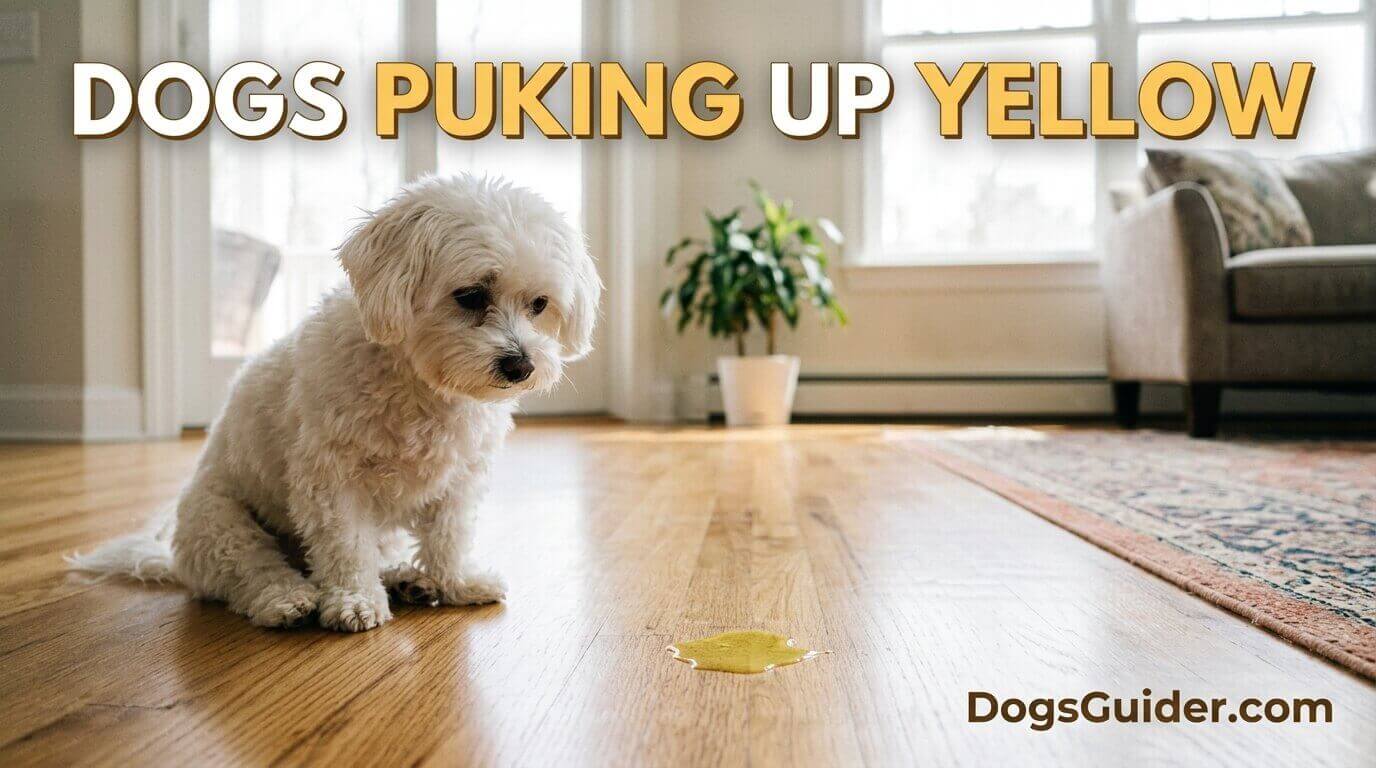
Yellow vomit is usually bile. The liver makes bile, and the gallbladder stores it to help digest fat. It normally flows into the small intestine.
When it travels backward into an empty stomach, it irritates the lining and can trigger vomiting. The result is a yellow or yellow-green liquid or foam.
The color alone does not tell you the cause. What matters is how often it happens, when it happens, and how your dog acts afterward.
Yellow Foam vs Yellow Bile
Yellow foam is usually a mix of bile, saliva, and stomach fluid. It looks frothy rather than watery. Both are common with an empty stomach.
If the vomit is clear or white foam, that can point to different causes, such as stomach irritation or kennel cough.
Common Causes of Dogs Puking Up Yellow
1. An Empty Stomach
This is the most common cause. If your dog goes many hours without food, stomach acid and bile build up and cause nausea.
It often happens late at night or early in the morning. Puppies and small breeds are more prone because they have less reserve between meals.
2. Bilious Vomiting Syndrome
Some Dogs Puking Up Yellow bile repeatedly in the early morning, usually before breakfast. This pattern is often called bilious vomiting syndrome.
Your vet can confirm it after ruling out other problems. Feeding a small meal late in the evening and a very early breakfast often helps.
3. Eating Something They Should Not
Garbage, table scraps, spoiled food, grass, or fatty foods can irritate the stomach. After a bout of vomiting, the stomach empties and bile appears.
4. Gastritis and Stomach Bugs
Inflammation of the stomach lining, viral infections, and food sensitivities can all cause vomiting, sometimes with diarrhea.
5. Pancreatitis
Inflammation of the pancreas often follows a fatty meal. Signs include repeated vomiting, belly pain, a hunched posture, low appetite, and lethargy. It needs veterinary care.
6. Intestinal Blockage
Swallowed toys, socks, bones, or corn cobs can block the digestive tract. Repeated vomiting, inability to keep water down, pain, and loss of appetite are serious signs. This is an emergency.
7. Parasites
Worms and other intestinal parasites can cause vomiting, especially in puppies.
8. Liver, Kidney, and Other Diseases
Chronic or recurring yellow vomiting can be linked to liver disease, kidney disease, inflammatory bowel disease, or hormone problems such as Addison’s disease. These need tests to diagnose.
9. Toxins and Medications
Poisonous plants, chemicals, human foods like grapes or xylitol, and some medications can cause vomiting. If you suspect poisoning, call a vet or poison hotline immediately.
When to Worry: Call Your Vet Right Away If
- Your dog vomits more than two or three times in a day, or keeps vomiting over several days
- The vomit contains blood or looks like coffee grounds
- Your dog is very tired, weak, or hard to wake
- You see a swollen, painful belly
- Your dog retches repeatedly, but nothing comes up
- Your dog cannot keep water down
- There is diarrhea, fever, or pale gums
- Your dog may have eaten something toxic or a foreign object
- The dog is a puppy, a senior, very small, or has an existing illness such as diabetes
Unproductive retching with a bloated belly can signal bloat, which is life-threatening. Go to an emergency vet immediately.
What to Do at Home After One Episode
If your adult dog vomited yellow once and is otherwise bright, alert, and acting normally, you can often start with simple home care.
- Remove food briefly. Many vets suggest resting the stomach for about 6 to 12 hours in healthy adult Dogs Puking Up Yellow. Do not fast puppies, toy breeds, seniors, or diabetic dogs without your vet’s advice.
- Offer small sips of water. Give a little at a time so your dog does not gulp and vomit again.
- Reintroduce bland food. Offer small portions of plain boiled chicken and rice. Increase gradually over a day or two.
- Return to normal food slowly. Mix bland food with the regular diet over two to three days.
- Watch closely. If vomiting returns or your dog seems worse, call your vet.
Do not give human anti-nausea or pain medication unless your vet tells you to. Some are dangerous for Dogs Puking Up Yellow.
How Vets Diagnose Yellow Vomiting
If the problem repeats, your vet may start with a physical exam and your dog’s feeding history. Depending on the findings, they may recommend bloodwork, a fecal test, X-rays, or ultrasound.
These help spot infections, pancreatitis, organ disease, and blockages. Bring notes about when the vomiting happens, what your dog ate, and whether it looks different each time.
How to Prevent Dogs Puking Up Yellow
- Feed on a schedule. Regular mealtimes keep the stomach from sitting empty too long.
- Split meals. Two or three smaller meals can help dogs prone to bile vomiting.
- Add a late snack. A small bedtime meal helps morning vomiters.
- Avoid fatty table scraps. Rich foods are a common pancreatitis trigger.
- Change foods slowly. Switch diets over seven to ten days.
- Keep hazards out of reach. Secure garbage, small toys, and toxic items.
- Stay on parasite prevention. Follow your vet’s deworming plan.
What Different Vomit Colors Can Mean
Looking closely at the vomit gives your vet useful clues. Take a photo if you can.
- Yellow or yellow-green: Usually bile from an empty stomach or irritation.
- Clear liquid: Often stomach fluid or swallowed water, sometimes from nausea.
- White foam: Saliva and stomach fluid, sometimes linked to acid or coughing conditions.
- Brown or chunky: May be partly digested food, or in rare cases something more serious. A strong fecal smell needs urgent attention.
- Red streaks or coffee-ground look: Blood. Call your vet the same day, or immediately if there is a lot.
- Bright green: Can be grass, but also bile or a toxin. Check what your dog ate.
Which Dogs Are Most at Risk?
Any dog can vomit bile, but some need extra caution. Puppies and toy breeds can become dehydrated or develop low blood sugar quickly. Senior dogs are more likely to have underlying kidney or liver problems.
Dogs Puking Up Yellow with diabetes, pancreatitis history, or chronic stomach issues should be seen sooner. If your dog fits one of these groups, do not wait to see if it passes.
How Vets Treat Dogs Puking Up Yellow
Treatment depends on the cause. Your vet may recommend:
- Anti-nausea medication to stop vomiting and let your dog eat comfortably.
- Stomach protectants or acid reducers if irritation is suspected.
- Fluids given under the skin or by IV for dehydration.
- A special diet, often low in fat and easy to digest.
- Surgery or endoscopy if a foreign object is blocking the gut.
- Deworming if parasites are found.
Follow your vet’s instructions exactly, and finish any prescribed medicine even if your dog seems better.
Keep a Vomiting Diary
If your dog vomits yellow bile more than once, track the details for a week. Write down the date and time, what the vomit looked like, what your dog ate the previous day, and any other symptoms.
Patterns, such as always vomiting at 5 a.m., can point straight to the cause and help your vet decide on tests or feeding changes.
FAQs
1. Why is my dog throwing up yellow foam?
It is usually bile mixed with saliva and stomach fluid, often from an empty stomach. If it happens repeatedly, see your vet.
2. Is it normal for a dog to puke yellow once?
A single episode in a healthy, active dog is often not serious. Watch for more vomiting, tiredness, or loss of appetite.
3. Why does my dog throw up yellow in the morning?
Long overnight gaps without food are a common reason. Feeding a late-evening snack and an earlier breakfast often helps.
4. What should I feed a dog that threw up yellow?
After a short rest, offer small amounts of plain boiled chicken and white rice, then return to normal food gradually.
5. Is yellow vomit an emergency?
Not always. It becomes urgent if your dog vomits repeatedly, has blood in the vomit, seems weak, or has a swollen belly.
6. Can pancreatitis cause yellow vomit?
Yes. Pancreatitis can cause bile-colored vomiting, belly pain, and lethargy, and it needs veterinary treatment.
7. How long can a dog go without eating after vomiting?
Healthy adults can usually rest the stomach for several hours, but puppies and small or sick dogs should not fast. Ask your vet.
8. Can I give my dog Pepto-Bismol or other human medicine?
Do not give human medications without veterinary advice, as some are unsafe for dogs.
This article is for general information and does not replace advice from your veterinarian.

Sarah Mitchell has been raising French Bulldogs for over 9 years in Austin, Texas. After adopting her first Frenchie, Biscuit, she became passionate about helping new owners navigate the unique needs of the breed from breathing care to diet and heat safety. Sarah has worked closely with local veterinarians and attended the AKC National Championship three times as a breed enthusiast. Her guides focus on practical, real-world advice for American Frenchie owners.


[…] Benadryl for Dogs is a brand name for diphenhydramine, an antihistamine. It blocks histamine, the chemical your body releases during an allergic reaction. […]