
Introduction
From across a dog park, a Siberian Husky vs Malamute can look like the same dog. Both have thick double coats, upright ears, and that unmistakable wolf-like Arctic look.
But once you know what to check, telling them apart takes about five seconds, and choosing between them for your own home takes a bit more thought.
Here’s everything you need to know, backed by what breed clubs and working-dog experts actually say.
The 5-Second Way to Tell Them Apart
Before diving into the full comparison, here’s the fastest visual check:
- Look at the tail: A Malamute’s tail curls up and over its back like a plume. A Husky’s tail hangs in a relaxed curve or brushes gently against its back; it doesn’t curl.
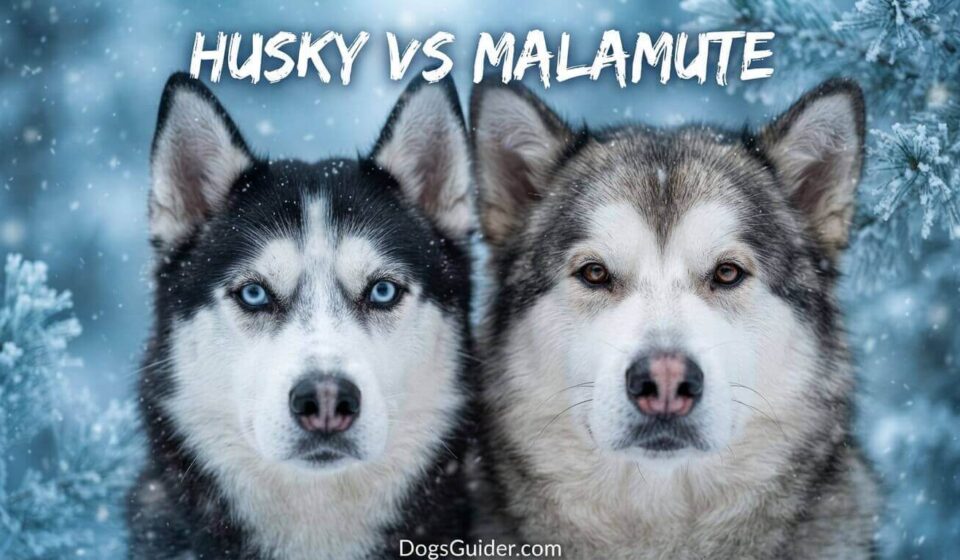
- Look at the eyes: If the dog has bright blue eyes (or one blue, one brown), it’s almost certainly a Husky vs Malamute are bred to have brown eyes; only blue eyes are a disqualifying fault in the Malamute breed standard.
- Look at the size: If the dog looks noticeably bulky and heavy-boned, it’s likely a Malamute. Huskies are leaner and more narrow-framed.
Origin and Original Job
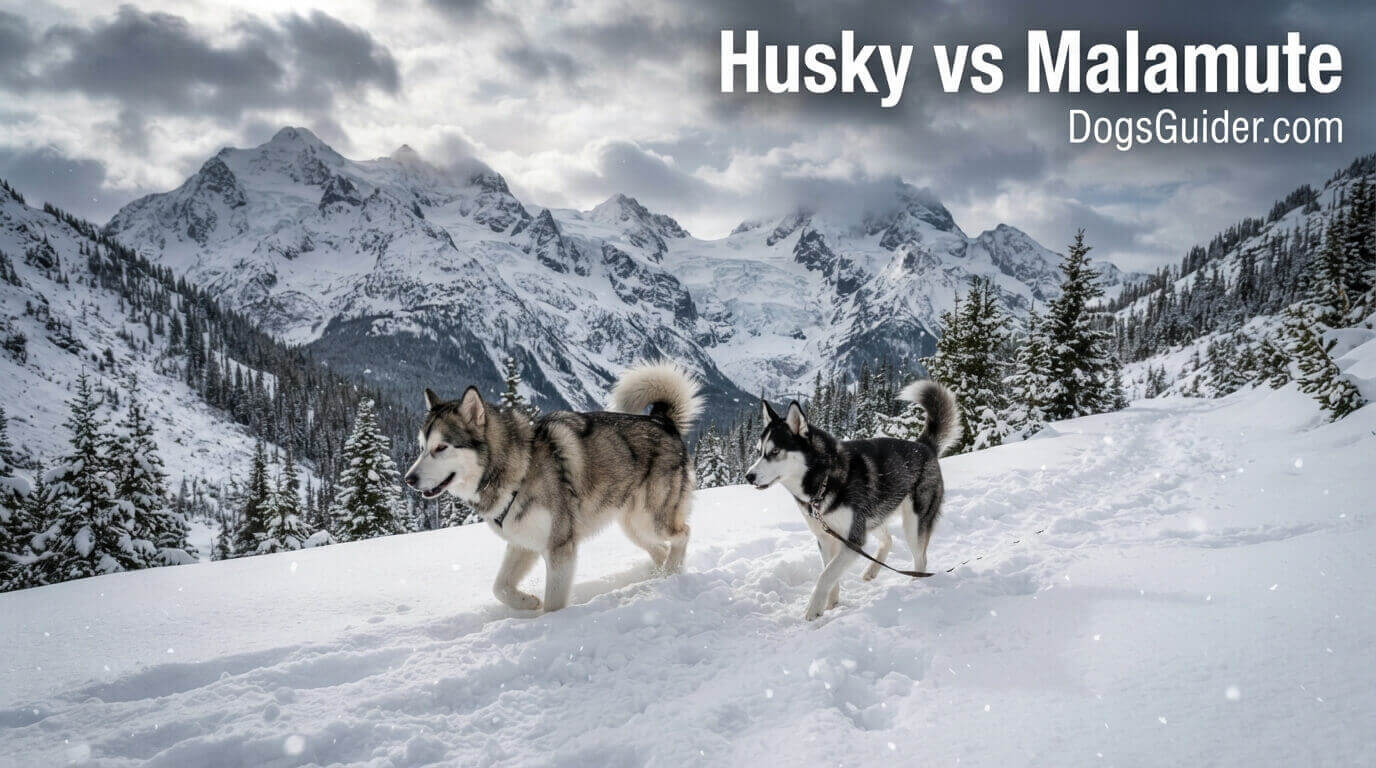
Both breeds descend from Arctic sled dogs, but they were bred for very different jobs. The Alaskan Malamute is the older of the two, developed by the Mahlemut Inuit people to haul heavy freight over long distances at a slow, steady pace; think of it as the breed’s original “heavy-duty truck.”
The Siberian Husky was bred later by the Chukchi people of Siberia for a different purpose: pulling lighter loads quickly over long distances, more like a marathon runner than a weightlifter.
That single distinction, power versus speed, explains almost every physical and behavioral difference between the two breeds today.
Size and Build
| Trait | Siberian Husky | Alaskan Malamute |
|---|---|---|
| Male weight | 45–60 lbs | 85+ lbs |
| Female weight | 35–50 lbs | 75+ lbs |
| Build | Lean, narrow, aerodynamic | Broad, heavy-boned, muscular |
| Bred for | Speed over long distances | Power for heavy loads |
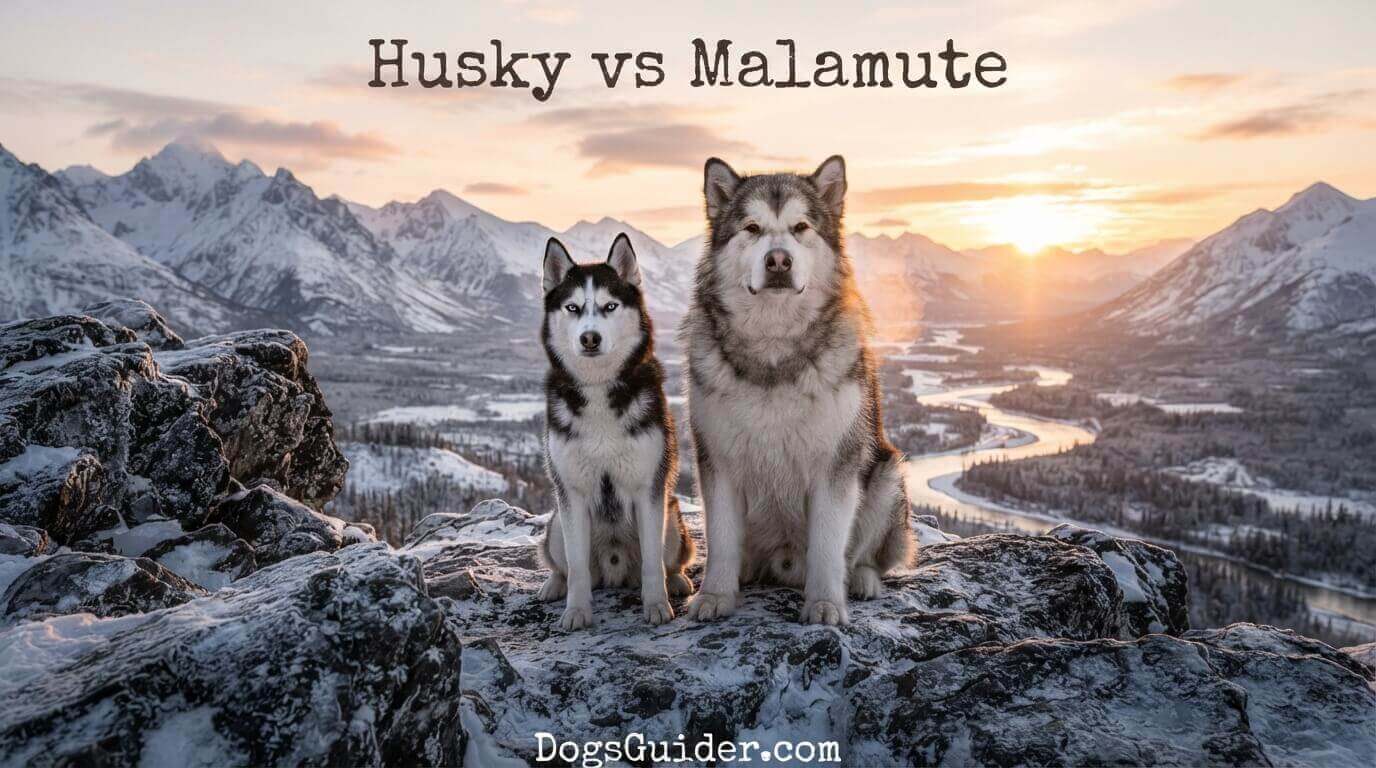
A Malamute can end up nearly twice the weight of a Husky, which matters more than most first-time owners expect. A bigger dog means more food, more space, and more strength to manage on a leash.
Coat, Face, and Eye Color
Both breeds have thick double coats built for freezing temperatures, but Husky vs Malamute typically carry a slightly longer, coarser coat than Huskies.
Facial markings are one of the clearest identifiers: Huskies often show a white “mask” or stripe running up the center of the forehead, while Malamutes tend to have a solid, unmarked face with a darker “cap” pattern on top of the head.
Eye color is the single most reliable giveaway. Huskies can have blue, brown, amber, or even one of each (“heterochromia”). Malamutes are only bred with brown eyes; the AKC breed standard actually disqualifies blue eyes in Malamutes shown for conformation.
Temperament: Which One Is Easier to Live With?
Both breeds are famously friendly toward people; neither makes a good guard dog, since both tend to greet strangers with enthusiasm rather than suspicion. The real differences show up in daily behavior:
- Huskies are more mischievous, vocal, and notorious escape artists. They’re highly social and don’t do well left alone for long stretches.
- Malamutes tend to be calmer indoors once properly exercised, more independent, and somewhat more aloof with strangers than Huskies.
Neither breed is “easier” across the board; it depends on what kind of energy you can match at home.
Exercise and Space Needs
Both breeds need serious daily exercise, but the type differs slightly. Huskies thrive on endurance activities: long runs, jogging alongside a bike, or multi-hour hikes.
Husky vs Malamute do best with strength-oriented activity like pulling, weight-carrying walks, or structured work, though they still need real exercise, not just a backyard.
Given their size and energy, neither breed is a realistic fit for a small apartment without a serious daily exercise commitment.
Grooming and Shedding
Both are heavy seasonal shedders; expect two major “coat blow” periods a year where daily brushing becomes non-negotiable.
Malamutes, with their longer coat, generally require slightly more grooming time than Huskies, though neither breed is low-maintenance in this department.
Which One Actually Fits Your Lifestyle?
- Choose a Husky if: you want a lighter, more agile running/hiking partner, don’t mind a vocal and mischievous personality, and can commit to serious daily endurance exercise.
- Choose a Malamute if: you want a larger, more powerful dog, prefer a calmer indoor temperament once exercised, and have the space and strength to manage a bigger, more independent dog.
- Choose neither if: you live in a small space, work long hours away from home, or aren’t prepared for heavy shedding and serious daily exercise; both breeds struggle in these conditions.
Bottom Line
A Husky vs Malamute may look like variations of the same dog, but they were built for different jobs, and that difference still shapes their size, temperament, and daily needs today.
If you want a lighter, faster companion for endurance activity, the Husky fits. If you want a bigger, steadier powerhouse of a dog, the Malamute is the better match.
Either way, both breeds demand real time, space, and exercise commitment before they earn their spot on your porch.
FAQs
1. What is the easiest way to tell a Husky and a Malamute apart?
Check the tail and eyes. A Malamute’s tail curls over its back; a Husky’s does not. Blue eyes almost always mean Husky, since Malamutes are only bred with brown eyes.
2. Which is bigger, a Husky vs Malamute?
The Malamute is significantly bigger. Males can weigh 85+ pounds, compared to a Husky male’s typical 45–60 pounds.
3. Are Huskies or Malamutes better with families?
Both can be great family dogs, but Huskies tend to be more overtly social and playful, while Malamutes are usually calmer and slightly more independent once past puppyhood.
4. Do Malamutes have blue eyes like Huskies?
No. Malamutes are bred exclusively with brown eyes; blue eyes are considered a disqualifying fault in the official breed standard.
5. Which breed is easier for a first-time owner?
Neither is considered a beginner breed. Both require experienced handling, heavy exercise commitment, and strong training consistency due to their independence and strength.
6. Do Huskies or Malamutes shed more?
Malamutes generally shed slightly more due to their longer, denser coat, though both breeds undergo heavy seasonal “coat blow” shedding twice a year.

Sarah Mitchell has been raising French Bulldogs for over 9 years in Austin, Texas. After adopting her first Frenchie, Biscuit, she became passionate about helping new owners navigate the unique needs of the breed from breathing care to diet and heat safety. Sarah has worked closely with local veterinarians and attended the AKC National Championship three times as a breed enthusiast. Her guides focus on practical, real-world advice for American Frenchie owners.