
Introduction
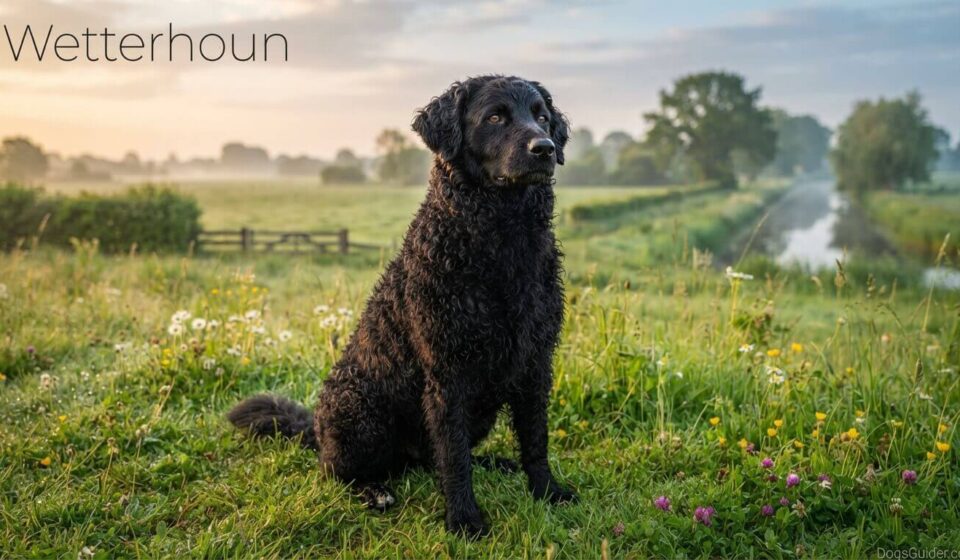
Also known as the Frisian Water Dog or Otterhoun, this centuries-old Dutch breed was built for tough, cold-water hunting work and remains a loyal, watchful companion today.
This guide covers the Wetterhoun’s history, temperament, health, and what it actually takes to own one of the world’s most uncommon dog breeds.
Wetterhoun at a Glance
- Height: 21.6-23 inches (55-59 cm) at the withers
- Weight: 55-77 pounds (25-35 kg)
- Lifespan: 12-13 years
- Coat: Dense, curly, water-resistant; black, brown, or those colors with white
- Temperament: Loyal, independent, reserved with strangers, watchful
- Exercise needs: High; bred as a working hunting and water-retrieving dog
- Rarity: Approximately 1,000 dogs worldwide, mostly in the Netherlands
- Best for: Experienced owners with an active, outdoor-oriented lifestyle
Wetterhoun History and Origin
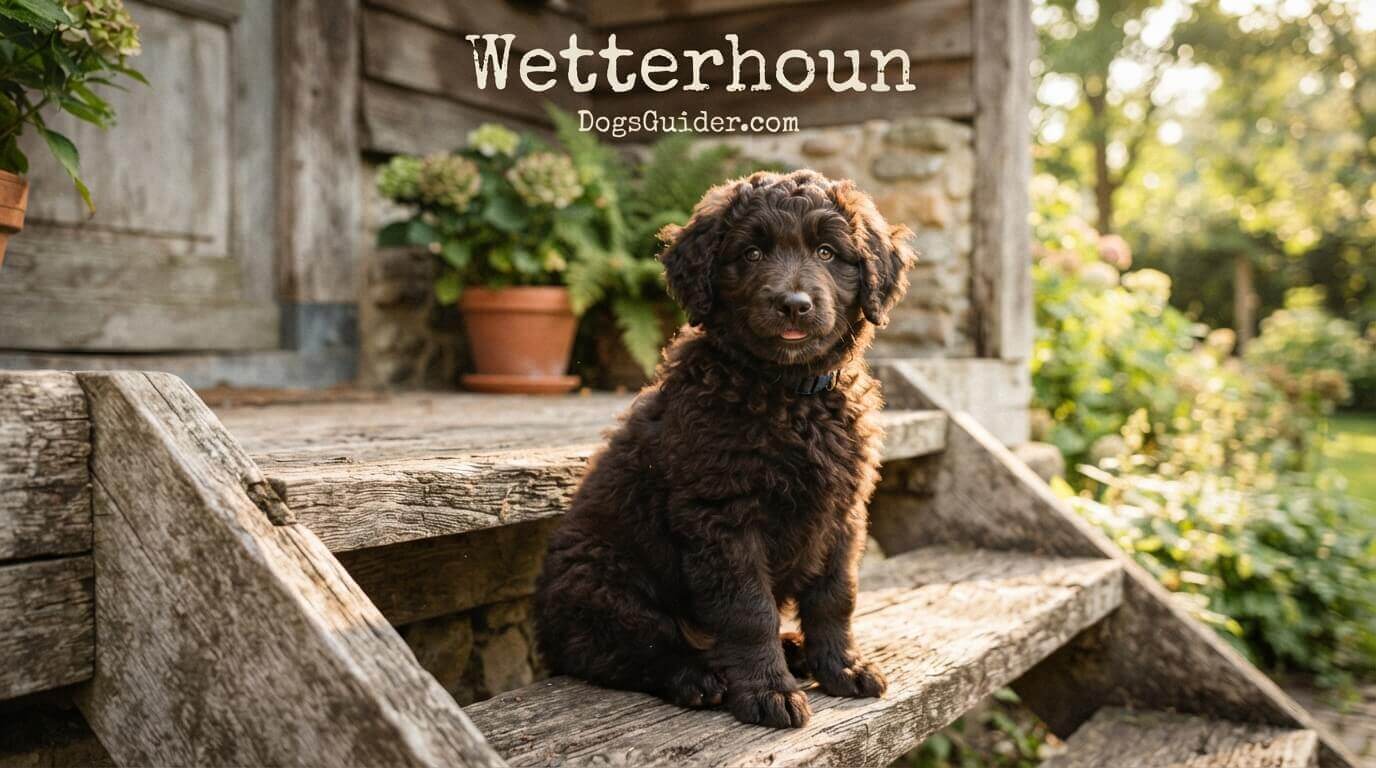
The Wetterhoun originated at least 400 years ago in Fryslân (Friesland), a province in the northern Netherlands. Its name comes from the West Frisian word “Wetterhûn,” meaning “water dog.”
The breed’s origins are believed to trace back to Gypsy dogs crossed with an indigenous Frisian breed, possibly the now-extinct Old Water Dog.
Farmers and hunters originally used the Wetterhoun to hunt otters and polecats and to retrieve waterfowl from cold, rough water, in addition to serving as an alert watchdog on the farm.
The Wetterhoun nearly disappeared during World War II, when the breed’s numbers dropped sharply across the Netherlands. Dedicated fanciers worked carefully to rebuild the population, and the breed slowly regained ground.
The Dutch Kennel Club officially recognized the Wetterhoun in 1943, and the Fédération Cynologique Internationale later recognized it within the water dogs section of Group 8.
In the United States, the Wetterhoun was approved for the AKC’s Foundation Stock Service program in November 2019, a step toward eventual full recognition.
Wetterhoun Temperament and Personality
The Wetterhoun’s breed standard describes it as “the ideal guard dog,” reserved with strangers, but never aggressive, and deeply affectionate with its own family. Key temperament traits include:
- Strong-willed and independent, the Wetterhoun thinks for itself, a trait inherited from its working background
- Not stubborn in a negative sense: despite its independence, the breed is not willfully disobedient and shows real tenacity in completing tasks
- Reserved with strangers, naturally watchful and cautious around unfamiliar people, making it a capable watchdog
- Devoted to family, affectionate and loyal once trust is established
- Sensitive to harsh treatment; the breed standard specifically notes the Wetterhoun should never be trained using punishment, since it responds far better to patient, positive methods
Because of its independent streak and guarding instincts, the Wetterhoun requires early, consistent training and socialization; this is not typically recommended as a first-time owner’s breed.
Wetterhoun Appearance and Coat
The Wetterhoun has a medium-to-large, sturdy, well-proportioned build with a square-shaped head, broad skull, and short, wide muzzle.
Its most distinctive feature is its dense, tightly curled coat, which is naturally water-resistant and provides excellent insulation for cold-water work, a functional trait, not just an aesthetic one.
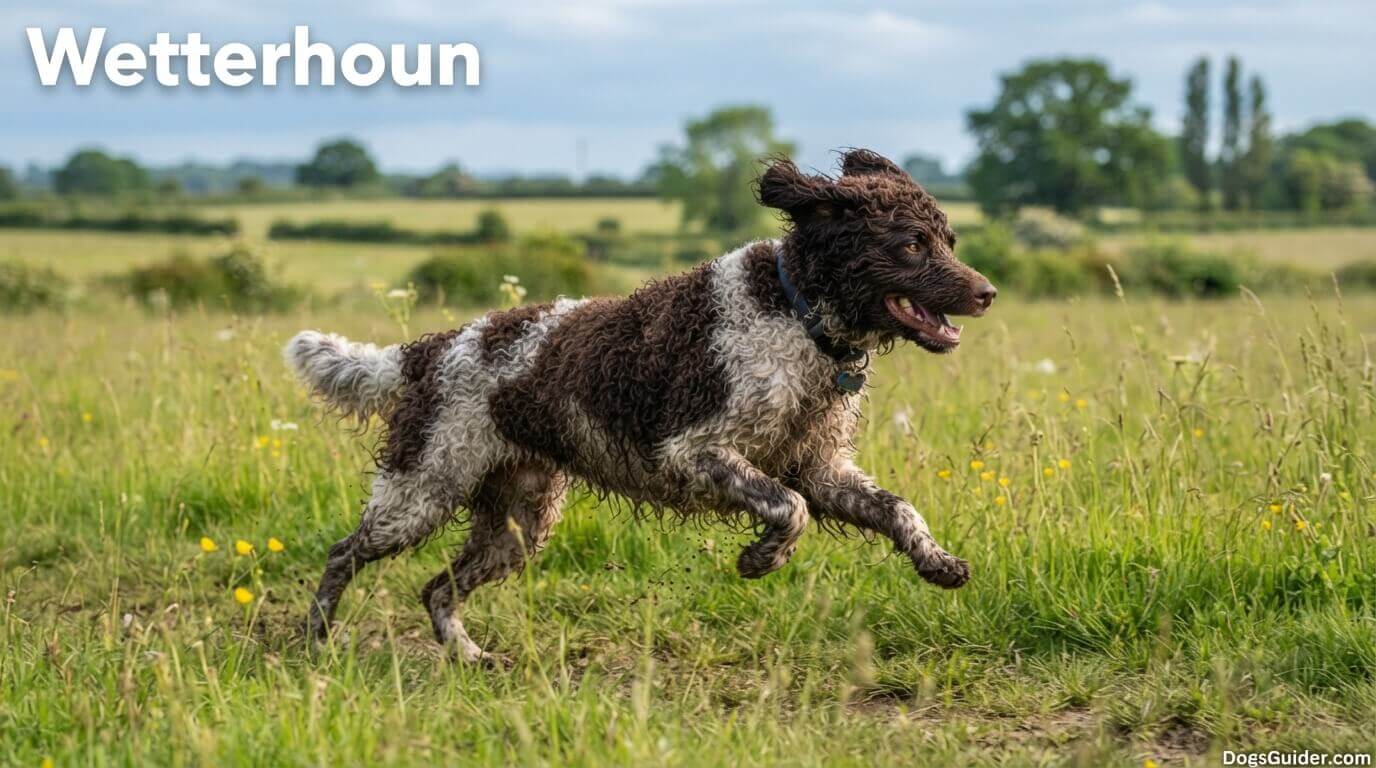
The coat is smoother on the head, ears, and legs. Recognized colors include solid black, solid brown, or either color combined with white, sometimes with ticking or roan markings.
Wetterhoun Exercise and Training Needs
As a working hunting and water-retrieving breed, the Wetterhoun needs substantial daily exercise, both physical and mental. Activities that suit the breed well include:
- Swimming: The Wetterhoun’s water-resistant coat and retrieving instincts make swimming an ideal outlet
- Hunting or retrieving games, engaging its natural working drive, helps prevent boredom-related behavior issues
- Long walks or hikes support both physical fitness and mental stimulation
- Early socialization is critical given the breed’s natural wariness of strangers
Training should start early and rely on positive reinforcement rather than correction-based methods, per the breed’s own official standard.
Wetterhoun Health Considerations
As a rare breed with a historically small gene pool, health testing is especially important for the Wetterhoun. Recommended health tests from the breed’s parent club include:
- Hip evaluation; to screen for hip dysplasia
- Elbow evaluation: to screen for elbow dysplasia
- Severe Combined Immune Deficiency (SCID) testing; an inherited immune disorder screened for in the breed
Because the worldwide population is so small, breeders take a conservation-minded approach, often requiring health clearances and expert judge approval before allowing a dog to be bred, in order to protect genetic diversity within the limited population.
Can You Actually Get a Wetterhoun?
Because the Wetterhoun remains one of the rarest breeds in the world, finding one is genuinely difficult outside the Netherlands.
Most Wetterhoun dogs still reside in their home country, where the Nederlandse Vereniging voor Stabij- en Wetterhounen (the Dutch club for the Stabyhoun and Wetterhoun) maintains breeding records and pedigrees.
Recently, dedicated breed programs in other countries, including a first litter born in the UK in 2025, have begun cautiously expanding the breed’s international presence, though availability remains extremely limited.
Prospective owners should expect long waitlists, careful vetting by breed clubs, and a strong emphasis on responsible, conservation-focused breeding practices.
Is the Wetterhoun Right for You?
The Wetterhoun is best suited to experienced dog owners with an active, outdoor-oriented lifestyle ideally near water. Its independent nature, guarding instincts, and high exercise needs mean it isn’t the easiest fit for first-time owners or sedentary households.
However, for the right owner, the Wetterhoun offers a uniquely loyal, capable, and historically rich companion unlike almost any other breed available today.
Final Thoughts
The Wetterhoun represents a rare piece of living Dutch history: a breed that nearly vanished but was carefully preserved through generations of dedicated breeders.
For experienced owners willing to meet its exercise, training, and socialization needs, the Wetterhoun offers a devoted, capable companion unlike almost any other dog breed available today, though its extreme rarity means prospective owners should expect a long and careful search.
FAQs
1. How rare is the Wetterhoun?
The Wetterhoun is one of the rarest dog breeds in the world, with an estimated total population of around 1,000 dogs, most of which live in the Netherlands.
2. What is the Wetterhoun originally bred for?
The Wetterhoun was originally bred in Friesland, Netherlands, to hunt otters and polecats, retrieve waterfowl from cold water, and serve as a farm watchdog.
3. Is the Wetterhoun recognized by the AKC?
Not yet as a fully recognized breed. The Wetterhoun was approved for the AKC’s Foundation Stock Service program in November 2019, which is typically a step toward eventual full recognition.
4. Is the Wetterhoun good for first-time dog owners?
Generally no. The Wetterhoun’s independent, strong-willed nature and high exercise needs make it better suited to experienced owners who can provide consistent training and an active lifestyle.
5. Does the Wetterhoun get along with strangers?
The Wetterhoun is naturally reserved and watchful around strangers, making it an effective watchdog, though the breed standard notes that it should never be aggressive.
6. How much exercise does a Wetterhoun need?
The Wetterhoun needs substantial daily exercise, including activities like swimming, retrieving games, and long walks, reflecting its background as an active working hunting breed.

Sarah Mitchell has been raising French Bulldogs for over 9 years in Austin, Texas. After adopting her first Frenchie, Biscuit, she became passionate about helping new owners navigate the unique needs of the breed from breathing care to diet and heat safety. Sarah has worked closely with local veterinarians and attended the AKC National Championship three times as a breed enthusiast. Her guides focus on practical, real-world advice for American Frenchie owners.