
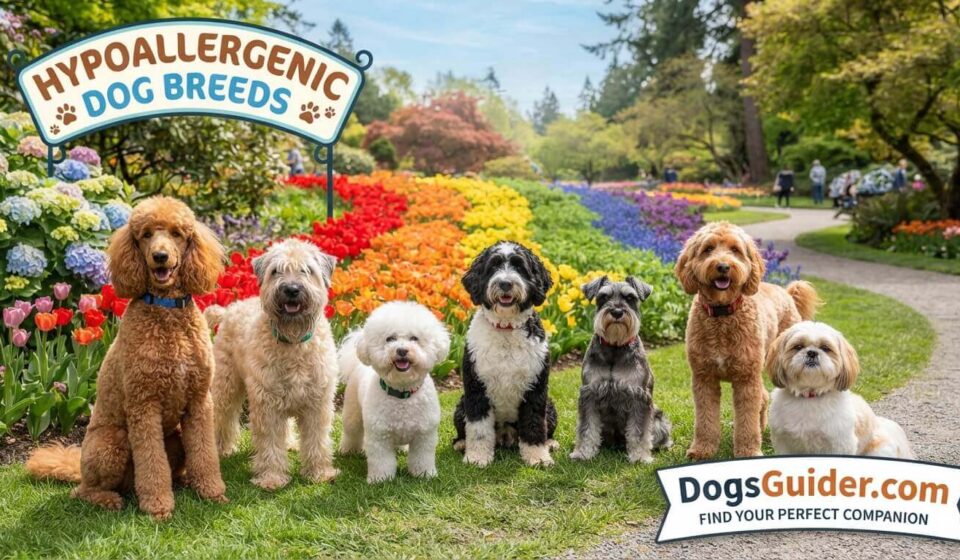
Introduction
In this guide, you’ll find 20 of the best hypoallergenic dog breeds, what actually makes a breed “hypoallergenic,” and how to choose the right one for your allergy level and lifestyle.
What Does “Hypoallergenic Dog” Actually Mean?
“Hypoallergenic” doesn’t mean allergen-free; it means a breed produces fewer allergens than average. Most people assume dog allergies come from fur, but the real trigger is usually dander (dead skin flakes), along with proteins in a dog’s saliva and urine.
Hypoallergenic dog breeds tend to share three traits that reduce how many allergens end up floating around your home:
- Hair, instead of fur, grows continuously like human hair rather than shedding in seasonal cycles
- Low or no shedding coats, less loose hair means less dander gets released into the air
- Single-layer coats with no fluffy undercoat mean less trapped dander overall
According to the National Institutes of Health, as much as 10-20% of the U.S. population is allergic to dogs — which is exactly why hypoallergenic dog breeds have become so popular among first-time and allergy-prone owners.
The 20 Best Hypoallergenic Dog Breeds
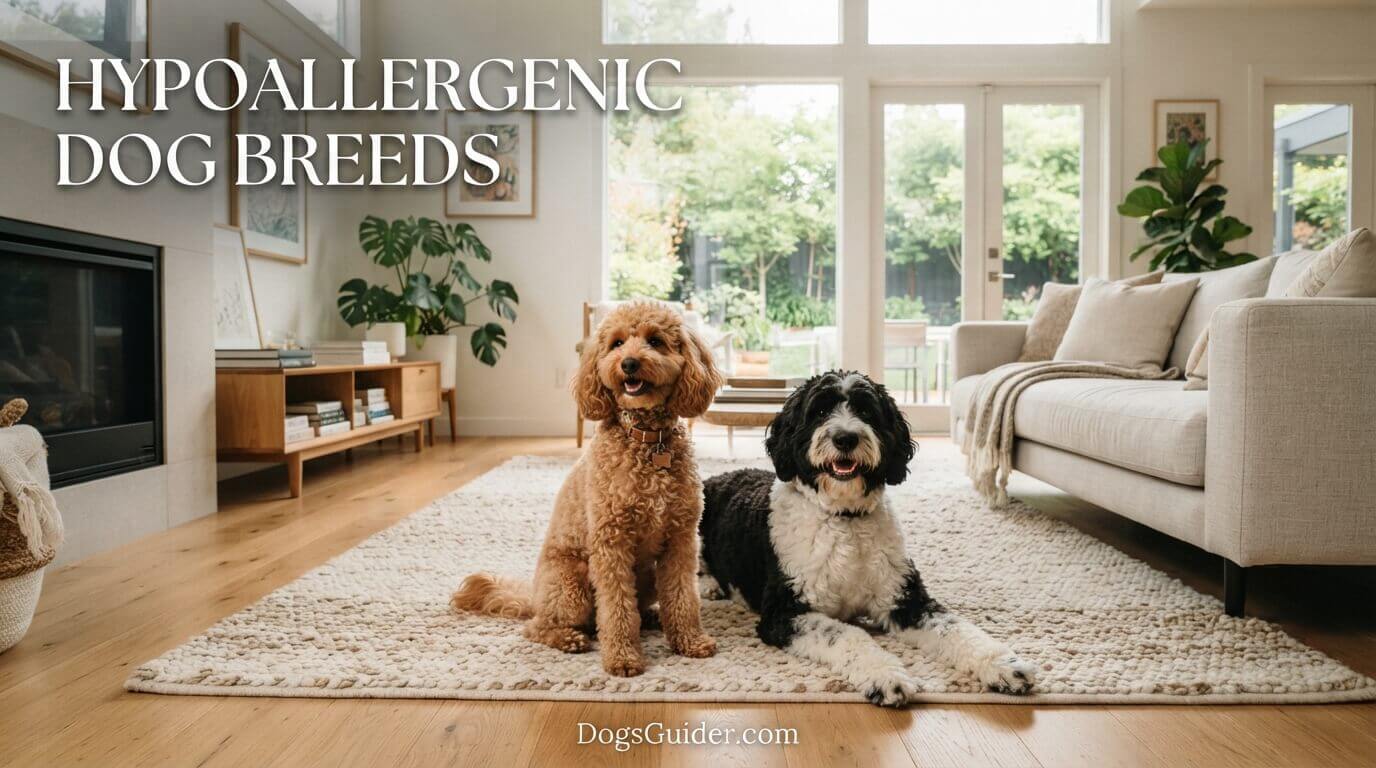
1. Poodle (Standard, Miniature, and Toy)
Poodles are the gold standard of hypoallergenic dog breeds. Their dense, curly coat traps dander close to the skin instead of releasing it into the air, and they come in three sizes to fit almost any household. Expect professional grooming every 4-6 weeks.
2. Bichon Frise
This cheerful, cotton-ball-coated breed sheds minimally despite its fluffy look. Its double coat catches loose hair before it falls, but it does require regular brushing to prevent matting.
3. Portuguese Water Dog
Energetic and highly trainable, the Portuguese Water Dog has a curly, single-layer coat that traps dander rather than spreading it. This breed needs plenty of exercise and mental stimulation.
4. Havanese
Cuba’s national dog has a long, silky coat that rarely sheds. Havanese dogs are social, adaptable, and do well with children and other pets, though their coat needs daily brushing to avoid tangles.
5. Maltese
Small, affectionate, and known for a long white coat with minimal shedding, the Maltese is a classic choice among hypoallergenic dog breeds for apartment living and allergy-prone households.
6. Shih Tzu
Shih Tzus have long hair rather than fur, which sheds very little. Regular grooming keeps their coat from matting, and their small size makes them a great fit for smaller homes.
7. Yorkshire Terrier
Yorkies have fine, silky hair that closely resembles human hair texture. Despite their tiny frame, they produce minimal dander and travel well, making them one of the most popular small hypoallergenic dog breeds.
8. Schnauzer (Miniature, Standard, and Giant)
All three Schnauzer sizes are low-shedding and highly adaptable. Their wiry coat needs regular hand-stripping or clipping, but they’re a solid option across a wide range of home sizes.
9. Afghan Hound
Surprisingly for a long-haired breed, Afghan Hounds produce minimal dander thanks to their single coat of fine, silky hair rather than traditional double-layered fur.
10. Basenji
Known as the “barkless dog,” the Basenji has an extremely short, fine coat and is famously clean, often grooming itself much like a cat, a strong pick for allergy sufferers who want a low-maintenance coat.
11. Chinese Crested
Available in hairless and “powderpuff” varieties, the Chinese Crested sheds very little either way. The hairless variety needs skin protection from the sun and cold, while the powderpuff needs occasional brushing.
12. American Hairless Terrier
As the name suggests, this breed has little to no coat at all, making it one of the most allergy-friendly hypoallergenic dog breeds available. It’s playful, alert, and easy to groom.
13. Bedlington Terrier
With a curly, lamb-like coat, the Bedlington Terrier sheds infrequently but needs regular trimming to prevent matting and keep its signature shape.
14. Coton de Tulear
Nicknamed the “Royal Dog of Madagascar,” this cheerful companion breed sheds only occasionally, though its cotton-soft coat benefits from daily brushing to stay tangle-free.
15. Soft Coated Wheaten Terrier
This medium-sized terrier sheds infrequently and has a soft, wavy coat, though it requires daily grooming to remove loose hair and dirt before it settles into the coat.
16. Lagotto Romagnolo
Originally bred as truffle-hunting dogs in Italy, Lagotto Romagnolos have a dense, curly, waterproof coat that sheds very little and suits active, allergy-conscious families.
17. Kerry Blue Terrier
A soft, wavy, low-shedding coat and a spirited personality make the Kerry Blue Terrier a solid mid-sized option among hypoallergenic dog breeds, provided owners keep up with regular grooming.
18. Xoloitzcuintli (Mexican Hairless Dog)
Available in hairless and coated varieties, the Xolo is an ancient breed that produces minimal dander, especially in its hairless form, though sun protection is important for bare skin.
19. Irish Water Spaniel
The tallest of the AKC’s spaniels, this breed has a dense, curly, liver-colored coat that sheds infrequently, combined with a playful, clownish personality.
20. Peruvian Inca Orchid
Another ancient hairless breed, the Peruvian Inca Orchid sheds very little and is considered one of the more allergy-friendly medium-sized hypoallergenic dog breeds, though it also comes in a coated variety.
Small vs. Large Hypoallergenic Dog Breeds

Hypoallergenic dog breeds aren’t limited to small dogs. Here’s how to think about size:
- Small hypoallergenic breeds: Maltese, Yorkshire Terrier, Bichon Frise, Havanese, Shih Tzu, Chinese Crested, ideal for apartments and smaller homes
- Medium hypoallergenic breeds: Standard Schnauzer, Portuguese Water Dog, Soft Coated Wheaten Terrier, Lagotto Romagnolo ,good for active households with moderate space
- Large hypoallergenic breeds: Standard Poodle, Giant Schnauzer, Afghan Hound, Irish Water Spaniel, better suited to homes with yards and higher exercise needs
How to Choose the Right Hypoallergenic Dog Breed for You
1. Consider Your Allergy Severity
If your allergies are mild, most low-shedding breeds will work well. If your allergies are severe, consider spending time with the specific breed before bringing one home. Individual dogs within the same breed can still produce different allergen levels.
2. Factor In Grooming Commitment
Most hypoallergenic dog breeds have hair, not fur, which means regular brushing and professional grooming every 4-8 weeks. Skipping grooming lets loose hair and dander build up in the coat instead of being removed.
3. Match Energy Level to Your Lifestyle
Some hypoallergenic dog breeds, like the Portuguese Water Dog and Standard Poodle, are highly active and need daily exercise. Others, like the Maltese or Havanese, are content with shorter walks and indoor play.
4. Think About Household Size and Kids
Breeds like the Havanese, Bichon Frise, and Coton de Tulear are known for being patient and gentle, making them a good fit for families with children.
Tips for Reducing Allergens at Home With a Hypoallergenic Dog
- Brush your dog outside or in a non-carpeted room to keep loose hair from spreading
- Bathe your dog every 4-6 weeks (not more, to avoid drying out the skin and increasing dander)
- Use a HEPA air purifier in rooms where your dog spends the most time
- Wash your dog’s bedding weekly in hot water
- Keep your dog off furniture and out of the bedroom if allergies are severe
- Vacuum with a HEPA-filter vacuum at least twice a week
Final Thoughts
While no dog is completely allergen-free, choosing from these hypoallergenic dog breeds combined with regular grooming, consistent cleaning, and a HEPA air purifier can make dog ownership manageable even for allergy-prone households.
Whether you want a small lap dog like the Maltese or an active companion like the Portuguese Water Dog, there’s a hypoallergenic dog breed suited to nearly every lifestyle and living space.
FAQs
1. Are hypoallergenic dog breeds truly allergen-free?
No. No dog breed is 100% allergen-free, since all dogs produce some level of dander, saliva, and skin cells. Hypoallergenic dog breeds simply produce and spread significantly fewer allergens than average-shedding breeds.
2. What is the most hypoallergenic dog breed?
The Poodle is widely considered the most hypoallergenic dog breed due to its dense, curly, low-shedding coat that traps dander close to the skin rather than releasing it into the air.
3. Are hairless dogs more hypoallergenic than dogs with hair?
Generally, yes, hairless breeds like the American Hairless Terrier and Xoloitzcuintli produce very little dander since they have minimal to no coat, though they still produce some allergens through skin and saliva.
4. Can I still be allergic to a hypoallergenic dog breed?
Yes. Because allergen sensitivity varies from person to person and even dog to dog within the same breed, it’s a good idea to spend time around a specific dog before committing, especially if your allergies are severe.
5. Do hypoallergenic dog breeds need more grooming than other dogs?
Usually yes. Since most hypoallergenic dog breeds have continuously growing hair rather than shedding fur, they typically require more frequent brushing and professional grooming to stay mat-free and allergen-controlled.
6. Are small hypoallergenic dog breeds better for allergies than large ones?
Not necessarily, allergen production depends more on coat type and dander levels than size. A large Standard Poodle can produce fewer allergens than a small breed with a heavier-shedding double coat.

Sarah Mitchell has been raising French Bulldogs for over 9 years in Austin, Texas. After adopting her first Frenchie, Biscuit, she became passionate about helping new owners navigate the unique needs of the breed from breathing care to diet and heat safety. Sarah has worked closely with local veterinarians and attended the AKC National Championship three times as a breed enthusiast. Her guides focus on practical, real-world advice for American Frenchie owners.


[…] Pugalier breed was originally developed with a specific goal in mind: keep the Pug’s charm and personality […]
[…] are affectionate, low-exercise companions that love lounging, making them a classic entry among the best apartment dog breeds for laid-back households. Shedding: moderate-high. Barking: low. Energy: […]
[…] guide covers 20 of the best low maintenance dog breeds and exactly what to consider before choosing […]