

Introduction
The Frenchton, sometimes called the Faux Frenchbo Bulldog or Boston Frenchie, is one of the most popular designer dog crosses today, blending the compact charm of the French Bulldog with the lively energy of the Boston Terrier.
If you’re researching this breed before buying, adopting, or simply out of curiosity, this guide covers everything: appearance, temperament, lifespan, shedding, real pricing, and whether a Frenchton actually fits your lifestyle.
Table of Contents
- What Is a Frenchton?
- Frenchton Appearance and Size
- Frenchton Temperament and Personality
- Frenchton Lifespan and Health
- Does a Frenchton Shed? Grooming Needs
- How Much Does a Frenchton Cost?
- Frenchton Training and Exercise Needs
- Frenchton Pros and Cons
- Is a Frenchton Right for You?
- Frequently Asked Questions
What Is a Frenchton?
A Frenchton is a designer hybrid breed created by crossing a purebred French Bulldog with a Boston Terrier.
The cross was developed in the United States in the late 1990s with a clear goal: to keep the French Bulldog’s affectionate, easygoing personality while introducing the Boston Terrier’s slightly longer muzzle and better airway structure, resulting in a dog that generally breathes a bit easier than a purebred Frenchie.
Because a Frenchton is a mixed breed, appearance and traits can vary from litter to litter and even between puppies from the same litter. Some Frenchies favor their French Bulldog parent more strongly, while others lean closer to the Boston Terrier side.
Frenchton Appearance and Size
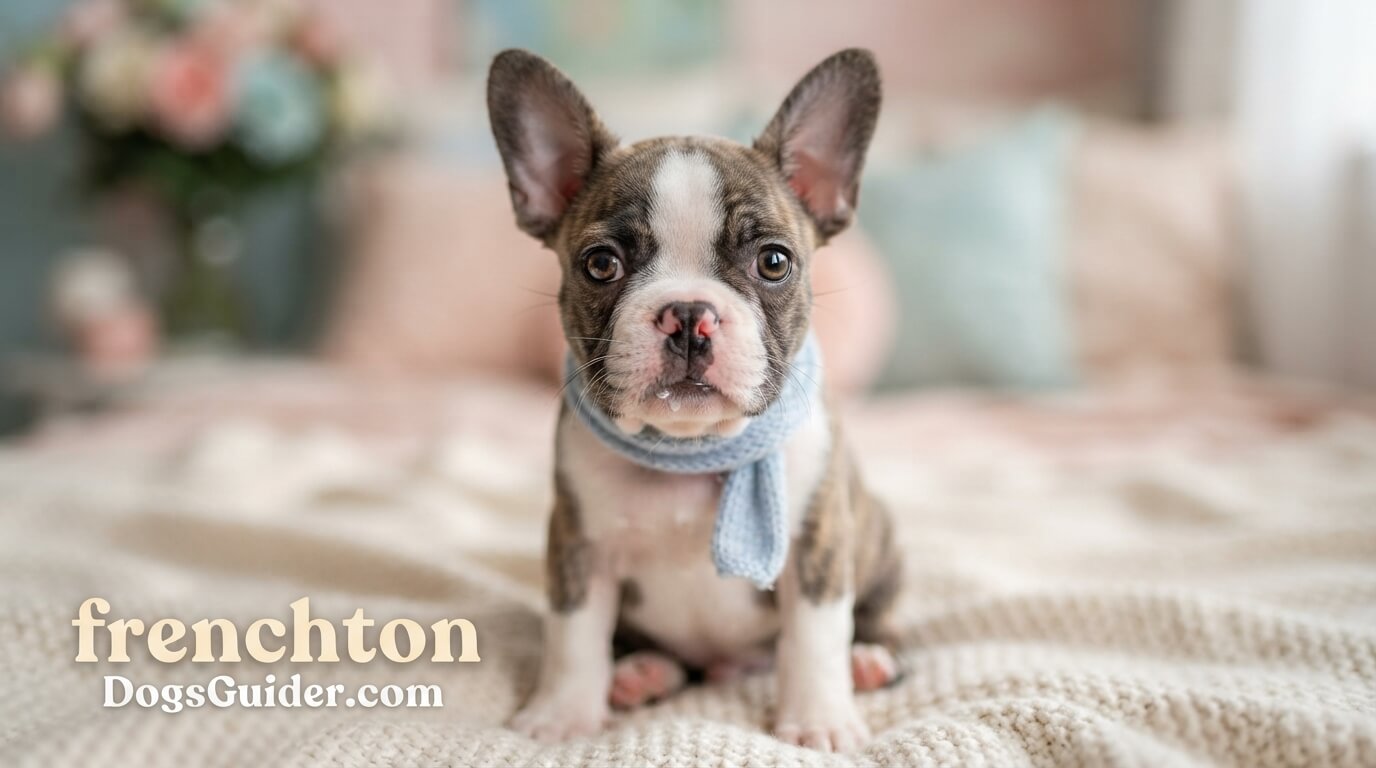
Frenchtons are small, muscular, compact dogs. Typical physical traits include:
- Weight: 15–25 pounds
- Height: 11–15 inches at the shoulder
- Ears: Large, perky, bat-like ears inherited from both parent breeds
- Face: A square head with a shorter muzzle, though usually less flat than a purebred French Bulldog
- Coat: Short, smooth, and dense
- Colors: Black, brindle, fawn, white, cream, and pied, often with unique markings
- Tail: Naturally short, straight, or slightly curled
Most Frenchtons reach their full adult size by 12–18 months of age.
Frenchton Temperament and Personality
Frenchtons are known for being affectionate, playful, and highly adaptable. They combine the calm, laid-back nature of the French Bulldog with the livelier, more energetic personality of the Boston Terrier, which typically results in a dog that’s:
- Sociable with people and generally good with children and other pets when properly socialized
- Intelligent and eager to please, though occasionally stubborn
- Adaptable to apartment living, small homes, or larger houses alike
- Moderately energetic — playful in bursts, but content to relax the rest of the day
This temperament makes the Frenchton a strong choice for first-time dog owners, singles, couples, and families looking for a low-drama, high-affection companion.
Frenchton Lifespan and Health
One of the biggest advantages of the Frenchton over a purebred French Bulldog is its improved health profile. Because crossbreeding introduces greater genetic diversity, Frenchtons typically live 12 to 15 years longer than the average 10–12 year lifespan of a purebred Frenchie.
That said, Frenchtons can still inherit some breed-specific health risks from their parent breeds, including:
- Brachycephalic-related breathing issues (though typically milder than in purebred French Bulldogs)
- Skin fold irritation in dogs with more pronounced facial wrinkles
- Eye conditions such as cherry eye or corneal ulcers
- Patellar luxation (kneecap dislocation), common in small breeds
Choosing a breeder who health-tests both parent dogs significantly reduces these risks and helps ensure a longer, healthier life for your Frenchton.
Does a Frenchton Shed? Grooming Needs
Frenchtons have a short, dense, single-layer coat and are considered low-to-moderate shedders. They are not hypoallergenic, but their grooming needs are minimal compared to long-haired or double-coated breeds.
- Brushing: Once a week with a soft bristle brush or rubber grooming glove is usually enough
- Bathing: Every 4–6 weeks, or as needed
- Facial folds: Wipe clean regularly to prevent bacterial buildup and irritation
- Nails and ears: Regular trimming and cleaning to avoid overgrowth or infection
How Much Does a Frenchton Cost?

Frenchton prices vary based on breeder reputation, location, coat color, and lineage. Here’s a realistic price breakdown:
| Source | Typical Price Range |
|---|---|
| Backyard breeder / casual listing | $500 – $1,600 |
| Reputable breeder (standard pet-quality) | $1,500 – $3,500 |
| Reputable breeder with health testing and guarantees | $2,700 – $5,600 |
| Rescue or shelter adoption | $50 – $500 |
Beyond the purchase price, budget for ongoing costs too. Estimates place the total lifetime cost of owning a Frenchton somewhere between $20,000 and $55,000, covering food, routine vet care, insurance, grooming, and potential emergency medical expenses over its 12–15 year lifespan.
Frenchton Training and Exercise Needs
Frenchtons are intelligent and generally eager to please, which makes them relatively easy to train with consistent, positive reinforcement methods.
A stubborn streak inherited from the French Bulldog side means short, engaging training sessions work far better than long, repetitive ones.
Exercise needs are moderate:
- Daily walks: 20–30 minutes are typically sufficient
- Playtime: Short bursts of indoor or yard play help burn energy
- Heat caution: Like French Bulldogs, Frenchtons can overheat quickly. Avoid exercise during peak heat
Frenchton Pros and Cons
| Pros | Cons |
|---|---|
| Affectionate and adaptable temperament | Can inherit some brachycephalic health risks |
| Longer average lifespan than a purebred Frenchie | Puppies can vary widely in appearance and traits |
| Low grooming and moderate exercise needs | Can be stubborn without consistent training |
| Great for apartments and first-time owners | Not a hypoallergenic breed |
Is a Frenchton Right for You?
A Frenchton tends to be a great fit if you:
- Live in an apartment or small home and want a low-exercise companion
- Want the look and charm of a French Bulldog with generally better breathing and a longer lifespan
- Have moderate time for daily walks and short training sessions
- Can budget for potential vet visits related to brachycephalic traits
It may not be the best fit if you need a highly active running or hiking companion, live in an extremely hot climate without climate control, or are away from home for long stretches on a regular basis.
Final Thoughts
The French Bulldog offers many of the qualities people love about the French Bulldog: the affectionate nature, the compact size, and the low-maintenance coat, while generally trading a shorter lifespan and higher health risks for a longer, often healthier life.
If you’re prepared for moderate exercise needs, consistent training, and the cost of a reputable breeder, a Frenchton can make a wonderfully loyal companion for years to come.
FAQs
1. What is a Frenchton?
A Frenchton is a designer hybrid dog created by crossing a French Bulldog with a Boston Terrier, combining the Frenchie’s charm with the Boston Terrier’s slightly healthier build.
2. How much does a Frenchton cost?
Frenchton puppies typically cost between $1,500 and $5,600 from a reputable breeder, while rescue adoption usually costs $50 to $500.
3. How long does a Frenchton live?
Frenchies typically live 12 to 15 years, which is generally longer than the average 10–12 year lifespan of a purebred French Bulldog.
4. Does a Frenchton shed a lot?
No. Frenchtons have a short, single-layer coat and are considered low-to-moderate shedders, requiring only weekly brushing to manage loose hair.
5. Are Frenchtons good with kids and other pets?
Yes, when properly socialized from puppyhood, Frenchies are generally friendly and sociable with children and other household pets.
6. Are Frenchtons hypoallergenic?
No breed is truly hypoallergenic, and Frenchtons are no exception, though their light shedding makes them more manageable than heavier-shedding breeds for some allergy sufferers.
7. Do Frenchies have breathing problems like French Bulldogs?
Frenchtons generally have fewer breathing issues than purebred French Bulldogs thanks to the Boston Terrier’s longer muzzle, but some individuals can still inherit brachycephalic traits.

Sarah Mitchell has been raising French Bulldogs for over 9 years in Austin, Texas. After adopting her first Frenchie, Biscuit, she became passionate about helping new owners navigate the unique needs of the breed from breathing care to diet and heat safety. Sarah has worked closely with local veterinarians and attended the AKC National Championship three times as a breed enthusiast. Her guides focus on practical, real-world advice for American Frenchie owners.