

Most Aggressive Dog Breeds: Real Statistics, Facts & Responsible Ownership

Introduction
Aggression in dogs stems from a complex mix of genetics, breeding history, socialization, training, and individual temperament, not breed alone.
This guide covers the breeds most frequently cited in bite statistics and fatal attack data, explains why that data is more complicated than it looks, and offers practical guidance on responsible ownership.
Important Context Before You Read This List
Before diving into specific breeds, it’s worth understanding a key distinction: statistics on the most aggressive dog breeds usually measure reported incidents and severity, not an inherent tendency toward aggression in every dog of that breed. Several important caveats shape how this data should be read:
- Reporting bias exists: larger, more powerful breeds cause more noticeable injuries, so their bites get reported and documented far more often than a small dog’s nip
- Small breeds actually bite more frequently: research from the University of Pennsylvania found that breeds like Dachshunds and Chihuahuas show higher rates of snapping and biting, but rarely appear in “most dangerous” lists because their bites are less likely to cause serious injury
- Genetics load the gun, environment pulls the trigger: a dog’s breeding history can predispose certain behavioral tendencies, but training, socialization, and ownership determine whether those tendencies become a problem
- Breed misidentification is common; many bite statistics rely on visual identification by witnesses or animal control, which studies show is frequently inaccurate, especially for mixed breeds
The Most Aggressive Dog Breeds, Ranked by Statistics
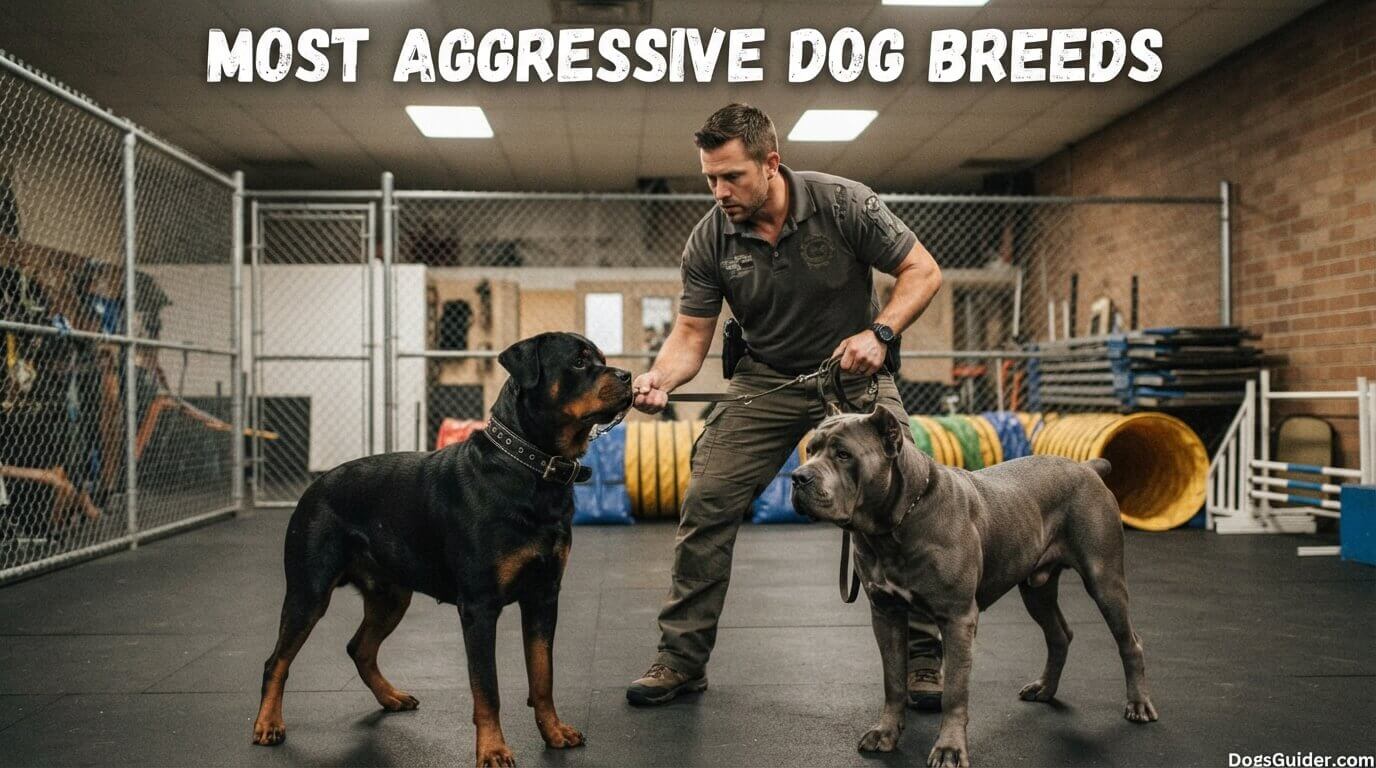
Pit Bull (and Pit Bull-Type Breeds)
Pit Bulls consistently top most lists of the most aggressive dog breeds, statistically linked to a large share of fatal dog attacks in the U.S. between 2005 and 2019.
However, “Pit Bull” is not one official breed but an umbrella term covering several related breeds, including the American Pit Bull Terrier and American Staffordshire Terrier, which complicates the data significantly.
Despite the reputation, well-bred and properly trained Pit Bulls can be loyal, playful family companions.
Rottweiler
Rottweilers rank second in fatal attack statistics in many studies. They were historically bred as guard and herding dogs, giving them strong territorial and protective instincts that require early, consistent socialization to manage appropriately.
German Shepherd
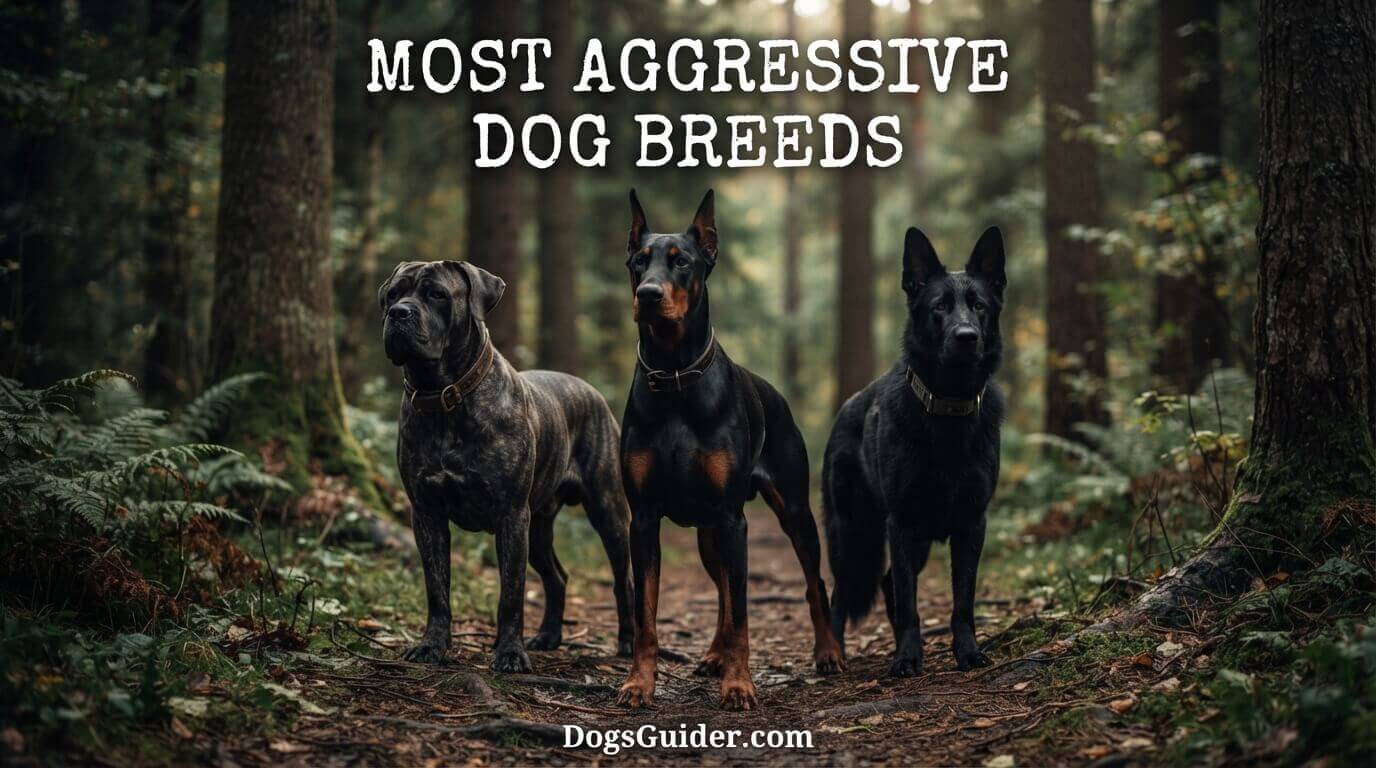
Frequently cited in bite statistics, German Shepherds were bred for guarding and police work, which gives them natural protective drives.
With proper training, they’re widely used as service and working dogs, showing that breed tendencies can be channeled productively.
Doberman Pinscher
Bred specifically as a protective guard dog in the 1800s, the Doberman Pinscher’s territorial instincts can translate into aggression without early socialization, though the breed is also known for intelligence and loyalty when properly trained.
Chow Chow
Known for a naturally independent, sometimes standoffish personality, Chow Chows can be reserved with strangers and are frequently listed among aggressive breeds, particularly in studies measuring stranger-directed aggression.
Presa Canario
Also known as the Canary Mastiff, this large breed was historically used for guarding, hunting, and unfortunately blood sports.
Despite ranking among the most dangerous by bite statistics, Presa Canarios have an American Temperament Test Society pass rate over 90%, showing the importance of individual temperament testing.
Wolf Hybrids
Crossbreeding domestic dogs with wolves produces animals with high prey drive and unpredictable behavior that doesn’t respond to training the way domestic breeds do.
An estimated one million wolf-dog hybrids live in the U.S., and many are abandoned within two years because owners are unprepared for their needs.
Dachshund
A study published in Applied Animal Behaviour Science found Dachshunds rank among the most frequently aggressive breeds toward both strangers and owners.
Bred to hunt badgers, their fearlessness and prey drive never fully faded, though their small size keeps them out of fatality statistics.
Chihuahua
Like Dachshunds, Chihuahuas frequently show high rates of snapping and biting in behavioral studies, but their small size means these incidents rarely cause serious harm or make headlines.
Jack Russell Terrier
Bred to hunt foxes underground, Jack Russells require fearlessness and a willingness to fight in tight spaces — traits that can show up as dog aggression, especially between males, despite their generally energetic, playful reputation.
Caucasian Shepherd
An extremely large livestock guardian breed known for independence and strong protective instincts, the Caucasian Shepherd requires an extremely experienced handler and is not recommended for typical family households.
Boxer
While generally excellent family dogs when well-bred and trained, Boxers can show dog-directed aggression, particularly between males, and their strong jaw means any bite carries more force than their friendly reputation might suggest.
What Actually Causes Aggressive Behavior in Dogs?
Rather than Most Aggressive Dog Breeds alone, several factors combine to shape a dog’s behavior:
- Lack of socialization: Puppies not exposed to different people, animals, and environments during the critical 3-14 week window are more prone to fear-based aggression later
- Poor training or inconsistent boundaries: Dogs without clear structure can develop unpredictable, reactive behavior
- Pain or medical issues: Sudden aggression in a previously calm dog often signals an underlying health problem that needs veterinary attention
- Fear and past trauma: dogs with a history of abuse or neglect may develop defensive aggression
- Genetics and breeding purpose: breeds developed for guarding, hunting, or fighting carry instincts that require deliberate management
Responsible Ownership Tips for Any Strong or Guarding Breed
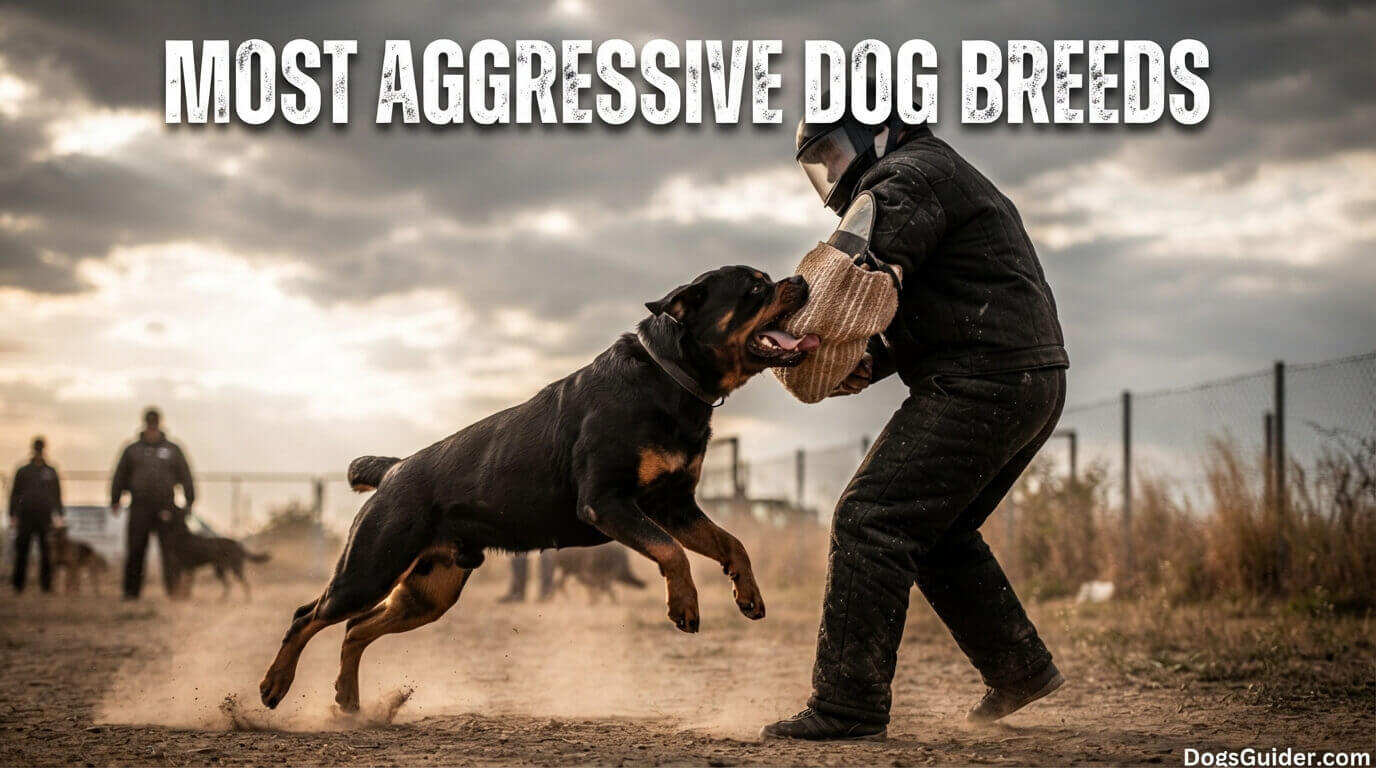
- Start socialization early: expose puppies to a wide range of people, animals, and situations during the critical developmental window
- Invest in consistent, positive training. Professional obedience classes are worth the investment for powerful or guarding breeds
- Understand breed-specific legislation: some cities and countries restrict or ban certain breeds; check local laws before adopting
- Never leave young children unsupervised with any dog, regardless of breed reputation
- Watch for warning signs: stiff body language, raised hackles, and growling are communication, not random behavior, and should be addressed early with a trainer
Final Thoughts
While Most Aggressive Dog Breeds do appear more frequently in bite statistics and fatal attack data, breed alone is a poor predictor of any individual dog’s behavior.
Genetics may influence temperament, but training, socialization, and responsible ownership play the larger role in whether a dog becomes aggressive or grows into a loving, well-adjusted companion.
If you’re considering one of these breeds, prioritize working with an experienced trainer and a breeder or rescue who understands the breed’s specific needs.
FAQs
1. What is technically the most aggressive dog breed?
Pit Bulls are most frequently cited as the most aggressive dog breed in fatal attack statistics, though this data is complicated by breed misidentification and the fact that “Pit Bull” covers several related breeds rather than one official standard.
2. Are small dogs actually more aggressive than large dogs?
Behavioral studies suggest small breeds like Chihuahuas and Dachshunds show higher rates of biting and snapping, but they rarely appear in “most dangerous” lists because their bites are far less likely to cause serious injury compared to larger breeds.
3. Can aggressive dog breeds become good family pets?
Yes. Many breeds statistically linked to aggression, including Pit Bulls, Rottweilers, and German Shepherds, can become loving, well-behaved family companions with proper training, early socialization, and responsible ownership.
4. Is breed-specific legislation effective at reducing dog bites?
This remains a debated topic among researchers and animal behaviorists. Many experts argue that responsible ownership, training, and socialization have a greater impact on reducing aggressive incidents than breed-specific bans.
5. What age is most important for preventing aggression in dogs?
The 3-14 week socialization window is widely considered the most critical period, during which puppies form lasting associations with people, other animals, and new environments.
6. Should I avoid adopting a breed on this list?
Not necessarily. These breeds simply require more experienced handling, consistent training, and early socialization. Many make wonderful, loyal companions when their specific needs are understood and met responsibly.
Sarah Mitchell has been raising French Bulldogs for over 9 years in Austin, Texas. After adopting her first Frenchie, Biscuit, she became passionate about helping new owners navigate the unique needs of the breed from breathing care to diet and heat safety. Sarah has worked closely with local veterinarians and attended the AKC National Championship three times as a breed enthusiast. Her guides focus on practical, real-world advice for American Frenchie owners.


[…] expressive eyes are a trait shared by many of the cutest dog breeds, from Pugs to Cavalier King Charles […]